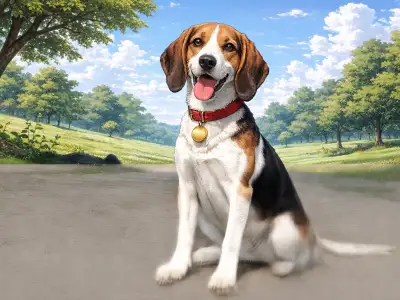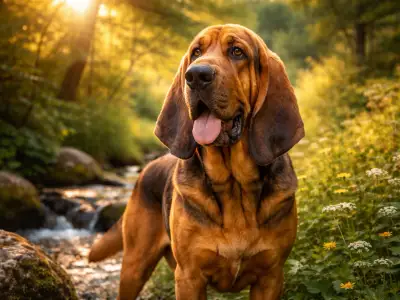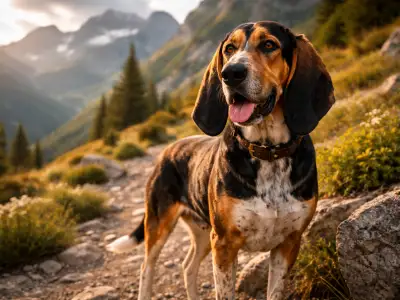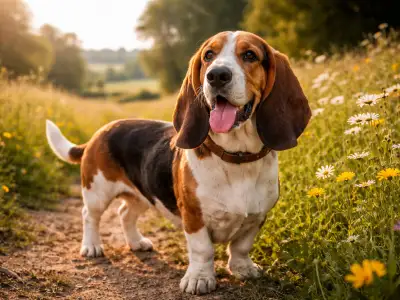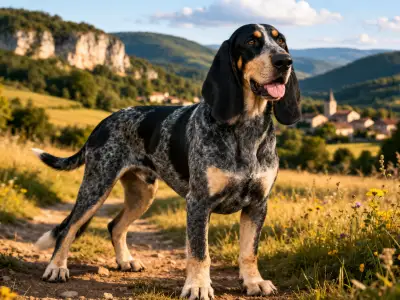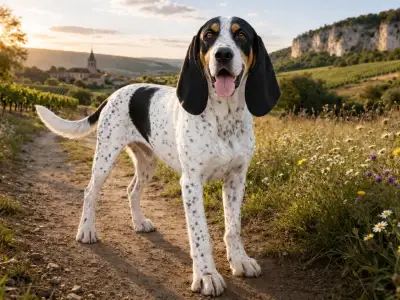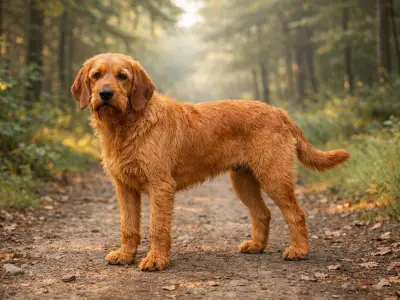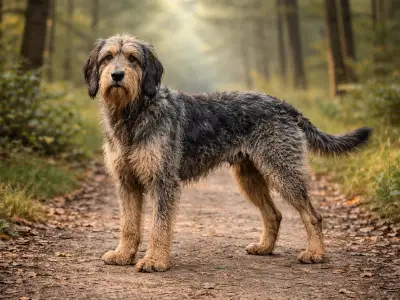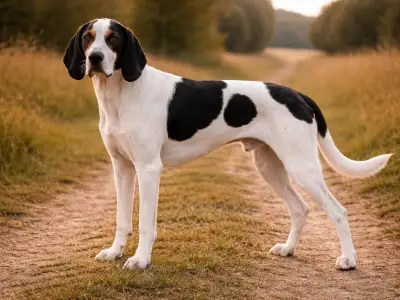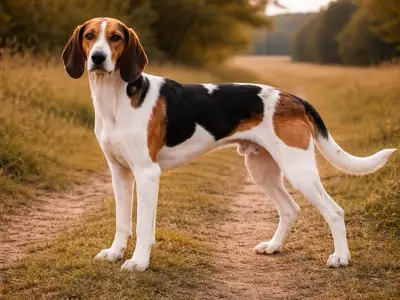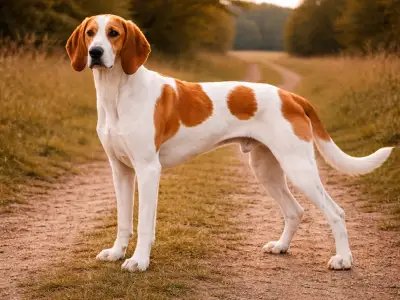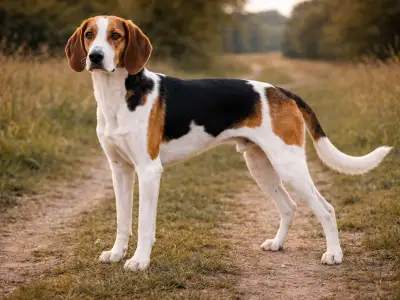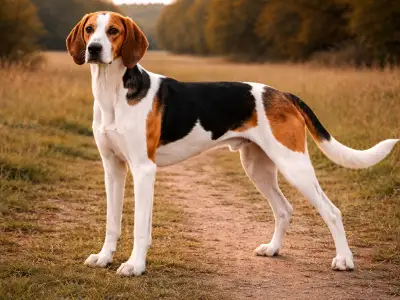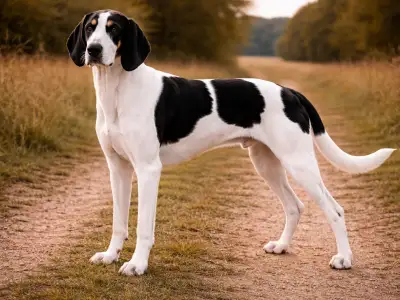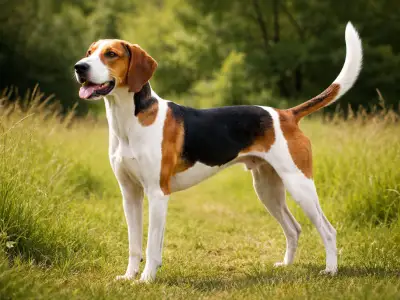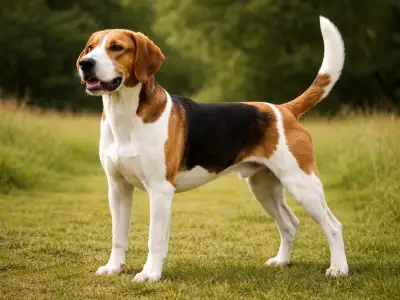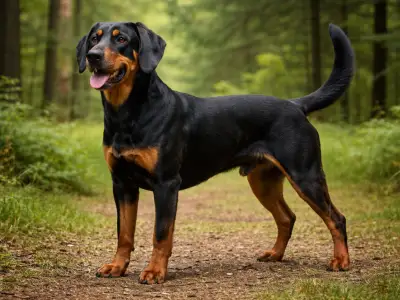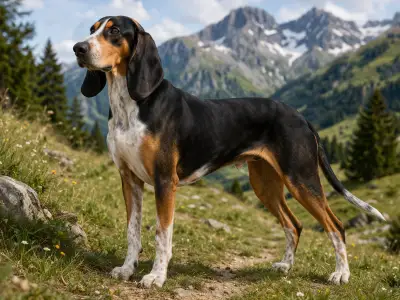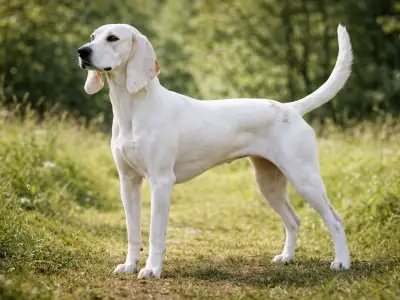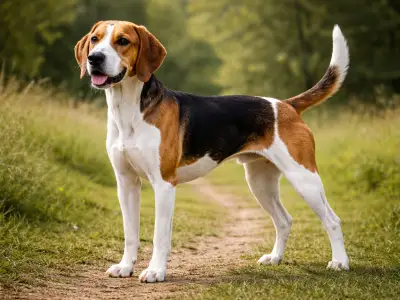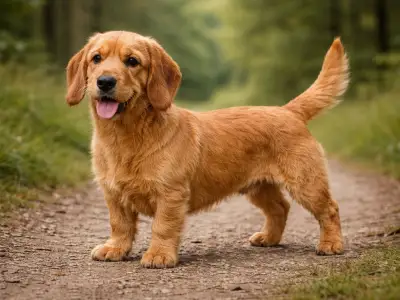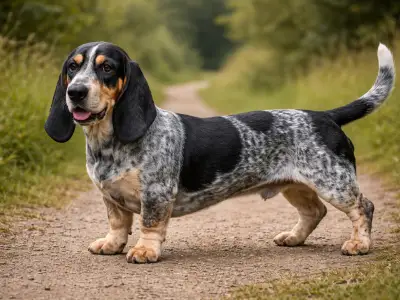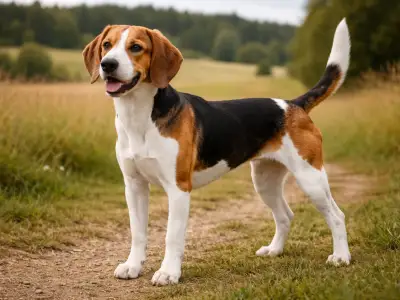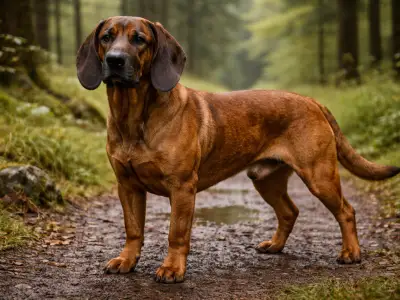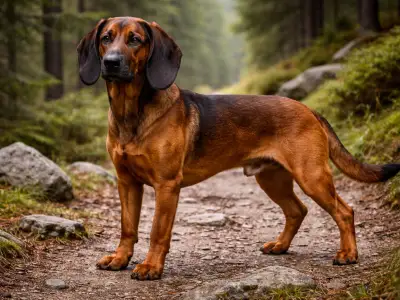
Petit Bleu de Gascogne
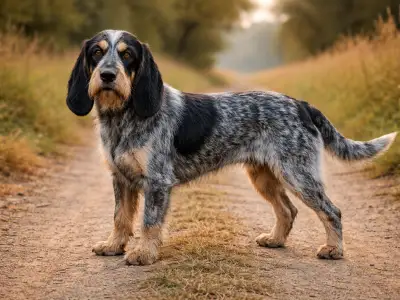
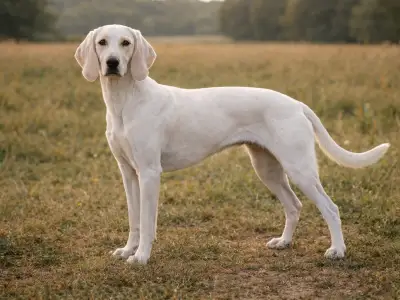
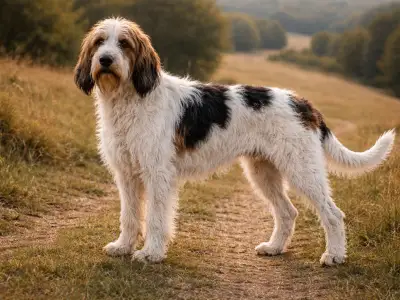
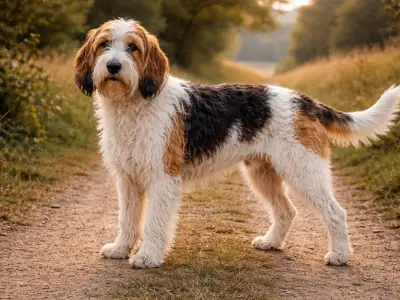
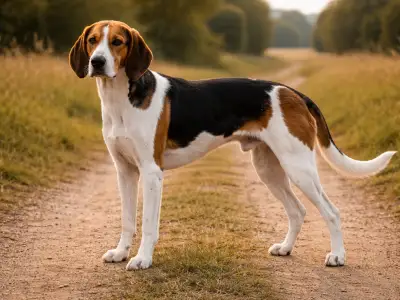
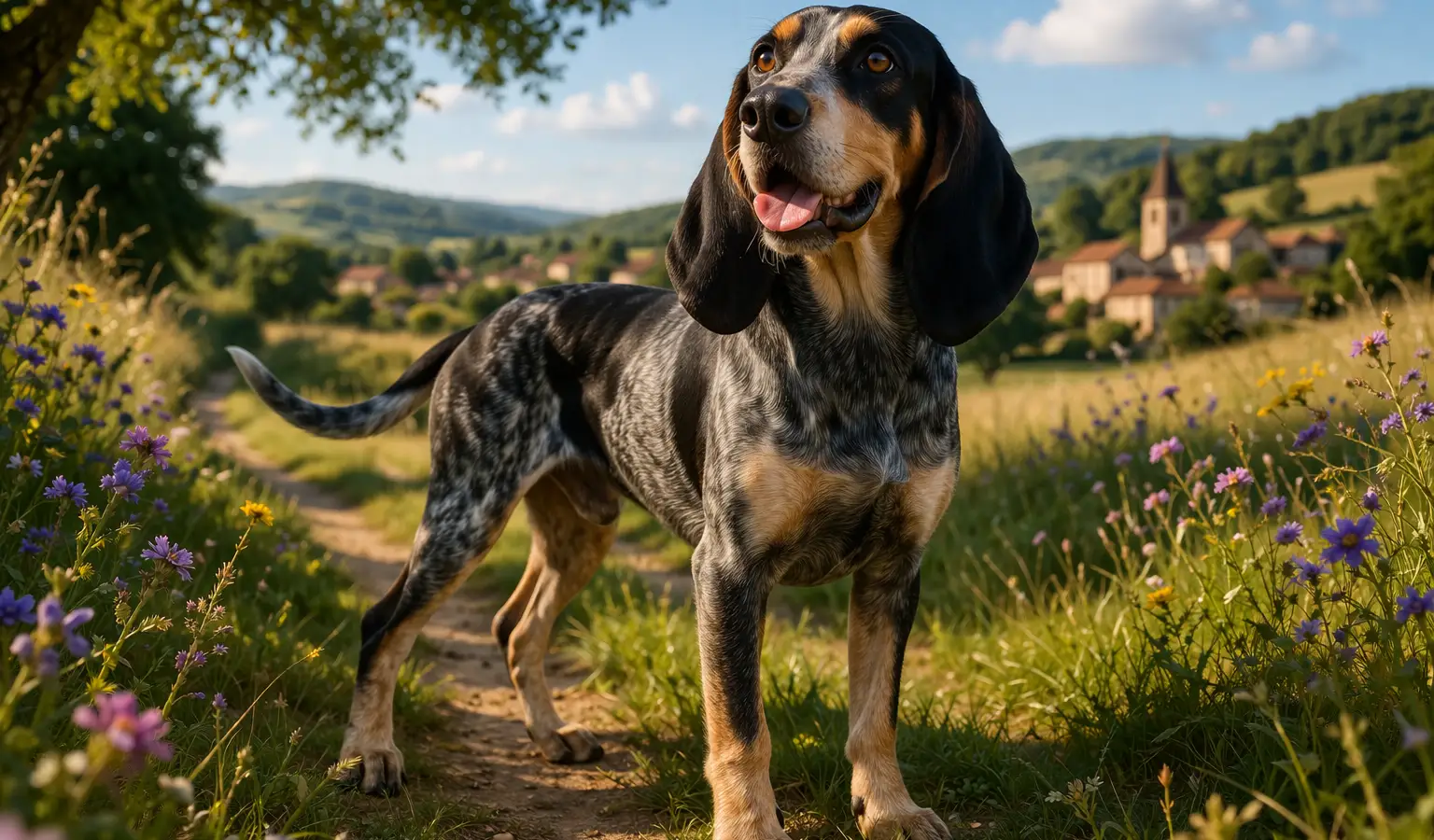
The Petit Bleu de Gascogne is a lighter French scenthound than the Grand Bleu, yet still hardy with an excellent nose. Often used for small game, it is persistent on the trail and works well in a pack. Friendly at home, it needs regular activity, scent work and space to stay fulfilled.
Life expectancy
11 – 13 years
Price
900 – 1500 €
Monthly budget
70 €
Size
Medium
Profile
Petit Bleu de Gascogne
Origin
France
Year of origin
2023
Developed by
French hunting breeders
Size
Medium
Coat type
Short coat
Owner profile
Active owner
Hypoallergenic
No
Litter size
6
Life expectancy
11 – 13 years
Price
900 – 1500 €
Female
- Height : 50 – 56 cm
- Weight : 16 – 22 kg
Male
- Height : 52 – 58 cm
- Weight : 18 – 25 kg
Temperament & abilities
Affectionate
3/5
Calm
3/5
Independent
4/5
Intelligence
4/5
Obedience
3/5
Hunting instinct
5/5
Energy level
4/5
Good with children
3/5
Dog-friendly
4/5
Friendly with strangers
3/5
Hunting profile
Stamina
4/5
Hunting drive
4/5
Independence
4/5
Trainability
3/5
Beginner-friendly
2/5
Family compatibility
3/5
Feather game
0/5
Fur game
4/5
Underground work
0/5
Water work
0/5
These indicators help compare breeds and choose the right one for your hunting style.
Game & abilities
Estimated ability level by game type.
Budget
Purchase price
900 – 1500 €
The price may vary depending on the breeder, bloodline, and region.
Average monthly cost
70 €
Estimated average: food, healthcare, accessories, and grooming.
A driven scent hound with a serious nose, steady stamina, and real pack-hunting heritage
Is the Petit Bleu de Gascogne a good hunting dog?
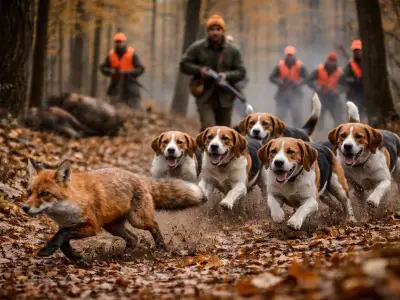
The Petit Bleu de Gascogne is generally a very capable hunting dog for people who want a true scenthound rather than an all-round gundog. Bred to follow scent with persistence and voice, it is usually most convincing in tracking and pursuing game over distance, especially where nose work, endurance, and a methodical search matter more than speed alone. For hunters asking whether the Petit Bleu de Gascogne is good in the field, the short answer is yes for traditional hound work, but it is less naturally suited to jobs that demand close handling, frequent off-lead redirection, or polished retrieving.
Its main strengths are a fine nose, determination on a line, and the ability to keep working in difficult terrain without burning out too quickly. The breed often shows the classic hound style: head down, committed to scent, and inclined to work independently once it has information to follow. That can be a real advantage for hare, rabbit, and similar scent-driven hunting, and in some contexts for wild boar work depending on the individual dog, local practice, and line. The working style is more about honest scent pursuit than flashy versatility, so it tends to appeal to hunters who value reliability of nose and stamina over instant responsiveness.
Handling is where future owners need to be realistic. Like many scent hounds, the Petit Bleu de Gascogne may be trainable and cooperative in a calm environment, yet far more selective when scent takes over. Recall can require serious, patient work, and field obedience should not be judged by the standards of highly handler-focused pointing breeds or retrievers. Early exposure, consistent training, and regular opportunities to use the nose matter a great deal. A harsh approach is unlikely to improve matters; this breed usually responds better to steady repetition, structure, and clear expectations.
- Best fit: hunters wanting a traditional scent hound for tracking and pursuit work, often in rural settings.
- Less ideal for: owners expecting a highly biddable dog that stays naturally close and switches tasks quickly.
- Daily life: manageable in a home with enough exercise, but easier with space, routine, and meaningful work.
In everyday life, the balance between field performance and family living depends heavily on exercise and mental outlet. A well-managed Petit Bleu de Gascogne can be affectionate and pleasant at home, but it is not a decorative companion breed. It tends to make the most sense for active owners who genuinely appreciate hound temperament: vocal, scent-driven, energetic outdoors, and not always eager to check in every few seconds. For someone comparing hunting breeds, this is a coherent choice when the priority is nose, stamina, and authentic hound work rather than close-control versatility.
Cold-nose tracking
The Petit Bleu de Gascogne is valued first for scent work. Like many traditional French scenthounds, it is generally appreciated for a fine nose that can stay on an older trail with patience rather than rushing. This makes it especially relevant for hunters who want a methodical tracking dog instead of a fast, flashy but inconsistent worker.
Steady voice on the line
One practical strength is its classic hound voice. When a Petit Bleu opens honestly on scent, that vocal style can help hunters follow the progress of the chase through cover and broken terrain. For people who enjoy hearing a dog work and reading the hunt by sound, this is often a very appealing field quality.
Built for long outings
This is not usually a one-burst hunting dog. The Petit Bleu de Gascogne tends to suit longer days where endurance, rhythm, and persistence matter more than explosive speed. In real hunting use, that can translate into a hound that keeps working with purpose over time, provided conditioning, weather, and ground conditions are managed sensibly.
Strong pack cooperation
The breed has a reputation as a pack-oriented scenthound, and that matters in practice. A Petit Bleu often shows its best qualities when hunting in company, where cooperation, line sharing, and collective pressure on game are important. Hunters looking for a highly independent solo specialist may want to assess the individual dog carefully before choosing one.
Focused on scent, not tricks
In the field, the Petit Bleu de Gascogne is usually more about concentration than showy obedience. That can be a real strength for hunting, because many handlers value a dog that stays mentally locked onto the line instead of constantly checking back for instruction. Training still matters, but its working style often reflects hound persistence more than instant compliance.
Who the Petit Bleu de Gascogne suits best
The Petit Bleu de Gascogne usually suits a scent-hound enthusiast who values nose work, stamina, and a traditional hunting style over instant off-leash obedience. It tends to fit best with rabbit or small-game hunters, rural owners, and active homes that can offer long walks, tracking games, and patient training. This is often a better match for someone who enjoys working with a dog’s natural instincts than for an owner expecting a highly biddable, handler-focused companion at all times.
In daily life, the breed may work well in a calm family that appreciates a vocal, energetic hound and has secure outdoor space, though individual temperament and upbringing matter. It is usually less suitable for very sedentary households, people who are frequently away, or first-time owners unprepared for scent-driven independence, baying, and consistent recall training. Apartment living can be difficult if exercise, enrichment, and noise tolerance are limited. In the right hands, it can be an affectionate, driven hunting dog; in the wrong setup, its energy and strong nose can quickly become a mismatch.
How its history shaped the breed’s nose, voice, and steady hunting style
Origin and development of the Petit Bleu de Gascogne
The Petit Bleu de Gascogne comes from southwestern France, especially the old Gascony hunting tradition, and is generally understood as a smaller scenthound developed from the larger Bleu de Gascogne types. Despite the word petit, the name refers more to its historical game use than to a toy-sized dog: this is a compact but still substantial hound bred to work scent on the ground with persistence. The breed appears to have been shaped for practical hunting in varied terrain, where hunters wanted the classic nose, voice, and pack sense of the blue Gascon hounds in a handier format suited to smaller game and more agile day-to-day work.
As with many old French hounds, parts of the breed’s early development are not perfectly documented, and accounts can vary. What is broadly accepted is that breeders selected for reliable scenting ability, endurance, and a measured working temperament rather than sheer speed alone. That history helps explain the modern Petit Bleu de Gascogne: typically a dog that hunts methodically, uses its nose with confidence, and often shows a calm, even gentle manner at home once exercised properly. It is usually less about flashy intensity and more about honest, sustained work, especially for hunters who value line control, vocal tracking, and cooperation over reckless pace.
Historically, this type was associated with hunting hare and other small game, though individual dogs and lines may also be used on larger quarry depending on country, tradition, and handling. That background still matters for anyone considering the breed today. A Petit Bleu de Gascogne often suits owners who appreciate a true scenthound: independent enough to follow scent seriously, yet generally sociable and workable when given patient training. It may be less naturally biddable than a dog bred for constant handler focus, and recall can be challenging around fresh scent, which is a direct inheritance from generations of selection for hunting drive.
In practical terms, the breed’s history points to a dog best suited to people who enjoy active outdoor life and understand hound behavior. Its strengths often include stamina, a good nose, pack compatibility, and a balanced temperament. Its limitations are equally historical: it may be vocal, easily drawn by scent, and somewhat slow to mature in training compared with more obedience-oriented breeds. For hunters, that can be an asset in the field; for family life, it means daily exercise, secure space, and calm, consistent handling are usually important if the breed is to thrive.
From Gascony, France
The Petit Bleu de Gascogne is a French scenthound linked to the old hound traditions of Gascony in the southwest of France. Despite the name Petit, it is not a toy or miniature dog, but a more moderately sized hunting hound developed for practical field work, especially where endurance, nose, and manageable handling mattered.
Selected for the nose
This breed was shaped primarily for scent work rather than speed alone. Hunters valued a dog able to follow a line carefully, voice its progress, and stay committed over varied terrain. In practice, that often means a hound with strong tracking instinct, real persistence, and a tendency to trust its nose more than immediate handler cues.
A social working hound
Like many pack-oriented scenthounds, the Petit Bleu de Gascogne is often described as sociable, even-tempered, and less sharp in manner than some harder driving hunting breeds. That can make daily life pleasant, but it does not automatically create easy obedience. Many individuals are affectionate and cooperative, yet still independent once a scent captures their attention.
Best with room to move
This is usually not the easiest breed for a very sedentary household or a home expecting an always-off-switch companion. The Petit Bleu de Gascogne generally does best with regular outdoor time, meaningful exercise, and chances to use its nose. Rural or semi-rural living often suits it well, especially if secure space and structured activity are available.
Daily care is simple, needs are not
Coat care is fairly straightforward, but the breed’s real maintenance lies in exercise, recall management, and mental use. A Petit Bleu de Gascogne that gets walks only on a lead without scent outlets may become frustrated or hard to settle. Owners usually do better when they enjoy long walks, tracking games, and consistent hound-aware training.
Who it suits best
The breed tends to suit people who appreciate traditional scenthound traits: stamina, voice, independence, and a genuine hunting heritage. It may appeal to hunters wanting a smaller French hound, or active owners who understand that trainable does not always mean instantly compliant. First-time owners can manage one, but usually with realistic expectations and patient handling.
Practical answers for hunters, active owners, and families considering this scent hound
Petit Bleu de Gascogne hunting and daily life FAQ
Is the Petit Bleu de Gascogne a good hunting dog for modern hunters?
The Petit Bleu de Gascogne is generally valued as a capable scenthound, especially by people who want a dog that can work methodically on scent rather than rush blindly. It is traditionally associated with hare and other small game, though suitability can vary with line, country, terrain, and training. Many hunters appreciate its nose, persistence, and classic hound voice, but it is usually best matched with owners who enjoy following a scent dog rather than controlling every movement at close range. For a hunter seeking a cooperative but independent trailing dog, it can be a very appealing breed.
Is the Petit Bleu de Gascogne easy to train, or is it stubborn?
Like many scent hounds, the Petit Bleu de Gascogne is often intelligent and willing, but not always instantly obedient in the way some herding or gun dog breeds can be. Once a scent captures its attention, independent decision-making tends to come naturally, so recall and responsiveness usually need patient, repetitive work. Training tends to go better with calm consistency, food rewards, and short sessions that build habits instead of forcing confrontation. It is rarely the ideal choice for someone who wants a highly biddable off-switch outdoors without investing serious time in foundational training.
Can a Petit Bleu de Gascogne live as a family dog if it also hunts?
Many individuals can live successfully as both hunting dogs and family companions when they receive enough exercise, structure, and clear routines. In the home, they are often affectionate and pleasant, but daily life is easier when their working instincts are respected rather than ignored. A bored hound may become noisy, restless, or highly interested in following every scent outside, so families should be realistic about management. This breed tends to suit active households that enjoy long walks, training, and secure outdoor time more than very sedentary homes.
How much exercise does a Petit Bleu de Gascogne really need?
This is not usually a breed that is satisfied with a brief walk around the block. Most Petit Bleu de Gascognes do best with substantial daily physical activity plus scent-based mental work, such as tracking games, long walks, varied routes, or controlled field outings. Young adults in particular may need quite a lot of structured exercise to stay settled indoors. If an owner cannot provide regular movement and opportunities to use the nose, the breed may feel frustrating to live with even if its temperament is otherwise appealing.
Can a Petit Bleu de Gascogne live in an apartment or small home?
Apartment living is possible in some cases, but it is rarely the easiest setup for this breed. The main issues are not just size, but voice, energy, scent drive, and the need for regular outdoor time in a secure environment. A well-exercised adult with thoughtful management may adapt better than many people expect, yet a confined lifestyle with limited activity can quickly create problems. In most situations, the breed is more comfortable with access to space, a predictable routine, and owners who do not mind building daily life around exercise and supervision.
Is the Petit Bleu de Gascogne a good choice for first-time dog owners?
For most first-time owners, this breed is not the simplest introduction to dog ownership. The challenge is less about sharpness or difficulty in the home and more about managing a true scenthound with independence, stamina, and a strong instinct to follow odors. A beginner who is highly active, realistic, and committed to training may do well, especially with support from experienced hound people. Someone looking for easy recall, low exercise needs, and effortless control off leash would usually be better served by a more beginner-friendly breed.
What kind of owner or hunter is the Petit Bleu de Gascogne best suited to?
The Petit Bleu de Gascogne tends to suit people who genuinely enjoy hound behavior rather than merely tolerate it. It is often a strong match for hunters who appreciate nose work, voice, endurance, and a dog that can work with some independence while still being manageable through consistent handling. Outside hunting, the best owners are active, patient, and comfortable with secure containment, regular training, and plenty of walking. It is usually a weaker match for people who want a low-maintenance pet, silent house dog, or highly handler-focused companion in every setting.