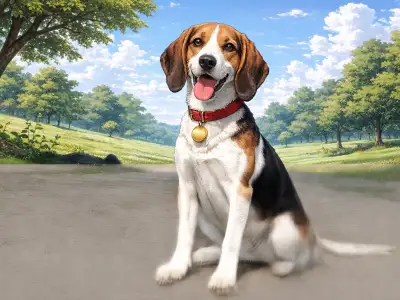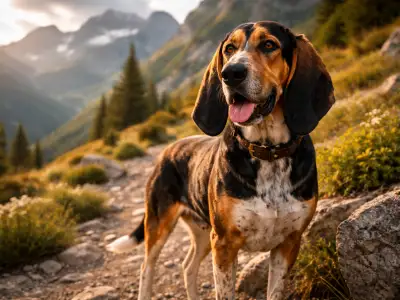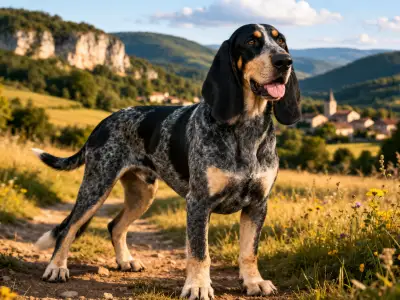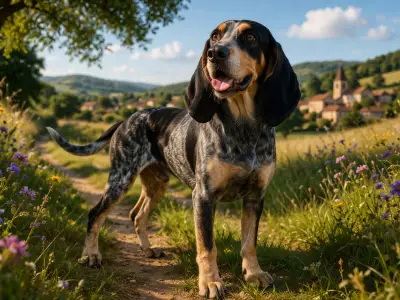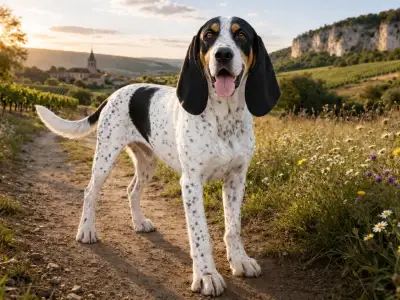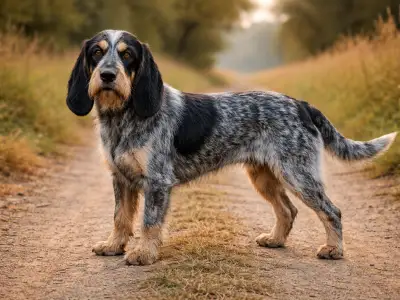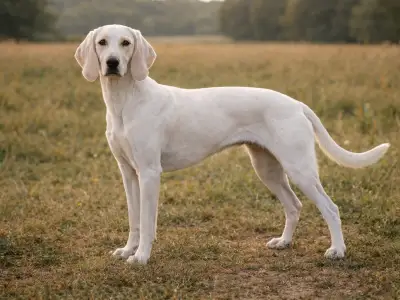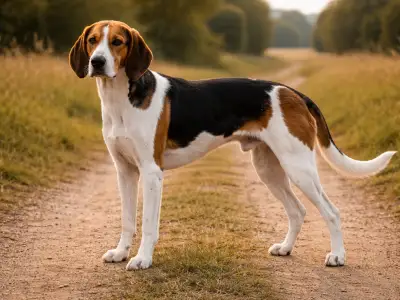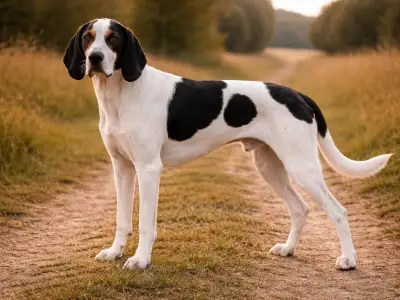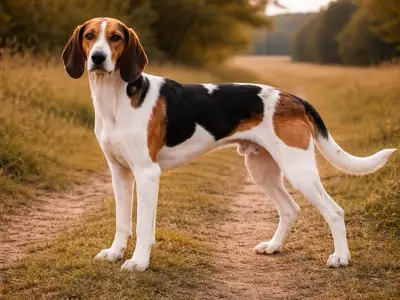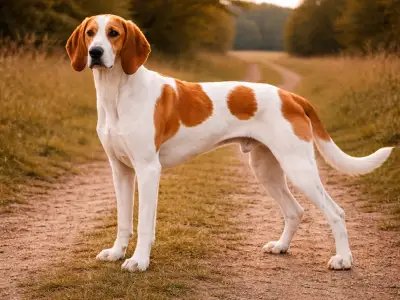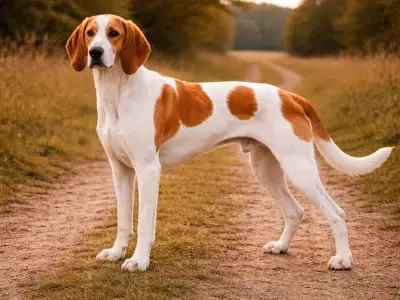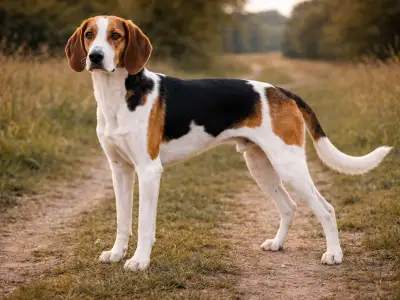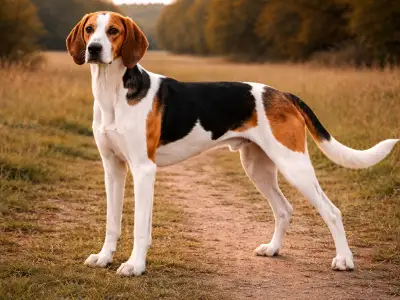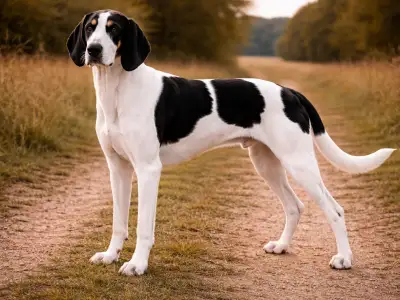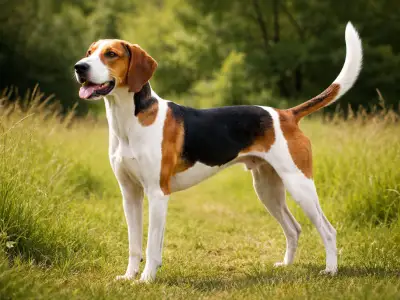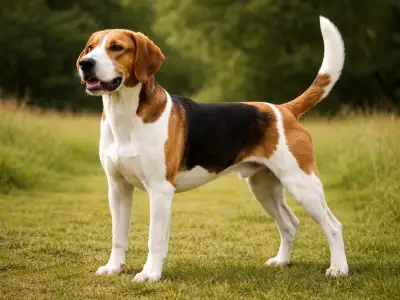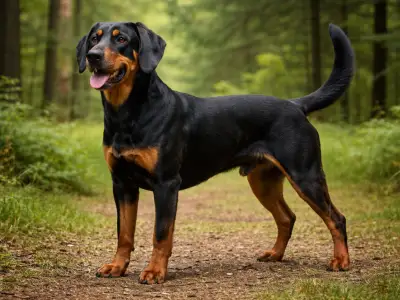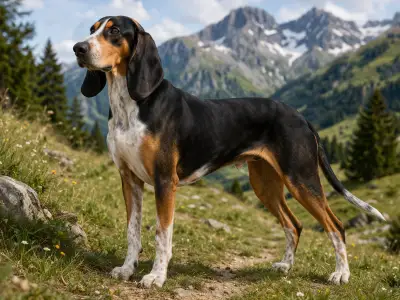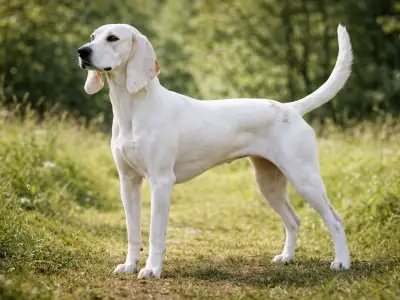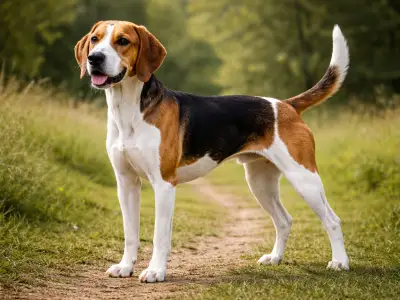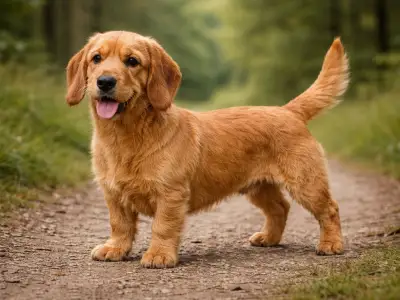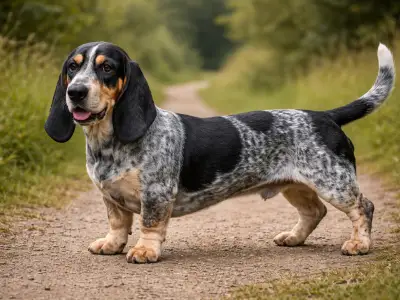
Estonian Hound
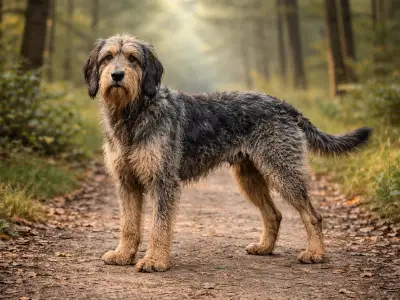
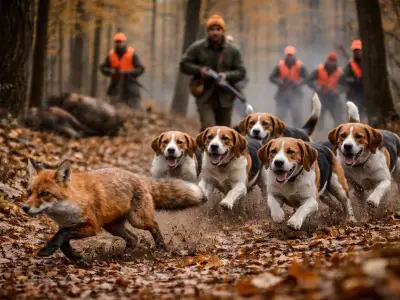
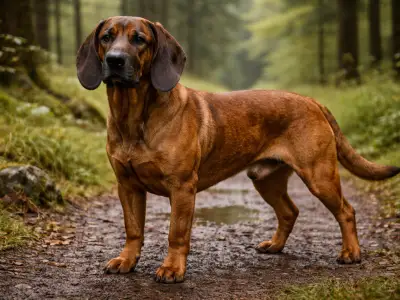
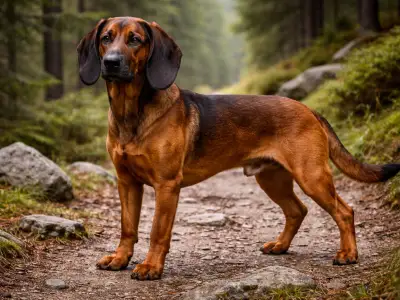
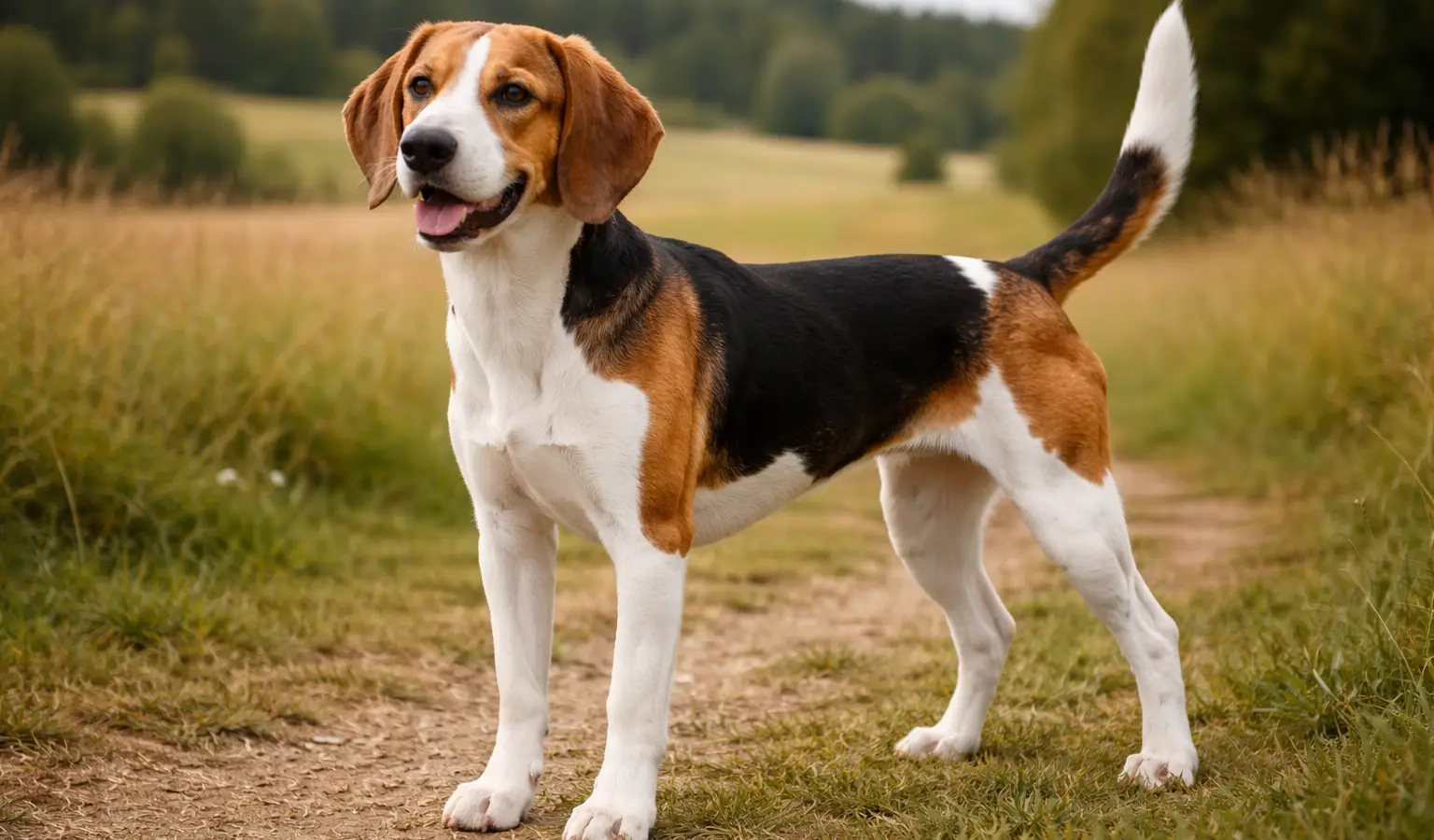
The Estonian Hound is a medium-sized hunting dog developed for hare and fox hunting. Lively, enduring and equipped with a good nose, it works steadily on the trail and can be persistent in pursuit. Generally social, it can fit well into family life but needs daily exercise, scent-based enrichment and consistent training to build reliable recall.
Life expectancy
12 – 15 years
Price
700 – 1200 €
Monthly budget
65 €
Size
Medium
Profile
Estonian Hound
Origin
Estonia
Year of origin
1954
Developed by
Estonian hunters
Size
Medium
Coat type
Short coat
Owner profile
Active owner
Hypoallergenic
No
Litter size
6
Life expectancy
12 – 15 years
Price
700 – 1200 €
Female
- Height : 42 – 47 cm
- Weight : 15 – 20 kg
Male
- Height : 45 – 52 cm
- Weight : 18 – 25 kg
Temperament & abilities
Affectionate
4/5
Calm
3/5
Independent
3/5
Intelligence
4/5
Obedience
3/5
Hunting instinct
5/5
Energy level
4/5
Good with children
4/5
Dog-friendly
4/5
Friendly with strangers
3/5
Hunting profile
Stamina
4/5
Hunting drive
4/5
Independence
3/5
Trainability
3/5
Beginner-friendly
3/5
Family compatibility
4/5
Feather game
0/5
Fur game
4/5
Underground work
0/5
Water work
0/5
These indicators help compare breeds and choose the right one for your hunting style.
Game & abilities
Estimated ability level by game type.
Budget
Purchase price
700 – 1200 €
The price may vary depending on the breeder, bloodline, and region.
Average monthly cost
65 €
Estimated average: food, healthcare, accessories, and grooming.
A balanced look at its field ability, working style, and day-to-day manageability
Is the Estonian Hound a good hunting dog?
The Estonian Hound is generally considered a good hunting dog for hunters who want a practical, energetic scent hound with a serious nose, steady drive, and more manageable size than some larger hounds. It is most coherent in game-tracking and pursuit work where nose and persistence matter more than raw power. For the right owner, Estonian Hound hunting ability can be very appealing: it tends to combine enthusiasm in the field with a temperament that is often easier to live with than harder, more extreme working hounds. The trade-off is familiar to hound owners: independent scent focus, strong prey interest, and a recall that usually needs patient, ongoing work.
In the field, the breed is valued for covering ground methodically rather than chaotically. A good Estonian Hound often works with its nose down, stays engaged on scent, and shows useful stamina across varied terrain. It is not usually the first choice for handlers wanting a highly handler-dependent dog that constantly checks in for direction. Its working style is more naturally autonomous, which is an advantage in scent work but can feel challenging for novice trainers. Courage and persistence are usually strengths, but individual dogs, bloodlines, and hunting culture can influence just how intense, vocal, or driven a given dog becomes.
For training and handling, the breed often responds best to consistency, repetition, and practical field exposure rather than heavy-handed methods. Trainability is real, but it should be understood in hound terms: many Estonian Hounds can learn well, yet when fresh scent is present, instinct may compete strongly with obedience. That makes early recall work, leash manners, and impulse control especially important. Hunters who enjoy shaping a dog over time usually appreciate this breed more than people expecting effortless off-lead reliability from the start.
- Best use cases: scent-led hunting, tracking, and active handlers who want a genuine working hound without giant size
- Main strengths: nose, stamina, determination, practical field sense, and generally versatile country-dog energy
- Main demands: recall training, daily exercise, mental work, secure management around game, and tolerance for hound independence
- Less ideal for: very sedentary homes, owners wanting a low-drive pet, or hunters seeking strong retrieve focus over scent pursuit
As a companion, the Estonian Hound can fit family life surprisingly well if its exercise and tracking instincts are taken seriously. It is often a better match for rural or semi-rural living than for a tightly constrained urban routine, though committed active owners may still do well. Overall, it suits the person comparing hunting breeds who wants a functional, honest, medium-sized hound: capable in the field, lively at home, and rewarding to handle if you respect both its nose and its independence.
Methodical scent tracking
The Estonian Hound is valued first for nose work. Rather than hunting in a frantic, wasteful style, many individuals track with a measured, efficient rhythm that helps them stay on older or more difficult scent. For hunters who want a dog that works a line carefully instead of just covering ground fast, this can be one of the breed’s most useful field qualities.
Clear voice on game
As with many scent hounds, voice matters, and the Estonian Hound is often appreciated for being audible on track. A clear, honest tongue can help the handler follow the progress of the chase, judge direction, and read the dog from a distance in thicker cover. That practical communication is a real advantage during hare or fox work.
Steady all-day stamina
This is typically a hardy hunting dog with the endurance for long outings, especially when kept lean and properly conditioned. The breed generally suits hunters who want a hound able to work for hours without constant loss of focus. Its stamina is useful not only in the field but also in daily life, because an underexercised Estonian Hound may become restless at home.
Manageable pack hound temperament
The Estonian Hound often appeals to handlers who want a true working hound without the size or sheer force of some larger scenthound breeds. Many are energetic but comparatively manageable, making them easier to handle for hunters who value control, transport convenience, and a dog that can switch from field work to family routine with sensible training.
Focused on small game
The breed is most closely associated with small-game hunting, particularly hare and fox, and that specialization is important for buyers to understand. It is not usually chosen because it can do everything; it is chosen because it can be very effective within its lane. For hunters targeting this kind of game with a scent-driven hound, that focus is a genuine strength.
Responsive with consistent handling
The Estonian Hound is not a robotic dog, but many lines are considered quite workable when training is steady and fair. In practical terms, that can mean cleaner recall, better cooperation during search patterns, and less unnecessary conflict between dog and handler. It tends to suit owners who enjoy regular training and clear routines rather than heavy-handed correction.
Who the Estonian Hound suits best
The Estonian Hound tends to suit a hunter or very active owner who enjoys a scent-driven dog rather than a naturally easy off-lead companion. This is often a good match for people who like structured outings, regular training, and a dog with honest working instincts, good stamina, and a keen nose. In a hunting context, it is generally best suited to handlers who appreciate methodical tracking and are prepared to channel excitement, voice, and prey drive with consistent education.
As a family dog, the breed can fit well in an active household that values daily exercise, clear routines, and mental work. It is usually less suitable for sedentary homes, owners who want a highly biddable dog at all times, or households expecting reliable freedom in unfenced areas without serious recall training. Apartment life may work for some individuals, but it is rarely the easiest setup if exercise, scent work, and noise management are not handled well.
- Best fit: active hunters, outdoorsy owners, families with time for training and long walks
- Less ideal: low-activity homes, inconsistent handlers, homes with limited tolerance for hound voice and scent-chasing behavior
How a practical hunting background shaped the breed seen today
Origin and development of the Estonian Hound
The Estonian Hound was developed in Estonia as a practical scenthound for local hunting conditions, especially for tracking and driving game with a clear, manageable style of work. Most breed histories describe it as a relatively modern hound, shaped in the 20th century from a mix of smaller and medium-sized hunting dogs already used in the region. Exact proportions of the founding breeds are not always presented consistently, but Finnish, Swiss, and Russian hound influence is often mentioned. What matters for owners and hunters is the result: a lighter, agile dog bred to use its nose well, work with purpose, and remain easier to handle than some larger, harder-driving hounds.
Its development was closely tied to hunting regulations and local needs. Estonia needed a dog suited to smaller game and to terrain where endurance, scenting ability, and sensible size were more useful than sheer power. That history still helps explain the breed’s present-day character. The Estonian Hound typically works as a methodical scent hound rather than an explosive, highly independent specialist. Many individuals show good persistence on a line, a strong interest in scent, and a voice that is valuable in the field, while still fitting more easily into everyday family life than some more intense pack hounds.
This background also explains the breed’s balance of strengths and limitations. The Estonian Hound often suits hunters who want a dog with genuine drive but not an excessively heavy or extreme working style. In daily life, that can translate into a dog that is pleasant at home when its exercise and nose work needs are met, but restless or distractible if under-stimulated. Training usually benefits from consistency, repetition, and real-world outlets for scenting instincts. Recall, off-lead reliability, and focus around wildlife may require more work than with breeds that were not selected so strongly for following scent.
For non-hunters, the breed’s history is still highly relevant. This is not simply a generic active family dog with a hound look; it was shaped for purposeful field use. People who enjoy tracking, long walks, structured training, and a dog that likes to use its nose may find that heritage rewarding. Those wanting a low-maintenance companion with little interest in game or scent-led behavior may find the breed less straightforward. In that sense, the Estonian Hound’s origin is not just a historical footnote; it is the clearest guide to its temperament, working style, and everyday needs.
A Baltic hunting breed
The Estonian Hound was developed in Estonia as a practical scenthound for local hunting conditions. It is generally described as a lighter, more manageable hound than some larger continental packs, with enough stamina for field work but a size that suits ordinary handling. Its identity is closely tied to hare and fox hunting rather than to purely ornamental breeding.
Selected for voice and nose
Like many scent hounds, this breed was shaped for its ability to pick up a line, follow it methodically, and announce progress with a clear voice. Selection appears to have favored dogs that could work with focus without becoming too heavy or slow. For hunters, that often means a dog valued for tracking honesty and steady pursuit more than raw speed alone.
Even-tempered but scent-driven
In daily life, the Estonian Hound is often described as friendly and more approachable at home than its serious working side might suggest. That said, it remains a hound: once a scent catches its attention, independence can show quickly. Training usually goes best with patience, repetition, and reliable recall work rather than constant correction.
Best with space and routine
This breed usually does best in a home that can offer regular outdoor time, structured exercise, and calm boundaries. A house with secure space is often easier than a small apartment, especially if the dog is under-stimulated. It can adapt to family life, but boredom, pent-up energy, and strong scent interest may create management challenges for novice owners.
Low-frills coat, real exercise needs
Coat care is straightforward in most cases, with basic brushing and routine checks after walks or hunts usually being enough. The bigger commitment is physical and mental activity. This is not simply a dog that needs a quick outing; it tends to thrive with purposeful walks, tracking-style games, and chances to use its nose in a controlled way.
Who it suits best
The Estonian Hound often suits people who genuinely enjoy living with a working-type scent hound, whether for hunting or an active rural lifestyle. It may be a good match for handlers who appreciate a vocal, nose-led dog and do not expect perfect off-leash neutrality. Those wanting a highly biddable dog focused mainly on close human guidance may prefer another type.
Practical answers for people considering the Estonian Hound as a hunting companion, active family dog, or first scenthound.
Estonian Hound FAQ: hunting, training, and daily life
Is the Estonian Hound a good hunting dog for beginners?
The Estonian Hound can be a good entry-level hunting breed for someone who wants a manageable scenthound rather than a very hard-driving or highly independent pack hound. It is generally valued for its nose, steady tracking style, and workable size, which can make handling easier in the field and at home. That said, beginner success still depends heavily on access to proper training, controlled introductions to game scent, and the handler's consistency. A novice hunter who wants a cooperative rabbit or hare hound and is willing to learn scent work may find the breed more approachable than some larger, more intense hounds.
What game is the Estonian Hound usually used for, and how does it hunt?
The breed is most commonly associated with hunting hare and other small game by scent, though actual use can vary by country, line, and local hunting culture. In practical terms, the Estonian Hound is expected to work with its nose, follow a trail with determination, and give voice while pursuing scent, which helps the hunter understand the track's progress. It is not usually thought of as a catch-and-hold dog or a versatile pointing breed. People looking for a methodical scenthound with clear hunting purpose often appreciate that style, but they should choose a dog from proven working stock if field ability is a priority.
Are Estonian Hounds easy to train, or are they too independent?
They are often trainable in a practical sense, but they are still hounds, which means scent can easily outrank your voice if training is weak. Many individuals respond well to calm repetition, clear routines, and reward-based work, especially when recall and lead manners start early. The main challenge is not usually intelligence; it is maintaining attention when the dog is following odor, movement, or fresh outdoor stimulation. Owners who expect instant off-leash reliability may be disappointed, while those who build engagement patiently and manage the environment sensibly often do better.
Can an Estonian Hound live as a family dog if it also hunts?
In the right home, yes. Many working hounds can switch well between field activity and home life when they receive enough exercise, structure, and social contact. The Estonian Hound is often described as more moderate in size and easier to live with than some heavier hunting breeds, but it is still an active scent dog that needs outlets for its instincts. Families tend to do best when they enjoy walks, training games, and secure outdoor time, rather than expecting the dog to settle happily with only brief exercise around the block.
Is the Estonian Hound suitable for apartment living?
Apartment life is possible for some Estonian Hounds, but it is rarely the easiest setup unless the owner is very committed. The real issue is usually not square meters alone; it is whether the dog gets enough daily movement, sniffing opportunities, and mental work to stay settled indoors. As a vocal scenthound, some individuals may bay or bark when excited, frustrated, or tracking scents, which can be difficult in close housing. A house with a secure yard is often more convenient, but a disciplined apartment owner with an active routine can still make it work.
How much exercise does an Estonian Hound need when it is not actively hunting?
Most Estonian Hounds need more than a simple leash walk morning and evening. On non-hunting days, they usually benefit from a combination of brisk physical exercise, longer sniff-based walks, and short training sessions that use the nose and brain. Many owners find the dog settles better after structured activity such as tracking games, recall practice, or controlled exploration in secure areas. If exercise is too limited, some hounds may become noisy, restless, or overly focused on every scent outside, so daily management matters as much as occasional big outings.
Who is the Estonian Hound best suited for, and who may struggle with this breed?
This breed often suits active owners, hunters, and people who genuinely enjoy living with a scent-driven dog rather than trying to suppress hound behavior. It can be a sensible choice for someone who wants a functional hunting companion of moderate size and is prepared for recall training, lead use, and regular outdoor time. It may be less suitable for very sedentary households, people wanting effortless off-leash freedom, or owners who are sensitive to vocalization and muddy, weather-driven routines. The best match is usually a person who likes practical dogs, steady training, and a life that includes woods, fields, and long walks.