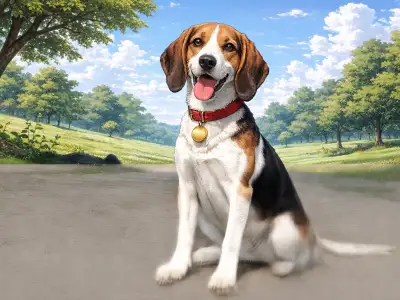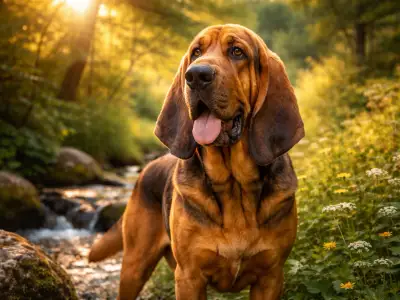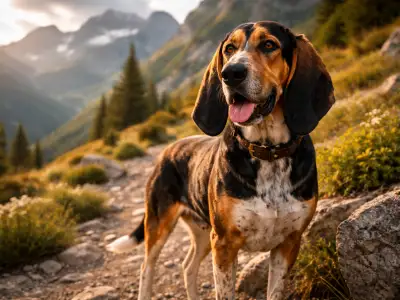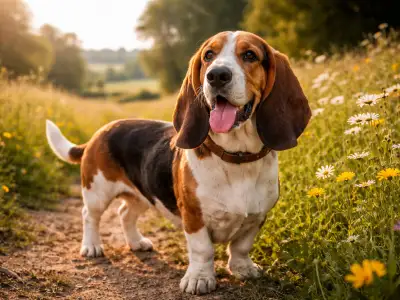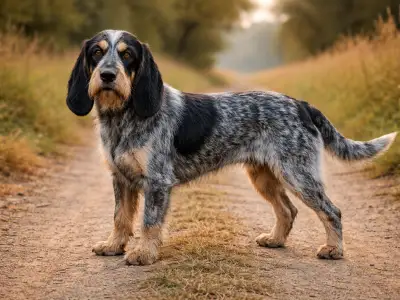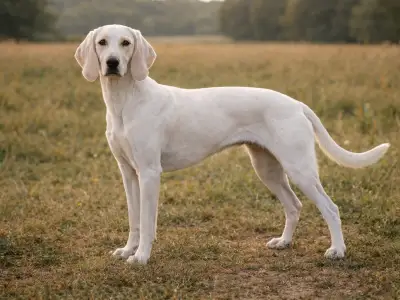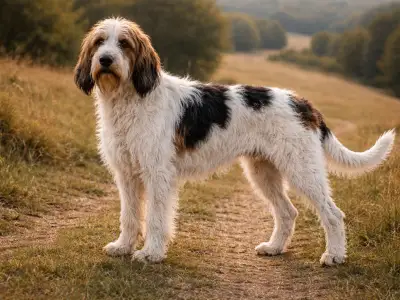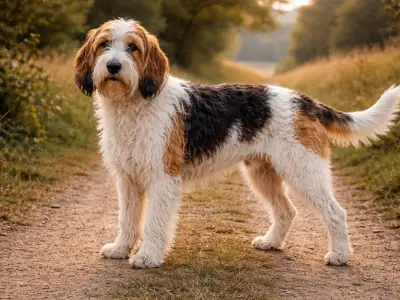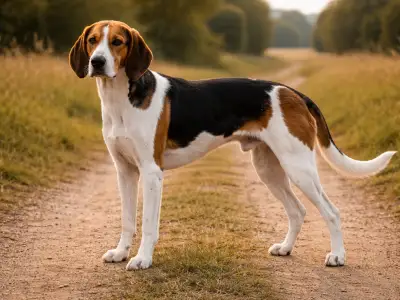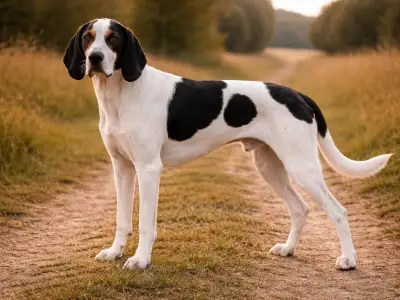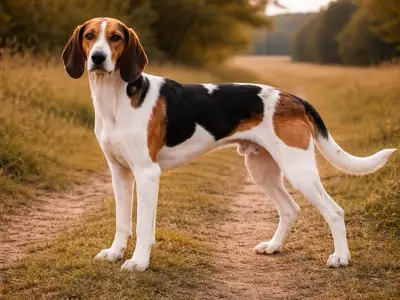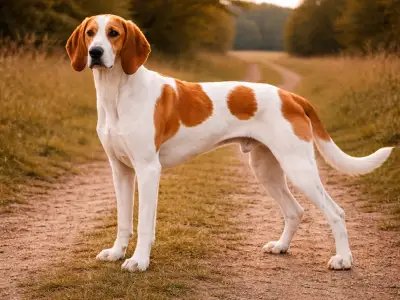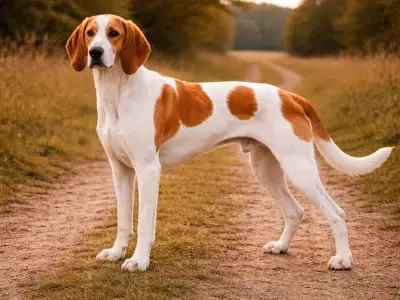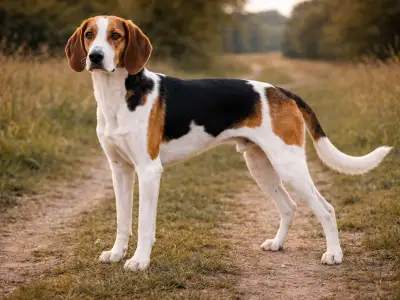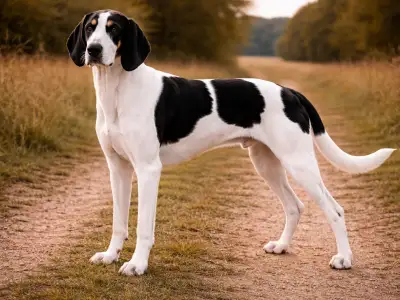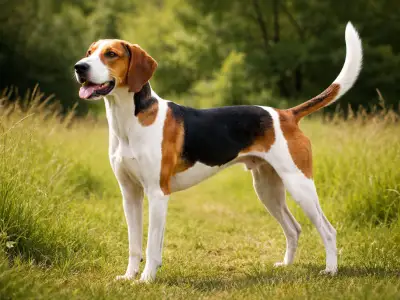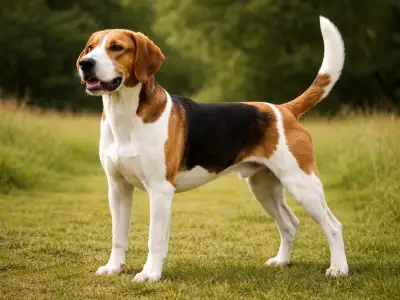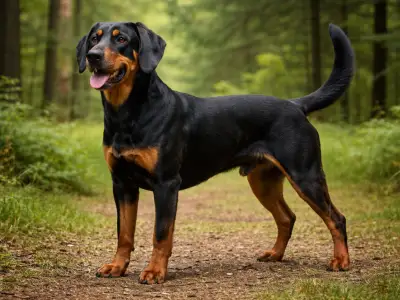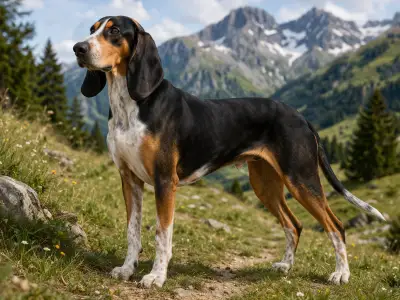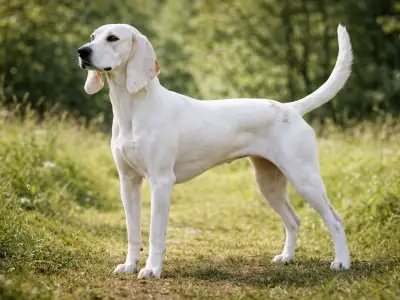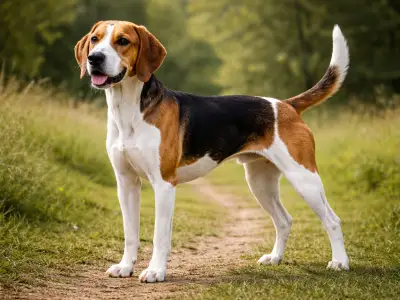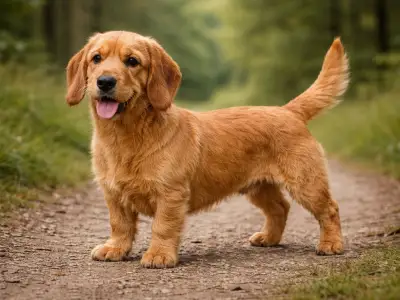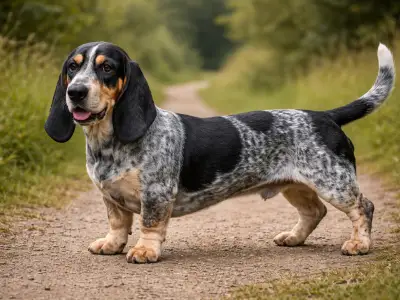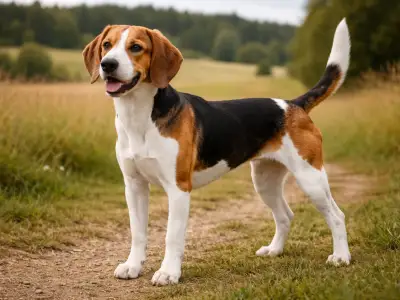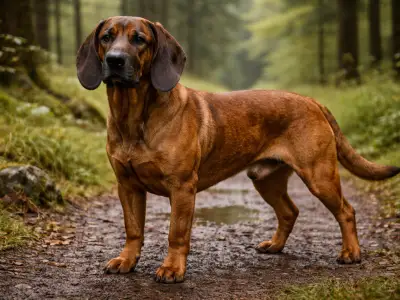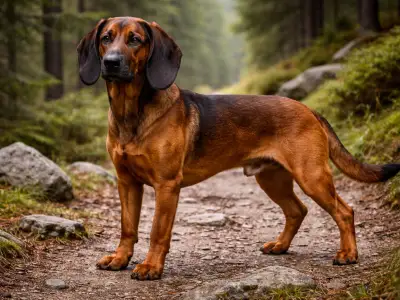
Great Anglo-French Tricolour Hound
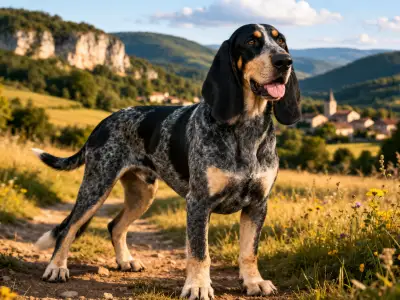
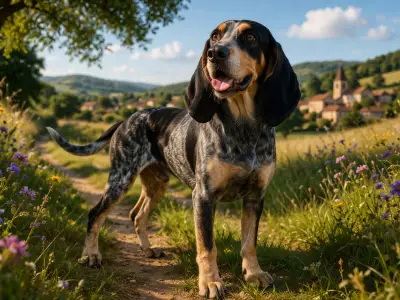
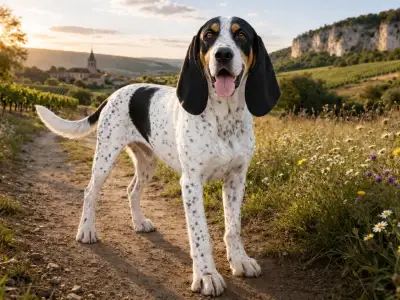
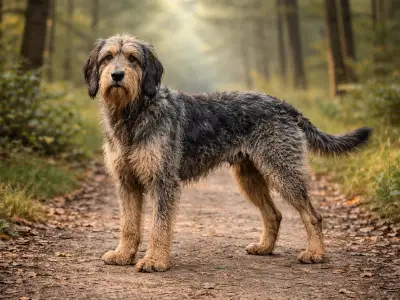
The Great Anglo-French Tricolour Hound is a large pack scenthound developed from French and English lines for big-game hunting. Powerful, enduring and equipped with an excellent nose, it is steady on the trail and highly driven once it is on scent. Very social with other dogs, it needs plenty of space, substantial daily exercise and consistent training suited to a hunting-type hound.
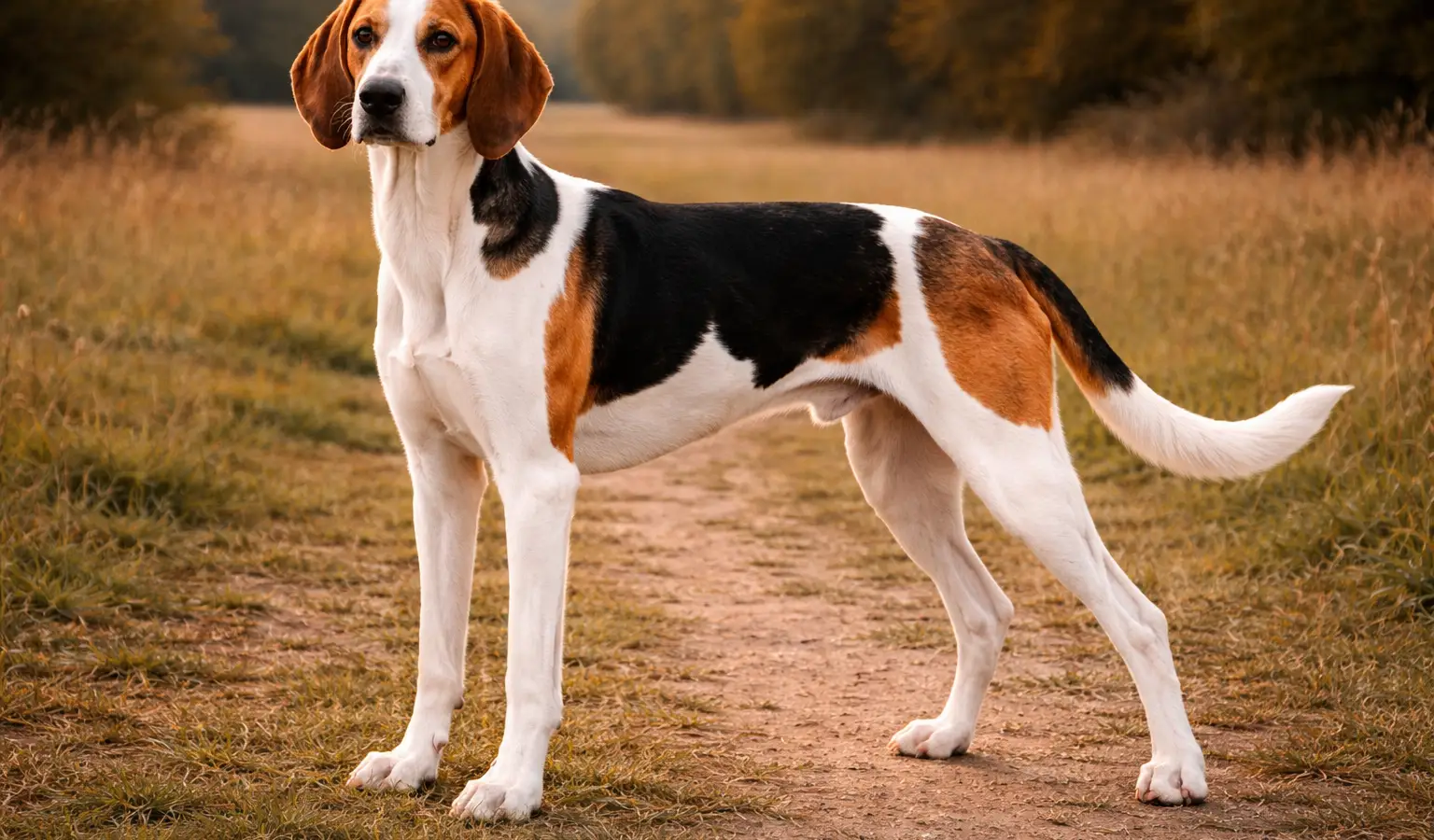
Life expectancy
10 – 12 years
Price
900 – 1600 €
Monthly budget
80 €
Size
Large
Profile
Great Anglo-French Tricolour Hound
Origin
France
Year of origin
1957
Developed by
French pack hunters
Size
Large
Coat type
Short coat
Owner profile
Experienced owner
Hypoallergenic
No
Litter size
8
Life expectancy
10 – 12 years
Price
900 – 1600 €
Female
- Height : 60 – 65 cm
- Weight : 30 – 35 kg
Male
- Height : 62 – 72 cm
- Weight : 32 – 38 kg
Temperament & abilities
Affectionate
3/5
Calm
3/5
Independent
5/5
Intelligence
4/5
Obedience
2/5
Hunting instinct
5/5
Energy level
5/5
Good with children
3/5
Dog-friendly
4/5
Friendly with strangers
2/5
Hunting profile
Stamina
5/5
Hunting drive
5/5
Independence
4/5
Trainability
3/5
Beginner-friendly
2/5
Family compatibility
3/5
Feather game
0/5
Fur game
4/5
Underground work
0/5
Water work
0/5
These indicators help compare breeds and choose the right one for your hunting style.
Game & abilities
Estimated ability level by game type.
Budget
Purchase price
900 – 1600 €
The price may vary depending on the breeder, bloodline, and region.
Average monthly cost
80 €
Estimated average: food, healthcare, accessories, and grooming.
A powerful pack hound with stamina, nose, and serious working drive
Is the Great Anglo-French Tricolour Hound a Good Hunting Dog?
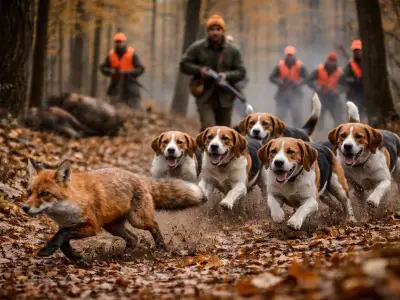
The Great Anglo-French Tricolour Hound is, above all, a genuine hunting dog, and in the right context it can be highly effective. Bred as a scent hound for pursuing game over distance, it is typically valued for its strong nose, endurance, and determination rather than close, highly handler-focused work. For hunters asking whether the Great Anglo-French Tricolour Hound is a good hunting dog, the short answer is yes for traditional trailing and pursuit work, especially where stamina, voice, and pack cooperation matter, but less so for people wanting a versatile all-purpose gundog or an easy off-switch at home.
In the field, this breed usually works with a wide search pattern and a strong instinct to follow scent with persistence. It is generally more about tracking, driving, and maintaining pursuit than about retrieve work or tight quartering near the gun. Many individuals show notable courage and resilience in difficult terrain, and the breed's physical build supports long outings over varied ground. That said, handling can be more independent than with more biddable hunting breeds. A Great Anglo-French Tricolour Hound often makes most sense for experienced hound people who understand pack dynamics, hound voice, and the realities of training reliable recall in a dog bred to commit to scent.
Its main strengths and demands are usually easy to summarize:
- Strengths: strong nose, high stamina, drive to hunt, ability to work in a pack, and confidence over long distances and challenging terrain.
- Demands: significant daily exercise, patient training, secure management, and an owner who accepts that hunting instinct may outweigh convenience.
- Less coherent use cases: casual pet homes, low-activity households, and owners wanting frequent off-leash freedom in unfenced areas.
Training should be approached with realism. This is not typically the kind of hound chosen for instant responsiveness or highly polished obedience. Trainability is real, but it often depends on consistency, early structure, and using motivation that respects the breed's instincts. Recall, lead manners, and calm behavior at home usually need deliberate work. Mental enrichment also matters, because a dog bred to search, trail, and pursue can become difficult if under-stimulated.
In everyday life, the balance between field performance and family living depends heavily on outlet. A well-managed Great Anglo-French Tricolour Hound can be steady and pleasant in a suitable home, but it is rarely a low-maintenance companion. This breed suits people who genuinely want a working scent hound and can provide space, routine, and purpose. For hunters comparing breeds, it is most coherent for traditional hound work and active rural life, not for a suburban household looking for a flexible family dog that hunts only occasionally.
Powerful cold-nose tracking
This breed is valued first and foremost as a serious scenthound, able to work scent lines with determination over difficult ground. In the field, that often means steady progress on older or more complicated trails rather than flashy, unreliable speed. For hunters who prioritize dependable tracking and scent commitment, this is one of the breed’s most practical assets.
Built for pack pursuit
The Great Anglo-French Tricolour Hound traditionally shines when hunted in a group, where its voice, drive, and line-holding ability can support coordinated pursuit. It is generally less about independent improvisation than about contributing effectively within a pack structure. That makes it especially appealing to hunters who value organized hound work over solo versatility.
Strong stamina over long outings
This is an athletic, hard-going hound developed for demanding days rather than short casual hunts. Many individuals show the endurance to keep working across varied terrain and extended chases, provided conditioning is appropriate. That stamina is a real advantage for serious hunting, but it also means the breed usually needs far more daily exercise and purpose than a typical companion dog.
Bold drive on large game
The breed is commonly associated with pursuing larger quarry, and its working style tends to reflect that: forward, committed, and energetic. Hunters often appreciate this courage and persistence when game is moving strongly or terrain is testing. At the same time, that intensity can make the breed a better fit for experienced handlers than for owners seeking an easy, low-pressure gundog.
Focused once on scent
When a trail is live, many Great Anglo-French Tricolour Hounds become highly absorbed in the job. That concentration is useful in hunting because it helps the dog stay committed instead of constantly checking back for guidance. The trade-off is obvious in daily life: recall and off-lead control may require patient training, and distractions from game scent should never be underestimated.
Best with experienced hound handling
Trainability here is usually most rewarding when the handler understands scent hounds and works with the breed’s instincts instead of against them. It can learn pack routines, field manners, and consistent cues well, but it is not usually the most biddable choice for people wanting instant compliance. Clear structure, repetition, and practical hunting exposure tend to bring out its best qualities.
Who this hound suits best
The Great Anglo-French Tricolour Hound is usually best suited to an experienced hunting home that values a true pack hound: athletic, driven by scent, and happiest with a job that uses nose, stamina, and voice. It tends to fit hunters pursuing hare, deer, or wild boar in country where long chases and teamwork matter. Outside the field, it can suit an active rural owner who understands hound independence and can provide serious daily exercise, secure space, and patient recall training.
It is often a weaker match for first-time dog owners, highly urban households, or people wanting a highly biddable off-lead companion for casual walks. This breed may find repetitive pet-dog routines frustrating if its hunting instincts are strong, and many individuals are not naturally easy apartment dogs. Families can live well with one if they enjoy an outdoors-focused lifestyle, accept a vocal scent hound temperament, and are realistic about management around wildlife and roaming opportunities.
How a French pack hound shaped by English influence became the driven, far-ranging scenthound seen today
Origins of the Great Anglo-French Tricolour Hound
The Great Anglo-French Tricolour Hound was developed in France as a large pack scenthound for hunting big game, especially deer and wild boar, with some lines also used on other quarry depending on region and tradition. As its name suggests, the breed reflects a deliberate blend of old French hound families and English Foxhound influence. That crossbreeding was aimed less at appearance than at working qualities: stamina, pace, a carrying voice, and the ability to hunt in a coordinated pack over wide country.
The French side of its heritage is linked to powerful regional hounds valued for nose, persistence, and the style of collective hunting known as chasse à courre or related pack work. The English contribution likely strengthened speed, drive, and a more forward-moving way of covering ground. Exact historical formulas can vary in the sources, and individual lines were not always developed in a perfectly uniform way, but the general purpose is clear: create a substantial, athletic hound able to pursue game energetically while staying functional within a pack.
That history helps explain the breed’s modern temperament. The Great Anglo-French Tricolour Hound is typically bred to work with other dogs, follow scent with determination, and keep going for long periods rather than offering constant handler-focused responsiveness. In practical terms, this often means a dog with serious energy, a strong trailing instinct, and a loud, expressive voice. For hunters, those are strengths. For everyday family life, they can be demanding traits unless the dog has enough exercise, structure, and secure space.
Its development also explains why this is not usually the easiest hound for casual ownership. Many individuals are affectionate and sociable, especially when well raised, but independence is part of the package. Training often goes best with consistency, repetition, and realistic expectations rather than a search for instant obedience. The breed tends to suit experienced houndsmen, active rural homes, or people who genuinely understand working scenthounds. In the right context, its history is not just background detail: it is the key to understanding its endurance, pack sense, and strong hunting focus today.
Built from French and English hound lines
The Great Anglo-French Tricolour Hound comes from the long tradition of crossing French pack hounds with English Foxhound-type blood to produce a fast, enduring scenthound for large-game hunting. As its name suggests, this is not a toy version of a hound but a substantial working dog developed with function, voice, and stamina in mind.
Selected for pack work
This breed was shaped to work in a coordinated pack rather than as a highly handler-focused companion dog. Breeders generally prioritized nose, drive, rhythm on a trail, and the ability to keep going over difficult ground. That history still matters today: many individuals are social with other dogs, but they may be less naturally attentive than breeds selected for close obedience.
A serious scent hound temperament
In daily life, the Great Anglo-French Tricolour Hound often combines an even, hound-like nature with strong independence once a scent catches its interest. Many are pleasant, steady dogs, but they are rarely effortless pets for first-time owners. Recall, loose-lead walking, and impulse control can require patient, consistent training, especially in distracting outdoor environments.
Needs room and real exercise
This is usually a poor match for a sedentary household or a small urban routine with only brief walks. The breed tends to do best with space, regular long outings, and structured physical activity that lets it use both body and nose. A secure area is important, because a determined scenthound may follow scent rather than household rules.
Low-frills coat, high daily demand
Coat care is generally straightforward, with routine brushing and basic ear, nail, and skin checks usually covering most needs. The bigger commitment is not grooming but lifestyle management. This breed commonly needs time, conditioning, and thoughtful handling to stay balanced, especially if it is not actively used for hunting or other scent-based work.
Best suited to experienced hound people
The Great Anglo-French Tricolour Hound is often best appreciated by hunters or active owners who understand pack hounds and accept their limits as well as their strengths. For the right person, it can be a robust, capable, melodious working companion. For households wanting an easy off-switch and close day-long attentiveness, it may feel too specialized.
Practical answers about work, training, home life, and owner fit
Hunting and daily life FAQ
Is the Great Anglo-French Tricolour Hound a good hunting dog for most people?
The Great Anglo-French Tricolour Hound was developed as a working scenthound, so it tends to make the most sense for people who genuinely want a hunting partner rather than a mainly decorative pet. It is generally better suited to experienced handlers, especially those familiar with pack hounds, strong scent drive, and independent decision-making in the field. This breed can be very capable on game when it comes from solid working lines and receives proper exposure, conditioning, and training. For a novice owner with no hunting plans, its drive, voice, and need for purpose may feel like more dog than expected.
What kind of hunting is the Great Anglo-French Tricolour Hound best suited for?
This breed is primarily associated with scent work and traditional hound hunting, where stamina, nose, and persistence matter more than close off-lead obedience. It is often discussed as a dog for larger game and for work in packs, although exact suitability can vary with local hunting style, bloodline, and training. In practical terms, it tends to suit hunters who value a hound that can cover ground, follow scent with determination, and work with other dogs. Someone looking for a versatile gundog that retrieves to hand or works at very close range would usually be looking at a different type of breed.
Are Great Anglo-French Tricolour Hounds easy to train?
They are trainable, but they are not usually described as easy in the same way as highly biddable companion breeds. A Great Anglo-French Tricolour Hound often responds best to calm, consistent handling, clear routines, and plenty of repetition in real environments rather than endless drilling at home. Because scent can quickly outweigh handler interest, recall and off-lead reliability may remain a management issue, especially outside secure areas. Early socialization, lead manners, kennel or home routines, and cooperative handling are important, but owners should still expect an independent hound mind.
Can a Great Anglo-French Tricolour Hound live as a family dog?
It can, but usually in the right household rather than in just any family setting. Many scenthounds are affectionate and sociable in their own way, yet daily life is easier when the family understands that this is an active working breed with a strong nose, a loud voice, and a real need for movement. It may do well with older children and in homes that enjoy outdoor routines, but constant indoor confinement rarely suits it. Families wanting a highly obedient, low-maintenance dog for suburban life may find this breed demanding.
Does this breed need a large yard, or can it live in a house?
A house is possible if the dog gets enough structured exercise and sensible management, but small-space living is not the easiest setup for this breed. A large, secure outdoor area helps because the Great Anglo-French Tricolour Hound is energetic, athletic, and very motivated by scent, which can make wandering a real concern if fencing is weak. The key point is not just square footage indoors, but whether the owner can provide daily outlets, noise tolerance, and safe containment. Apartment living may be difficult due to exercise needs and the breed's characteristic hound voice.
How much exercise does a Great Anglo-French Tricolour Hound need when it is not hunting regularly?
Without regular hunting, this breed usually still needs a substantial amount of physical exercise and scent-based mental activity. A short walk around the block is unlikely to be enough for most individuals, especially young adults from active working stock. Long walks, controlled tracking games, structured free running in safe enclosed areas, and steady routine help prevent frustration and restlessness. Owners should also remember that mental fatigue from sniffing and searching can be just as useful as pure mileage, but it does not replace consistent daily movement.
Who is the Great Anglo-French Tricolour Hound best suited to?
This breed tends to suit dedicated hound people, active rural owners, and hunters who appreciate a traditional scent hound rather than expecting a highly handler-focused pet. It is often a better match for someone with space, time, secure fencing, and realistic expectations about training, vocalization, and prey drive. First-time owners can find it challenging unless they have strong support and a lifestyle built around exercise and management. In the right hands, it may be a serious, capable working companion; in the wrong setup, it can become difficult to live with simply because its instincts are so strong.