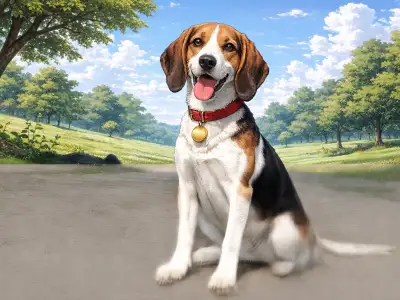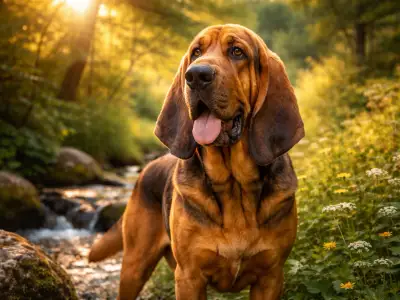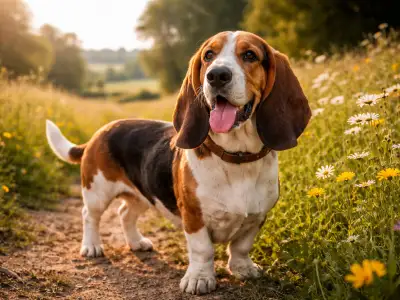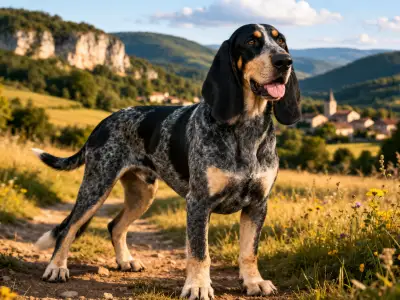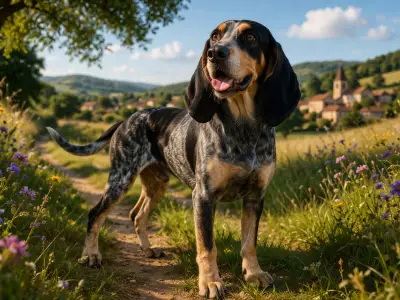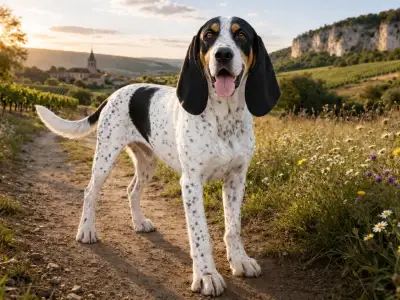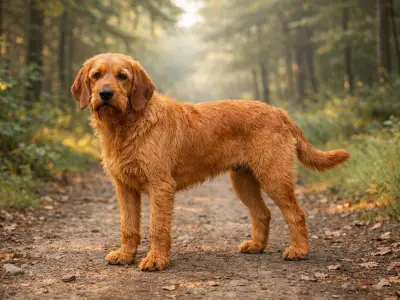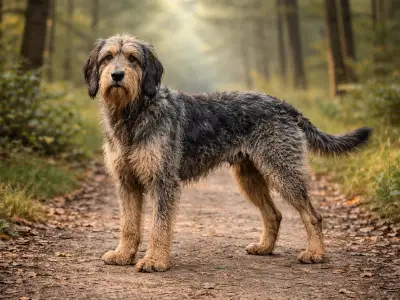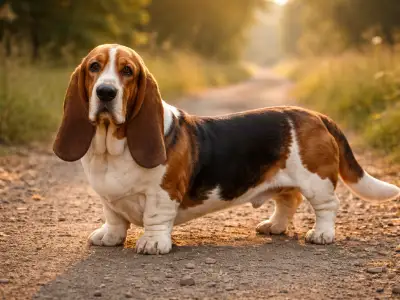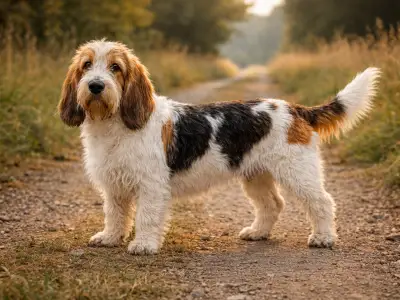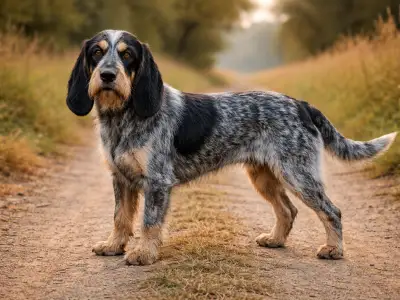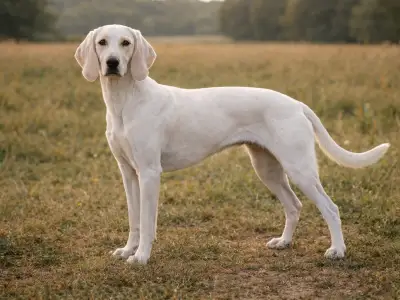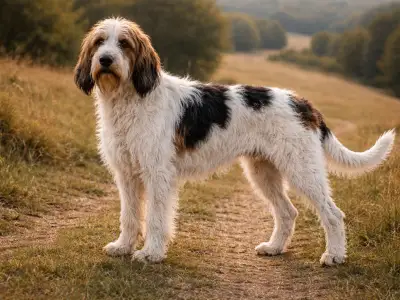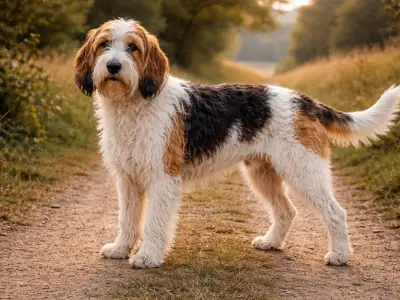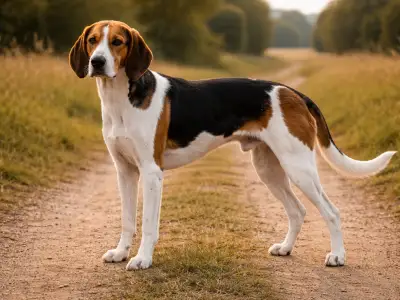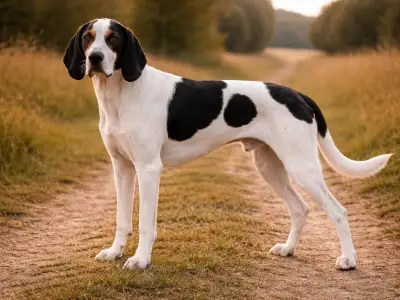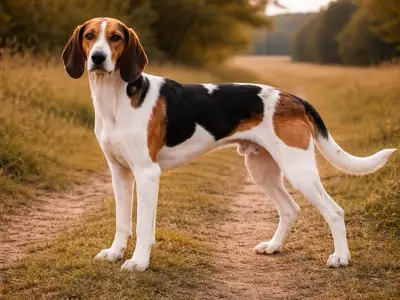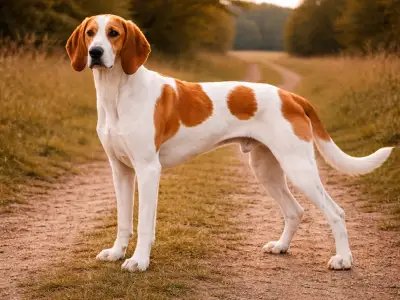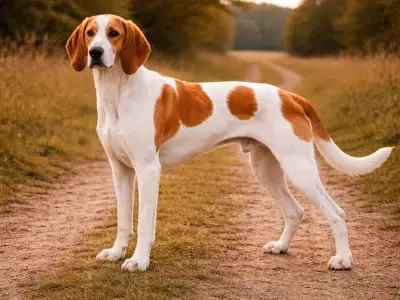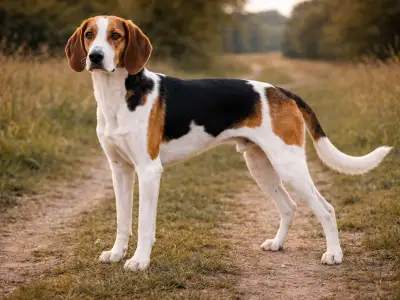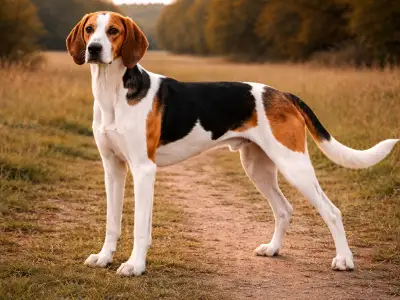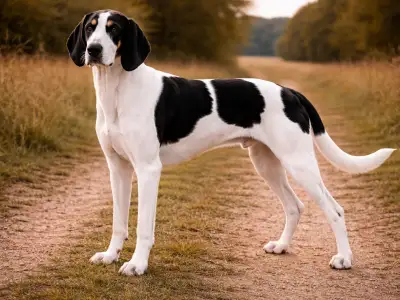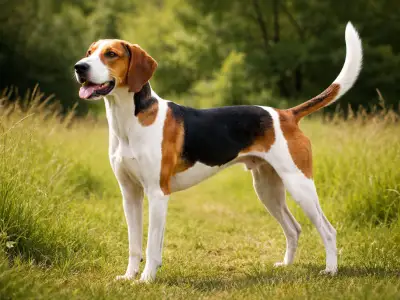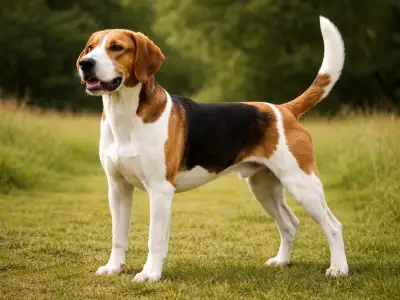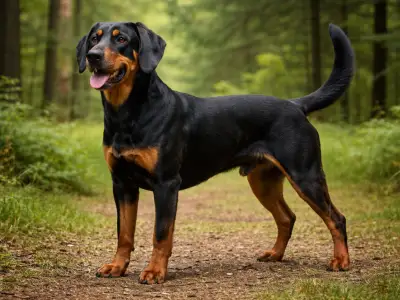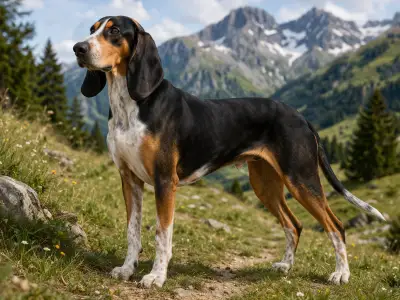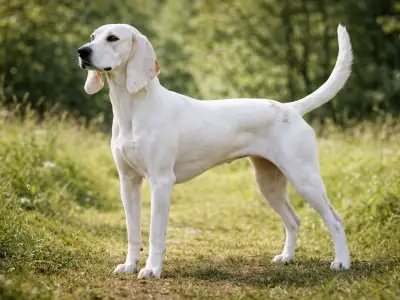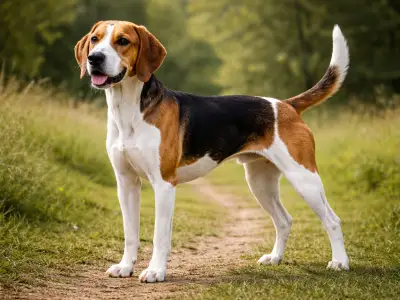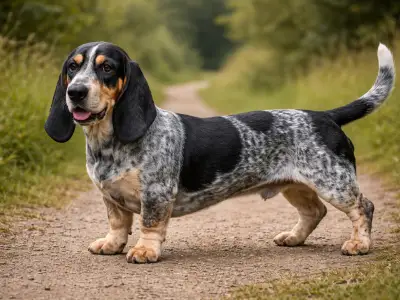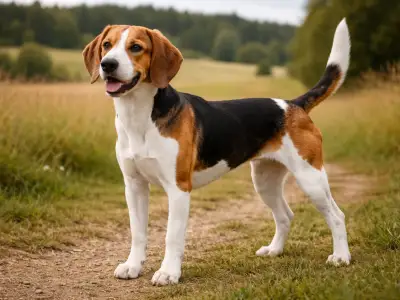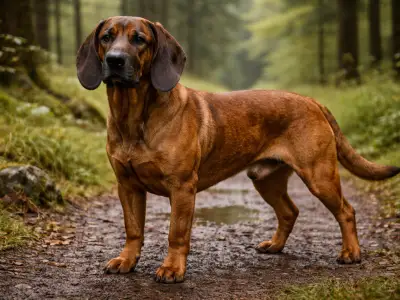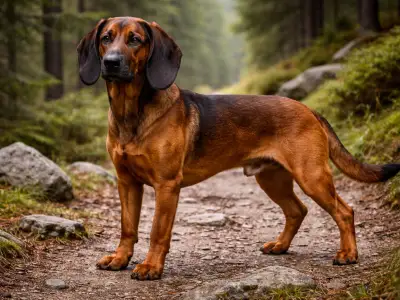
Bruno Jura Hound
The Bruno Jura Hound is a Swiss scenthound with a fine nose and strong drive, valued for persistence on the trail. Often used for hunting and tracking wounded game, it is social in a pack but needs plenty of exercise and consistent training to manage its instincts.
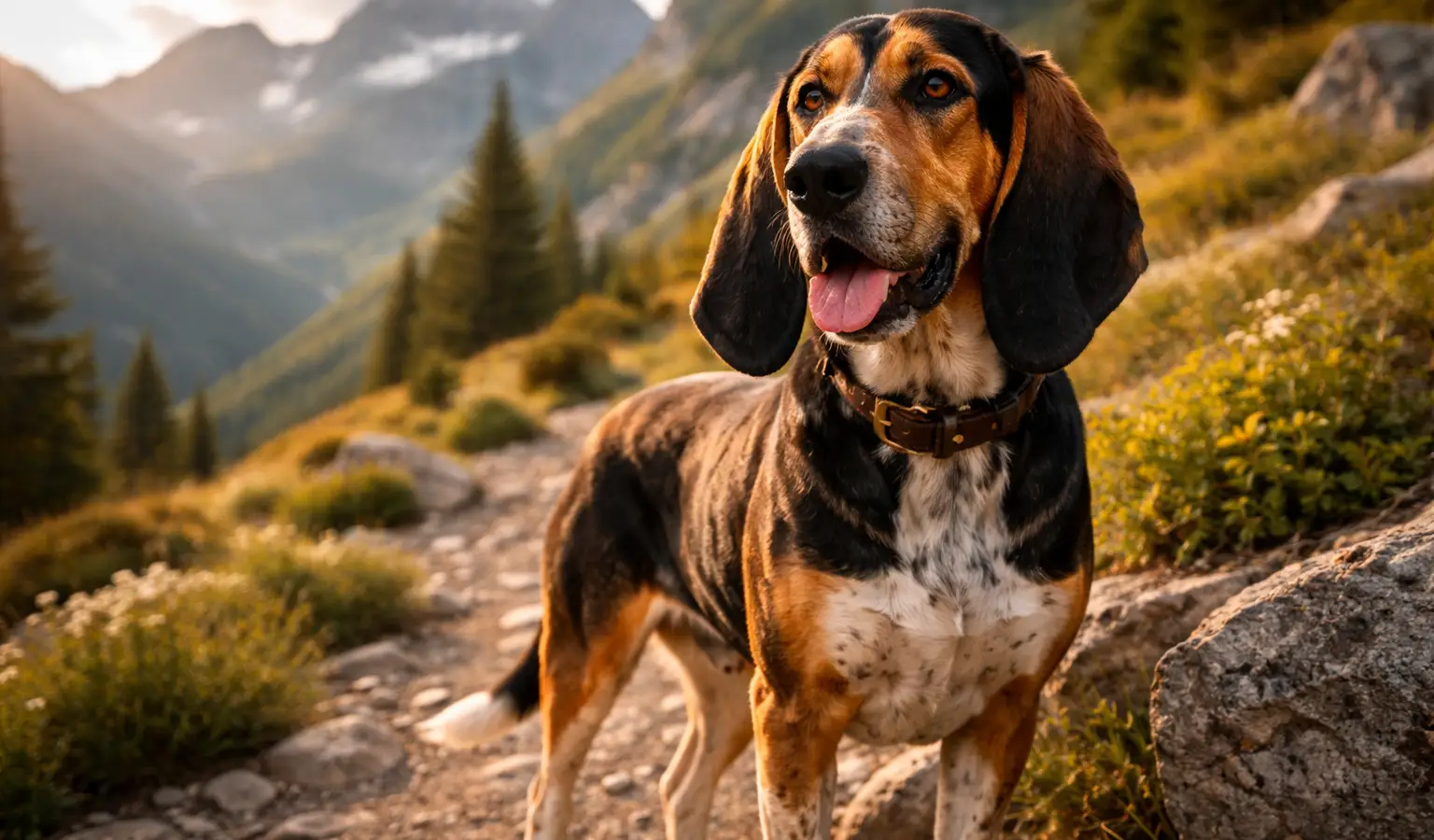
Life expectancy
11 – 13 years
Price
800 – 1400 €
Monthly budget
65 €
Size
Medium
Profile
Bruno Jura Hound
Origin
Switzerland
Year of origin
2002
Developed by
Swiss hound breeders
Size
Medium
Coat type
Short coat
Owner profile
Active owner
Hypoallergenic
No
Litter size
6
Life expectancy
11 – 13 years
Price
800 – 1400 €
Female
- Height : 47 – 57 cm
- Weight : 18 – 24 kg
Male
- Height : 49 – 59 cm
- Weight : 20 – 26 kg
Temperament & abilities
Affectionate
3/5
Calm
3/5
Independent
4/5
Intelligence
4/5
Obedience
3/5
Hunting instinct
5/5
Energy level
4/5
Good with children
3/5
Dog-friendly
4/5
Friendly with strangers
3/5
Hunting profile
Stamina
4/5
Hunting drive
4/5
Independence
4/5
Trainability
3/5
Beginner-friendly
2/5
Family compatibility
3/5
Feather game
0/5
Fur game
4/5
Underground work
0/5
Water work
0/5
These indicators help compare breeds and choose the right one for your hunting style.
Game & abilities
Estimated ability level by game type.
Budget
Purchase price
800 – 1400 €
The price may vary depending on the breeder, bloodline, and region.
Average monthly cost
65 €
Estimated average: food, healthcare, accessories, and grooming.
A capable scent hound for hunters who value nose, voice, and steady pursuit
Is the Bruno Jura Hound a good hunting dog?
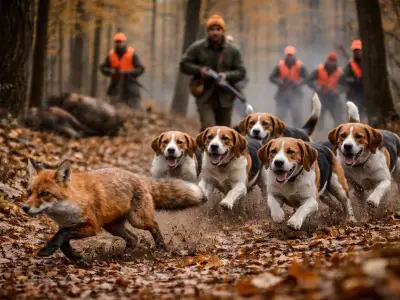
The Bruno Jura Hound is generally considered a very capable hunting dog for scent-driven work, especially where a cold nose, persistence, and an honest hound voice matter more than flashy speed or versatile retrieve work. This is a traditional scenthound type built to follow game methodically, often with real determination in difficult terrain. For hunters asking whether the Bruno Jura Hound is good at hunting, the short answer is that it can be excellent in the right role: tracking and pursuing game by scent rather than acting like a multi-purpose pointing or retrieving breed.
In the field, the breed is typically valued for its nose, stamina, and serious working style. A good Bruno du Jura tends to hunt with concentration and purpose, working scent carefully instead of ranging in a loose, casual pattern. That makes it especially coherent for hunters who want a dog that can account for game methodically in woods, hills, and other scenting environments where patience matters. Its courage and persistence can be real assets, but those same qualities can also mean the dog may become very committed once on a line, so handling and recall should never be treated as secondary.
Training demands are moderate to high in practical terms. The breed is not usually described as hard-working in a blind, obedient way; it often does best with consistent structure, repetition, and early exposure to the kind of work expected from it. A Bruno Jura Hound hunting well usually reflects both instinct and education. Reliable handling, calm kennel manners, lead work, and a realistic recall under distraction all need time. Owners expecting instant off-switch behavior or highly biddable, handler-focused responses may find the breed more independent than some other hunting dogs.
- Best fit: scent hunting, tracking, and steady pursuit with a hound that uses its nose with conviction
- Less ideal for: owners wanting a close-working, highly controllable all-round gundog or a natural retriever
- Daily life: active, vocal at times, and usually better suited to homes that can provide regular exercise, structure, and mental work
As a companion, the Bruno Jura Hound can be pleasant and affectionate, but everyday life is easiest when its energy level and working instincts are taken seriously. This is usually a better match for hunters, active rural owners, or experienced hound people than for someone wanting a low-maintenance family pet. Compared with some broader-purpose hunting breeds, it offers strong scent hound abilities and authentic field character, but it also asks for patience, secure management, and enough work to keep that hunting temperament balanced at home.
Cold-nose tracking
The Bruno Jura Hound is valued first for scent work. It is generally appreciated for a deep, methodical nose that can stay on older ground scent with real determination, especially in rough country where fresher lines may be broken or confusing. For hunters who prioritize reliable trailing over sheer speed, this is one of the breed's most practical strengths.
Steady pursuit style
Rather than hunting in a frantic, wasteful way, many Bruno Jura Hounds work with a measured rhythm that helps them keep contact with the line. That controlled style can be especially useful on hare, fox, or roe deer depending on local use, because the dog often pressures game consistently without burning out too early.
Clear hound voice
A strong, expressive voice on trail is a major advantage in a traditional scent hound, and the Bruno du Jura is often noted for it. Good vocal reporting helps the handler follow the progress of the chase, judge line confidence, and understand changes in tempo. In wooded or hilly ground, that audible contact can be especially valuable.
Comfort in hard terrain
This breed is closely associated with mountainous and broken country, and that background shows in the way many individuals handle slopes, forests, and uneven ground. It is not just about endurance but also about balance and practical movement. Hunters covering difficult terrain may find the breed better suited than heavier, less agile hounds.
Long-working stamina
The Bruno Jura Hound typically suits hunts that ask for hours of focused effort rather than short bursts. Its strength is sustained work: searching, sorting scent, and continuing the chase with concentration. That makes it appealing to active hunters, but it also means daily life should include enough exercise and mental occupation to avoid frustration.
Best for scent-hound handlers
This is usually not the easiest choice for someone expecting instant obedience at a distance. Its hunting value comes from independence, nose-led decision-making, and persistence on game. In experienced hands, those traits are assets; in casual homes, they can feel demanding. The breed tends to suit owners who understand hound training and can channel drive without constant conflict.
Who the Bruno Jura Hound suits best
The Bruno Jura Hound tends to suit an experienced, active owner who genuinely enjoys living with a driven scenthound rather than simply admiring one. This is often a good fit for hunters who value nose work, stamina, and a dog that can stay focused on scent in rough country. Outside hunting, the breed usually does best with a household that can offer long daily exercise, structured routines, and calm but consistent training. Many individuals are affectionate at home, but they are rarely low-maintenance companions.
Less suitable profiles include first-time dog owners looking for easy recall, very tidy indoor living, or a dog that is content with brief walks and little mental work. A Bruno du Jura may also frustrate owners who want constant off-lead freedom in unfenced areas, since strong scent drive can outweigh responsiveness if training and management are not solid. In practical terms, this breed often fits best with country or semi-rural homes, active handlers, and people who appreciate independent working temperament rather than expecting eager-to-please obedience at all times.
How an old Swiss scent hound became the steady, persistent hunting dog seen today
Origin and development of the Bruno Jura Hound
The Bruno Jura Hound, often referred to as Bruno du Jura, belongs to the old family of Swiss scent hounds developed for following game by nose across difficult country. Its roots are generally linked to the Jura Mountains along the Swiss-French border, where hunters needed a hound that could work methodically in wooded hills, broken ground, and changing scent conditions. As with many long-established regional hunting dogs, the exact early timeline is not perfectly documented, but the breed is widely understood to descend from old continental scenthound stock shaped over generations by practical hunting needs rather than by fashion.
That history helps explain the breed’s modern character. The Bruno Jura Hound was selected above all for nose, endurance, and determination on a trail. Instead of explosive speed alone, hunters valued a dog able to stay on scent, think through cold or complicated tracks, and keep working with consistency. This often goes with a temperament that is serious, purposeful, and independent when engaged in scent work. In daily life, many individuals are affectionate and even-tempered, but they usually retain the instincts of a true working hound and tend to do best with owners who understand that scent can easily outrank obedience in exciting environments.
Its development as a regional hunting hound also shaped its handling profile. The breed was not created primarily to perform close, constant eye contact work like some herding or gundog breeds. Instead, it was bred to use initiative at distance while remaining useful to the hunter through voice, persistence, and reliability on a track. For that reason, trainability is often real but somewhat hound-like: patient, consistent education usually works better than heavy pressure, and recall may require serious practice. Prospective owners should see the breed as an active scent specialist, not simply as a generic medium-sized family dog.
In practical terms, the Bruno du Jura tends to suit people who appreciate traditional scenthound qualities.
- Strengths: strong nose, stamina, commitment on a trail, and a typically honest working style.
- Possible limitations: independence, vocal tendency, and a need for meaningful exercise and scent-based outlets.
- Best fit: hunters, experienced hound owners, or very active homes able to provide structure, outdoor time, and patient training.
Seen in that context, the breed’s past is not just a historical footnote. The Bruno Jura Hound’s origin in mountain hunting country still shows in its balanced but driven nature: steady rather than flashy, capable rather than ornamental, and usually happiest when its nose and endurance have a real job to do.
Swiss scent-hound roots
The Bruno Jura Hound belongs to the old Swiss hound tradition and is associated with the Jura mountains, a region long linked with hunting by nose over difficult ground. As with many regional hounds, its modern identity was shaped by practical field use first, with appearance remaining secondary to scenting ability, endurance, and a clear, efficient hunting style.
Bred to follow scent
This is a classic scenthound built to work with its nose rather than by sight. Hunters have valued dogs of this type for their ability to stay on a line, sort out older scent, and keep moving with determination. That heritage often shows in daily life too: once engaged by an interesting smell, a Bruno du Jura may seem very focused and independent.
Steady but not soft
Many Bruno Jura Hounds come across as even-tempered, serious, and affectionate with their people, but they are not usually the most eager-to-please of all breeds. Their hound independence can make training feel selective rather than automatic. They often respond best to calm, consistent handling, clear routines, and plenty of practical reinforcement instead of repetitive drilling.
Needs room and purpose
This breed tends to suit active owners better than casual pet homes. A short walk around the block is rarely enough for a dog developed for tracking over distance. Daily life is usually easier when the dog has several outlets for nose work and movement.
- Long walks on varied ground
- Tracking games or scent work
- Secure spaces, because following scent can override recall
Best with experienced handling
The Bruno Jura Hound can be a rewarding partner for hunters and dog owners who appreciate hound behavior, but it may be less straightforward for first-time handlers. Its drive, voice, and tendency to work things out for itself mean management matters. Reliable recall, lead manners, and impulse control usually require patient practice, especially in areas full of wildlife scent.
Practical care, high daily demand
Coat care is generally uncomplicated, which is one of the easier parts of living with this breed. The bigger commitment is everyday management: exercise, mental engagement, and sensible containment. Long, pendulous ears also deserve routine checks after wet walks, brush, or hunting outings, as hounds working in rough cover can pick up dirt and debris more easily.
Practical answers about hunting ability, training, exercise, family life, and owner fit
Bruno Jura Hound hunting and daily life FAQ
Is the Bruno Jura Hound a good hunting dog for modern hunters?
The Bruno Jura Hound is generally regarded as a serious scent hound with a strong nose, stamina, and the persistence needed for tracking game over varied terrain. It tends to suit hunters who appreciate a dog that works with its nose first and may stay focused on scent rather than constantly checking in. In practical terms, that can be a real strength on a track, but it also means recall and handling need patient training. It is often a better match for someone who values traditional hound work than for a hunter wanting a highly handler-dependent style. Line, upbringing, and local hunting practice can influence how much drive, voice, and independence an individual dog shows.
How easy is a Bruno Jura Hound to train for hunting and everyday obedience?
Training is usually best approached with calm consistency, repetition, and rewards the dog genuinely values, rather than heavy pressure. Like many scent hounds, the Bruno Jura Hound can understand tasks well but may appear selective when an interesting scent competes with the handler. That does not necessarily mean poor intelligence; it often reflects hound independence and strong environmental focus. Early work on recall, lead manners, settling indoors, and response around wildlife is especially important if the dog will live as both a hunter and a family companion. Short, regular sessions usually work better than drilling, and many owners find that reliable obedience outdoors takes more time than basic training at home.
Can a Bruno Jura Hound live happily as a family dog, or is it only for hunting homes?
A Bruno Jura Hound can live well in a family setting if its exercise, scenting needs, and structure are taken seriously. Many hounds are affectionate at home and enjoy close contact with their people, but they are rarely low-effort pets. A dog from working lines may need substantial daily activity and mental engagement to stay settled and pleasant indoors. Families tend to do best when they enjoy outdoor time, can manage a vocal scent hound, and are realistic about training around distractions. For a very quiet, highly biddable, easygoing household dog, another breed may sometimes be simpler.
How much exercise does a Bruno Jura Hound need when it is not actively hunting?
This breed usually needs more than a couple of short walks around the block, especially if it is young, fit, or from active working stock. Daily life is often easiest when the dog gets a mix of physical exercise and nose work, such as long walks, controlled tracking games, scent trails, and time to move purposefully outdoors. Simply letting the dog into a yard is rarely enough on its own. Without enough activity, some hounds may become noisy, restless, or harder to manage on lead and around scent. The exact amount varies by age and temperament, but most owners should expect a clearly above-average exercise requirement.
Is the Bruno Jura Hound suitable for apartment living or city life?
Apartment living is possible in some cases, but it is not usually the most natural fit for a Bruno Jura Hound. The main challenges are often exercise needs, scent-driven frustration, and the possibility of hound vocalization, which can be difficult in close quarters. City environments also demand strong lead control and careful management because many scent hounds are tempted to follow their nose when they catch an interesting trail. A rural or semi-rural home with safe access to regular outdoor activity is often easier. If the dog lives in an apartment, the owner usually needs to be especially committed, experienced, and consistent.
What kind of owner is the Bruno Jura Hound best suited to?
The best match is often an owner who genuinely likes hounds and understands that independence is part of the package, not a training defect to be completely removed. This breed tends to suit hunters, active rural owners, and people who enjoy giving a dog practical work through tracking, scent games, or long outdoor routines. First-time owners can find the breed challenging if they expect instant recall, effortless off-lead reliability, or a dog that is always eager to please in a typical obedience-breed way. Patience, secure management, and a sense of humor help. Owners who enjoy reading canine behavior and working with natural instincts usually appreciate the Bruno Jura Hound most.
Does the Bruno Jura Hound get along with children and other pets?
With children, many individuals can be gentle and steady, especially when raised in a well-managed home, but supervision and sensible boundaries still matter. Around other dogs, scent hounds often do reasonably well, particularly if they are socialized early and given clear routines. Smaller pets can be more complicated because prey drive and scent interest may be strong in some dogs. It is wiser not to assume that a hunting-bred hound will automatically be trustworthy with cats, rabbits, or poultry. Careful introductions, management, and attention to the individual dog's background are important for a realistic assessment.