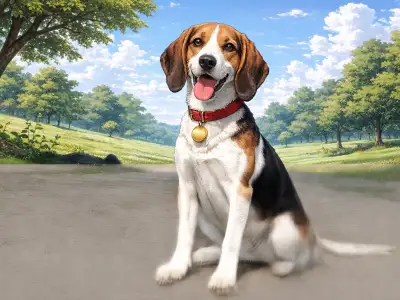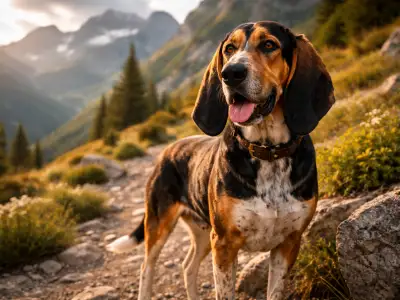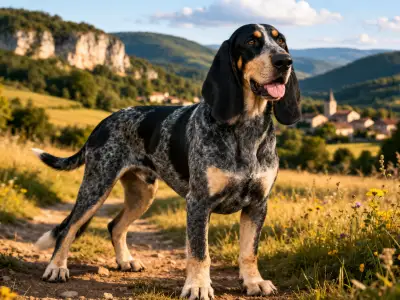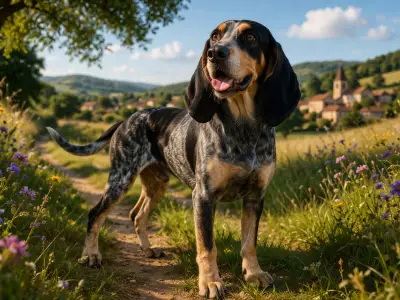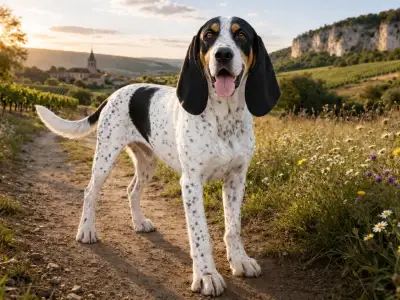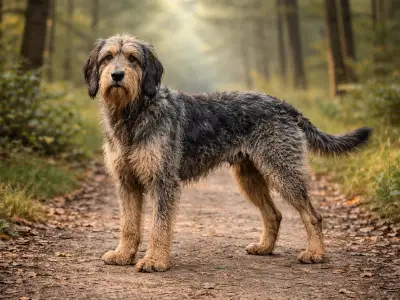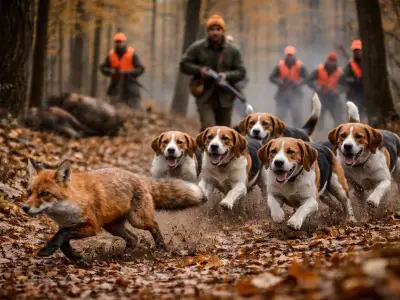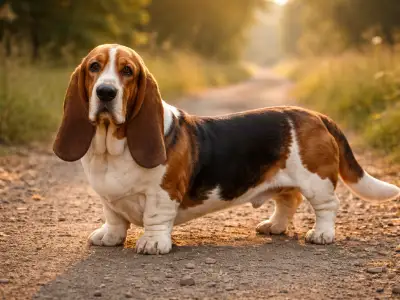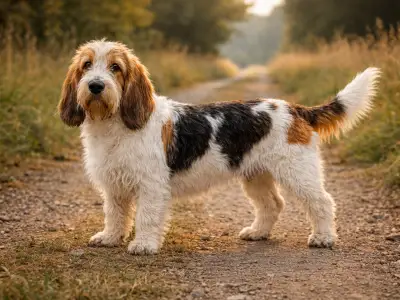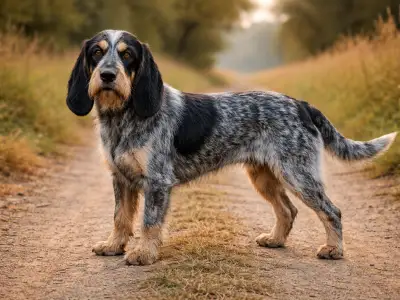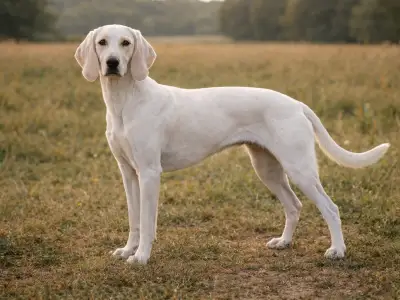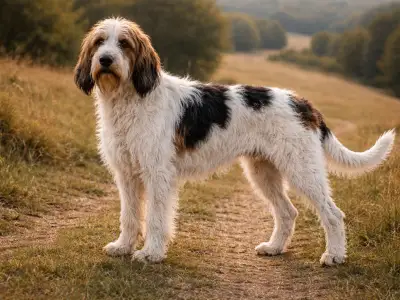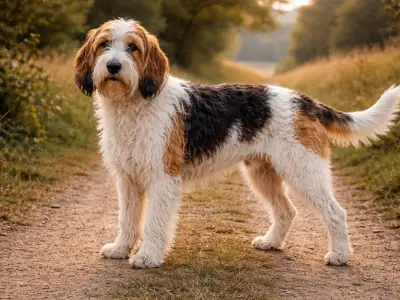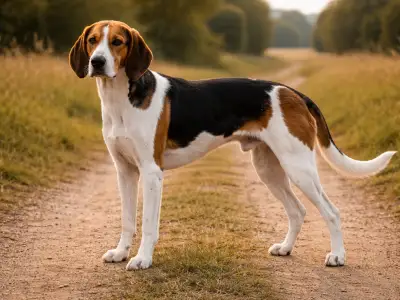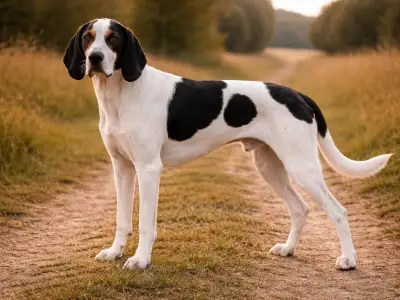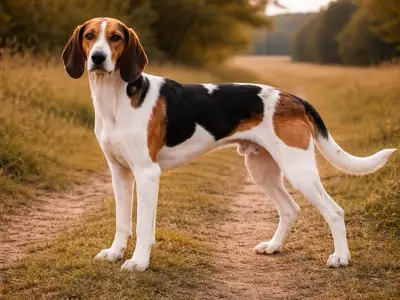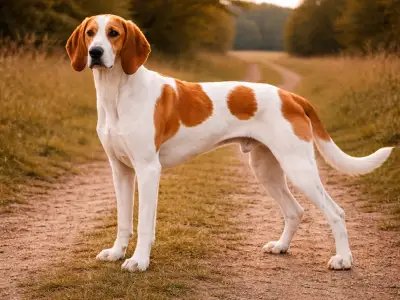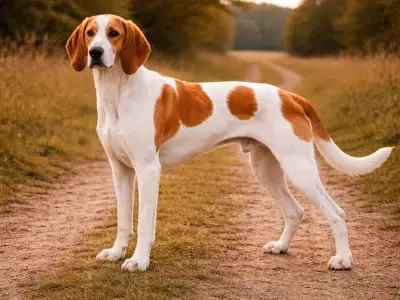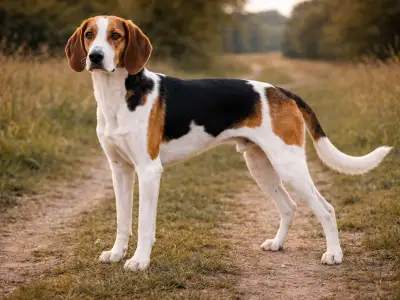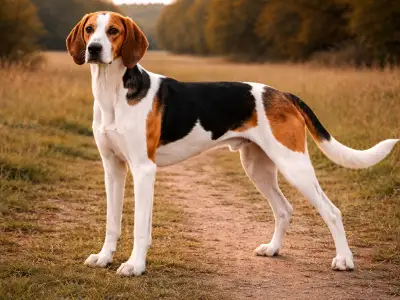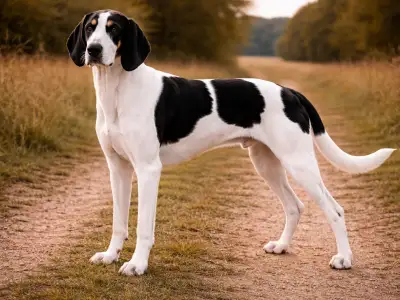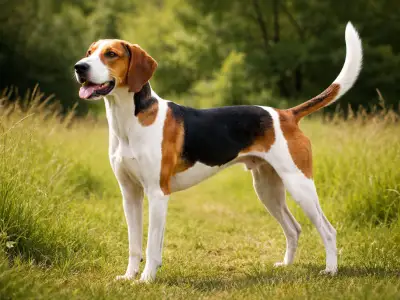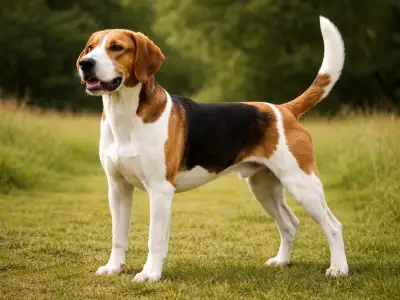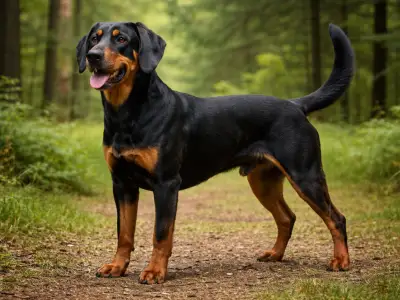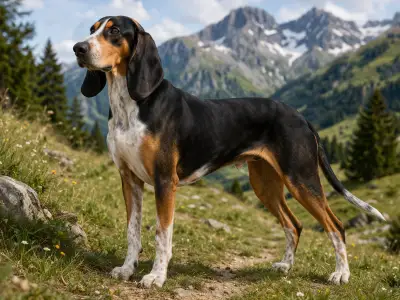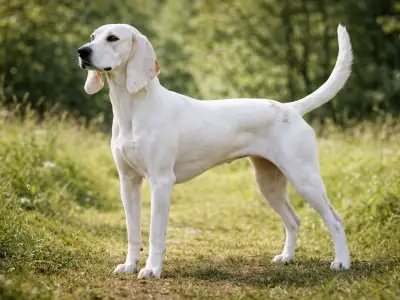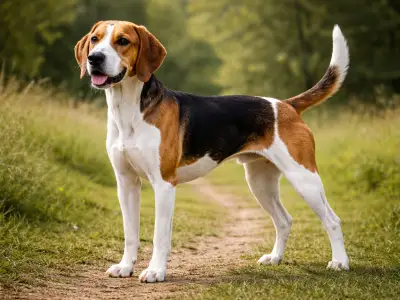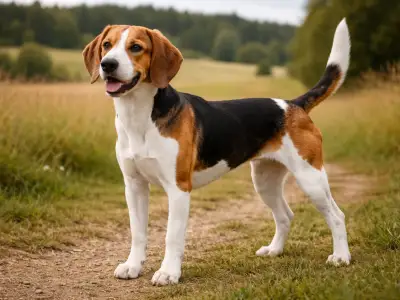
Great Anglo-French White and Orange Hound
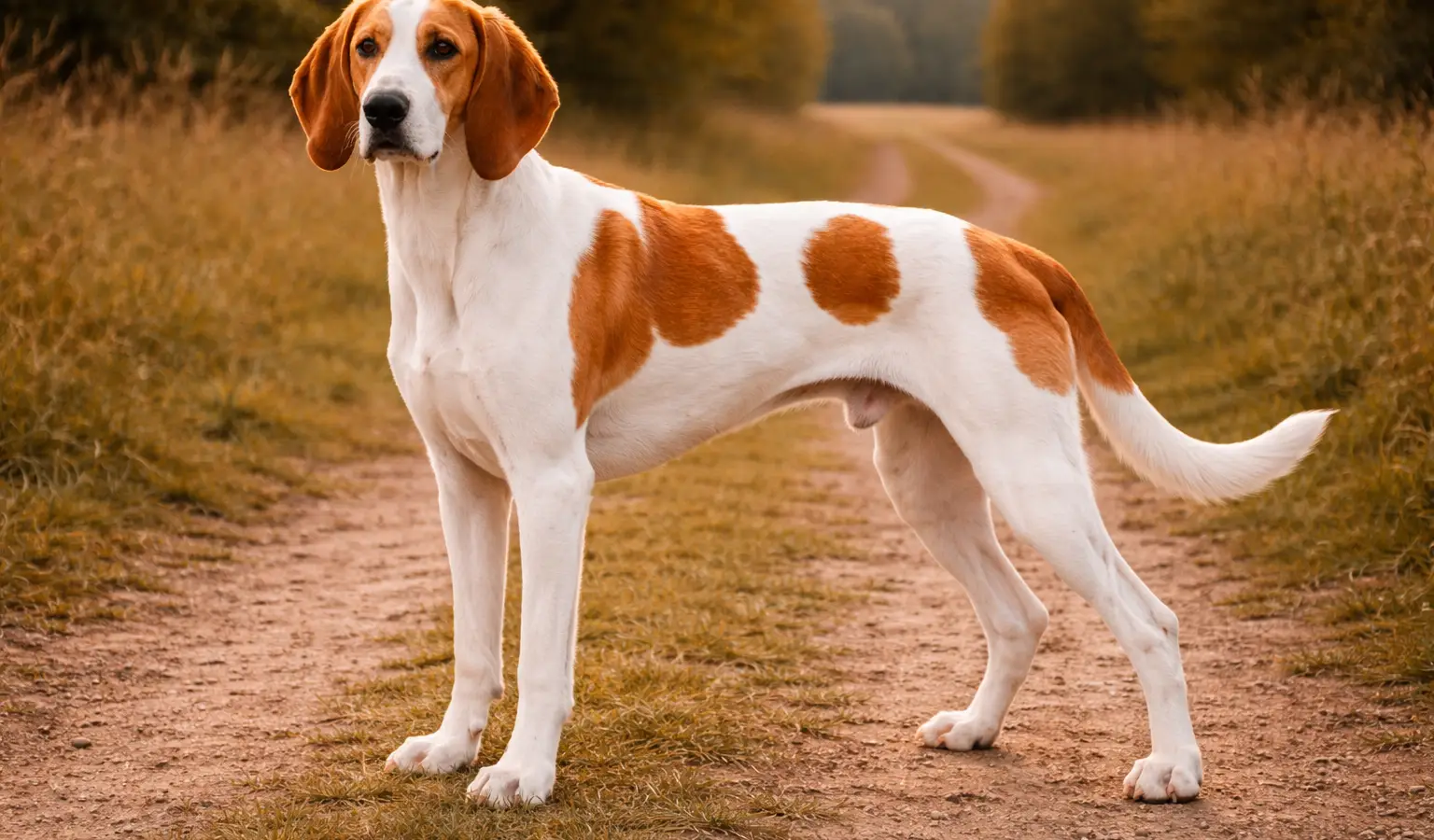
The Great Anglo-French White and Orange Hound is a large pack scenthound from French and English lines, developed for big-game hunting. Powerful, enduring and gifted with an excellent nose, it is an efficient trail worker with strong pursuit drive. Social in a pack, it needs space, substantial daily exercise and consistent training with special attention to recall.
Life expectancy
10 – 12 years
Price
900 – 1600 €
Monthly budget
80 €
Size
Large
Profile
Great Anglo-French White and Orange Hound
Origin
France
Year of origin
1957
Developed by
French pack hunters
Size
Large
Coat type
Short coat
Owner profile
Experienced owner
Hypoallergenic
No
Litter size
8
Life expectancy
10 – 12 years
Price
900 – 1600 €
Female
- Height : 60 – 65 cm
- Weight : 28 – 34 kg
Male
- Height : 62 – 72 cm
- Weight : 30 – 36 kg
Temperament & abilities
Affectionate
3/5
Calm
3/5
Independent
5/5
Intelligence
4/5
Obedience
2/5
Hunting instinct
5/5
Energy level
5/5
Good with children
3/5
Dog-friendly
4/5
Friendly with strangers
2/5
Hunting profile
Stamina
5/5
Hunting drive
5/5
Independence
4/5
Trainability
3/5
Beginner-friendly
2/5
Family compatibility
3/5
Feather game
0/5
Fur game
4/5
Underground work
0/5
Water work
0/5
These indicators help compare breeds and choose the right one for your hunting style.
Game & abilities
Estimated ability level by game type.
Budget
Purchase price
900 – 1600 €
The price may vary depending on the breeder, bloodline, and region.
Average monthly cost
80 €
Estimated average: food, healthcare, accessories, and grooming.
What this pack hound does well, and what it asks of its owner
Hunting ability and real-world suitability
The Great Anglo-French White and Orange Hound is, above all, a serious hunting dog rather than a casual all-round companion with a bit of hunting instinct. Bred as a scent hound for pursuing game over distance, it is generally best suited to hunters who value nose, stamina, voice, and sustained drive in the field. For the right work, especially traditional scent-led hunting in varied country, it can be highly capable; for people wanting close, highly handler-focused work or an easy suburban pet, it is usually a more demanding choice.
In hunting terms, this breed is typically appreciated for its strong nose, honest search style, and ability to keep working for long periods. Like many French hounds developed for pack use, it tends to be more about methodical pursuit and endurance than quick obedience drills or versatile gun-dog tasks. Its working style often suits hunters who want a dog that can follow scent with determination across mixed terrain, rather than one that constantly checks back for direction. That independence is part of its value in the field, but it also means handling can feel less straightforward than with more biddable breeds.
Training demands are real. A Great Anglo-French White and Orange Hound usually benefits from early recall work, patient exposure to different environments, and consistent boundaries around excitement and arousal. Trainability is not necessarily poor, but it is often selective: many hounds learn well when the work makes sense to them, yet may seem stubborn when asked for repetitive control exercises with little relevance to their instincts. Off-lead reliability can vary a lot by individual, line, and education, so buyers should be realistic about management.
- Best fit: experienced or committed owners who understand scent hound behavior and can offer regular hard exercise.
- Most coherent use cases: traditional hound work, scent-led pursuit, and active rural homes that can channel high energy constructively.
- Less natural fit: retrieve-focused shooting roles, very close-control hunting, or quiet city life with limited outlets.
In everyday life, this breed can be affectionate and social, but its energy level and working temperament shape the household. It usually needs more than walks around the block; it tends to do better with space, routine, and meaningful activity. Prospective owners comparing hunting breeds should see it as a specialist scent hound with courage, stamina, and purpose, but also one that asks for time, structure, and tolerance for a more independent mind.
Cold-nose tracking
This hound is valued above all for scent work. In suitable lines, it can stay engaged on older trails and sort out ground scent in changing conditions, which matters when game has moved well before the pack arrives. For hunters who prioritize nose quality over flashy speed, that is a practical strength.
Built for long chases
The Great Anglo-French White and Orange Hound is generally bred for endurance rather than short bursts. It tends to suit long hunting days, rough country, and repeated effort across uneven ground. That stamina is one of its clearest field advantages, but it also means daily life usually requires serious exercise and consistent outlets.
Strong pack coordination
As a traditional scenthound, this breed usually shows its best qualities when working with other hounds. It can contribute to collective drive, maintain the line of pursuit, and stay involved in the rhythm of a pack hunt. Hunters looking for a highly independent one-dog style may find it less specialized for that role.
Forward drive on game
This is a determined hunting dog with real momentum once it is committed to a scent. That forward drive can help keep pressure on moving game and reduce hesitation in difficult going. The trade-off is that recall and off-switch work should be trained carefully, because prey focus may easily outweigh casual handling.
Good voice for tracking
Like many French pack hounds, it may offer a clear, useful voice on the line, helping hunters follow the progress of the chase without constant visual contact. In practical hunting terms, vocal expression can be a real asset in wooded or broken terrain. In suburban family life, though, that same tendency may be less convenient.
Best with experienced handling
This breed can be workable and cooperative in the right hands, but it is not usually the easiest option for novice trainers seeking instant obedience. It tends to respond best to structured repetition, clear routines, and handlers who understand pack hound motivation. For active hunting homes, that often matters more than formal precision.
Who this hound suits best
The Great Anglo-French White and Orange Hound generally suits hunters who want a large, athletic scenthound bred for serious field work rather than casual companionship. It is usually a better match for people familiar with hounds, rural living, and long active days than for first-time dog owners. This breed often makes the most sense for those who value nose work, stamina, and a dog that can operate confidently in a hunting context, especially where space, structure, and consistent handling are available.
In daily life, the best owner is typically active, patient, and realistic about management: this is not usually the easiest dog for a quiet apartment, a sedentary household, or a family wanting an off-switch without enough exercise and direction. It may be less suitable for owners expecting close-control obedience at all times, since scent hounds can become very focused once they pick up a trail. The strongest fit is often a hunting home or very outdoorsy household that can provide room, routine, training, and purpose, while accepting that independence, voice, and energy are part of the package.
How its French pack-hound roots and English influence shaped the breed seen today
Origins of the Great Anglo-French White and Orange Hound
The Great Anglo-French White and Orange Hound was developed in France as a pack scenthound for pursuing large game over distance, and its name points directly to its background: a blend of old French hunting hounds with English Foxhound influence. As with several Anglo-French breeds, the exact recipe varied by region, kennel, and hunting tradition, so it is better understood as a purpose-bred type refined for work rather than a breed created in a single moment. What remained consistent was the goal: a fast, enduring hound with a strong nose, a ringing voice, and the stamina to stay effective in rough country during long hunts.
The French side of its heritage likely came from established large hound lines valued for scenting ability, pack cooperation, and a certain seriousness on game. The English contribution appears to have reinforced speed, drive, and a more ground-covering style. That combination helps explain the modern dog’s profile: energetic, highly motivated by scent, and generally at its best when it can work as part of a coordinated hunting team rather than as a casual companion with only modest exercise. This is not usually a breed shaped for decorative living; it was selected to perform, and that working history still shows clearly in its daily needs.
The white-and-orange coat pattern is part of the traditional identification of the breed, but color was never the main point. Selection focused much more on practical hunting qualities such as nose, endurance, pack sense, and the ability to handle demanding terrain. In the field, that history often translates into a hound that can be independent in scent work, vocal when engaged, and less naturally handler-focused than many pet-bred dogs. For experienced hunters, those traits can be assets. For non-hunting homes, they can feel intense unless the dog receives enough exercise, structure, and patient training.
Today, the Great Anglo-French White and Orange Hound remains closely tied to functional use, and that background matters when judging suitability. People drawn to the breed should expect a substantial scenthound with high energy, strong tracking instinct, and a temperament often shaped by pack work. It may suit owners who appreciate traditional hounds, rural space, and purposeful activity. It is usually a less obvious choice for city life or for households wanting a highly biddable, low-maintenance companion. Its history is the best guide to its present: capable, athletic, and most convincing when given a life that respects its hunting origins.
Built from French and English hound roots
The Great Anglo-French White and Orange Hound comes from the French tradition of large pack scenthounds, developed with English hound influence to produce speed, nose, and staying power. It is best understood as a specialist hunting dog rather than a general-purpose pet, with type and character shaped above all by work in the field.
Selected for pack hunting
This breed was selected to hunt in groups, following scent over distance with rhythm, voice, and endurance. That history matters in daily life: many individuals are more comfortable with canine company than with a sedentary household routine, and their instincts often point strongly toward trailing, ranging, and staying engaged with moving scent.
Driven, social, and not especially soft
Temperament is often sociable in a kennel or pack setting, but this is not usually a highly biddable, handler-focused breed in the way some gundogs are. Training tends to go best with calm repetition, clear rules, and realistic expectations. A strong nose can easily outrank recall if education and management are inconsistent.
Needs space and serious exercise
The Great Anglo-French White and Orange Hound generally suits rural life far better than apartment living. It usually needs room to move, frequent structured exercise, and regular outlets for scenting behavior. A short walk around the block is rarely enough for a mature hound of this type, especially if it comes from active working lines.
Low-frill coat, higher day-to-day management
Coat care is usually straightforward, but overall management is not necessarily easy. Owners may need to pay attention to ear cleanliness, secure fencing, transport, conditioning, and recovery after long outings. The real commitment is less about grooming and more about meeting the breed's physical drive, voice, and appetite for purposeful activity.
Best for experienced hound people
This breed often makes most sense for hunters or very active owners who already understand independent scenthounds. It may be less suitable for first-time dog owners seeking close off-lead control or a highly adaptable family dog. In the right environment, it can be impressive and steady; in the wrong one, frustration can build on both sides.
Practical answers for hunters and future owners
Great Anglo-French White and Orange Hound: Hunting and Daily Life FAQ
Is the Great Anglo-French White and Orange Hound a good hunting dog for most owners?
The Great Anglo-French White and Orange Hound was developed as a working scenthound, so its hunting instincts are usually a major part of the breed. In the right hands, it can be a serious and capable hunting companion with stamina, nose, and a strong desire to follow scent. That said, this is not always the easiest choice for a casual pet owner who simply likes the look of a hound. It tends to suit experienced handlers, active homes, and people who understand pack hounds, scent-driven behavior, and the need for structured outlet. For hunters seeking a traditional French hound type, it may be a very relevant breed, but suitability still depends on line, training, and the kind of game pursued.
Can a Great Anglo-French White and Orange Hound live as a family dog if it is not used for hunting?
It can in some cases, but this breed is usually easier to live with when it has a genuine working outlet or at least a very demanding activity routine. A well-managed individual may be affectionate and sociable at home, yet it is still a high-drive scenthound built for long hours of movement and scent work. Without enough exercise, freedom to use its nose, and consistent handling, daily life can become frustrating for both dog and owner. Families who enjoy outdoor routines, long walks, tracking games, and calm but firm guidance may cope better than sedentary households. It is generally not the simplest choice for someone wanting an easygoing companion dog.
How easy is it to train a Great Anglo-French White and Orange Hound?
Training is usually best described as workable rather than effortless. Like many scent hounds, this breed may be intelligent and cooperative in context, but once scent takes over, independence can become very obvious. Recall, loose-lead walking, and calm focus around game scent often require patient repetition and realistic expectations. Harsh handling is unlikely to improve results, while clear routines, reward-based work, and steady exposure to real-life distractions tend to be more productive. Owners with prior hound experience often find the breed easier to read than first-time trainers do.
How much exercise does a Great Anglo-French White and Orange Hound need each day?
This is usually not a breed that is satisfied with a short walk around the block. Most individuals need substantial daily exercise combined with mental work, especially scent-based activity that lets them use their natural abilities. Long walks, structured running in safe areas, tracking practice, and time spent outdoors are often more valuable than brief bursts of play in the garden. Young dogs may also need help learning how to settle indoors, because physical energy and scent drive do not automatically switch off at home. People considering this breed should expect a genuinely active lifestyle, not occasional exercise.
Is the Great Anglo-French White and Orange Hound suitable for apartment living?
Apartment life is usually a difficult fit for this breed. Size, energy, vocal tendency common in hounds, and the need for regular outdoor work all make compact urban living more challenging. Even a well-exercised dog may struggle if it lacks space, routine, and quiet management, especially if it becomes excited by scents or sounds. A rural or semi-rural setting with secure space and easy access to open ground is often more practical. Housing alone does not decide success, but the breed generally suits homes that can support an active working hound lifestyle.
Does the Great Anglo-French White and Orange Hound get along with children and other dogs?
With other dogs, the outlook is often fairly positive because this breed comes from a pack-hound background, although individual temperament and socialization still matter. With children, compatibility depends more on supervision, manners, and household expectations than on simple breed labels. A well-raised dog may be steady and tolerant, but its size, energy, and excitement outdoors can be a lot for very young children. It is usually better suited to families who understand large active dogs and can manage boundaries consistently. Small pets can be more complicated because prey drive may be significant.
Who is the Great Anglo-French White and Orange Hound best suited for?
This breed is generally best for experienced, highly active owners, especially hunters or people deeply interested in working hounds and scent-driven dogs. It tends to suit those who enjoy training with realism, accept some independence, and do not expect instant off-lead reliability. The best match is often someone with space, time, secure management, and a daily routine built around exercise rather than fitted in as an afterthought. It is less suitable for first-time owners, very urban households, or people wanting a low-maintenance family pet. In the right environment, it can be impressive and rewarding, but it usually asks a lot from its owner.