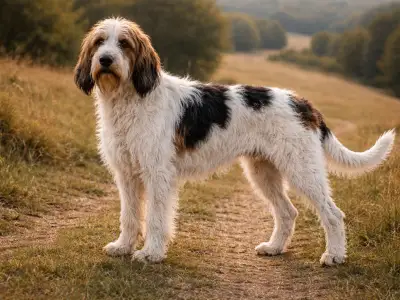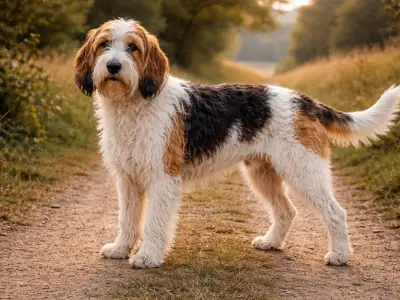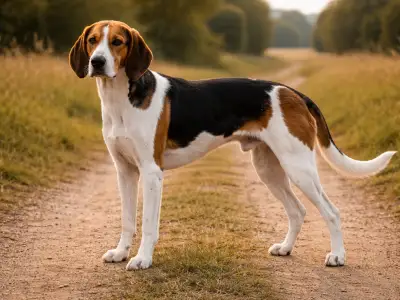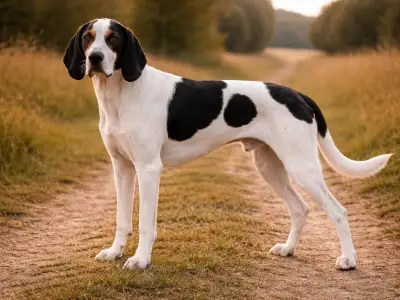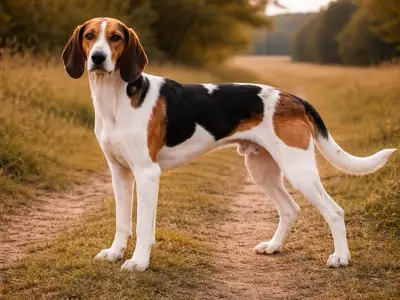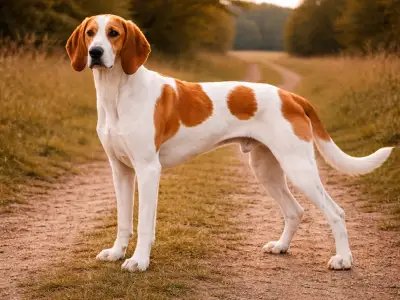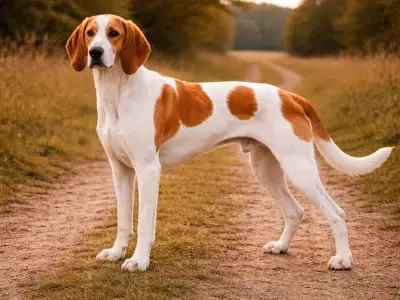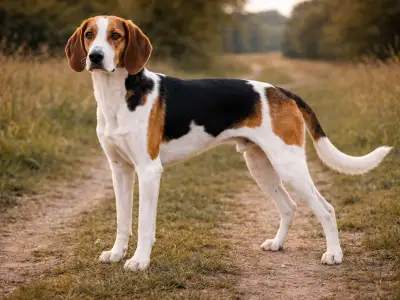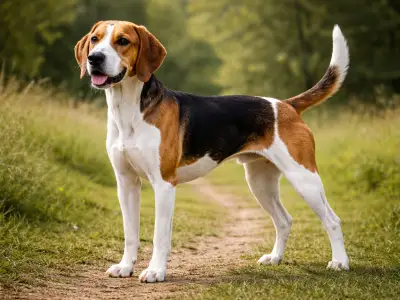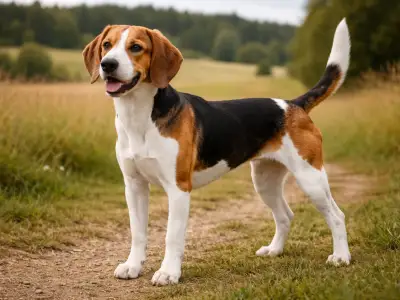
English Foxhound
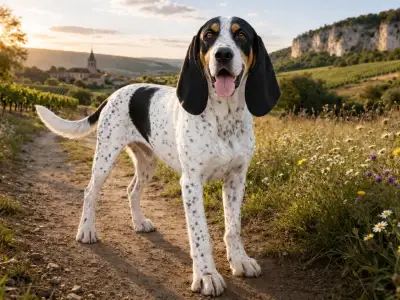
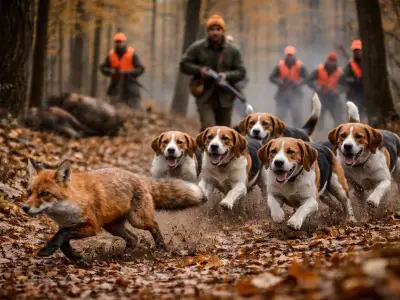
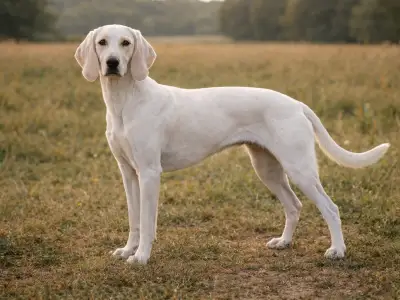
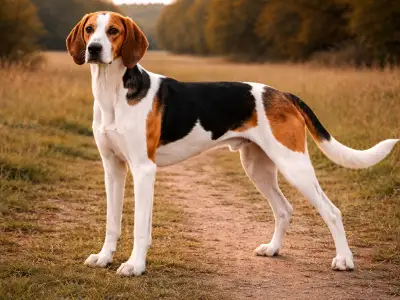
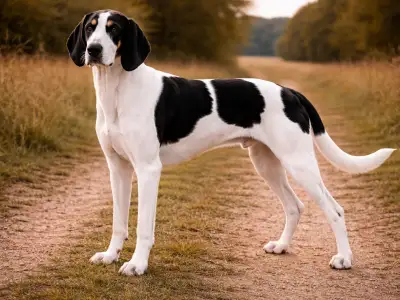
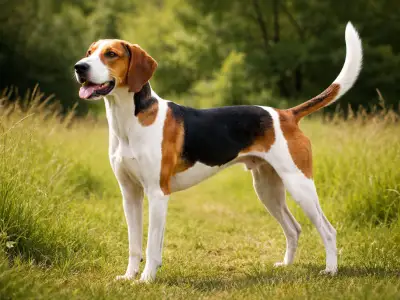
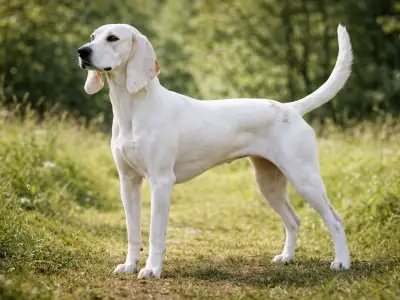
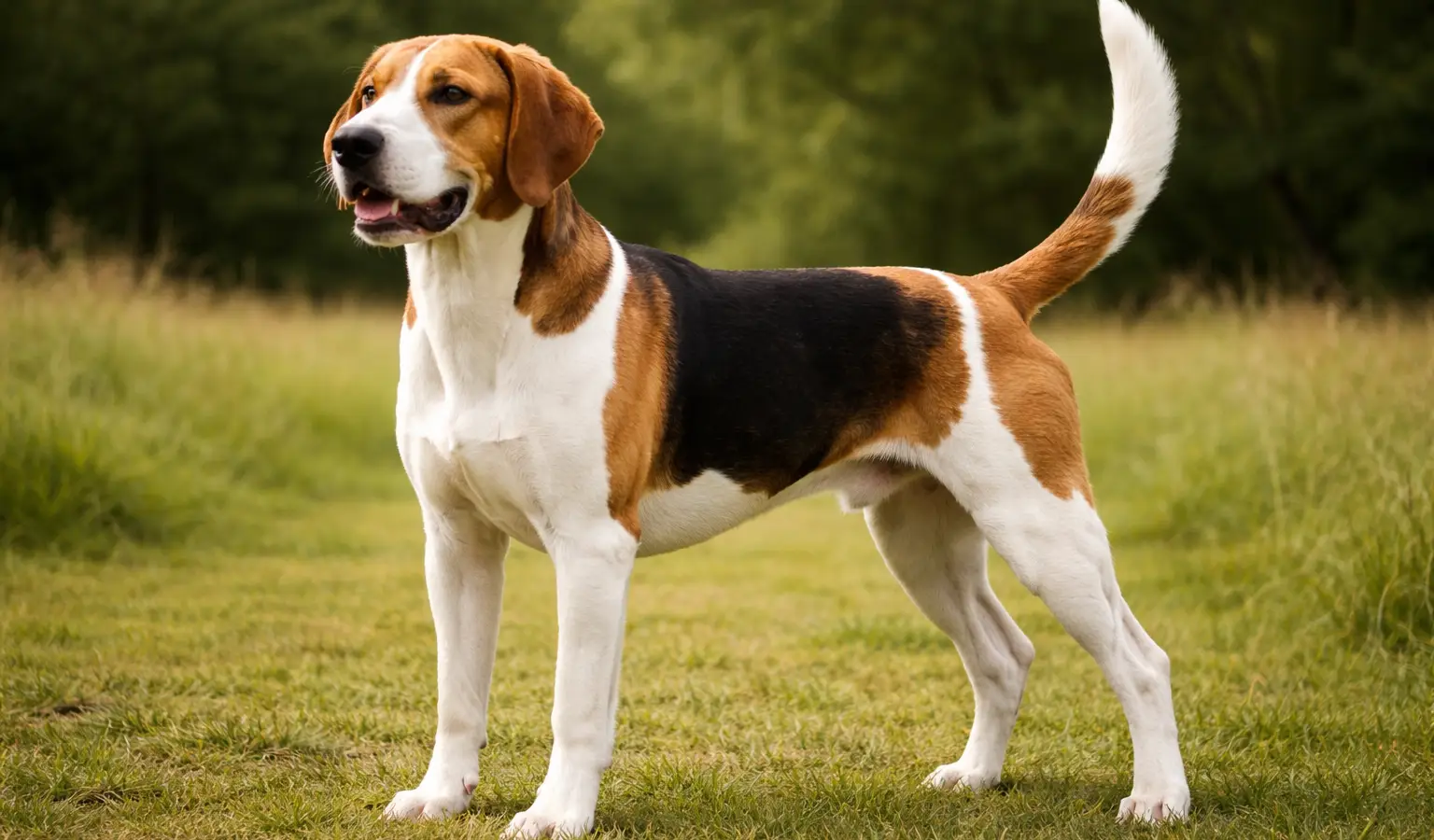
The English Foxhound is a large British pack scenthound developed for fox hunting. Powerful, enduring and equipped with an excellent nose, it is known for steady work and strong pack mentality. Very social with other dogs, it requires substantial daily exercise, plenty of space and consistent training, thriving best in an active lifestyle.
Life expectancy
11 – 13 years
Price
800 – 1400 €
Monthly budget
75 €
Size
Large
Profile
English Foxhound
Origin
United Kingdom
Year of origin
1700
Developed by
English huntsmen
Size
Large
Coat type
Short coat
Owner profile
Experienced owner
Hypoallergenic
No
Litter size
7
Life expectancy
11 – 13 years
Price
800 – 1400 €
Female
- Height : 58 – 63 cm
- Weight : 25 – 30 kg
Male
- Height : 60 – 68 cm
- Weight : 30 – 34 kg
Temperament & abilities
Affectionate
3/5
Calm
3/5
Independent
4/5
Intelligence
4/5
Obedience
3/5
Hunting instinct
5/5
Energy level
5/5
Good with children
3/5
Dog-friendly
5/5
Friendly with strangers
3/5
Hunting profile
Stamina
5/5
Hunting drive
5/5
Independence
4/5
Trainability
2/5
Beginner-friendly
1/5
Family compatibility
3/5
Feather game
0/5
Fur game
4/5
Underground work
0/5
Water work
0/5
These indicators help compare breeds and choose the right one for your hunting style.
Game & abilities
Estimated ability level by game type.
Budget
Purchase price
800 – 1400 €
The price may vary depending on the breeder, bloodline, and region.
Average monthly cost
75 €
Estimated average: food, healthcare, accessories, and grooming.
A powerful scent hound built for endurance, teamwork, and long days on a line
Is the English Foxhound a good hunting dog?
The English Foxhound is a very capable hunting dog, especially for hunters who value a strong nose, relentless stamina, and a traditional scent-hound working style. Bred to follow game over distance, it is generally at its best when tracking and pursuing scent in open country with other hounds rather than working as a close, highly handler-focused gun dog. For the right use, the breed can be impressive; for the wrong expectations, it may feel independent, loud, and demanding.
In the field, the English Foxhound is known for endurance more than finesse. Its search pattern is usually driven by scent rather than visual checking-in, and many individuals show the determination to stay on a line for a long time once engaged. That makes the breed coherent for hunters looking for a scent specialist with courage, drive, and the physical capacity to cover ground. Handling can be more traditional than modern: recall and off-leash control often require serious training, and even then, instinct and pack focus may outweigh immediate responsiveness in high-arousal situations.
Trainability is not poor, but it is different from that of a more biddable all-purpose hunting dog. The English Foxhound often responds best to consistent routines, repetition, and fair structure rather than constant correction. Early work on recall, lead manners, settling at home, and exposure to varied terrain is especially important. Prospective owners should also be realistic about voice: this is a hound type, and vocalization can be part of its working temperament.
- Best fit: experienced hound owners, active rural homes, hunters who appreciate scent work and stamina
- Less ideal for: people wanting a close-working, highly obedient dog or an easy suburban companion
- Typical strengths: nose, toughness, persistence, pack work, ability to keep going for hours
- Typical demands: high energy level, independent handling, structured training, space, and regular hard exercise
As a family dog, daily life with an English Foxhound depends heavily on outlet and management. A well-exercised, well-raised individual may be good-natured and social, but this is rarely a low-maintenance breed. Compared with many hunting breeds, it makes the most sense for people who genuinely want a working scent hound and can live with its energy, voice, and independence. If your priority is traditional hound hunting ability, the English Foxhound deserves attention. If you want sharp retrieve work, tight handling, or a flexible urban companion, other breeds may be easier to live with.
Ground-covering scent work
The English Foxhound is valued first for its ability to follow a line over distance at a purposeful, efficient pace. Rather than working as a tight, methodical tracker in dense cover, it is generally better suited to carrying scent forward across open country, lanes, pasture, and mixed terrain where momentum matters as much as nose.
Serious stamina
This is a true endurance hound, bred for long outings rather than short bursts of effort. A fit English Foxhound can keep working for hours when properly conditioned, which makes it appealing to hunters who want a dog that stays useful deep into the day. That same engine also means daily life requires substantial exercise and structure.
Natural pack coordination
One of the breed’s clearest strengths is how comfortably it works in company with other hounds. English Foxhounds are typically most convincing in a pack setting, where their rhythm, voice, and social drive support cooperative pursuit. For hunters wanting a highly independent one-dog style, this strong pack instinct may be less convenient.
Bold but businesslike drive
The breed is known for commitment and forward pressure on game without needing to be flashy. Many English Foxhounds show a steady, workmanlike determination that helps them stay engaged when the chase stretches out or conditions become demanding. In practice, this suits handlers who appreciate persistence more than dramatic close-range control.
Best with experienced handling
Trainability is real, but it usually needs to be understood in hound terms. An English Foxhound can learn routines and hunting patterns well, yet its scent focus and independence may outweigh obedience in the field. It often suits handlers who know how to channel drive, build recall carefully, and manage a dog bred to follow its nose.
Specialist rather than all-round gun dog
For traditional scent hunting, the English Foxhound has strong credentials. For versatile shooting-dog tasks such as close handling, formal retrieving, or frequent off-switch work around the home, it is usually less naturally adapted than many gundog breeds. Prospective owners should see it as a specialist hound with clear strengths, not a universal hunting companion.
Who the English Foxhound suits best
The English Foxhound tends to suit experienced, highly active owners who genuinely enjoy living with a working hound rather than simply owning an athletic dog. It is often a better match for a hunter involved in scent hound work, trail following, or long days outdoors than for someone wanting close-off-lead control and instant responsiveness. This breed usually thrives with space, routine, and purposeful exercise, and daily life is easier when the owner understands hound independence, strong scent focus, and the need for patient training.
As a family dog, the English Foxhound can fit a rural or very active household that accepts noise, stamina, and a dog that may prioritize its nose over household obedience. It is generally less suitable for sedentary homes, first-time dog owners, small urban apartments, or people expecting an easy recall in distracting environments. Common mismatches include owners who want a highly biddable companion, minimal exercise needs, or a dog content with short walks and garden time. In the right home, it can be hardy, sociable, and enjoyable to live with, but its hunting instincts and endurance are not minor details.
How a traditional pack hound was shaped for endurance, nose, and cooperative hunting
Origins and development of the English Foxhound
The English Foxhound was developed in Britain as a purpose-bred pack hound for mounted fox hunting, with roots that likely reach back several centuries. While exact early crosses are not always documented with precision, the breed is generally understood to have been shaped from older British hounds and selected generation after generation for stamina, a strong scenting ability, and the capacity to work smoothly in a large pack over long distances. That history helps explain why the modern English Foxhound is less a one-person dog by origin than a highly social working hound built to follow scent methodically and keep going for hours.
Unlike some hounds that were prized for independent, close-cover hunting, the English Foxhound was refined for open-country pursuit, rhythm, and collective discipline. Breeders and hunt kennels tended to value sound movement, physical toughness, a clear voice, and a balanced temperament that allowed many dogs to live and work together without constant conflict. In practical terms, this often produces a dog that is hardy, active, and pack-oriented, with a nose that can easily take priority over the handler if training and management are inconsistent. The breed’s historic job did not require intense handler focus in the way some gundogs or herding breeds were developed to offer it.
That background still matters today. Many English Foxhounds retain high exercise needs, strong chase instincts, and a steady, workmanlike style rather than dramatic biddability. They can be affectionate and even-tempered in the right home, but they usually suit owners who genuinely enjoy hound behavior: scent-led decision-making, a powerful drive to move, and a dog that may be more responsive with patient repetition than with precision-heavy training. For hunting, tracking, or active rural life, those traits can be real strengths. In a quiet urban routine with limited outlets, they may become difficult to satisfy.
For prospective owners, the breed’s history points to a fairly specific profile:
- Best suited to: active handlers, rural or semi-rural living, and people who appreciate hounds rather than expecting instant off-leash reliability
- Main strengths: endurance, sociability with other dogs, scenting ability, and a steady working rhythm
- Common limitations: recall can be challenging around game, mental stimulation is important, and daily life is easier with secure space and consistent structure
In short, the English Foxhound is the product of practical selection for pack hunting, not modern convenience. Its present-day temperament, energy level, and handling style make the most sense when viewed through that lens.
Built for the pack
The English Foxhound was shaped in Britain as a pack hound for mounted fox hunting, where stamina, uniformity, and a reliable nose mattered more than individual flair. That history still shows today: this is a functional scent hound developed to work for hours over varied ground, often in company with other dogs and under human direction.
Selected for endurance
Generations of breeding emphasized toughness, rhythm, and the ability to keep moving at a steady pace rather than sprint briefly and stop. In practice, many English Foxhounds are energetic, hardy dogs that need substantial daily exercise. They tend to suit active owners or hunters who appreciate a hound bred for long outings, not a casual lap around the block.
A sociable hound mind
Because the breed traditionally worked in packs, English Foxhounds are often notably social with other dogs and may enjoy structured group activity. Their temperament can be steady and cheerful, but they are not always highly handler-focused in the way some gundogs are. A strong scent can quickly become their priority, so recall and everyday obedience need patient, consistent training.
Driven by scent
The English Foxhound is first and foremost a scent hound, and that shapes both hunting usefulness and family life. Many individuals are persistent once they pick up a trail and may range enthusiastically if given the chance. Secure space, reliable management, and meaningful nose work can make a real difference for owners who want a dog that is satisfied, not simply tired.
Best with room to move
This breed generally fits country or semi-rural life better than a sedentary urban routine. An English Foxhound can adapt to family living when given enough physical exercise, mental stimulation, and clear structure, but boredom may show up as vocalizing, restlessness, or roaming behavior. It is usually a better match for households that genuinely enjoy outdoor time and regular activity.
Simple coat, big daily needs
Coat care is usually straightforward thanks to the short, practical jacket, but the breed is not low-maintenance overall. Time, movement, and handling matter far more than grooming complexity. Prospective owners should think less about brushing and more about whether they can offer frequent exercise, calm training repetition, and a lifestyle that respects the instincts of a traditional hunting dog.
Practical answers about hunting ability, trainability, exercise, family life, housing, and owner fit
English Foxhound hunting and daily life FAQ
Is the English Foxhound a good hunting dog for beginners?
The English Foxhound is a capable scent hound, but it is not always the easiest first hunting dog for a complete beginner. This breed was developed for pack hunting and may think and work very independently once it is on scent, which can challenge novice handlers who expect quick obedience at distance. A beginner can do well with a steady individual, good mentoring, and consistent training, especially if the dog comes from lines suited to practical field work rather than only tradition or kennel life. It usually suits handlers who enjoy hound behavior, patient repetition, and long conditioning work more than those wanting a highly biddable, close-working dog.
What kind of hunting is the English Foxhound best suited for?
The English Foxhound is primarily a scent-driven hound built to trail with stamina, determination, and a strong nose. It is generally best suited to work where following ground scent over distance matters more than tight handler focus or rapid directional changes. In practice, the breed tends to fit hunters who value endurance, voice, and pack cooperation, especially in traditional hound-style work. Suitability can vary a lot by country, line, and training, so it is wise to look at how the parents and close relatives actually hunt rather than relying only on breed reputation.
Are English Foxhounds easy to train off leash and on recall?
Recall is often one of the biggest challenges with this breed, especially once scent takes priority. Many English Foxhounds are intelligent and willing in a routine, but they are not usually known for the instant off-leash responsiveness seen in some herding or gundog breeds. Training should start early with reward-based repetition, long lines, controlled exposure to distractions, and a realistic understanding that instinct can overpower obedience in open areas. For many owners, secure spaces, careful management, and a strong emergency recall are more realistic goals than assuming dependable freedom in every environment.
Can an English Foxhound live as a family dog if it also comes from hunting lines?
It can, provided the home understands what a working hound is like day to day. A well-managed English Foxhound may be affectionate, social, and steady with people, but it usually needs far more exercise, structure, and mental occupation than a casual pet household expects. Its voice, scent drive, and desire to follow interesting smells can be difficult in suburban family life if outlets are poor. Families tend to do best when they enjoy outdoor routines, can train consistently, and are comfortable living with an active, sometimes single-minded dog rather than a naturally easygoing house pet.
How much exercise does an English Foxhound really need?
This is a high-endurance hound, so a short walk around the block is rarely enough. Most individuals need substantial daily physical activity plus scent-based enrichment, such as tracking games, long hikes, structured running beside conditioning plans, or other safe outlets that engage both body and nose. Without enough work, some English Foxhounds may become noisy, restless, or opportunistic about escaping to investigate scent. The exact amount depends on age, fitness, and line, but prospective owners should think in terms of serious daily commitment, not occasional weekend exercise.
Is the English Foxhound suitable for apartment living or a small yard?
In most cases, this is not an ideal apartment breed. Even a calm adult usually brings a combination of stamina, strong scent interest, and a hound voice that can create friction in close living quarters. A small yard helps only a little, because the breed does not simply need space to stand outside; it needs regular movement, training, and purposeful activity. A rural or semi-rural home with secure fencing and easy access to long outings is often a better fit, especially for owners who want to live comfortably with the breed's natural instincts.
Who is the English Foxhound best suited for, and who should probably choose another breed?
The English Foxhound generally suits experienced active owners, traditional hound enthusiasts, and some hunters who appreciate independence, stamina, and scent work more than highly polished obedience. It can also suit people who enjoy structured outdoor life and are realistic about management, fencing, and recall limitations. It is usually a poor match for very sedentary households, first-time owners wanting an easy all-purpose pet, or anyone expecting reliable off-leash freedom in wildlife-rich areas with minimal training. If you want a dog that naturally checks in often, learns fast for handler approval, and settles easily with modest exercise, another breed may be simpler to live with.