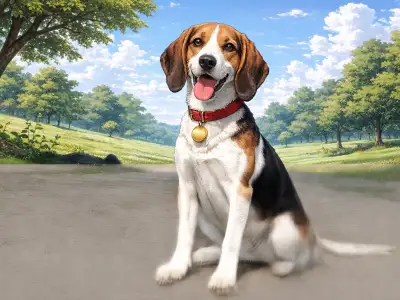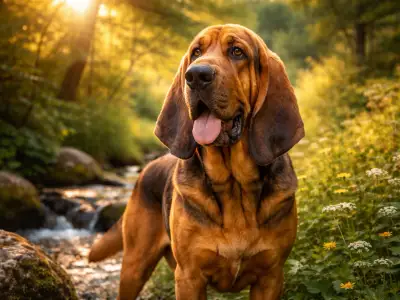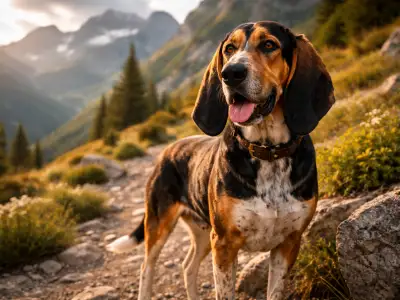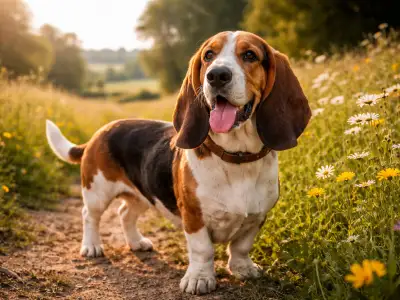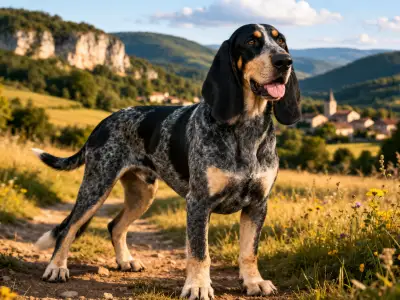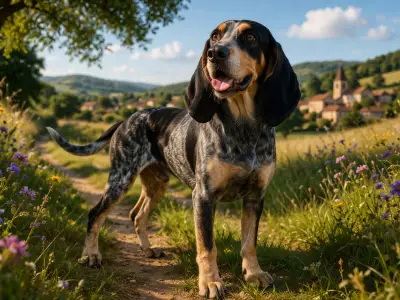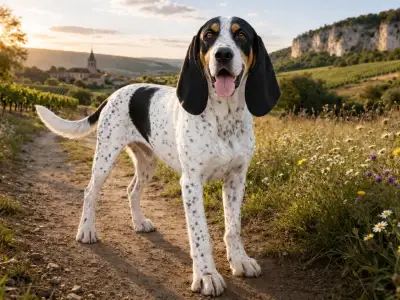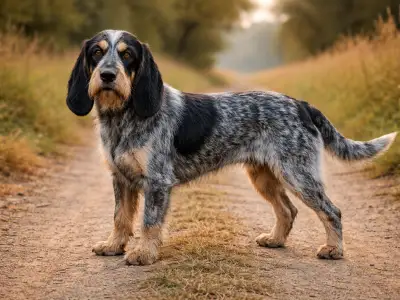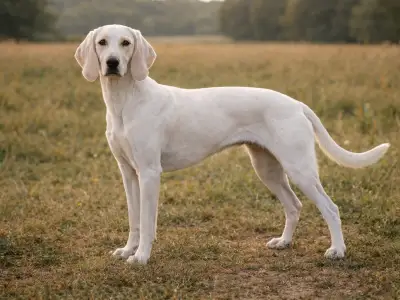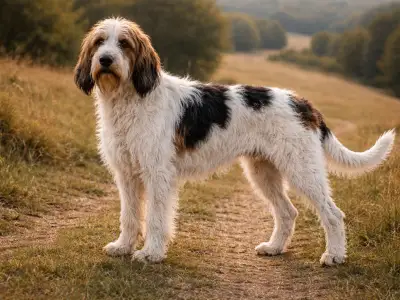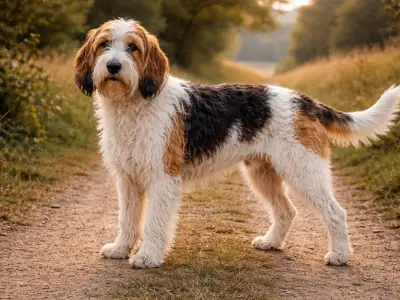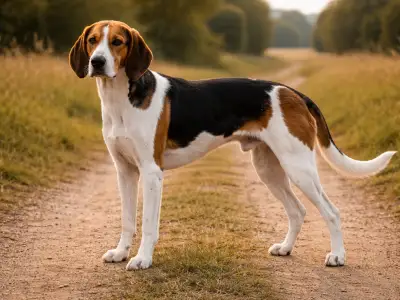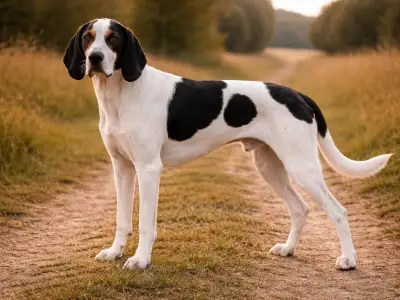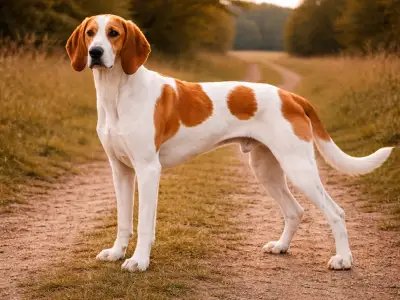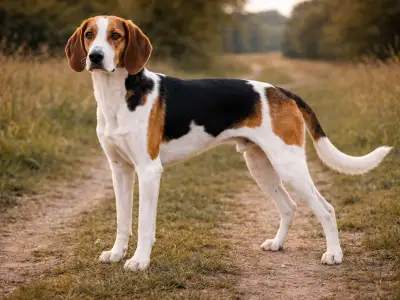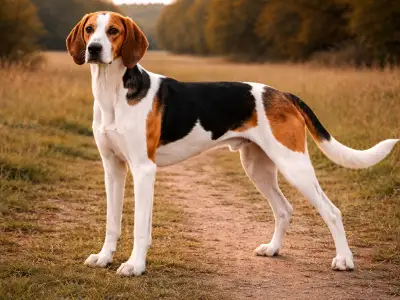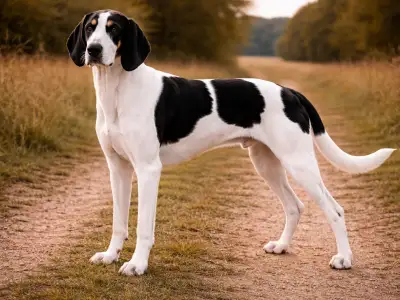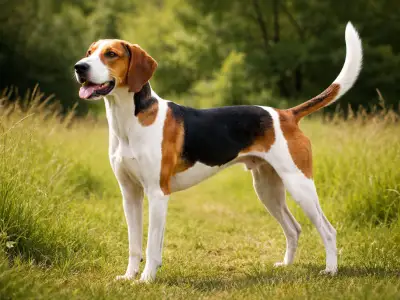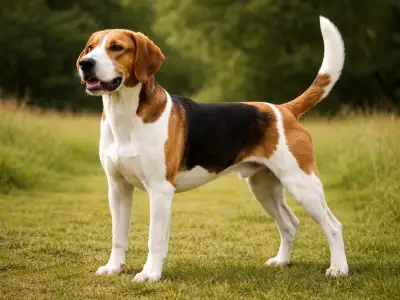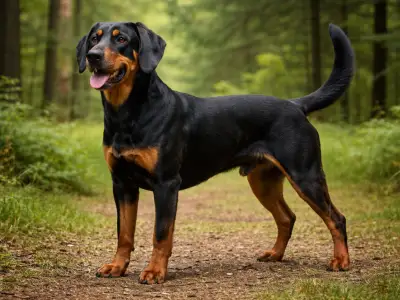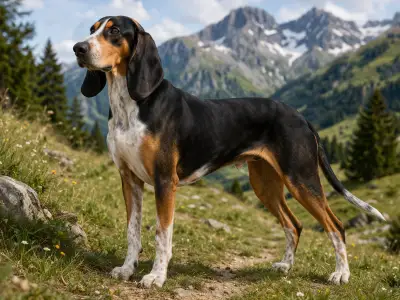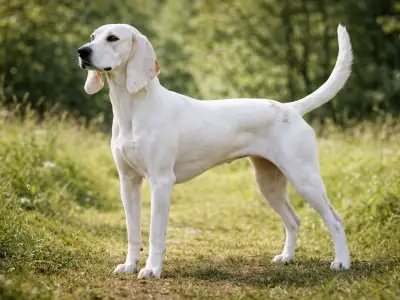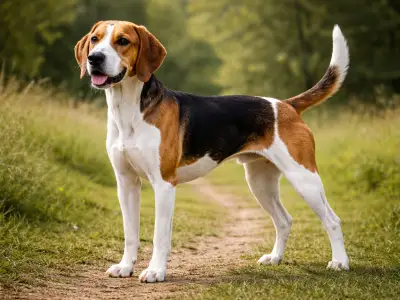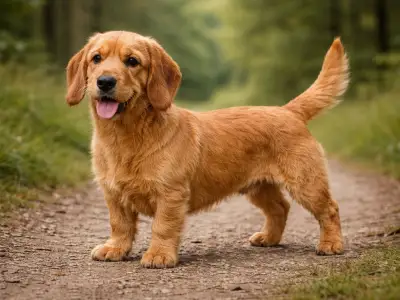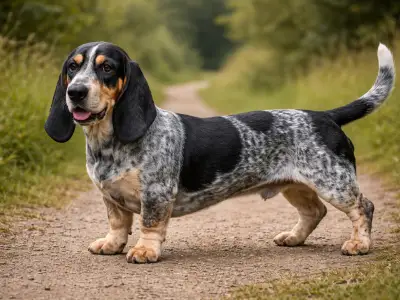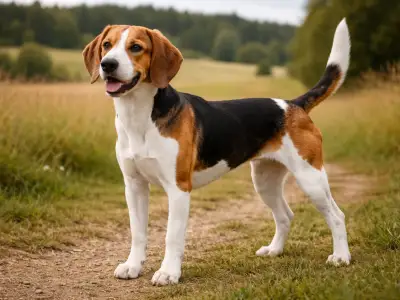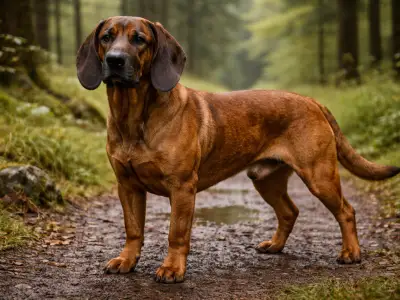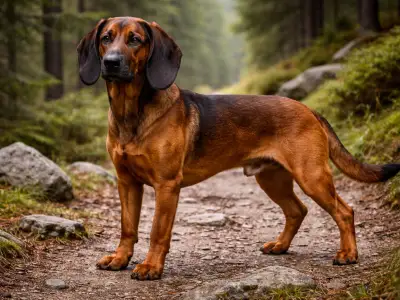
French Tricolour Hound
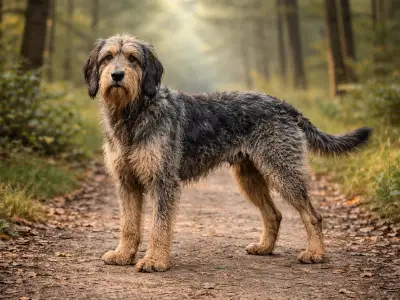
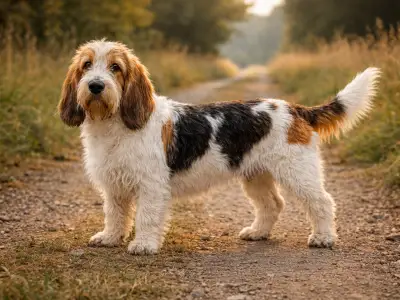
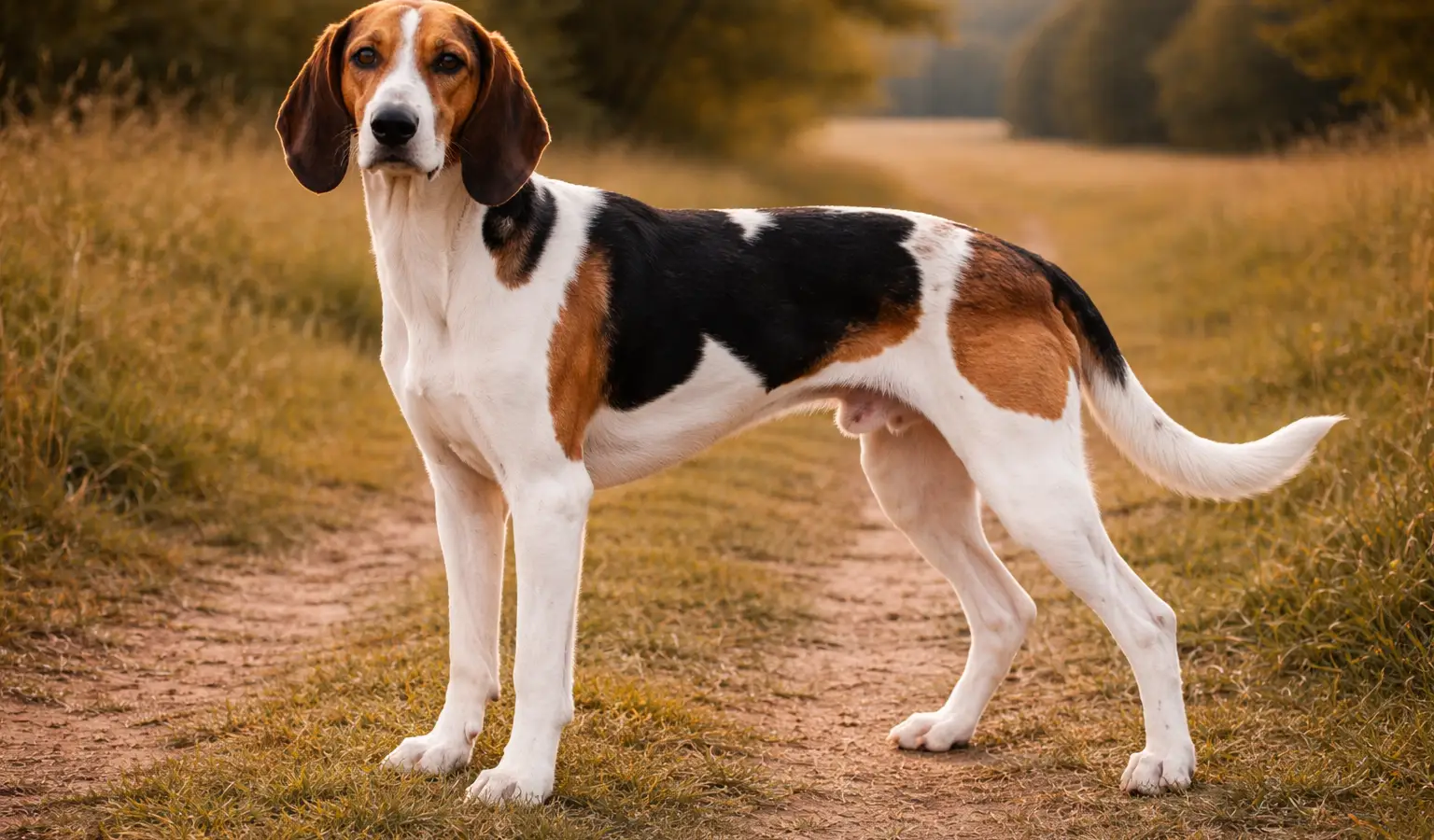
The French Tricolour Hound is a large French scenthound developed for pack hunting and traditional hound work. Powerful, enduring and equipped with an excellent nose, it is valued for steady trail performance and a strong voice. Highly social with other dogs, it needs substantial daily exercise, space and consistent handling suited to an active hunting-type breed.
Life expectancy
10 – 12 years
Price
900 – 1600 €
Monthly budget
80 €
Size
Large
Profile
French Tricolour Hound
Origin
France
Year of origin
1957
Developed by
French pack hunters
Size
Large
Coat type
Short coat
Owner profile
Experienced owner
Hypoallergenic
No
Litter size
8
Life expectancy
10 – 12 years
Price
900 – 1600 €
Female
- Height : 60 – 65 cm
- Weight : 28 – 32 kg
Male
- Height : 62 – 72 cm
- Weight : 30 – 35 kg
Temperament & abilities
Affectionate
3/5
Calm
3/5
Independent
5/5
Intelligence
4/5
Obedience
2/5
Hunting instinct
5/5
Energy level
5/5
Good with children
3/5
Dog-friendly
4/5
Friendly with strangers
2/5
Hunting profile
Stamina
5/5
Hunting drive
5/5
Independence
4/5
Trainability
3/5
Beginner-friendly
2/5
Family compatibility
3/5
Feather game
0/5
Fur game
4/5
Underground work
0/5
Water work
0/5
These indicators help compare breeds and choose the right one for your hunting style.
Game & abilities
Estimated ability level by game type.
Budget
Purchase price
900 – 1600 €
The price may vary depending on the breeder, bloodline, and region.
Average monthly cost
80 €
Estimated average: food, healthcare, accessories, and grooming.
What the French Tricolour Hound does well in the field, what it asks from its handler, and how that affects everyday life
A powerful pack hound best suited to driven, scent-led hunting
The French Tricolour Hound is a capable hunting dog for hunters who want a fast, enduring scent hound built to work game by nose over distance. In the right context, French Tricolour Hound hunting strengths include stamina, drive, a ringing voice, and the determination to stay on a line in difficult country. It is usually most coherent as a pack-oriented hound for traditional hound work rather than as a highly versatile one-dog solution expected to quarter close, retrieve neatly, and constantly check in with the handler.
Its working style is typically that of a forward-going scenthound: it uses its nose seriously, covers ground with purpose, and can show real courage and persistence on demanding quarry. That makes it appealing for hunters who value rhythm, drive, and a dog that can keep pressure on game. The trade-off is handling. Compared with more handler-focused gundogs, recall and off-lead control may require more time, more repetition, and realistic expectations, especially when the dog is fully engaged in scent. This is not usually the easiest breed for novice trainers who want instant responsiveness in the field.
Energy level is another key part of the decision. A French Tricolour Hound generally needs substantial physical work and mental outlet, not just short walks. It tends to make the most sense for people with regular access to countryside, structured exercise, and a genuine outlet for tracking or hunting instincts. In daily life, many individuals can be pleasant and even-tempered at home once properly exercised, but underworked dogs may become noisy, restless, or hard to live with. Apartment life and highly sedentary homes are rarely the most natural fit.
- Best use cases: traditional scent hunting, pack work, and handlers who value nose, stamina, and determination over close-control versatility.
- Main strengths: endurance, game focus, strong scenting ability, and confidence in rough terrain.
- Main limitations: independent working style, demanding exercise needs, and training that often requires patience and consistency.
For someone comparing hunting breeds, the French Tricolour Hound is usually a better match for classic hound work than for mixed shooting duties or casual pet ownership. It can be an impressive working companion in the right hands, but it suits owners who understand hound temperament, can manage a high-energy dog, and do not expect the tight handling style seen in many retrievers or versatile gundogs.
Strong trailing nose
The French Tricolour Hound is primarily appreciated as a scent hound with the nose to hold a line over distance and changing ground. In suitable breeding and hunting conditions, it can work older scent with purpose rather than rushing blindly, which makes it especially relevant for hunters who value steady tracking and honest nose work.
Built for long pursuits
This is a hound type associated with stamina more than short bursts of speed. It is generally better suited to sustained hunts, rough country, and repeated efforts over several hours than to quick casual outings. For active hunting homes, that endurance is a major asset, but it also means the breed usually needs substantial exercise outside the season.
Effective in a pack
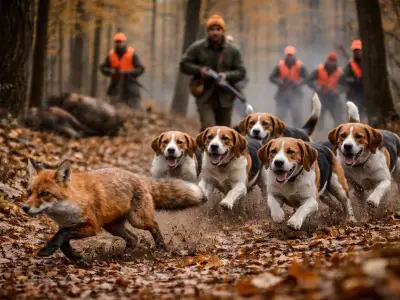
One of the breed’s most practical hunting qualities is its pack orientation. The French Tricolour Hound has traditionally been used in group work, where cooperation, consistency, and confidence around other hounds matter as much as individual drive. For hunters running multiple dogs, that pack-minded style can be a real advantage, though solo handling may require more patient training.
Drive on large game
The breed is commonly linked with pursuing larger game, and its style tends to reflect determination rather than softness. It often appeals to hunters who want a hound that will stay engaged once on scent and keep pressure on the track. That said, intensity can vary by line and education, so early control work remains important.
Clear, purposeful voice
Like many working French scenthounds, the French Tricolour Hound is valued not only for finding game but also for giving usable vocal information during the chase. A clear hunting voice can help handlers follow the progress of the pack through dense cover or broken terrain. In everyday family life, however, that same tendency means noise tolerance should be considered.
Best with experienced handling
This is not usually the easiest hunting breed for a novice looking for instant off-lead reliability. Its scent focus, independence, and excitement on game can make recall and control more demanding than with more handler-oriented gun dogs. In capable hands, though, that independence is often part of what makes the breed so effective in serious scent work.
Who the French Tricolour Hound suits best
The French Tricolour Hound tends to suit experienced hound people, dedicated hunters, and very active owners who genuinely enjoy living with an energetic scent dog. In the field, it is generally best matched to those who value stamina, nose work, and cooperative pack hunting over close, constant off-lead control. At home, daily life usually works best in a rural or semi-rural setting with room, routine, and plenty of purposeful exercise. This is often a better fit for someone who wants a working scenthound first and a family companion second, even though many individuals can be affectionate and steady in the household.
- Good match: hunters pursuing hare, deer, or wild boar depending on local practice, active owners used to vocal, driven hounds, and homes with secure outdoor space.
- Less suitable: apartment dwellers, low-exercise households, first-time dog owners, or anyone expecting easy recall around game scent.
- Common mismatch: people wanting a highly handler-focused dog for casual suburban life rather than a determined, independent hunting breed.
Training can be rewarding, but this is rarely the easiest breed for owners who prefer instant compliance. Its independence, voice, and strong tracking instinct may be challenging without structure, patient handling, and enough real activity.
How the breed’s history shaped its scenting style, stamina, and modern temperament
Origin and development of the French Tricolour Hound
The French Tricolour Hound, or Français tricolore, is a relatively modern French scenthound developed for pack hunting rather than as a general farm or companion dog. It was selected to follow large game over distance with speed, nose, and enough voice to be useful in the field. As with several French hound breeds, its history is tied to older regional hunting dogs and to organized hunting traditions in France, so some details of its exact development can vary by source. What is clear is that the breed was shaped for practical work: covering ground efficiently, staying focused on scent, and cooperating with other hounds.
The breed appears to have been refined from established French pack-hound lines, with breeders aiming for a balanced dog that combined endurance, drive, and a clear hunting style. That background helps explain the French Tricolour Hound’s present-day character. Many individuals are energetic, persistent, and more naturally tuned to scent work than to constant human direction. They are often sociable with other dogs because they were created to work in a pack, but that same heritage can mean a strong prey instinct and a tendency to prioritize a trail over casual recall if training is incomplete.
In practical terms, the breed’s history points to a dog that usually suits active owners, experienced hound handlers, or hunters who appreciate an independent working mind. This is not typically a breed developed to be idle, highly biddable in the style of a herding dog, or effortlessly adaptable to very confined urban life. Daily life is usually easier when the dog has space, a structured routine, and meaningful outlets such as tracking, scent games, long exercise, or hunting work where legal and appropriate. Early training and steady handling matter, but expectations should remain realistic: many scenthounds are cooperative in their own way rather than eager to obey every cue instantly.
That historical purpose also helps explain the breed’s strengths and limitations today. A well-bred French Tricolour Hound may offer stamina, a strong nose, and a stable pack-oriented nature, which can make it rewarding for people who want a serious scent hound with authentic working roots. On the other hand, prospective owners should be comfortable with energy, vocal expression, and the management needs that come with a dog bred to pursue game over long distances. In short, the breed’s origin is not just background information; it is the best guide to understanding how this hound is likely to think, move, and fit into modern family or hunting life.
French pack-hound roots
The French Tricolour Hound was developed in France as a scenthound for pack hunting, especially on larger game in demanding terrain. It is generally seen as part of the long French tradition of specialized hunting dogs bred for stamina, voice, and cooperative work rather than for a highly individual, independent style.
Bred for nose and drive
Selection focused on practical hunting qualities: a reliable nose, the ability to carry a line over distance, physical endurance, and a clear hound voice that handlers can follow. This helps explain why the breed often appears energetic, persistent, and strongly motivated by scent, especially outdoors where game trails and new smells are everywhere.
Sociable, but not soft
In many lines, the temperament reflects life in a pack: social with other dogs, people-oriented enough to handle well, but not necessarily eager to please in the way some gun dogs are. The French Tricolour Hound can be affectionate at home, yet its hunting instincts and concentration on scent may outweigh obedience if training lacks consistency.
Best with space and purpose
This is usually not the easiest breed for a sedentary household or a small urban routine. It tends to suit owners who can offer regular exercise, secure outdoor space, and meaningful activity such as long walks, tracking games, or hunting work. Without enough outlet, a driven scent hound may become noisy, restless, or difficult to manage.
Straightforward care, serious exercise
Coat care is usually simple, with basic brushing and routine checks after time in cover or rough ground. The bigger commitment is daily physical and mental work. A French Tricolour Hound generally needs more than a quick outing around the block; it does best when its nose, body, and brain are all given regular use.
For handlers who value hound qualities
This breed often suits experienced hound owners, active rural homes, and hunters looking for endurance and traditional scenthound character. It may be less suitable for people who want effortless recall, low exercise needs, or an off-leash companion in busy areas. Success depends a lot on bloodline, early education, and realistic expectations about how scent hounds think and work.
Practical answers about hunting ability, training, exercise, family life, and owner fit
French Tricolour Hound hunting FAQ
Is the French Tricolour Hound a good hunting dog for modern hunters?
The French Tricolour Hound was developed as a pack scent hound, and it is generally valued for stamina, nose, and drive on game. It tends to suit hunters who appreciate a dog that works energetically over ground and follows scent with commitment rather than constantly checking back for direction. In practical terms, that can be a strength in organized hunting, but it also means the breed may feel intense for casual owners who only want light weekend activity. Individual quality varies, so hunting ability still depends on line, early exposure, conditioning, and handling.
Are French Tricolour Hounds easy to train, or are they too independent?
Most French Tricolour Hounds are trainable, but they are not usually the easiest choice for someone wanting instant obedience in every setting. Like many scent hounds, they can become highly focused once they pick up an interesting trail, so recall and attention often require patient, repeated work. They usually respond better to calm consistency, clear routines, and useful rewards than to harsh correction. Owners who enjoy structured training and accept that hound independence is part of the breed often do better than those expecting a highly handler-dependent dog.
Can a French Tricolour Hound live as a family dog if it is not used for hunting?
It can, but this is rarely a low-maintenance pet breed. A French Tricolour Hound often needs substantial daily exercise, scent-based outlets, and enough space to move and decompress, otherwise boredom and vocal behavior may become more likely. In the right home, some individuals can be affectionate, social, and pleasant with family members, especially when raised with steady boundaries and routine. The key question is not simply whether the dog can live without hunting, but whether the household can realistically replace that working outlet with regular activity and purposeful engagement.
Do French Tricolour Hounds get along with children and other dogs?
Many scent hounds are comfortable in multi-dog settings, and the French Tricolour Hound often has the social background to live well with other dogs when introductions and management are sensible. With children, compatibility usually depends more on supervision, manners, and the dog's upbringing than on a simple breed label. This is an active, fairly driven hound, so families generally do best when children understand how to behave around dogs and adults can manage excitement. Small household pets may be more complicated because prey interest can be strong in some individuals.
Is the French Tricolour Hound suitable for apartment living?
For most homes, apartment living is not the most natural fit for this breed. The French Tricolour Hound is usually better suited to a rural or semi-rural environment where it has room, regular outdoor time, and less frustration from confinement. Exercise alone is not always enough if the dog lacks opportunities to use its nose and move freely in a controlled, safe way. A very committed owner might manage apartment life with extensive daily work, but for many people the breed is easier to live with in a house with secure outdoor access.
How much exercise does a French Tricolour Hound really need each day?
This is typically not a breed satisfied by a quick walk around the block. Most French Tricolour Hounds need a high level of daily physical exercise along with mental work such as tracking games, scent searches, or long controlled outings. Young adults and actively bred working dogs may need especially careful management because their energy and persistence can be considerable. A good rule is to think beyond simple mileage and ask whether the dog has had a chance to move, sniff, problem-solve, and settle afterward.
Who is the French Tricolour Hound best suited for?
The breed usually suits experienced hound owners, active rural households, and hunters who understand pack hound behavior and can provide structure without expecting robotic obedience. It is often a stronger match for people who enjoy endurance, outdoor time, and training through repetition than for first-time owners looking for a highly biddable companion. Daily life with this dog can be rewarding, but it may also include managing noise, scent-driven distraction, and a strong need for activity. In short, the best owner is usually someone who genuinely likes hounds for what they are, not someone hoping this breed will behave like a more handler-focused dog.