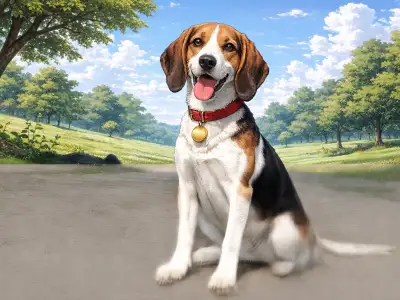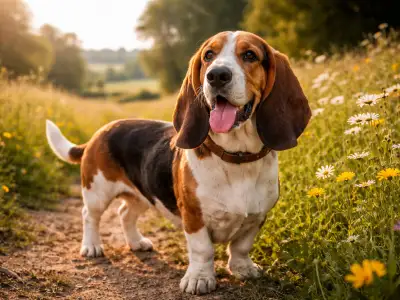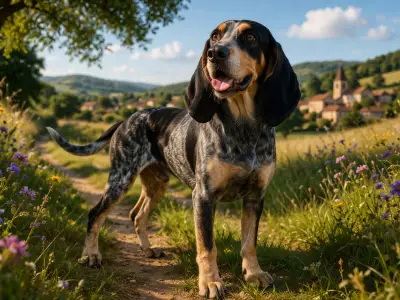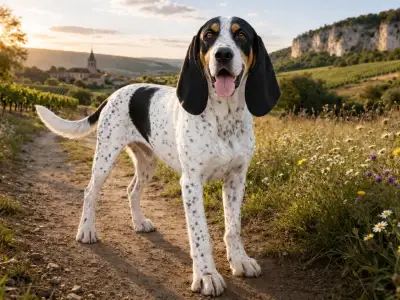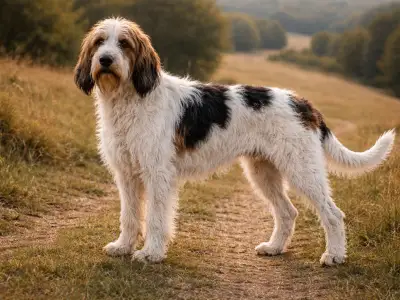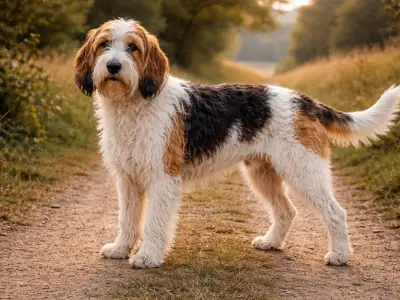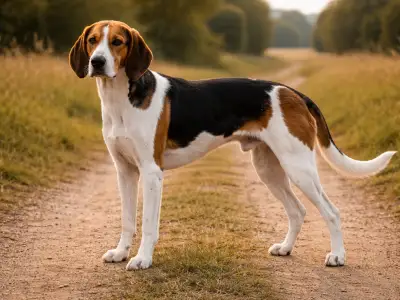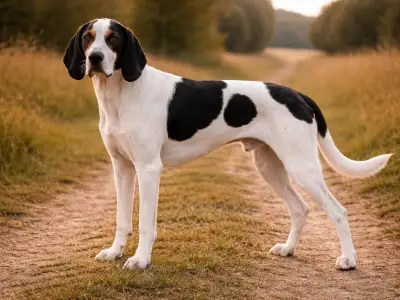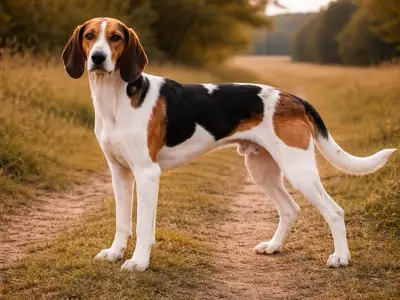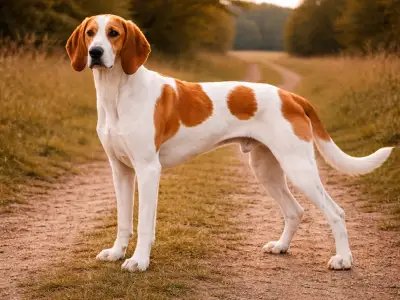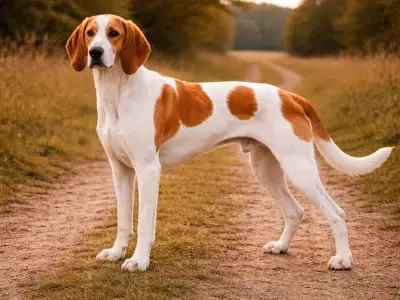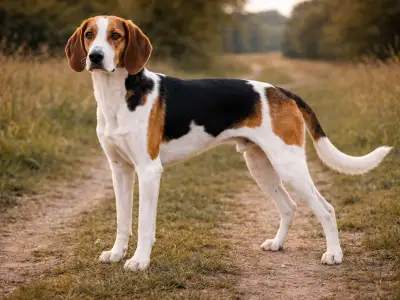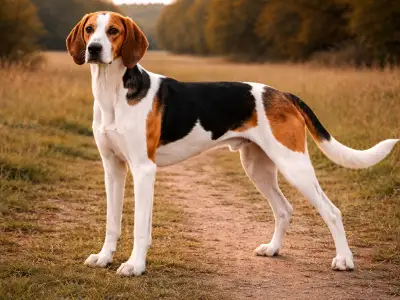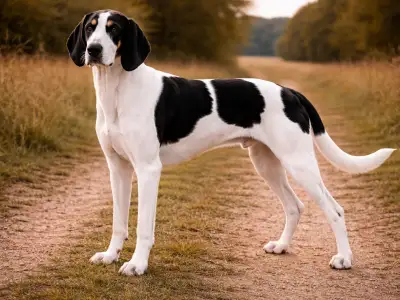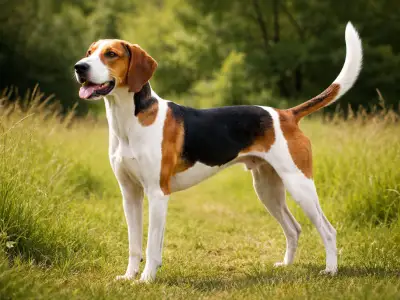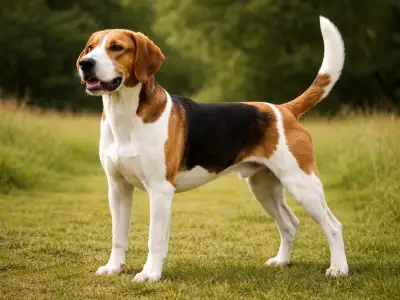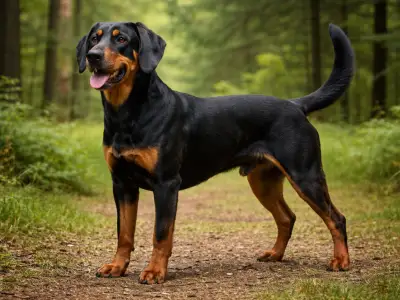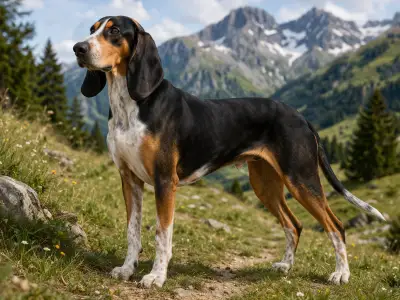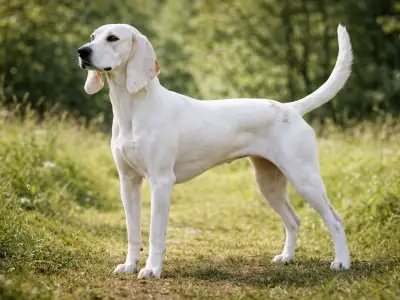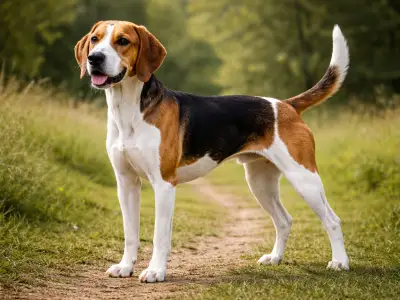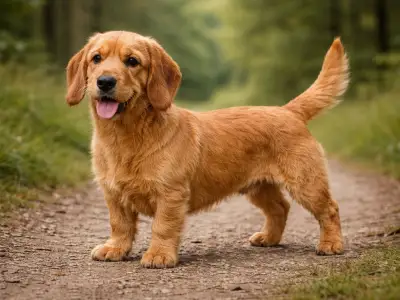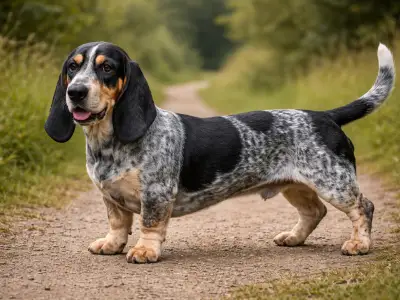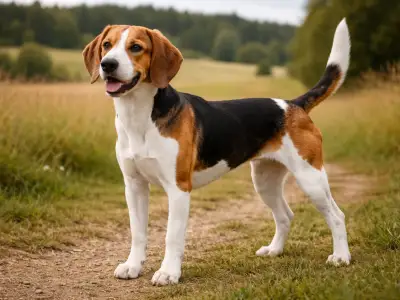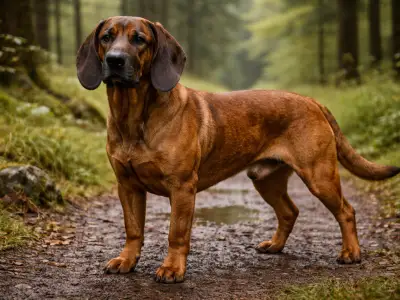
Beagle
The Beagle is a cheerful, curious and highly social small scenthound. Originally bred for hare hunting, it has an excellent nose and strong scent drive, which can make recall challenging without consistent training. Friendly with families and often great with children, it needs daily exercise, scent games and careful diet management.
Life expectancy
12 – 15 years
Price
700 – 1200 €
Monthly budget
60 €
Size
Medium
Profile
Beagle
Origin
United Kingdom
Year of origin
1800
Developed by
English breeders
Size
Medium
Coat type
Short coat
Owner profile
Active owner
Hypoallergenic
No
Litter size
6
Life expectancy
12 – 15 years
Price
700 – 1200 €
Female
- Height : 33 – 38 cm
- Weight : 8 – 11 kg
Male
- Height : 36 – 41 cm
- Weight : 10 – 14 kg
Temperament & abilities
Affectionate
5/5
Calm
3/5
Independent
4/5
Intelligence
4/5
Obedience
3/5
Hunting instinct
5/5
Energy level
4/5
Good with children
5/5
Dog-friendly
5/5
Friendly with strangers
5/5
Hunting profile
Stamina
4/5
Hunting drive
3/5
Independence
3/5
Trainability
3/5
Beginner-friendly
4/5
Family compatibility
5/5
Feather game
0/5
Fur game
4/5
Underground work
0/5
Water work
0/5
These indicators help compare breeds and choose the right one for your hunting style.
Game & abilities
Estimated ability level by game type.
Budget
Purchase price
700 – 1200 €
The price may vary depending on the breeder, bloodline, and region.
Average monthly cost
60 €
Estimated average: food, healthcare, accessories, and grooming.
A compact scent hound with a serious nose, plenty of drive, and very specific handling needs
Is the Beagle a Good Hunting Dog?
The Beagle is a genuinely capable hunting dog when the job matches its strengths. Bred as a scent hound, it is at its best following ground scent with persistence, voice, and stamina rather than working at long range under tight directional control. For rabbit, hare, and similar small-game hunting, a good Beagle can be highly effective. For hunters wanting a dog that quarters by nose, stays engaged on a line, and brings classic hound music to the field, Beagle hunting remains a very coherent choice. It is less convincing for people seeking a highly versatile gun dog, a polished retriever, or instant off-lead obedience in difficult scent conditions.
Its main asset is the nose. A Beagle typically works with determination, methodically sorting scent and pushing on through cover that might discourage a softer dog. Many show solid courage in brush, good stamina for their size, and an honest, workmanlike search pattern driven more by scent than by constant eye contact with the handler. That working style is exactly why some hunters love the breed and others do not. A Beagle often wants to follow the scent picture it believes in, which can make handling feel independent compared with more handler-focused breeds.
Training demands are real. Recall is one of the biggest practical issues in a Beagle hunting dog, because once the nose switches on, the outside world can become less important. Early foundation work, repetition, and consistent rules matter more than force. Trainability is not poor, but it is selective: many Beagles learn well when motivation is clear, yet they are not usually the easiest dogs for precision work. Retrieving may exist in some individuals, but it is not the breed's defining strength. In the field, they tend to suit owners who enjoy hound temperament and accept that progress can depend heavily on bloodline, maturity, and patient handling.
For daily life, the balance is mixed but manageable. A Beagle is small enough for many homes and often has a sociable temperament, yet its energy level, voice, and scent-driven curiosity should not be underestimated. Without enough exercise, tracking-style activity, and structure, many become noisy, distracted, or inventive escape artists. The most coherent use cases are:
- small-game hunting where nose and persistence matter most
- hunters who appreciate a traditional scent hound working style
- active homes that can provide regular exercise and scent-based outlets
- owners willing to invest in recall training and secure management
Compared with more biddable hunting breeds, the Beagle offers excellent scenting ability and enjoyable field character, but asks for more acceptance of independence. It suits people who want a real hound rather than a do-everything gundog. In the right setting, that can be a very rewarding balance between field performance and family life.
Powerful tracking nose
The Beagle’s standout asset is its nose. Bred as a scent hound, it is typically very capable of following rabbit and hare lines with persistence, even when scent is light or broken. For hunters focused on small game, that natural scenting ability is often the reason the breed remains so useful and popular.
Honest voice on trail
A good Beagle usually gives clear vocal information while working scent, which helps handlers follow the chase without seeing the dog constantly. That classic hound voice is more than character; it is practical field feedback. For hunters who enjoy listening to a track develop, this trait can be a real advantage.
Strong stamina for long outings
Despite its compact size, the Beagle often has impressive endurance. Many can work for extended periods over mixed ground if condition, weather, and fitness are managed sensibly. This makes the breed appealing for hunters who want an active small hound that can stay engaged through a long morning rather than fading quickly.
Natural pack worker
Beagles have long been used in groups, and many show an easy, practical style when hunting alongside other dogs. That pack-minded attitude can support cooperative work and a steady chase, especially in traditional small-game hunting. It also means they often suit handlers who value hound teamwork more than solo independence.
Tight focus on scent line
When a Beagle locks onto odor, it often works with real concentration. That focus helps on twisting game lines where a dog must sort out turns, checks, and old scent carefully rather than rushing blindly. The flip side is that recall can be more challenging in the field, so handling needs patient, consistent training.
Practical size and handling
The Beagle’s moderate frame is a genuine hunting advantage. It is small enough to transport, house, and manage more easily than many larger hounds, yet sturdy enough for rough cover and frequent outings. For hunters balancing field use with family life, that manageable size often makes day-to-day ownership much more realistic.
Who the Beagle suits best
The Beagle generally suits a hunter or active owner who enjoys following a nose-led dog rather than micromanaging every step. In the field, this breed is often a good match for rabbit and hare hunting, small-game work, and handlers who appreciate persistence, voice, and honest scenting ability over sheer speed or constant handler focus. At home, the same Beagle usually fits best with people who can provide daily exercise, sniff-heavy walks, patient training, and secure containment. Many do well in lively family life when their energy and curiosity are taken seriously.
It is less suitable for owners who want a highly biddable off-leash dog, a quiet apartment companion with minimal exercise, or a hunting partner expected to ignore game scent and stay glued to the handler. A Beagle can be charming and sociable, but also independent, vocal, and food-motivated. The best fit is a household that enjoys an upbeat hound temperament and can manage the breed's tendency to follow its nose, test boundaries, and need consistent routine.
Origin, selection, and what the breed’s past still explains today
Beagle history: how a small pack hound became a modern companion
The Beagle was developed in Britain as a small scent hound bred to follow hare and rabbit by nose over long distances. Its exact early ancestry is not perfectly documented, and historians do not agree on every stage of its formation, but the general picture is clear: breeders selected compact, tough, musical-voiced hounds that could work in packs and stay on a line of scent with determination. That history still shows in the modern Beagle’s priorities. This is a dog that often trusts its nose first, enjoys movement and exploration, and tends to work with cheerful persistence rather than sharp intensity.
Earlier small hounds sometimes grouped under the Beagle name likely existed for centuries, but the breed became more standardized in the 19th century, especially in England, when organized breeding and pack hunting shaped a more consistent type. Practical function mattered more than show-ring polish. Hunters wanted a hound that was handy to keep, agile in rough cover, energetic without being oversized, and social enough to hunt closely with other dogs. Those choices help explain why today’s Beagle is often friendly, lively, and comfortable in company, yet also quite independent when following scent.
As the breed spread beyond hunting fields and into family homes, its charm, moderate size, and outgoing temperament broadened its appeal. Even so, the Beagle did not leave its working heritage behind. Many individuals still show strong scent drive, stamina, and a tendency to vocalize when excited or on a trail. For daily life, that means owners should not mistake the breed’s soft expression and manageable size for a low-effort dog. A Beagle often does best with regular exercise, scent games, patient recall training, and secure boundaries, because an interesting odor can outweigh obedience in the moment.
For hunters and active households, the breed’s development suggests a fairly specific profile:
- Strengths: excellent nose work ability, endurance, pack sociability, and enthusiasm in dense cover or on small game scent.
- Limitations: selective hearing on scent, average off-leash reliability unless well managed, and a voice that may not suit every neighborhood.
- Best fit: people who enjoy an active, expressive hound and can give it structure, outlets, and realistic expectations.
In short, the Beagle’s origin as a compact hunting hound is not just background trivia. It is the key to understanding the breed’s temperament, working style, and daily needs today: merry, capable, scent-led, and usually most successful with owners who appreciate hound instincts instead of trying to suppress them.
Built as a pack hound
The Beagle developed in Britain as a small scent hound used to follow rabbits and hare on foot. That background still matters today: many Beagles are social with other dogs, persistent on a trail, and happiest when they can move, search, and work their nose rather than simply stroll beside their owner.
Nose first, ears second
A Beagle’s defining trait is scent drive. When odor is interesting enough, recall and loose-leash manners can fade unless training is solid and management is realistic. For hunters and active families, this means the breed often shines in tracking-style work, search games, and practical nose use, but usually needs patience around distractions.
Friendly, but not soft
Many Beagles are cheerful, approachable dogs with a lively, curious nature, which helps explain their long popularity as family companions. At the same time, they are not always eager to obey just for the sake of pleasing. Training often goes best when it is consistent, reward-based, and interesting enough to compete with the environment.
Daily life needs structure
This is rarely a low-maintenance house dog in the practical sense. A Beagle often needs secure fencing, regular exercise, and daily mental work to stay settled indoors. Without enough outlets, some individuals may become noisy, restless, or highly opportunistic around food, scents, and open doors.
A good match for active owners
The Beagle tends to suit people who enjoy routine, outdoor time, and hands-on training more than owners wanting instant off-leash reliability. It can be a rewarding choice for small-game hunters, scent-work enthusiasts, and families who like a sturdy, sociable dog, provided they are prepared for hound independence and everyday management.
Simple coat, real upkeep
Grooming is straightforward thanks to the short coat, but care is not limited to brushing. Beagles benefit from weight control, regular exercise, nail care, and attention to ear cleanliness, especially after time in cover, wet ground, or dense brush. Their compact size makes them manageable, yet their energy and appetite still require discipline.
Practical answers about hunting ability, training, exercise, housing, and everyday suitability
Beagle hunting and family life FAQ
Is a Beagle a good hunting dog for rabbits and other small game?
Beagles were developed as scent hounds, and many still show strong natural interest in following ground scent, especially on rabbit and hare. Their main strengths are nose work, persistence, and the ability to work methodically rather than at high speed. In practical hunting, a Beagle often suits people who enjoy listening to a hound work a trail and who want a smaller, manageable dog for brush, fields, and mixed cover. Individual ability varies a lot, though, so bloodline, early exposure, physical condition, and patient training all matter.
Are Beagles easy to train, or are they too stubborn for beginners?
Beagles are trainable, but they usually are not the kind of dog that obeys with the instant precision of a highly handler-focused breed. Their nose can easily compete with your voice, so training has to be consistent, reward-based, and realistic about distraction. Many first-time owners do well with a Beagle if they enjoy repetition, short sessions, and clear routines rather than expecting fast perfection. Recall, leash manners, and settling indoors often need more work than people expect, especially during adolescence.
Can a Beagle live as a family dog if it also comes from hunting lines?
In many cases, yes. A Beagle from hunting stock can be affectionate, social, and enjoyable in family life, but working instincts do not disappear just because the dog lives in a house. That usually means more sniffing, more determination outdoors, and a greater need for structured activity than some pet owners anticipate. Families tend to do best when they appreciate an active scent hound personality and provide daily exercise, boundaries, and supervision around food, wildlife, and open spaces.
How much exercise does a Beagle really need every day?
Most Beagles need more than a quick walk around the block. A good routine often includes brisk walking, sniffing time, some training, and chances to use the nose through tracking games, search exercises, or longer outings in safe areas. Compared with some larger hunting breeds, the Beagle is compact, but that does not mean low energy. When under-stimulated, many become noisy, restless, or opportunistic about escaping, so mental work is usually just as important as physical exercise.
Are Beagles good for apartment living, or do they need a big yard?
A Beagle can live in an apartment if the owner is committed, but the breed is not effortlessly easy in close quarters. The main issues are usually voice, boredom, and the tendency to follow scent if management is loose. A fenced yard is helpful for convenience, but it is not a substitute for walks, enrichment, and training; many Beagles with yards still need plenty of guided activity. In apartments, success often depends on meeting exercise needs, teaching calm routines, and being realistic about barking or baying.
Is a Beagle a good choice for off-leash hiking and reliable recall?
For many Beagles, off-leash freedom is a high-risk area unless recall has been trained carefully over time and the environment is very controlled. Once a scent line becomes interesting, even a friendly and well-raised Beagle may tune out the handler and keep working. That does not make the breed uncooperative; it reflects the priorities of a scent hound bred to follow odor with determination. Long lines, secure trails, and realistic expectations are often the safest and most practical approach for everyday owners.
Who is the Beagle best suited for, and who may struggle with this breed?
The Beagle often suits people who enjoy an active, sociable dog and do not mind a hound that thinks with its nose first. It can be a strong match for owners who like country walks, scent games, patient training, and a cheerful companion that is generally sturdy and portable. People who want instant recall, silent indoor living, or very easy off-switch behavior may find the breed frustrating. The best fit is usually someone who sees the Beagle's hunting heritage as part of the appeal rather than as a problem to suppress.