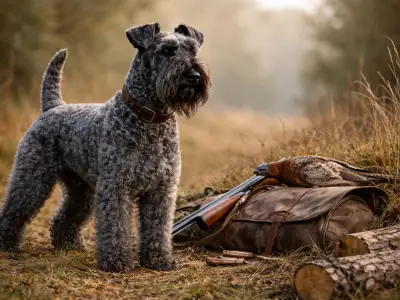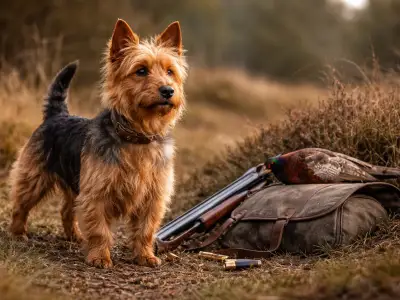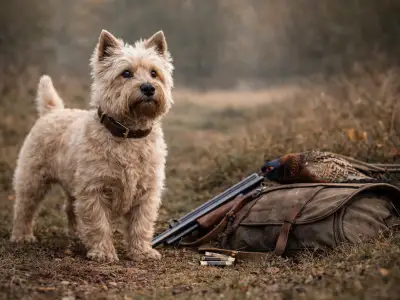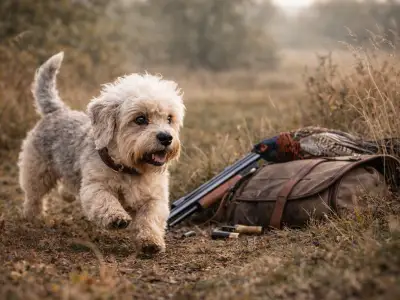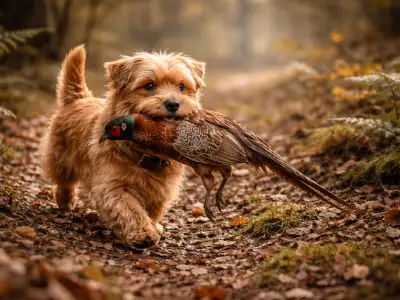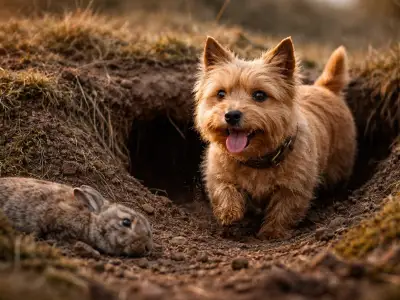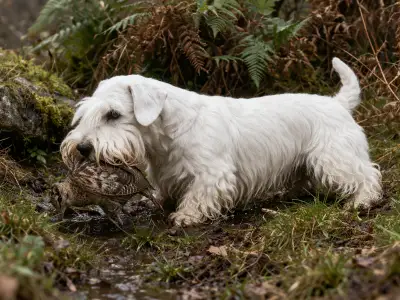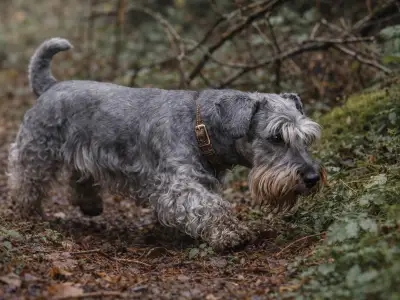
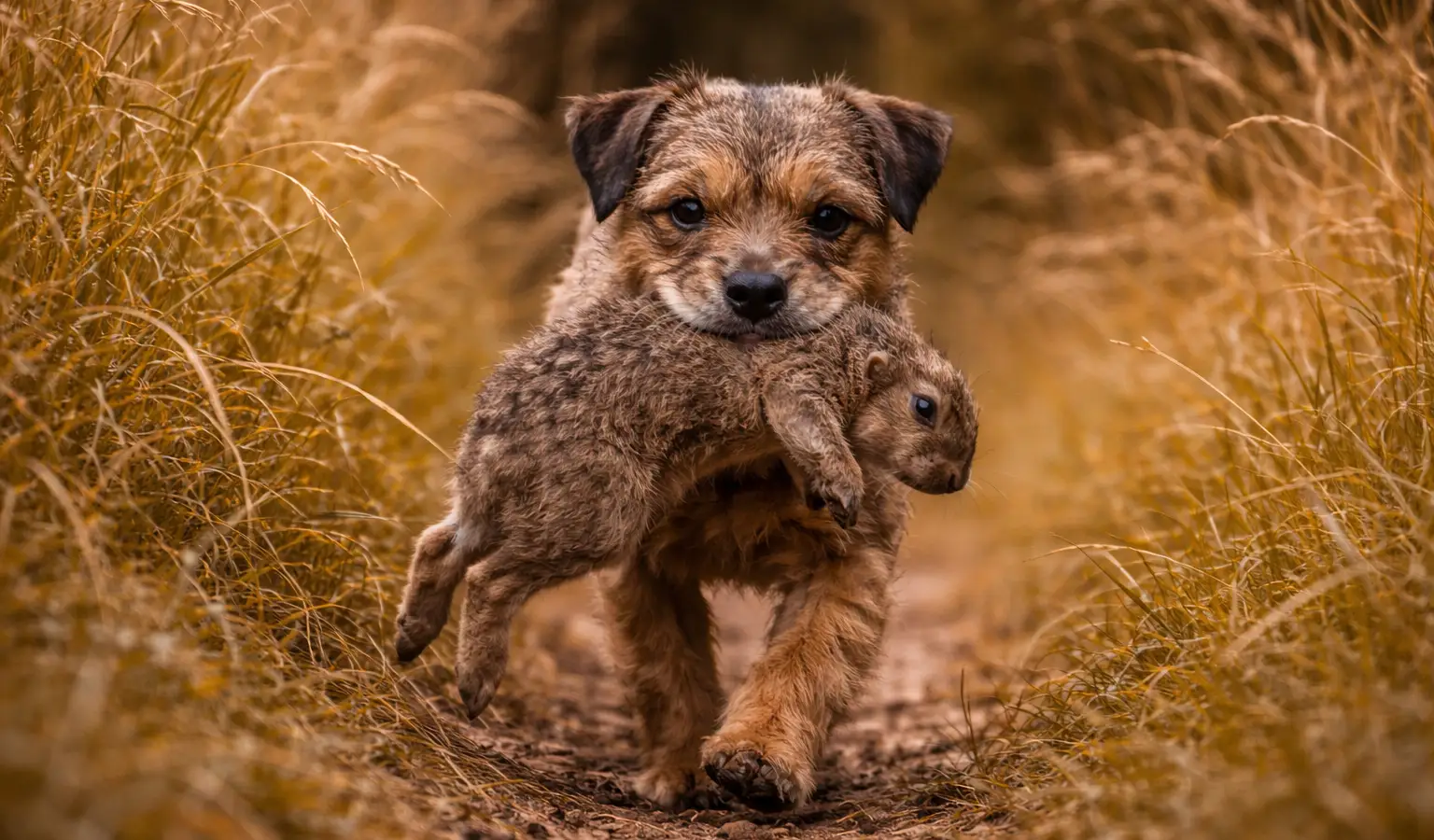
Border Terrier
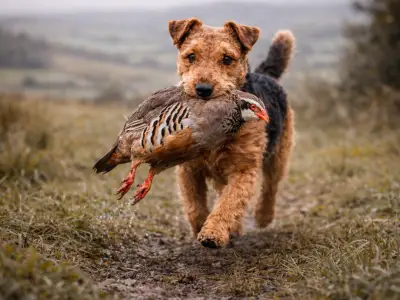
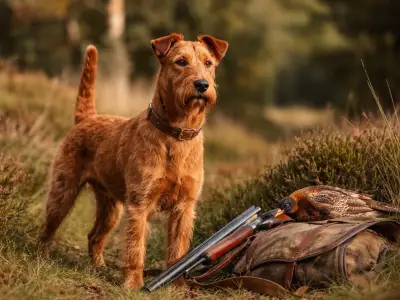
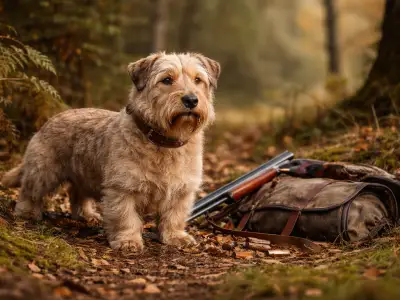
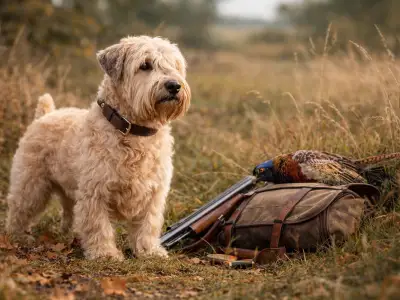
The Border Terrier is a hardy and courageous dog, originally bred for fox hunting. Friendly and balanced, it makes an excellent family companion.
Life expectancy
12 – 15 years
Price
900 – 1500 €
Monthly budget
60 €
Size
Small
Profile
Border Terrier
Origin
United Kingdom
Year of origin
1800
Developed by
Border hunters
Size
Small
Coat type
Wire coat
Owner profile
Active owner
Hypoallergenic
No
Litter size
5
Life expectancy
12 – 15 years
Price
900 – 1500 €
Female
- Height : 28 – 36 cm
- Weight : 5 – 6 kg
Male
- Height : 30 – 38 cm
- Weight : 6 – 7 kg
Temperament & abilities
Affectionate
4/5
Calm
4/5
Independent
3/5
Intelligence
4/5
Obedience
4/5
Hunting instinct
4/5
Energy level
3/5
Good with children
5/5
Dog-friendly
4/5
Friendly with strangers
4/5
Hunting profile
Stamina
4/5
Hunting drive
4/5
Independence
4/5
Trainability
3/5
Beginner-friendly
3/5
Family compatibility
4/5
Feather game
1/5
Fur game
4/5
Underground work
4/5
Water work
1/5
These indicators help compare breeds and choose the right one for your hunting style.
Game & abilities
Estimated ability level by game type.
Budget
Purchase price
900 – 1500 €
The price may vary depending on the breeder, bloodline, and region.
Average monthly cost
60 €
Estimated average: food, healthcare, accessories, and grooming.
A small working terrier with real grit, a practical nose, and a lively off-switch when properly managed
Is the Border Terrier a Good Hunting Dog?
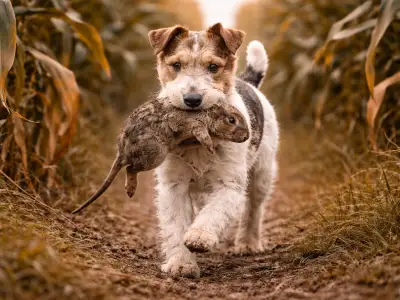
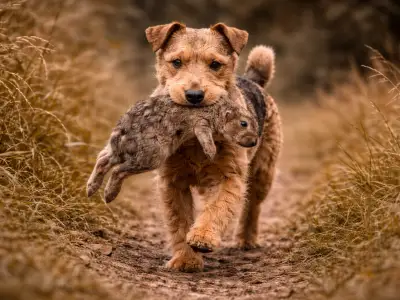
The Border Terrier can be a very capable hunting dog for the right kind of work. It was developed as a hard, agile terrier able to follow fox and other quarry in rough country, so its strengths usually lie in courage, persistence, and a useful nose rather than in the broad, high-speed pattern of larger pointing or flushing breeds. For hunters asking whether Border Terrier hunting ability is real, the short answer is yes: this is a genuine working terrier, but one best suited to close, purposeful work and owners who understand terrier independence.
In the field, the Border Terrier often works with determination and surprising stamina for its size. Many show a keen search instinct, good willingness to push through cover, and the confidence to tackle awkward terrain. Their compact build can be an advantage in hedgerows, brambles, banks, and mixed ground where a smaller dog moves efficiently. Handling, however, is not always as straightforward as with more biddable gundog breeds. A Border Terrier may stay focused on scent and quarry to the point of testing recall, especially if early training has been inconsistent. Reliable obedience matters if the dog is expected to work safely around livestock, roads, or other hunters.
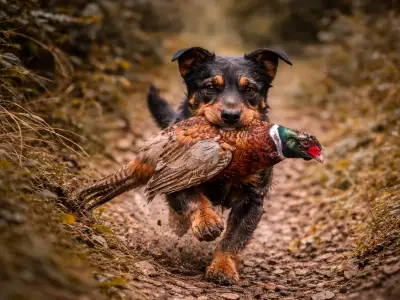
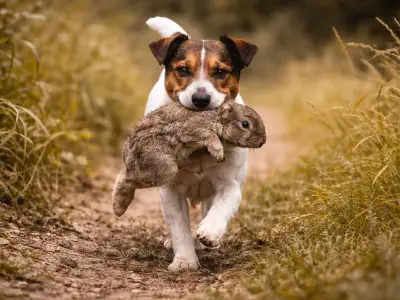
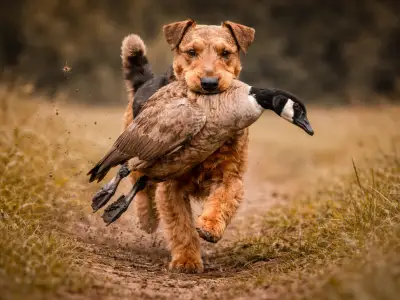
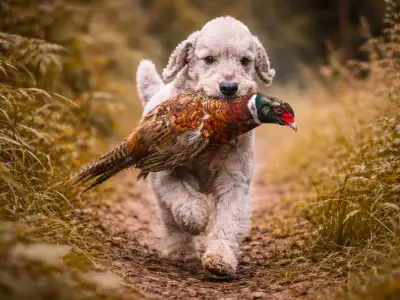
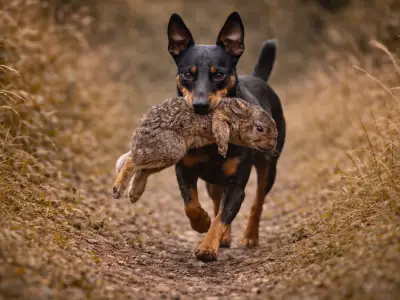
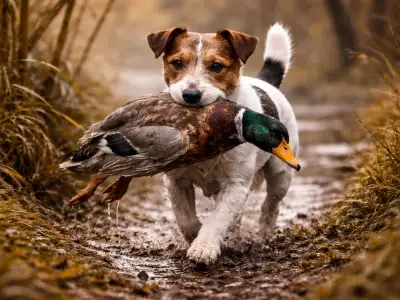
Training demands are moderate to high in a practical sense: not because the breed is unintelligent, but because terriers tend to have opinions. The best results usually come from early recall work, calm repetition, and plenty of controlled exposure to scent, cover, and real-world distractions. Some Border Terriers will retrieve small game or training dummies willingly, but retrieve instinct and delivery are often less predictable than in retriever or spaniel lines. If a buyer wants a highly polished, handler-dependent hunting dog, another breed may be easier. If they want a small, game little worker with character, the Border Terrier has a lot to offer.
- Strengths: courage, nose, stamina, practical size, versatility in rough cover, lively but manageable energy in many homes
- Limitations: independent temperament, variable retrieve, prey drive that can complicate recall, less naturally cooperative than many gundogs
- Best suited to: experienced terrier owners, active homes, and hunters who value grit and working attitude over mechanical precision
As an everyday companion, the balance is one of the breed's real attractions. A well-bred, well-exercised Border Terrier is often easier to live with than many people expect, but it still needs regular activity, structure, and mental work. Without enough outlet, frustration can show up as restlessness, digging, or over-interest in small animals. For someone comparing breeds, the Border Terrier is usually less about stylish field performance and more about honest, practical hunting temperament combined with a cheerful family life when its instincts are respected.
Determined underground worker
The Border Terrier was developed for hard, practical work and is widely valued for the determination needed when quarry goes to ground. A good individual often shows real grit without being needlessly reckless, which matters in tight spaces where nerve, self-control, and persistence are more useful than blind intensity.
Strong nose for close work
Many Border Terriers use their nose well in rough cover, hedgerows, and broken ground where a small, handy dog can stay busy and methodical. They are not usually chosen as specialist scent hounds, but their scenting ability can be very useful for locating, following short lines, and keeping pressure on moving game at close range.
Stamina beyond its size
This breed often surprises people with how much work it can handle over a long day. A fit Border Terrier may keep going through wet fields, banks, bramble, and uneven terrain with less fuss than many larger dogs. That endurance is one of its most practical hunting strengths, especially for active owners who want a small dog with real staying power.
Compact and agile in cover
The Border Terrier’s size is a working advantage, not just a lifestyle convenience. Its narrow, flexible build can help it move through dense cover, tight gaps, and awkward ground where bulkier dogs lose efficiency. For hunters dealing with foxy hedges, stone walls, or tangled edges, that agility can make the dog easier to use and easier to keep in contact with.
Practical biddability
Compared with some terriers, the Border Terrier often offers a more manageable balance of independence and handler awareness. It still needs consistent training, especially around excitement and prey drive, but many are easier to live with and direct in the field than sharper, more hard-headed terrier types. That makes the breed appealing to hunters who want grit without constant conflict.
Versatile small hunting companion
The Border Terrier tends to suit people who want one compact dog for mixed country use rather than a narrow specialist. Depending on the dog, line, and training, it may contribute to bolting work, close pest control, rough shooting days, and general active farm life. Its versatility is often one of the breed’s biggest advantages for practical handlers.
Who the Border Terrier suits best
The Border Terrier tends to suit an active owner who wants a small hunting terrier with real purpose rather than a purely decorative companion. In the field, it often appeals to people interested in bolting work, vermin control, or a versatile earthdog-type partner with stamina, courage, and enough biddability to stay connected to the handler. At home, the best match is usually a household that enjoys regular walks, training, scent games, and a dog that likes to be included rather than left to entertain itself.
It can also work well as a family dog when exercise, boundaries, and supervision around smaller pets are taken seriously. Less suitable profiles include very sedentary homes, owners who want instant off-leash reliability with little training, or households expecting a quiet lap dog with low prey drive. Many Border Terriers are affectionate and manageable, but they are still terriers: curious, determined, and sometimes selective about what deserves their attention. People who appreciate that mix of toughness, cheerfulness, and independence are often the ones who enjoy the breed most.
How a hard, practical foxing terrier became the steady, game little dog people know today
Origin and development of the Border Terrier
The Border Terrier comes from the rough hill country along the English-Scottish border, where farmers and hunt followers needed a small, tough terrier that could travel with hounds and still go to ground after fox. Rather than being bred mainly for looks, these dogs were shaped for function: long enough in leg to keep up across open country, narrow enough in chest to enter tight spaces, and hardy enough to work in cold, wet conditions. That practical beginning still helps explain the modern Border Terrier’s character: energetic but not usually frantic, bold without needing to be quarrelsome, and notably game for its size.
Its development is generally linked to the old working terriers of Northumberland and the Borders, with local strains used by shepherds, farmers, and foxhunters. Historical records are not always perfectly precise, which is common with old landrace-type working dogs, but the overall picture is consistent: the breed was refined to be an efficient field terrier, not a decorative companion. The Border Terrier’s weather-resistant coat, strong prey drive, and plain, workmanlike build all reflect that background. Even today, many owners notice that this breed often combines terrier determination with a somewhat more measured, cooperative style than some of the more fiery terriers.
That history matters if you are considering the breed for hunting or active family life. A good Border Terrier often suits people who want a compact dog with genuine working instinct, stamina on walks or in the field, and a temperament that can be easier to live with than a sharper, more confrontational terrier. At the same time, its original purpose brings limits as well as strengths. Small pets may trigger chase instincts, recall can require patient training, and mental underload can quickly show up as digging, vocalizing, or self-directed entertainment.
In practical terms, the Border Terrier tends to suit owners who enjoy training, outdoor time, and consistent handling. For some hunters, it can be an appealing choice as a small hunting terrier with courage, nose, and persistence, especially where a biddable, portable dog is valued. For family homes, the breed often fits best where people appreciate an active, wiry-coated dog with terrier instincts still intact, rather than expecting a purely easygoing lap dog. The breed’s past does not dictate every individual dog, but it strongly shapes the Border Terrier’s working style and everyday temperament.
Border-country roots
The Border Terrier developed along the England-Scotland border, where farmers and huntsmen needed a small, tough terrier able to follow horses, cover rough ground, and go to ground after foxes when required. That background helps explain the breed’s practical build: narrow enough for tight places, sturdy enough for long working days, and generally more workmanlike than flashy.
Bred for stamina, not drama
Unlike some terriers selected mainly for bold confrontation, the Border Terrier was often valued for persistence, efficiency, and level-headed usefulness in the field. Many individuals are keen, brave, and determined, but they can also be notably more biddable and easier to live with than sharper terrier types. That balance is one reason the breed appeals to both active pet owners and country sports households.
A practical hunting terrier
For hunting use, the Border Terrier is generally better suited to handlers who want a compact earthdog with endurance, good scenting ability, and a sensible working attitude rather than sheer aggression. Depending on line and training, it may suit vermin control, bolting work, and active days in mixed countryside. Prey drive is usually present, so recall and steadiness need real practice, not assumptions.
Lively but manageable at home
Daily life with a Border Terrier is often easier when owners understand that this is an energetic small dog, not a decorative one. Many are affectionate, cheerful, and good company, yet they still need regular exercise, interesting walks, and mental engagement. Without enough to do, some can become noisy, restless, or too eager to chase anything that moves.
Low-fuss coat, real upkeep
The harsh double coat is practical for outdoor work and usually less demanding than long, silky coats, but it is not entirely maintenance-free. Many Border Terriers benefit from periodic hand-stripping to keep texture and weather resistance, while routine brushing, nail care, and ear checks remain important. Owners wanting a naturally tidy outline should expect regular, hands-on coat management rather than complete wash-and-wear simplicity.
Best for active, involved owners
This breed tends to suit people who enjoy training, walking, and living with a bright dog that notices everything. A Border Terrier can adapt to village, suburban, or even some urban homes if exercise and supervision are consistent, but it is rarely ideal for a very sedentary routine. Secure fencing, clear boundaries, and early socialization usually make a meaningful difference in day-to-day harmony.
Practical answers about work, trainability, daily management, and owner fit
Border Terrier hunting and family life FAQ
Is a Border Terrier a good hunting dog?
The Border Terrier was developed as a tough, agile working terrier, and many individuals still show the boldness, nose, and persistence that make the breed useful in the field. It is generally better suited to earthwork, vermin control, and rough-country hunting tasks than to the broad all-round role of a gundog. In practice, hunting ability varies a lot with bloodline, early exposure, and training, so not every Border Terrier will have the same working intensity. For hunters who want a small, hardy dog with real terrier character rather than size or speed, the breed can be a very credible option.
What kind of hunting is the Border Terrier best suited for?
The breed is most naturally associated with terrier work: locating, pursuing, and pressuring quarry in dense cover or underground, depending on local laws and hunting traditions. Its compact build, weather-resistant coat, and willingness to push through rough terrain are practical advantages in hedgerows, brush, and uneven ground. Some Border Terriers also do well as farm dogs for ratting and general pest control, which often suits their instincts better than highly specialized modern sport work. They are not usually the first choice if you want long-range pointing, large retrieves, or a dog built to cover huge distances at speed.
Are Border Terriers easy to train for hunting and recall?
They are often trainable, but they are still terriers, which means they tend to think for themselves and can become selective when prey scent is strong. A Border Terrier usually responds best to short, consistent sessions, clear rules, and a handler who is calm rather than heavy-handed. Recall needs deliberate work from puppyhood, especially around movement, scent trails, and exciting environments, because instinct can easily override obedience if training is rushed. Many owners get the best results by treating recall and impulse control as long-term priorities rather than assuming the breed will offer off-leash reliability early.
Can a Border Terrier live happily as a family dog if it does not hunt?
Many can, provided they get enough exercise, mental stimulation, and regular outlets for their natural curiosity and prey drive. The breed often fits active homes well because it tends to be small enough for practical daily life while still having real working-dog energy and resilience. With sensible socialization and supervision, many Border Terriers are affectionate and lively companions, but they are usually not a low-effort lap dog in the usual sense. Families should expect a dog that enjoys being involved, notices everything, and may try to chase small animals if management is loose.
Do Border Terriers get along with children and other pets?
Many Border Terriers do well with children when they are raised with them or introduced thoughtfully, especially in homes that teach both dog and child respectful boundaries. Their size and robust nature can make them easier to live with than some more fragile small breeds, but they are still energetic terriers and may not enjoy rough handling. With other dogs, they are often more sociable than some terrier breeds, though same-sex tension or pushy behavior can still appear in certain individuals. Small pets such as rodents, rabbits, or free-roaming birds can be a bigger challenge because prey drive may remain strong even in an otherwise friendly household dog.
How much exercise and daily work does a Border Terrier need?
A Border Terrier usually needs more than a quick walk around the block and tends to do best with a mix of physical exercise, sniffing time, and structured engagement. Daily walks, training games, tracking-style activities, and chances to explore safely often help prevent boredom-driven digging, barking, or chasing. The exact amount depends on age, fitness, and temperament, but most adults are happiest with a genuinely active routine rather than occasional weekend outings. People are sometimes surprised by how much stamina this small terrier has once it is mature and confident outdoors.
Who is the Border Terrier best suited for, and who may struggle with the breed?
The breed tends to suit owners who like a small dog with real grit, outdoor enthusiasm, and a practical working background, whether for hunting, sport, or simply active country life. It often works well for people who enjoy training, can manage prey drive sensibly, and want a companion that is hardy and game rather than ornamental. Owners looking for effortless off-leash freedom, very low exercise needs, or a naturally biddable dog may find the Border Terrier more challenging than expected. First-time owners can succeed, but usually do best if they are realistic about terrier independence and ready to be consistent from the start.