Staffordshire Bull Terrier
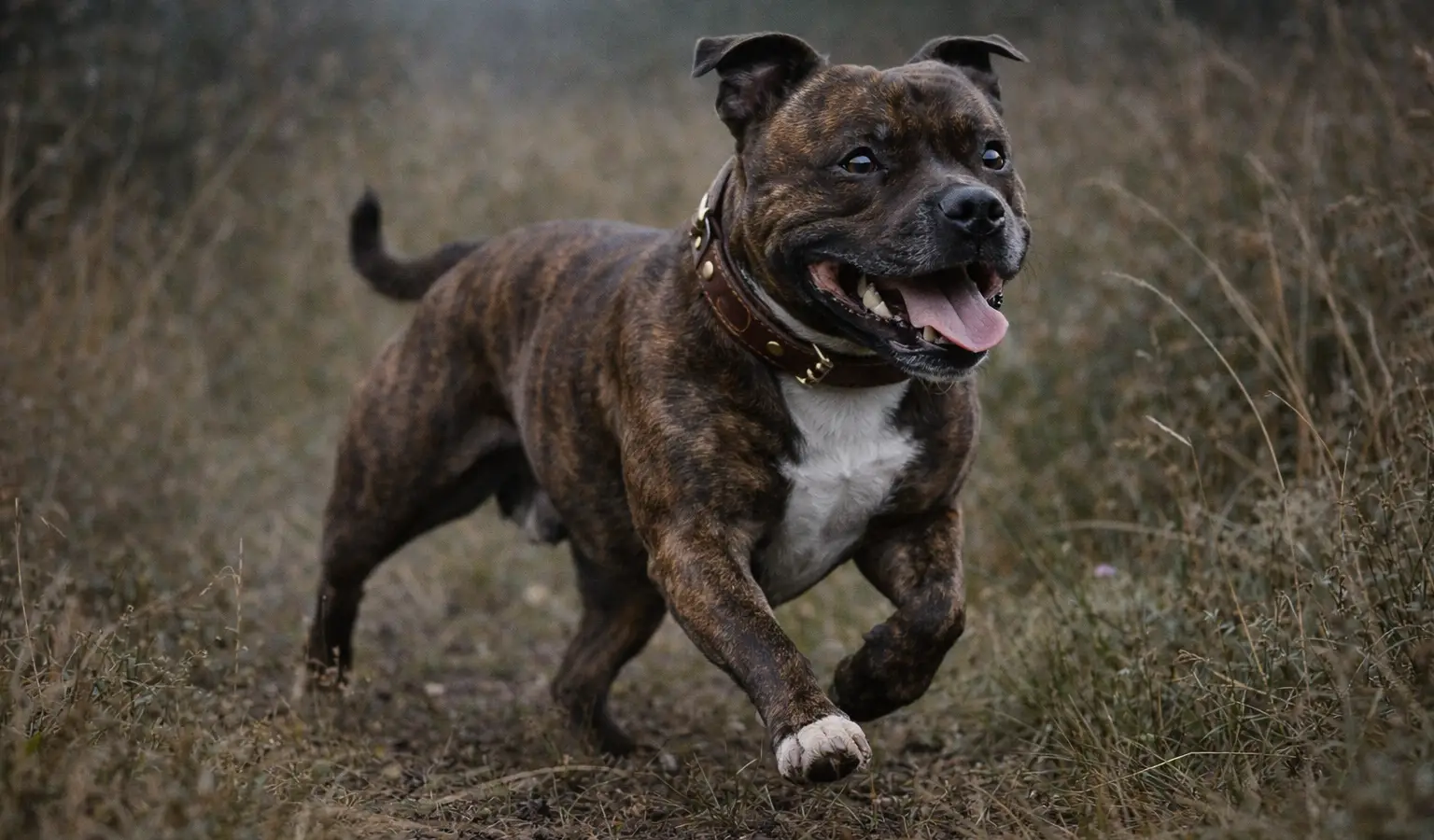
The Staffordshire Bull Terrier is a powerful, people-loving dog known for its courage and affection. With proper socialization and consistent training, it can be a wonderful family companion.
Life expectancy
12 – 14 years
Price
900 – 1500 €
Monthly budget
70 €
Size
Medium
Profile
Staffordshire Bull Terrier
Origin
United Kingdom
Year of origin
1800
Developed by
English breeders
Size
Medium
Coat type
Short coat
Owner profile
Active owner
Hypoallergenic
No
Litter size
6
Life expectancy
12 – 14 years
Price
900 – 1500 €
Female
- Height : 33 – 38 cm
- Weight : 11 – 15 kg
Male
- Height : 35 – 40 cm
- Weight : 13 – 17 kg
Temperament & abilities
Affectionate
5/5
Calm
3/5
Independent
2/5
Intelligence
4/5
Obedience
4/5
Hunting instinct
2/5
Energy level
4/5
Good with children
5/5
Dog-friendly
3/5
Friendly with strangers
4/5
Hunting profile
Stamina
4/5
Hunting drive
1/5
Independence
3/5
Trainability
3/5
Beginner-friendly
3/5
Family compatibility
4/5
Feather game
0/5
Fur game
2/5
Underground work
1/5
Water work
1/5
These indicators help compare breeds and choose the right one for your hunting style.
Game & abilities
Estimated ability level by game type.
Budget
Purchase price
900 – 1500 €
The price may vary depending on the breeder, bloodline, and region.
Average monthly cost
70 €
Estimated average: food, healthcare, accessories, and grooming.
A capable, game little terrier with real grit, but a specialist choice rather than an all-round hunting breed.
Is the Staffordshire Bull Terrier a Good Hunting Dog?
The Staffordshire Bull Terrier can show useful hunting terrier qualities, but it is not usually the first choice if you want a versatile modern hunting dog. In the field, its strengths tend to be courage, determination, close-range work, and the willingness to push into difficult cover. For hunting use, it makes the most sense in limited, practical terrier roles rather than as a broad-spectrum gun dog. Anyone considering Staffordshire Bull Terrier hunting should see it as a tough, energetic working companion with clear limits in range, handling style, and game specialization.
Its working style is typically compact and intense rather than wide-casting or highly methodical over big country. Many individuals have plenty of drive, decent stamina, and enough nose for close searching, but this is not a breed best known for elegant patterning, polished retrieve work, or the kind of natural quartering expected from dedicated bird dogs. The Staffordshire Bull Terrier temperament can be a plus in demanding terrain because the breed is often bold, physical, and hard to discourage, yet that same determination means handling must be consistent. Recall, impulse control, and calmness around other animals are especially important, as terrier instincts can easily override soft handling.
Training demands are moderate to high if you want a dog that is reliable outside the home as well as manageable in everyday life. The breed is usually intelligent and people-oriented, but not always easy in the sense of automatic compliance. A Staffordshire Bull Terrier hunting dog often needs more repetition, clearer boundaries, and earlier control work than a novice expects. Good candidates usually do best with short, engaging sessions, careful socialization, and regular outlets for energy. Harsh methods are unnecessary and can be counterproductive, while loose, inconsistent training can leave you with a strong little dog that follows its own agenda.
- Best fit: close terrier-type work, active owners, structured training, and practical field use on a modest scale
- Less suited to: large open-country searches, specialist pointing, steady waterfowl retrieving, or handlers wanting a very biddable distance-working dog
- Daily life balance: affectionate and lively at home, but usually needs exercise, supervision, and mental engagement to stay easy to live with
For a hunter comparing breeds, the Staffordshire Bull Terrier is most coherent as a gritty, energetic companion for someone who values toughness and character more than range, finesse, or multi-purpose hunting versatility. In family life, many are deeply attached to their people and enjoyable to live with, but they are rarely a low-effort option. The right dog from the right lines, with thoughtful training and realistic expectations, may be rewarding for an experienced terrier-minded owner, while many hunters will find a more purpose-bred hunting breed easier to develop and use consistently.
Bold close-range worker
The Staffordshire Bull Terrier was developed from old bull-and-terrier stock, and that background still shows in its confidence and willingness to engage at close quarters. In hunting terms, that can translate into real determination on vermin and other tight, high-pressure work, especially where a dog must stay committed rather than hesitate.
Quick in dense cover
Compact, muscular, and very agile, this breed can move efficiently through rough ground, yards, outbuildings, and heavy cover where a larger dog may be less practical. That athletic build helps with fast turns, sudden bursts, and close handling, making the Staffordshire Bull Terrier potentially useful for short, sharp pest-control tasks.
High prey focus
Many Staffordshire Bull Terriers show strong interest in moving animals, which can be an asset in ratting or similar work where intensity matters. The practical trade-off is that prey drive needs channeling. A dog with too little control can become hard to direct, so early training and clear boundaries are especially important for useful field behavior.
Responsive to hands-on handling
With consistent training, many Staffords are very people-oriented and eager to work closely with their handler. That makes them better suited to direct, interactive jobs than independent ranging. For hunters or landowners who want a dog that stays engaged nearby, checks in often, and works under supervision, this can be a real advantage.
Strong stamina for short outings
This is an energetic, robust breed that can bring plenty of effort to repeated short sessions of work. It is usually not the specialist choice for long-distance scenting or all-day gun-dog duties, but for intense bursts of activity around small holdings, farms, or practical pest control, its physical resilience can be very useful.
Best for pest control, not broad hunting
The Staffordshire Bull Terrier’s hunting strengths are fairly specialized rather than wide-ranging. It is better matched to close, controlled vermin work than to retrieving, pointing, or tracking over long distances. For the right owner, that clarity is helpful: this breed tends to suit practical, local working tasks more than traditional multi-role hunting days.
Who the Staffordshire Bull Terrier suits best
The Staffordshire Bull Terrier tends to suit an active, confident owner who enjoys close daily involvement with the dog and can channel terrier drive into structured exercise, training, and clear boundaries. In a hunting context, it is better understood as a bold, determined terrier type than as a versatile all-round gun dog. Some lines may show strong tenacity, prey interest, and enthusiasm for scent games or legal terrier-style work, but suitability varies a lot by individual dog, breeding, and education. Around the home, many Staffies are affectionate, people-oriented companions that usually want to be part of family life rather than left in a kennel or garden.
This breed is less suitable for owners wanting an easy off-switch outdoors, a highly biddable distance worker, or a dog that can simply entertain itself. It can also be a poor match for households unprepared for muscular play, persistent behavior, and the need for careful management around other animals. The best fit is often a home that wants a compact but powerful dog, values training and supervision, and understands that a Staffordshire Bull Terrier may be a lively family companion first and only a niche hunting terrier second.
How the breed’s early purpose shaped its modern character
Origins and development of the Staffordshire Bull Terrier
The Staffordshire Bull Terrier was developed in England, especially in the industrial Midlands, from older bulldog-and-terrier crosses. Those early dogs were bred for a combination of strength, determination, agility, and close handling by people. Historical records are not always perfectly precise, but the broad picture is clear: breeders wanted a compact, powerful dog with the tenacity of a terrier and the physical courage of the old bulldog type. That background helps explain why the modern Staffordshire Bull Terrier often combines a bold, energetic attitude with strong attachment to its family.
As blood sports were outlawed and society changed, the type did not disappear. Instead, it gradually shifted toward a more standardized companion and all-purpose working terrier, particularly in working-class homes where a dog needed to be manageable indoors yet tough and active outside. When the breed was formally recognized in the 20th century, selection increasingly favored sound temperament with people, athleticism, and the distinctive balance of substance and agility that still defines the Staffordshire Bull Terrier today. In practical terms, this history helps owners understand why the breed can be affectionate and human-oriented while still being physically forceful and highly driven.
Although the Staffordshire Bull Terrier is grouped among terriers, it is not a classic long-range hunting terrier in the way some earthdog breeds are. Its heritage points more toward close work, resilience, and determination than toward stylish distance hunting. That can make some individuals keen, intense, and game on vermin or small quarry, but it also means handling matters. A Staffordshire Bull Terrier often does best with an owner who appreciates a strong, compact dog that enjoys activity, clear rules, and regular engagement rather than a purely ornamental pet lifestyle.
For modern family life, the breed’s history suggests both strengths and limitations. Many Staffords are people-focused, playful, and highly responsive to fair, consistent training, but their physical confidence and terrier persistence can be underestimated. Early socialization, impulse control, and sensible outlet for energy are important, especially in busy homes. For hunters or active owners, the breed may suit someone wanting a robust, handy companion with grit and enthusiasm, but it is usually a more specialized personal dog than a versatile gundog or a broad-purpose hunting breed.
Industrial England roots
The Staffordshire Bull Terrier developed in 19th-century England, especially in the Midlands, from older bulldog-and-terrier crosses. Those dogs were bred for determination, athleticism, and courage in harsh working-class settings. The modern Staffy is far removed from that past in daily purpose, but its compact power, tenacity, and bold outlook still reflect those historical foundations.
A terrier with grit
Although often kept purely as a companion today, the breed sits within the terrier tradition and tends to show many classic terrier traits: persistence, prey interest, fast reactions, and a willingness to engage. For hunters, that does not automatically make it a polished field dog, but it helps explain why some individuals are lively, intense, and highly motivated by movement and scent.
People-focused by design
One of the breed’s defining features is its strong attachment to people. Well-bred and well-raised Staffordshire Bull Terriers are often affectionate, playful, and eager to stay close to their family. That makes them appealing for active homes, but it also means they may dislike being left alone for long periods and usually do best with regular interaction, structure, and clear handling.
Strong body, moderate size
The Staffy is muscular, agile, and surprisingly substantial for its size. This combination suits owners who want a robust small-to-medium dog that can hike, play hard, and cope with busy daily life. The trade-off is handling strength: lead manners and impulse control matter, because an excited Staffordshire Bull Terrier can be physically demanding despite not being a large breed.
Needs a job to do
This breed is usually easiest to live with when it gets meaningful daily outlets rather than only short walks. Many Staffordshire Bull Terriers thrive on a mix of exercise, training, and games that use the brain as well as the body. Useful routines often include recall practice, tug with rules, scent games, and calm settling work, especially in energetic young adults.
Best with steady guidance
The Staffordshire Bull Terrier often suits confident, involved owners who enjoy training and can provide consistent boundaries without heavy-handed methods. It may be less straightforward for people wanting an effortless dog-park companion or a highly biddable hunting partner. Early socialisation, reliable obedience, and sensible management around other animals can make a major difference to everyday harmony.
Practical answers on prey drive, training, exercise, home life, and owner fit
Staffordshire Bull Terrier hunting and family life FAQ
Is a Staffordshire Bull Terrier a good hunting dog?
The Staffordshire Bull Terrier comes from old bull-and-terrier stock and is still very much a terrier in attitude, but it is not usually the first choice for modern field hunting. Many individuals show strong prey interest, courage, and determination, which can be useful traits in certain pest-control or farm contexts. Even so, the breed is better understood today as a compact, energetic companion than as a specialized hunting dog with a broad working range. If hunting ability matters to you, the individual dog's bloodline, early exposure, steadiness around game, and trainability will matter far more than the breed name alone.
Do Staffordshire Bull Terriers have a strong prey drive?
Many Staffordshire Bull Terriers do have a noticeable prey drive, especially toward small fast-moving animals such as rodents, rabbits, or neighborhood cats. That does not mean every dog will behave the same way, but owners should assume management is necessary until the dog's responses are well understood. Reliable recall around wildlife can be difficult without careful training, and some dogs may never be trustworthy off lead in tempting environments. For daily life, this means secure fencing, lead control in open areas, and thoughtful introductions if you already keep small pets at home.
Can a Staffordshire Bull Terrier be trained for ratting or farm pest control?
Some Staffordshire Bull Terriers can be useful around a yard, stable, or farm where quickness, boldness, and interest in vermin are valued. Their compact build and determination may suit informal ratting better than formal hunting work, but success depends heavily on the individual dog and the handler's control. A dog with intense drive but poor impulse control can become difficult to direct, so obedience should come before any practical work. Focus on recall, leave it, steadiness, and safe handling around livestock before expecting the dog to channel instinct in a useful way.
Are Staffordshire Bull Terriers easy to train for everyday control and outdoor work?
They are often intelligent, people-oriented, and eager to engage, but they can also be strong-willed, highly excited by movement, and quick to follow instinct. In practical terms, that means training can go very well with clear structure, short sessions, and consistent rules, yet become frustrating if the owner is inconsistent or relies only on force. Many do best with reward-based training that builds focus before asking for reliability in stimulating places. For outdoor life, loose-lead walking, recall foundations, impulse control, and calm behavior around other animals are more important than advanced tricks.
Is the Staffordshire Bull Terrier a good family dog if it also has terrier hunting instincts?
In many homes, a well-bred and well-raised Staffordshire Bull Terrier can be affectionate, playful, and deeply attached to its family. The main point is that being loving with people does not automatically cancel out terrier-style drive, persistence, or excitement around other animals. Families usually do best when they provide supervision, daily exercise, clear household rules, and respectful interactions with children rather than assuming the dog will simply settle itself. This breed can fit active family life very well, but it tends to suit households that appreciate a sturdy, lively dog instead of expecting an effortless couch companion.
Can a Staffordshire Bull Terrier live in an apartment, or does it need a house with land?
A Staffordshire Bull Terrier can live successfully in an apartment if its exercise, training, and mental stimulation are handled seriously. The breed is compact and often likes being close to its people, so square footage matters less than routine, supervision, and access to regular outdoor activity. What causes trouble is usually not apartment living itself but boredom, frustration, and unmanaged arousal, which can lead to pulling, restlessness, or destructive behavior. A house with a secure yard is convenient, but not essential, provided the owner is committed to structured walks, games, and training every day.
Who is the Staffordshire Bull Terrier best suited for?
This breed generally suits owners who want a muscular, energetic, people-focused dog and are comfortable with terrier traits such as intensity, persistence, and occasional stubbornness. It often works best for people who enjoy training, can provide daily physical activity, and are realistic about management around wildlife or unfamiliar animals. First-time owners can succeed, but usually only if they are prepared to learn handling skills and stay consistent from the start. It is a less natural fit for someone wanting a low-drive dog, an easy off-lead rover in game-rich areas, or a home where small pets must move freely without careful supervision.