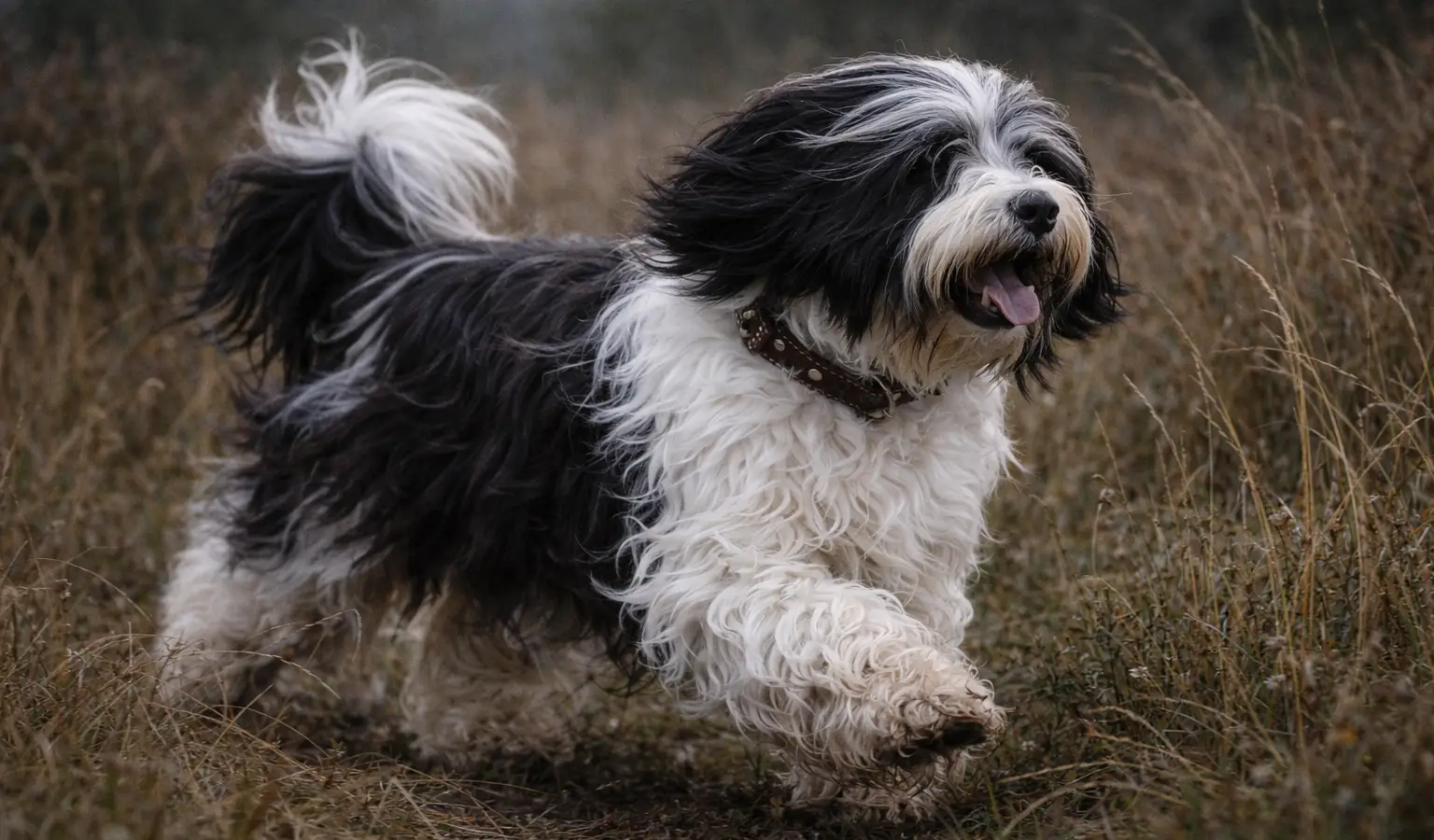
Tibetan Terrier
The Tibetan Terrier is a hardy and affectionate companion dog, historically used as a watchdog around monasteries and herds. Agile and loyal, it is known for its long coat and alert nature.
Life expectancy
12 – 15 years
Price
1200 – 2200 €
Monthly budget
70 €
Size
Medium
Profile
Tibetan Terrier
Origin
Tibet
Year of origin
1000
Developed by
Tibetan monks
Size
Medium
Coat type
Long coat
Owner profile
Calm owner
Hypoallergenic
No
Litter size
5
Life expectancy
12 – 15 years
Price
1200 – 2200 €
Female
- Height : 35 – 41 cm
- Weight : 9 – 12 kg
Male
- Height : 36 – 41 cm
- Weight : 11 – 14 kg
Temperament & abilities
Affectionate
5/5
Calm
4/5
Independent
3/5
Intelligence
4/5
Obedience
4/5
Hunting instinct
1/5
Energy level
3/5
Good with children
5/5
Dog-friendly
4/5
Friendly with strangers
3/5
Hunting profile
Stamina
2/5
Hunting drive
3/5
Independence
3/5
Trainability
3/5
Beginner-friendly
4/5
Family compatibility
5/5
Feather game
0/5
Fur game
0/5
Underground work
0/5
Water work
0/5
These indicators help compare breeds and choose the right one for your hunting style.
Game & abilities
Estimated ability level by game type.
No species scores are available yet.
Budget
Purchase price
1200 – 2200 €
The price may vary depending on the breeder, bloodline, and region.
Average monthly cost
70 €
Estimated average: food, healthcare, accessories, and grooming.
A practical look at hunting ability, working style, and everyday manageability
Is the Tibetan Terrier a good hunting dog?
The Tibetan Terrier is not generally considered a true hunting dog in the modern sense, and it is not among the most coherent choices for serious field work. Despite the name, it is not a classic terrier bred to go to ground, and most lines are better known for agility, alertness, and companionship than for structured hunting performance. That said, some individuals show a lively nose, good stamina on foot, and the kind of curiosity and responsiveness that can make them enjoyable in informal outdoor work, especially for owners who want an active dog rather than a specialist hunting breed.
In the field, a Tibetan Terrier is more likely to work as an opportunistic, energetic companion than as a highly methodical hunter. Its search pattern is usually less disciplined than that of purpose-bred gundogs or earthdogs, and game drive can vary noticeably from one dog to another. Handling tends to be better than with some more independent hunting breeds, but trainability often depends on patient, consistent work rather than strong natural instinct for retrieve, pointing, or flushing. Recall, steadiness, and focus around wildlife usually need deliberate training if the dog is expected to work off lead.
Where the breed can make sense is with owners who enjoy long walks, rough terrain, and a dog that is agile, sure-footed, and mentally engaged outdoors. A Tibetan Terrier may suit someone looking for a versatile country companion that can accompany hikes, light pest awareness around property, and occasional scent games or casual tracking-style activities. It is less convincing for hunters who need a dog with reliable game-finding range, a formal retrieve, bold quarry work, or the courage and consistency expected in demanding hunting situations.
Daily life is often where the balance shifts back in the Tibetan Terrier's favor. This breed can be lively and athletic without being as intense as many dedicated hunting lines, and many individuals adapt well to family life if they receive enough exercise and structure. Coat maintenance is a real consideration after time in brush or wet ground, and training should emphasize recall, impulse control, and cooperative handling from an early age.
- Strengths: agile movement, decent stamina, alert temperament, potentially good owner connection
- Limitations: inconsistent hunting instinct, limited specialist skills, variable retrieve and search pattern
- Best fit: active homes wanting an outdoor companion, not hunters seeking a purpose-bred working dog
Agile on rough ground
Despite the name, the Tibetan Terrier was not developed as a classic earth terrier or specialist gun dog. Its real working asset is nimble movement over difficult terrain. Sure-footed, balanced, and often quick to adjust its stride, it can handle uneven paths, rocky ground, and steep countryside better than many companion breeds of similar size.
Good day-long stamina
This breed often has more endurance than its soft coat and companion-dog image suggest. Many Tibetan Terriers are capable of long walks, steady hill work, and repeated outings without fading too quickly, provided fitness is built progressively. For hunters who want a smaller dog that can stay active all day, that resilience can be a practical advantage.
Alert and observant
Tibetan Terriers tend to notice movement, sound, and changes in their surroundings quickly. That natural watchfulness can be useful around camp, on rural property, or during informal pest-control situations where early detection matters. It does not automatically make them polished hunting dogs, but it does mean many individuals stay mentally engaged and aware in the field.
Responsive with patient training
When motivation is fair and training is consistent, this breed can learn useful field manners, recall, and steady movement around people. The key is cooperative handling rather than heavy pressure. A Tibetan Terrier may work best for an owner who enjoys shaping behavior over time, not for someone expecting the instant drive or hard intensity seen in purpose-bred hunting lines.
Best for light utility work
Its strongest hunting-related value is usually versatility in an everyday sense rather than specialization. A Tibetan Terrier may fit owners who want one dog for hiking, farm life, alert watchdog duties, and occasional countryside outings. It is less suited to demanding retrieve work, sustained prey pursuit, or highly structured shooting days where breed-specific hunting instincts are essential.
Who the Tibetan Terrier suits best
The Tibetan Terrier usually suits an active owner or household looking for a bright, agile, people-oriented dog rather than a specialist hunting terrier. Despite the name, it is not a classic earthdog or hard-driving game dog. In practice, it often fits best with walkers, hikers, and outdoorsy families who want a lively companion with good stamina, a quick mind, and enough character to stay interesting without being relentlessly intense.
For hunting use, the best fit would be someone wanting a versatile countryside companion that can cope with varied terrain and stay engaged outdoors, not a dog expected to show strong prey focus, gritty vermin work, or the consistency of purpose-bred hunting lines. It may also suit homes that enjoy training, grooming, and daily interaction. Less suitable profiles include owners wanting a low-maintenance dog, a kennel-oriented worker, or a highly obedient dog with instant off-lead reliability. Common mismatches happen when people expect a true terrier hunting style, underestimate coat care, or do not have time for regular exercise and mental work.
How a mountain companion became the adaptable, independent dog people know today
Origins and development of the Tibetan Terrier
Despite its name, the Tibetan Terrier is not a true terrier and was not developed as a classic earthdog or dedicated hunting breed. Most historians place its origins in the monasteries and villages of Tibet, where it appears to have been kept as a versatile companion, watchdog, and general-purpose farm dog in a harsh mountain environment. The "terrier" label is largely a Western naming choice from the breed’s introduction to Europe, based more on size than on original function. That distinction matters, because it helps explain why the breed’s modern temperament often feels more thoughtful, sure-footed, and independent than that of a typical high-drive hunting terrier.
In Tibet, these dogs were valued for their agility on rough terrain, dense protective coat, and alert nature around homes, livestock, and travelers. They were likely selected less for specialized prey work and more for practical versatility: moving easily over difficult ground, sounding the alarm, and living closely with people. That background still shows today. Many Tibetan Terriers are attentive and lively without being relentlessly intense, and they often combine a strong sense of their surroundings with a somewhat self-directed mind. For owners, this usually means a dog that can be very engaging and trainable, but not always eager to obey in the automatic, repetitive style seen in some purpose-bred gundogs.
As the breed became established outside Tibet in the twentieth century, formal breeding focused on preserving its distinctive outline, profuse coat, balanced movement, and companionable character. There is little evidence that it was systematically developed for modern hunting work, even if some individuals may show chase instinct, sharp awareness, and enough stamina for active outdoor life. In practical terms, that makes the Tibetan Terrier better understood as an alert, athletic companion than as a reliable hunting terrier for quarry underground or sustained field work.
For daily life, the breed’s history points to a dog that tends to suit people who want an active, intelligent partner with good environmental awareness and a close bond to the household. Its strengths often include agility, adaptability, and a watchful nature. Its limitations for hunting use usually include inconsistent prey drive compared with working terriers, some independence in training, and a coat that requires real maintenance after wet, muddy, or brushy outings. For the right owner, that heritage produces a charming, capable dog with mountain-dog resilience rather than a specialist hunter’s mindset.
Mountain roots
Despite the name, the Tibetan Terrier is not a true terrier in the classic earth-dog sense. It developed in the Himalayan region, where it likely served as a companion, watchdog, and all-purpose farm dog around monasteries and mountain communities. That origin helps explain its sure-footed build, weather-resistant coat, and alert but thoughtful nature.
Not a typical hunting terrier
For readers comparing hunting terrier breeds, this is an important distinction: the Tibetan Terrier was not primarily selected for going to ground or driving quarry in the way many British terriers were. It may show curiosity, chase instinct, and lively reactions outdoors, but its historical role was broader and generally less specialized for formal hunting work.
Lively, sensitive character
This breed often combines bright energy with a fairly sensitive temperament. Many Tibetan Terriers are affectionate with their family, observant with strangers, and quick to notice changes in the environment. They usually respond better to calm, consistent training than to harsh handling, and their independence can make recall and off-lead reliability variable from one dog to another.
Best home setup
A Tibetan Terrier usually suits owners who want an active companion rather than a hard-driving working dog. Daily walks, play, training games, and regular social contact matter more than extreme exercise. They can adapt to house or apartment living if their mental and physical needs are met, but they rarely thrive when left bored, isolated, or under-stimulated for long periods.
Coat care is real work
The long double coat is one of the breed’s defining features, but it comes with maintenance. Depending on coat length and texture, regular brushing is needed to limit mats, debris, and discomfort, especially around the legs, ears, and belly. Owners who love the breed’s look should be realistic: grooming is not optional, and neglect quickly creates practical problems.
Who this breed suits
The Tibetan Terrier tends to fit people who appreciate personality, closeness, and a dog that is engaged without being relentlessly intense. It can work well for active families, experienced first-time owners, or rural households wanting an alert companion. For dedicated hunting use, though, most handlers will find more purpose-bred terrier or gundog breeds better matched to the task.
Practical answers for people weighing hunting potential, trainability, home life, and owner fit.
Tibetan Terrier hunting and daily life FAQ
Is a Tibetan Terrier a good hunting dog?
In most cases, the Tibetan Terrier is not considered a true hunting terrier in the practical field sense. Despite the name, the breed developed more as an all-purpose companion and watchdog from Tibet than as a specialist earthdog or quarry dog. Some individuals may show alertness, prey interest, stamina, and a willingness to follow movement, but that does not automatically translate into reliable hunting usefulness. For someone wanting a serious hunting partner, there are usually better-suited breeds; for someone wanting an active dog with some instinct and outdoor enthusiasm, a Tibetan Terrier can still be enjoyable.
Does the Tibetan Terrier have a strong prey drive?
Prey drive can vary quite a bit from one dog to another, so it is better to judge the individual than assume a uniform breed pattern. Many Tibetan Terriers will notice birds, squirrels, rabbits, or fast movement and may be tempted to chase, especially when young or under-exercised. That said, they are not generally known for the intense, highly focused quarry drive seen in more purpose-bred hunting dogs. Early recall work, long-line training, and calm exposure to wildlife-rich environments matter if you want a dog that can enjoy countryside walks without becoming difficult to handle.
Can a Tibetan Terrier be trained for hunting or tracking work?
A Tibetan Terrier may do reasonably well in light scent games, informal tracking, or search-style activities if the dog enjoys working with its nose and handler. Training usually goes best when it is structured, upbeat, and varied, because this breed can be intelligent but also somewhat independent or selective if drilling becomes repetitive. For real hunting work, limitations often appear in consistency, drive, and specialization compared with breeds developed specifically for the task. If your goal is practical field performance, expectations should stay modest, but as a trainable outdoor companion with enrichment value, the breed can still be rewarding.
Is the Tibetan Terrier easy to live with as a family dog if you also spend time outdoors?
For many homes, this is where the Tibetan Terrier makes the most sense. The breed often combines a lively, adaptable temperament with enough athletic ability for long walks, hikes, and varied daily activity, while still valuing close family contact. Many are affectionate and attentive without being as relentlessly intense as some hard-driving working breeds. Families usually do best when they provide regular exercise, grooming time, clear boundaries, and mental stimulation, because a bored Tibetan Terrier can become noisy, mischievous, or overly opinionated.
Can a Tibetan Terrier live in an apartment, or does it need a house with land?
A Tibetan Terrier can often live well in an apartment if its exercise, training, and social needs are met consistently. What matters more than square footage is whether the dog gets daily walks, chances to explore, and enough structure to prevent frustration and nuisance barking. A house with a secure yard can be convenient, but it is not a substitute for engagement, and many dogs with gardens still become restless if under-stimulated. Prospective owners should also remember the coat brings a grooming commitment, especially after wet walks, muddy outings, or countryside use.
How much exercise does a Tibetan Terrier need each day?
Most Tibetan Terriers do best with more than a quick stroll around the block, but they usually do not require the extreme workload of a high-octane field dog. A practical routine for many adults includes a couple of meaningful walks, time for play or training, and regular opportunities to sniff, explore, and use their brain. Some individuals are quite energetic, especially in adolescence, while others are more moderate, so the ideal amount depends on age, conditioning, and temperament. When exercise is balanced with training and routine, they are often easier to manage indoors.
Who is the Tibetan Terrier best suited for, and who should look at another breed?
The Tibetan Terrier often suits owners who want an active companion with personality, decent versatility, and a stronger family-life balance than a specialized hunting dog. It can be a good match for people who enjoy hiking, training, and daily interaction, but who do not need a dog bred for demanding field performance. First-time owners may manage well if they are consistent and patient, though the breed's independent streak and grooming needs can surprise people expecting a low-maintenance pet. Someone seeking a dedicated hunter, very easy off-leash reliability, or minimal coat care may be happier with another breed.