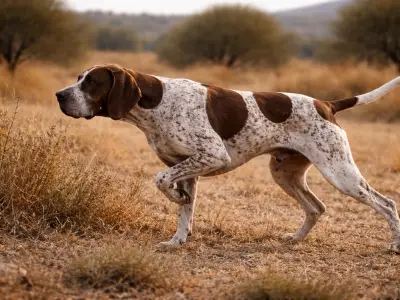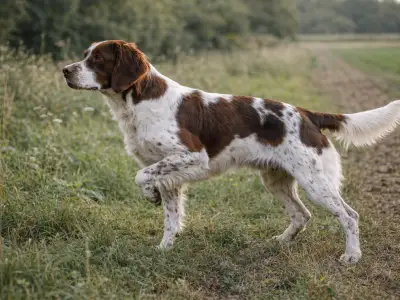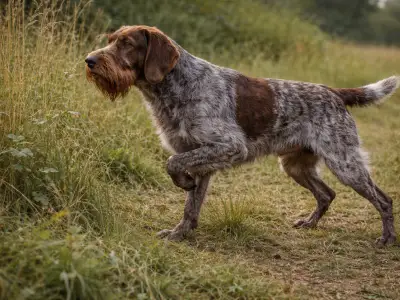
German Shorthaired Pointer
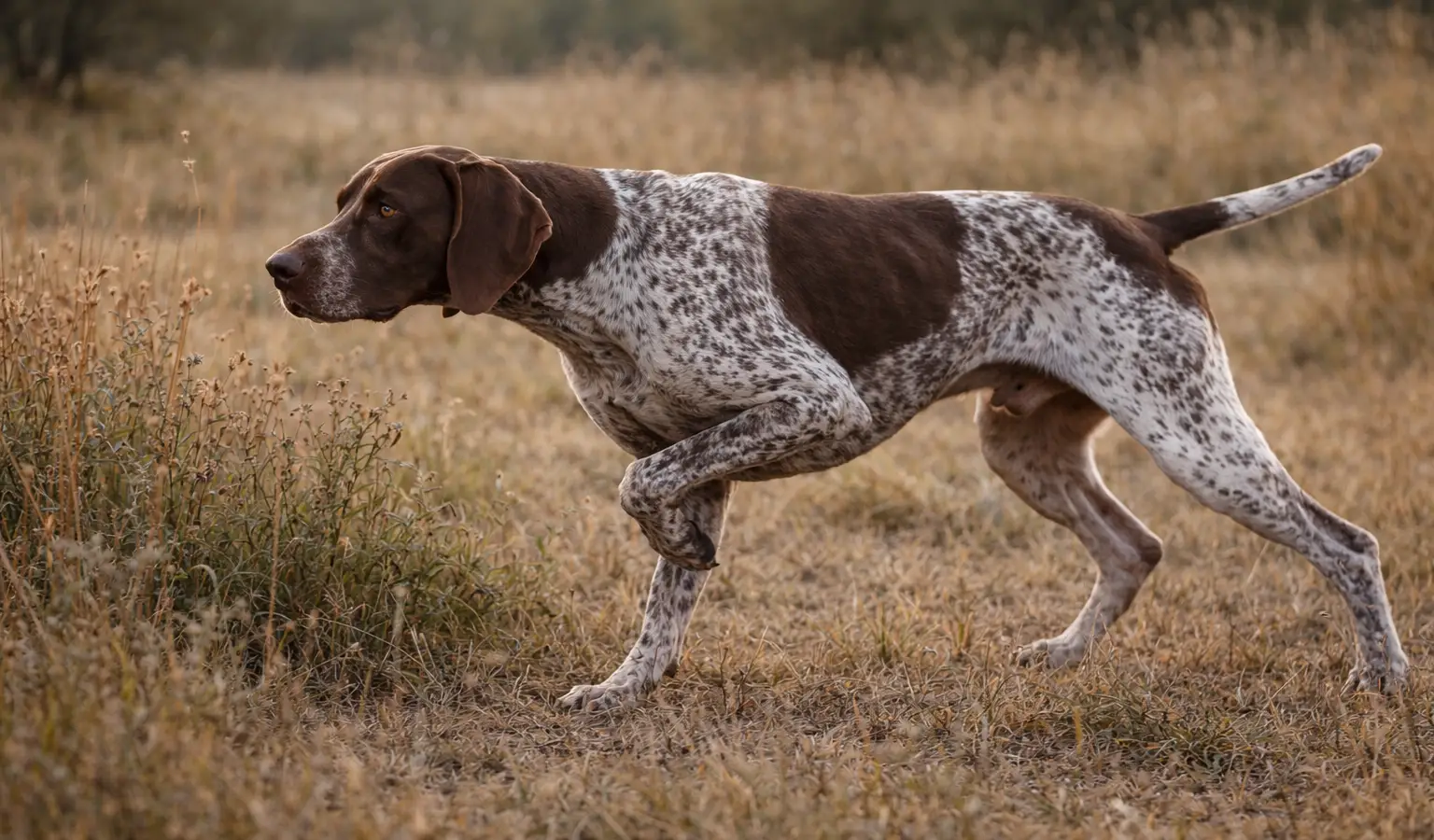
The German Pointer is a highly versatile hunting dog bred to do it all: search, point, track, retrieve and work in water. Intelligent, enduring and extremely driven, it needs an active owner and consistent training. Loyal with its family but very energetic, it thrives on substantial exercise, structured routines and plenty of scent-based work.
Life expectancy
12 – 14 years
Price
900 – 1600 €
Monthly budget
70 €
Size
Large
Profile
German Shorthaired Pointer
Origin
Germany
Year of origin
1800
Developed by
German hunters
Size
Large
Coat type
Short coat
Owner profile
Active owner
Hypoallergenic
No
Litter size
8
Life expectancy
12 – 14 years
Price
900 – 1600 €
Female
- Height : 56 – 62 cm
- Weight : 20 – 25 kg
Male
- Height : 58 – 64 cm
- Weight : 25 – 32 kg
Temperament & abilities
Affectionate
4/5
Calm
3/5
Independent
3/5
Intelligence
4/5
Obedience
4/5
Hunting instinct
5/5
Energy level
4/5
Good with children
4/5
Dog-friendly
4/5
Friendly with strangers
3/5
Hunting profile
Stamina
5/5
Hunting drive
5/5
Independence
4/5
Trainability
3/5
Beginner-friendly
2/5
Family compatibility
4/5
Feather game
5/5
Fur game
5/5
Underground work
3/5
Water work
5/5
These indicators help compare breeds and choose the right one for your hunting style.
Game & abilities
Estimated ability level by game type.
Budget
Purchase price
900 – 1600 €
The price may vary depending on the breeder, bloodline, and region.
Average monthly cost
70 €
Estimated average: food, healthcare, accessories, and grooming.
What this breed does well in the field, what it asks from the handler, and who it suits best
German Shorthaired Pointer: a versatile hunting dog with real range and drive
The German Shorthaired Pointer is widely considered a very good hunting dog, especially for hunters who want one versatile partner for pointing, searching, and retrieving. In the right hands, it combines a strong nose, good stamina, natural ground coverage, and an eager working attitude. It is often at its best with active handlers who appreciate a forward, athletic dog that can work fields, edges, light cover, and mixed terrain rather than a slower, more methodical specialist.
Its hunting style usually leans energetic and purposeful. Many German Shorthaired Pointers show a broad search pattern, plenty of pace, and enough courage to enter cover and keep going for long sessions. That makes the breed appealing for upland bird hunting and for people who value initiative in the field. Depending on line and training, many also develop into capable retrievers on land and may handle water work reasonably well, though individual dogs can vary in intensity, steadiness, and natural cooperation.
The main trade-off is handling. A German Shorthaired Pointer is typically trainable, but not always effortless. Recall, steadiness, and pattern control matter because this breed often has the energy and confidence to hunt big. Without consistent early training, enough exercise, and a handler who channels drive instead of merely trying to suppress it, the dog can become hard to live with or too independent in the field. It generally suits people who enjoy training and who want a responsive hunting dog, not owners looking for a calm low-maintenance companion.
- Strong points: versatility, nose, stamina, search, pointing instinct, athleticism, willingness to work.
- Watch points: high energy level, daily exercise needs, training demands, potential for overexcitement, and a style that may feel too fast for some hunters.
- Best use cases: active upland hunting, mixed hunting homes wanting one all-around gundog, and handlers able to provide structure on both hunting days and ordinary weekdays.
In everyday life, the same qualities that make the German Shorthaired Pointer effective in the field shape the home experience. This is usually a lively, engaged dog that needs movement, direction, and regular mental work. In a household that enjoys outdoor life and accepts the breed's intensity, it can balance hunting performance with family life quite well. In a sedentary home, that balance is much harder to achieve.
Powerful nose and useful range
A good German Shorthaired Pointer typically covers ground efficiently without hunting aimlessly. Its scenting ability is one of its main assets, helping it locate game over varied terrain while still giving the handler information to read. In practice, this suits hunters who want a pointing dog that can search with purpose rather than simply run big for the sake of it.
Steady pointing instinct
This breed is valued for finding game and indicating it clearly enough for the hunter to approach and prepare. Depending on breeding and training, many German Shorthaired Pointers show a natural point that can be refined into a very practical working tool. That makes the breed appealing to people who want visible, readable field work rather than chaotic close encounters.
Real all-day stamina
The German Shorthaired Pointer is built for active hunting days, not short bursts followed by long downtime. When well conditioned, it can keep working over distance, in changing cover, and through demanding weather better than many casual owners expect. That endurance is a major strength in the field, but it also means daily life usually requires serious exercise and structured outlets.
Versatile game-finding dog
One reason the breed remains so popular is its versatility. Many German Shorthaired Pointers can handle upland bird work, practical tracking tasks, and retrieving duties, especially in hunting homes that train consistently. It is often a strong choice for people who prefer one adaptable gundog rather than maintaining separate specialists for every type of outing.
Willing retriever
Retrieving ability is an important part of the breed’s appeal. Many individuals show a genuine willingness to pick up and carry game, which adds value after the shot and can make the dog more useful across a full hunting sequence. Reliable delivery still depends on training, but the underlying cooperation and game interest are often there to work with.
Responsive to training
Compared with more independent hunting breeds, the German Shorthaired Pointer often offers a workable balance of drive and handler focus. With fair, consistent education, many learn quickly and stay mentally engaged in the job. This does not make the breed effortless, especially at high energy levels, but it does suit hunters who want a trainable dog capable of polished field manners.
Who the German Shorthaired Pointer suits best
The German Shorthaired Pointer usually suits a hunter who wants one dog for many jobs: covering ground, finding game, pointing, and often adapting to varied terrain and seasons. It also fits very active owners who enjoy training, outdoor routines, and living with a dog that wants to work with its person. In a family setting, it often does best where exercise is part of daily life and the dog is included rather than left idle for long hours.
Less suitable profiles include sedentary households, owners wanting a low-maintenance pet, or hunters who only go out occasionally and cannot provide meaningful off-season activity. This breed is typically intelligent and trainable, but its drive, stamina, and sensitivity can be a poor match for inconsistent handling. Many German Shorthaired Pointers thrive with structure, recall training, field exposure, and enough mental work to prevent frustration.
- Best match: active hunter, runner, hiker, or country household with time for training
- Possible mismatch: apartment life without serious daily exercise, long periods alone, or first-time owners expecting an easy dog
- Daily reality: high energy, close human involvement, and regular outlets for nose, body, and brain
How a versatile hunting dog was shaped for field work, water, and daily companionship
Origins of the German Shorthaired Pointer
The German Shorthaired Pointer, often called the GSP, was developed in Germany as an all-purpose hunting dog rather than a narrow specialist. Its history points to deliberate selection for a dog that could search, point, track wounded game, and retrieve on land or from water. The exact mix of early influences is not always documented with complete certainty, but breeders are widely thought to have combined older German bird dogs with pointing and scenting stock from elsewhere in Europe to produce a more elegant, faster, and more adaptable hunter.
That background helps explain the breed’s modern character. The German Shorthaired Pointer was not shaped only to find birds in open country; it was expected to work closely with people, handle varied terrain, and stay useful across different types of game and weather. As a result, many lines still show a blend of drive, athleticism, biddability, and stamina that feels distinctly practical. In the field, this often appears as an energetic ranging style, a strong nose, and a willingness to keep working, especially when training and breeding have supported those traits.
Its development also helps explain why this breed can be such a rewarding dog for active owners and such a difficult one for the wrong home. A dog bred for long hunting days usually does not thrive on a short walk and little else. Many German Shorthaired Pointers need structured exercise, meaningful training, and regular outlets for their instincts. They tend to suit hunters, outdoor households, and handlers who enjoy engagement and consistency more than people looking for a calm, low-maintenance companion.
Historically, German breeders valued usefulness above ornament, and that practical mindset still defines the breed at its best. A well-bred German Shorthaired Pointer often combines enthusiasm with cooperation, but individuals can vary by bloodline and upbringing. Some are especially birdy and forward in the field, while others are more moderate or more family-oriented in daily life. Understanding the breed’s origin is helpful because it makes its present-day temperament easier to read: this is typically a capable, intelligent, high-energy pointing dog first, and the easiest pet only when its working nature is respected.
Built for versatility
The German Shorthaired Pointer was developed in Germany as an all-around hunting dog rather than a narrow specialist. Breeders selected for a dog able to search fields, point game, track wounded animals, and often retrieve on land or from water. That broad job description still explains the breed’s athletic build, alert mind, and strong desire to work with a handler.
A cooperative hunting style
In the field, many German Shorthaired Pointers combine speed, range, nose, and responsiveness. Well-bred dogs often hunt with forward drive while still checking in enough to remain useful to a person on foot. This balance makes the breed attractive to hunters who want intensity without losing teamwork, although range and pace can vary with bloodline, training, and game country.
Energetic at home too
This is rarely a low-maintenance house dog. A German Shorthaired Pointer usually needs substantial daily exercise, mental engagement, and clear routines to stay settled indoors. Without enough outlet, some individuals may become noisy, restless, or inventive in unhelpful ways. The breed tends to suit active owners who genuinely enjoy training, outdoor time, and structured daily life with the dog.
Trainable but not effortless
The breed is generally considered intelligent and willing, but its energy level can make training feel intense rather than easy. German Shorthaired Pointers often respond well to consistent, fair handling and frequent practice that keeps their brain engaged. They may be less suited to homes wanting a naturally calm, undemanding companion with minimal training needs.
Best with room to move
Many individuals adapt well to family life, but the living setup matters. A rural home, access to open ground, or a very active household usually fits the breed better than a sedentary urban routine. A large yard helps, but it does not replace real exercise, recall training, and purposeful outings. Daily life is easiest when movement is built into the schedule.
Simple coat, serious upkeep
The short coat is relatively easy to manage, which can make grooming feel straightforward compared with some hunting breeds. The real maintenance lies elsewhere: conditioning, regular training, weather exposure, and enough activity to support a hard-working dog. Owners should also expect muddy outings, seasonal shedding, and the practical realities that come with a versatile pointing dog used outdoors.
Practical answers about hunting ability, training, family life, exercise, housing, and owner fit
German Shorthaired Pointer hunting FAQ
Is the German Shorthaired Pointer a good hunting dog for beginners?
The German Shorthaired Pointer can be a very capable hunting dog, but it is not always the easiest first hunting breed for every beginner. It usually combines speed, range, scenting ability, pointing instinct, and strong drive, which can be exciting but also demanding to channel. A novice handler who enjoys structured training, regular field work, and consistent boundaries may do very well with one, especially with guidance from an experienced trainer or hunting club. Someone wanting a naturally calm, low-maintenance dog may find the breed overwhelming. Success often depends less on raw talent than on the match between the dog's lines, the handler's skill, and the amount of meaningful work provided.
How much exercise does a German Shorthaired Pointer really need when it is not hunting?
This breed usually needs far more than a short walk around the block. Most German Shorthaired Pointers do best with a mix of hard physical exercise, off-lead running in safe areas, scent work, retrieving, training drills, and daily interaction that uses the brain as well as the body. Without enough outlet, some dogs become noisy, restless, destructive, or difficult to settle indoors. A fit adult often needs substantial activity every day, not just on weekends. Even in a non-hunting home, the dog generally thrives when given a job-like routine rather than casual pet exercise alone.
Can a German Shorthaired Pointer live happily as a family dog?
Many German Shorthaired Pointers can be excellent family dogs in active homes. They are often affectionate, people-oriented, and eager to stay involved in daily life, but they are rarely a good match for households wanting a quiet, low-energy companion. Their enthusiasm can be a lot for very young children unless the dog is well trained and the family manages greetings, play, and indoor manners carefully. They usually do best where exercise is predictable and everyone is consistent about rules. In the right home, they can be loving, fun, and highly engaged without losing their working ability.
Are German Shorthaired Pointers easy to train for hunting and obedience?
They are often intelligent and willing to work, which helps training, but easy is not always the right word. A German Shorthaired Pointer commonly learns quickly, yet its prey drive, excitement, and sensitivity to inconsistent handling can create setbacks if training is rushed or unclear. Most respond best to calm, structured repetition, good timing, and regular exposure to birds, retrieves, recall work, and steadiness exercises appropriate to their stage of development. Harsh handling can reduce confidence in some dogs, while too little structure can produce a fast, talented dog that is difficult to control. Good training tends to reward patience more than force.
Is a German Shorthaired Pointer suitable for apartment living?
Apartment living is possible in some cases, but it is usually not the easiest setup for this breed. The main issue is not square footage by itself but whether the dog gets enough intense daily exercise, training, and chances to move freely outdoors in a safe and lawful way. A bored German Shorthaired Pointer in a small home may pace, vocalize, or struggle to relax, especially during adolescence. Owners who work long hours away from home often find the arrangement difficult unless they have a very strong activity plan. A house with access to open space generally makes life simpler, but management matters more than address alone.
What kind of owner is the German Shorthaired Pointer best for?
This breed tends to suit people who genuinely enjoy active dog ownership rather than just admire athletic dogs from a distance. Good matches often include hunters, runners, hikers, field sport enthusiasts, and families who want a dog involved in daily outdoor life and ongoing training. It is usually less suitable for sedentary households, first-time owners looking for an easygoing pet, or anyone hoping the dog will self-exercise in a yard. Owners typically do best when they like structure, can be consistent, and are prepared for a dog that matures with energy, curiosity, and strong working instincts. The breed often rewards effort with versatility and close partnership.
Do German Shorthaired Pointers get along with other dogs and small pets?
Many German Shorthaired Pointers are sociable with other dogs, especially if they are well socialized from a young age, but individual temperament still matters. Around small pets, caution is wise because this is a hunting breed with noticeable prey drive, and some individuals are much more reliable than others. Living peacefully with cats or small animals is possible in some homes, particularly with early introduction and careful supervision, but it should not be assumed. Outside the home, fast-moving wildlife can strongly trigger chase behavior if training is incomplete. Owners need realistic management, not blind trust, when prey instincts are part of the picture.