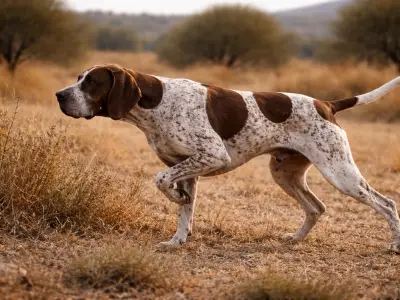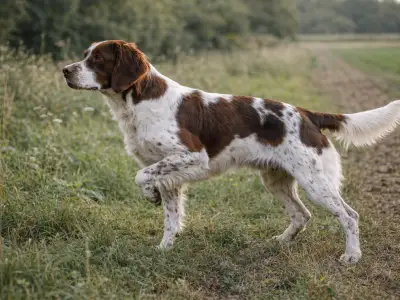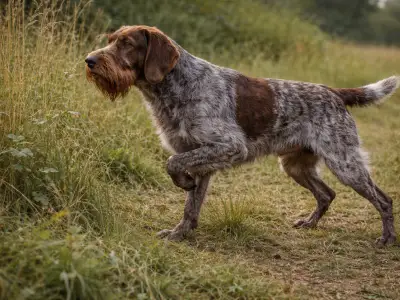
Ariege Pointer
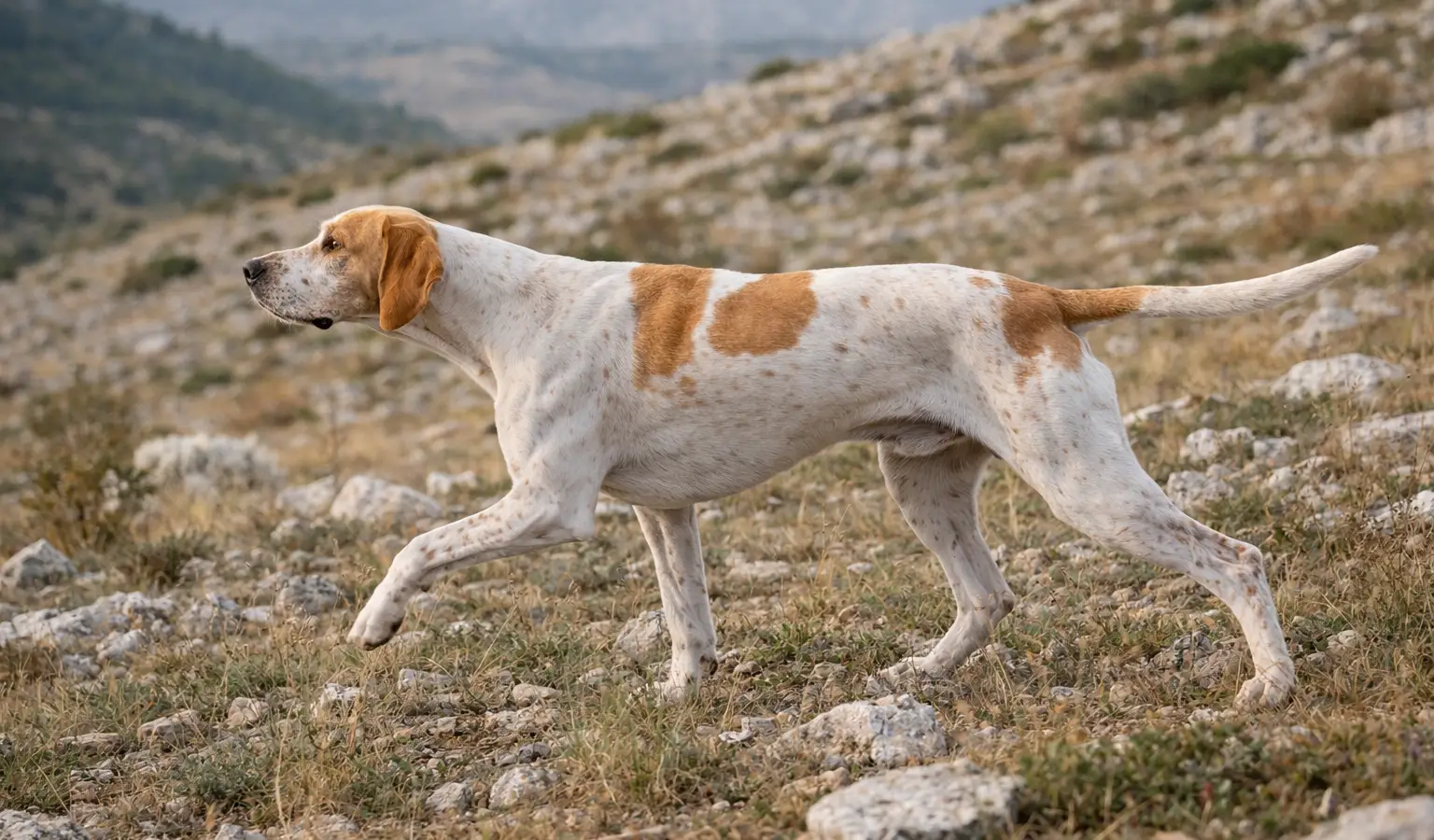
The Ariege Pointer is a rustic and enduring French pointing dog, developed for hunting in rough and mountainous terrain. With a precise nose and a methodical working style, it is calm, efficient and reliable in the field. Loyal and even-tempered, it can adapt to family life provided it receives sufficient exercise and mental stimulation.
Life expectancy
11 – 14 years
Price
800 – 1400 €
Monthly budget
65 €
Size
Large
Profile
Ariege Pointer
Origin
France
Year of origin
1800
Developed by
Ariège hunters
Size
Large
Coat type
Short coat
Owner profile
Active owner
Hypoallergenic
No
Litter size
7
Life expectancy
11 – 14 years
Price
800 – 1400 €
Female
- Height : 55 – 61 cm
- Weight : 20 – 27 kg
Male
- Height : 58 – 65 cm
- Weight : 23 – 30 kg
Temperament & abilities
Affectionate
4/5
Calm
3/5
Independent
3/5
Intelligence
4/5
Obedience
3/5
Hunting instinct
5/5
Energy level
4/5
Good with children
4/5
Dog-friendly
4/5
Friendly with strangers
3/5
Hunting profile
Stamina
5/5
Hunting drive
4/5
Independence
3/5
Trainability
3/5
Beginner-friendly
3/5
Family compatibility
4/5
Feather game
5/5
Fur game
2/5
Underground work
0/5
Water work
2/5
These indicators help compare breeds and choose the right one for your hunting style.
Game & abilities
Estimated ability level by game type.
Budget
Purchase price
800 – 1400 €
The price may vary depending on the breeder, bloodline, and region.
Average monthly cost
65 €
Estimated average: food, healthcare, accessories, and grooming.
A versatile pointing breed with style, stamina, and real daily-life demands
Is the Ariege Pointer a good hunting dog?
The Ariege Pointer is generally considered a very capable hunting dog, especially for hunters who want a classic pointing breed with a good nose, an energetic search, and a cooperative nature. In the field, the Braque de l'Ariège is usually appreciated for its ability to cover ground with purpose while staying workable for the handler. It often makes the most sense as a versatile gundog for upland hunting, mixed small game work, and long days where stamina and steady handling matter as much as raw speed.
Its hunting style tends to suit people who like an active dog that can range out, use scent intelligently, and point with conviction without becoming impossible to control. Compared with some harder, more independent field-bred pointing dogs, the Ariege Pointer is often described as more handler-aware, which can make training and day-to-day management more approachable. That said, this is still a real working breed with notable energy. A short walk and a backyard are rarely enough; without regular exercise, structured training, and chances to use its brain and nose, it may become restless or difficult to live with.
For practical hunting use, the breed is often most coherent in open or semi-open country where it can develop a smooth search pattern and use its stamina well. Individual dogs may also adapt to rougher ground, but efficiency in dense cover, retrieving commitment, and range can vary with bloodline, experience, and training. Recall, steadiness, and game exposure matter. A novice owner can succeed with this breed, but usually only if they are ready to invest in consistent education rather than assuming natural ability will do all the work.
- Strengths: good nose, sustained effort, stylish pointing instinct, generally biddable handling, and strong potential as a versatile hunting companion.
- Demands: high daily activity needs, ongoing training, and enough field access to channel working drive properly.
- Best fit: active hunters or outdoors-oriented homes that want one dog able to combine field work with affectionate family life.
- Less ideal for: very sedentary households, owners wanting a low-maintenance pet, or people who prefer a close, slow, highly self-limiting search from the start.
As a balance between hunting performance and everyday temperament, the Ariege Pointer can be a very appealing choice. It often offers more softness and family compatibility than some harder-driving specialists, while still bringing enough courage, stamina, and trainability for serious use in the field. For the right owner, that combination is exactly the appeal; for the wrong one, the breed's energy level and need for meaningful work can feel like a constant project.
Sensitive working nose
The Ariege Pointer is generally valued for a fine nose that can pick up game scent at distance while still sorting old scent from fresher bird movement. In practical hunting, this helps the dog search efficiently across open ground and broken cover without needing constant redirection from the handler.
Big, ground-covering search
This breed often hunts with an energetic, forward pattern that can cover a lot of terrain in a relatively short time. That makes it especially attractive to hunters who work wide fields, stubble, and light scrub and want a pointing dog that reaches out rather than staying very close at boot level.
Endurance for long outings
Lean, athletic, and built for movement, the Braque de l'Ariège is usually better suited to sustained fieldwork than to short, casual sessions only. With proper conditioning, many individuals can stay useful through long hunting days, which matters for hunters covering large areas or working several hours in varied country.
Stylish, readable pointing
A good Ariege Pointer tends to offer clear body language on game, making the point easier for the handler to read from a distance. That combination of intensity and visibility is practical in real hunting conditions, especially when wind, vegetation, or uneven terrain make subtle signals harder to catch.
Cooperative with a calm handler
Although it has drive, this breed is often described as responsive when trained with consistency and a steady hand. It usually suits hunters who want a dog with initiative in the field but not one that must be managed harshly. Sensitive handling often brings out better concentration, patterning, and steadiness.
Best for upland bird work
The Ariege Pointer is primarily appreciated as a pointing dog for feathered game rather than as a specialist for every hunting task. It can be a strong choice for upland bird hunters who value search, scenting, and point above all, while retrieving performance may depend more on the individual dog and training.
Who the Ariege Pointer Suits Best
The Ariege Pointer generally suits a hunter who wants a versatile pointing dog with drive in the field but a more manageable, people-oriented nature at home than some harder, more independent continental lines. It tends to fit best with owners who enjoy regular training, long walks, and real outdoor time rather than occasional weekend exercise. For rough shooting, mixed game days, and handlers who value a dog that works with them instead of far beyond gun range, the breed can be a very appealing match, especially when bred and trained with hunting in mind.
It is usually less suitable for very sedentary households, first-time owners expecting an easy low-maintenance pet, or hunters wanting an extreme-range specialist for highly competitive field work. Daily life is often easiest in homes that can provide structure, recall training, and enough mental work to channel scenting and pointing instincts. In a family setting, many individuals can be affectionate and calm after exercise, but boredom, inconsistent handling, or too little field outlet may create frustration and unwanted restlessness.
How a regional French pointing dog was shaped for practical hunting and why that still shows in the breed today
Origin and development of the Ariege Pointer
The Ariege Pointer, or Braque de l'Ariège, is a French pointing dog from the Ariège area in the southwest of France, near the Pyrenees. Most breed histories describe it as a local hunting dog developed from old French braque stock, likely refined over time with other regional pointers to produce a lighter, more active, more field-oriented dog. As with many older continental hunting breeds, the exact mix is not documented in perfect detail, but the general aim is clear: breeders wanted a versatile gun dog able to search ground efficiently, hold point with style, and remain manageable for hunters on foot.
That origin helps explain the breed's modern character. Compared with heavier old-style braques, the Ariege Pointer is often described as more elegant, more mobile, and better suited to covering country with speed and purpose while still staying connected to the handler. In practical terms, this usually means a dog with real stamina, a strong hunting instinct, and enough sensitivity to respond well to calm, consistent training. It is not typically a breed that thrives when underworked or handled harshly; its history points toward cooperation, field intelligence, and regular outlet for energy.
The breed's development was closely tied to everyday hunting rather than show-ring fashion. Hunters valued a dog that could locate game birds, establish point, and work for long periods in varied terrain. That working background still matters for anyone considering the breed today. An Ariege Pointer may suit an active owner, especially someone who appreciates a classic continental pointing dog with range, nose, and willingness, but it can be less suitable for a sedentary home where physical exercise and training are limited.
In family life, that same heritage often produces a dog that is affectionate and fairly responsive indoors once its needs are met, but daily life tends to go best when the dog has structure. Early training, recall work, and controlled exposure to game, livestock, and new environments are usually important because the breed was shaped to notice scent and movement. For hunters, the historical selection suggests a practical partner for upland work; for non-hunters, it suggests a companion best matched with space, activity, and owners who enjoy purposeful outdoor time rather than a low-demand pet.
Southern French roots
The Braque de l'Ariège comes from the Ariège region in southwestern France, where pointing dogs were valued for covering ground efficiently and locating game with style. It is generally described as an old French type shaped by regional hunting needs, combining elegance, endurance, and a practical field temperament rather than heavy exaggeration.
Selected for versatile field work
This breed was developed as a continental pointing dog able to hunt across open country, farmland, and varied terrain. In good hands, it is usually appreciated for a nose that can work at range, a fluid gait, and a cooperative attitude. For hunters, that often means a dog suited to walking hunters who want initiative without losing contact.
Gentle but not low-energy
At home, many Ariege Pointers are described as soft-natured, affectionate, and easier to live with than their athletic build might suggest. That does not make them sedentary. They typically need regular exercise, mental work, and calm guidance. Families who enjoy outdoor time often find the breed appealing; very inactive households may struggle with its daily needs.
Training responds to tact
The Braque de l'Ariège tends to do best with clear, fair training rather than harsh handling. Sensitive pointing breeds can shut down or lose confidence under excessive pressure, while consistent education often brings out their willingness and steadiness. Early recall work, exposure to varied ground, and patient socialization are especially useful for shaping a reliable hunting and family companion.
Best with space and purpose
This is usually a better fit for owners who can offer room to move, regular walks, and some form of structured activity. A country home is not mandatory in every case, but daily urban life is easier when the dog has meaningful outlets. Without enough exercise and engagement, a lively pointer may become restless, noisy, or difficult to settle indoors.
Lean, practical upkeep
Care is generally straightforward: the short coat is easy to maintain, and routine checks after field outings are part of sensible ownership. The real commitment is less about grooming than about time. This breed usually thrives when its body and brain are used often, whether through hunting, long walks, scent games, or steady outdoor training sessions.
Practical answers on hunting ability, trainability, exercise, home life, and owner fit.
Ariege Pointer hunting and family life FAQ
Is the Ariege Pointer a good hunting dog for modern hunters?
The Ariege Pointer is generally regarded as a capable pointing dog for hunters who want a versatile field companion with stamina, nose, and cooperative handling. It is usually best suited to upland-style work where methodical searching, pointing, and steady contact with the handler matter more than sheer speed alone. Many individuals are appreciated for an elegant, efficient gait and a temperament that can stay workable over a long day, though field style can vary by breeding and training. For a hunter who values a traditional pointing dog that can cover ground without becoming impossible to handle, the breed can be a strong fit.
How easy is an Ariege Pointer to train for hunting and recall?
In the right hands, the breed is often quite trainable because it tends to be responsive, people-oriented, and naturally interested in scent and game. That said, easy does not mean automatic: reliable recall, steadiness, and impulse control still require regular work, especially during adolescence and first hunting seasons. Most Ariege Pointers do best with calm, consistent training that balances structure with enough freedom to use their nose and think in the field. Heavy-handed handling can dull confidence, while inconsistent rules may create a dog that listens well at home but becomes selective once birds are involved.
Can an Ariege Pointer live as a family dog if it also hunts?
Often yes, provided its exercise, training, and social needs are taken seriously. Many pointing breeds can be affectionate and pleasant in the home when they have had enough physical outlet and mental engagement, and the Ariege Pointer is often described in that general direction. The challenge is that a hunting-bred dog rarely becomes calm simply because it lives indoors; without meaningful activity, restlessness, vocalizing, or destructive habits can appear. Families who enjoy outdoor routines, regular training, and a dog that wants to be involved in daily life are usually better matched than households looking for a very low-maintenance companion.
How much exercise does an Ariege Pointer really need outside the hunting season?
This is not usually a breed that is satisfied with a short walk around the block. Most adults need a substantial daily outlet that combines free movement, scent work, training, and time spent actively engaged with the handler rather than simple leash mileage alone. Off-season exercise often works best when it includes varied terrain, recall practice, retrieves, tracking games, or longer hikes that let the dog use both body and brain. A fit working-line dog may need noticeably more than a casual pet home expects, so future owners should think in terms of routine lifestyle, not occasional weekend activity.
Is the Ariege Pointer suitable for apartment living or a small home?
An Ariege Pointer can sometimes adapt to a smaller home, but the deciding factor is usually daily management, not square footage on paper. A well-exercised, well-trained dog with enough outdoor time and clear routines may settle indoors quite nicely, whereas an underworked dog can feel difficult even in a large house with a yard. Apartment living tends to be more realistic for experienced owners who can provide generous exercise, quiet training, and controlled outlets for hunting drive. If your schedule often limits outdoor time, a lower-energy breed may be the easier and fairer choice.
Who is the Ariege Pointer best suited to: first-time owners, active families, or experienced hunters?
The breed often fits best with active owners who appreciate a sensitive, athletic pointing dog and are willing to train regularly. Experienced hunters may find it especially rewarding because they can channel natural field instincts into practical work, but a committed first-time owner is not automatically ruled out if they understand the exercise and training demands. It is usually a better match for people who enjoy structure, outdoor time, and ongoing engagement than for owners wanting an independent backyard dog. In practical terms, the ideal home is often one that values both companionship and purposeful activity.
What are the main challenges of owning an Ariege Pointer day to day?
The biggest challenge for many homes is meeting the breed's combined need for movement, mental stimulation, and consistent handling. A dog with pointing-breed instincts may become distracted by scent, excited by birds, or hard to tire out if its routine is too limited or repetitive. Young dogs in particular can feel busy, impulsive, and physically strong before their training fully catches up, which can surprise owners who only expected a graceful family companion. The upside is that when the breed's energy is given a useful outlet, daily life often becomes much easier and more enjoyable for both dog and owner.