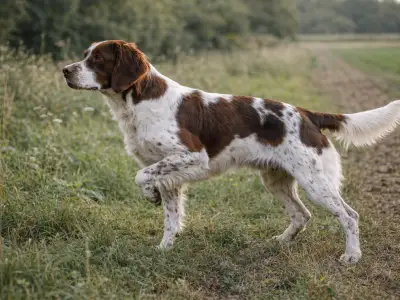
Burgos Pointer
The Burgos Pointer (Perdiguero de Burgos) is a powerful, rustic Spanish pointing dog valued for an excellent nose and strong stamina. Calm, thoughtful and closely bonded to its handler, it works in a methodical, reliable way on both feathered game and some furred quarry. It needs regular exercise, consistent training and scent-focused activities to thrive.
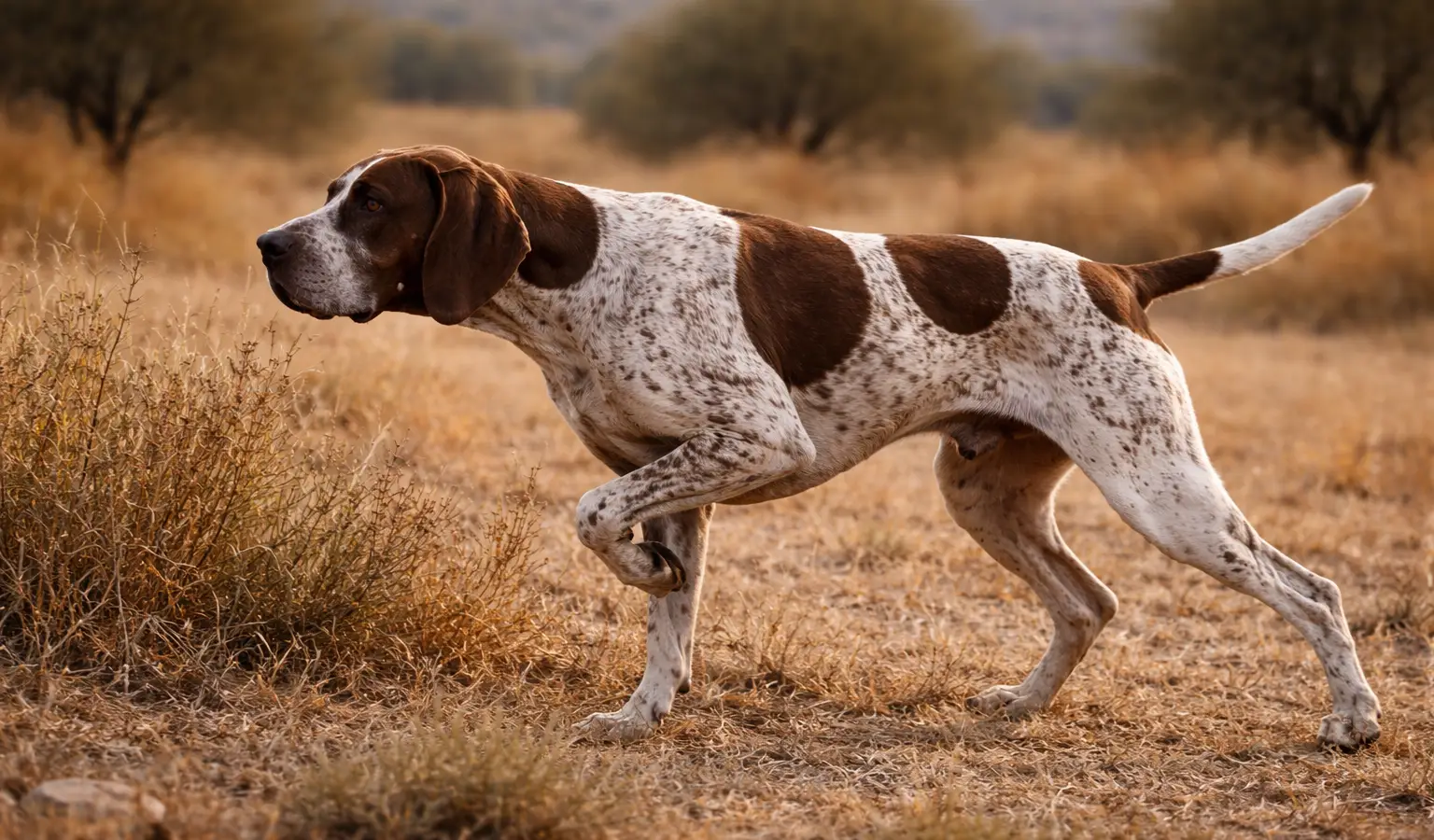
Life expectancy
12 – 14 years
Price
800 – 1400 €
Monthly budget
70 €
Size
Large
Profile
Burgos Pointer
Origin
Spain
Year of origin
1500
Developed by
Spanish hunters
Size
Large
Coat type
Short coat
Owner profile
Active owner
Hypoallergenic
No
Litter size
8
Life expectancy
12 – 14 years
Price
800 – 1400 €
Female
- Height : 58 – 62 cm
- Weight : 25 – 30 kg
Male
- Height : 62 – 67 cm
- Weight : 30 – 35 kg
Temperament & abilities
Affectionate
4/5
Calm
3/5
Independent
3/5
Intelligence
4/5
Obedience
4/5
Hunting instinct
5/5
Energy level
4/5
Good with children
4/5
Dog-friendly
4/5
Friendly with strangers
3/5
Hunting profile
Stamina
5/5
Hunting drive
4/5
Independence
4/5
Trainability
3/5
Beginner-friendly
2/5
Family compatibility
4/5
Feather game
4/5
Fur game
3/5
Underground work
0/5
Water work
2/5
These indicators help compare breeds and choose the right one for your hunting style.
Game & abilities
Estimated ability level by game type.
Budget
Purchase price
800 – 1400 €
The price may vary depending on the breeder, bloodline, and region.
Average monthly cost
70 €
Estimated average: food, healthcare, accessories, and grooming.
A calm, serious pointing breed best suited to methodical upland work and hunters who value nose, cooperation, and steady handling.
Is the Burgos Pointer a good hunting dog?
The Burgos Pointer is widely considered a capable hunting dog, especially for hunters who want a close-to-medium ranging pointer with a strong nose, composed temperament, and practical field manners rather than extreme speed or flashy style. In Burgos Pointer hunting, its main strengths are scenting ability, willingness to work with the handler, and a steady, economical approach that can suit walked-up shooting and varied gamebird work. It is usually a more thoughtful worker than an explosive one, which can make it very appealing to people who prefer control, consistency, and manageable handling in the field.
Its working style tends to be methodical and grounded. Many dogs of the breed are valued for their nose, their ability to sort out old scent from useful game scent, and their capacity to hunt without constantly running beyond practical gun range. That does not mean every Braque de Burgos works the same way, but the breed is often appreciated for cooperation and field sense. On open ground, light cover, and mixed farmland, this can translate into a hunting companion that is easier to read and direct than some harder-driving continental pointers. Retrieving ability is often serviceable, though the quality of retrieve, delivery, and water enthusiasm can vary with breeding and training.
The main trade-off is that the Burgos Pointer is not usually the best fit for someone wanting a very high-octane competitive field dog or a breed known for huge range and relentless pace all day. Its stamina can be good, but its energy level is often more moderate and steady than intense. Training demands are real: recall, quartering pattern, steadiness, and game manners still need consistent work. The advantage is that many individuals respond well to calm, fair handling and may not need the same level of forceful management as more independent pointing dogs. Heavy-handed training is rarely the smart route with a sensitive, cooperative hunting breed.
For everyday life, this balance is one of the breed's biggest attractions. A well-bred, well-exercised Burgos Pointer may settle more easily at home than some more frenetic hunting breeds, provided it gets regular physical exercise, scent work, and meaningful engagement. It can suit an active family that genuinely wants a hunting dog first and a companion second, but not a kennel-only specialist. The most coherent use case is an owner who hunts regularly, values a biddable temperament, and wants a versatile pointing dog for practical field days rather than maximum speed or pressure. For a hunter comparing breeds, the Burgos Pointer makes the most sense when nose, handling, and livable temperament matter as much as raw intensity.
Powerful ground scenting
The Burgos Pointer is widely valued for a strong nose, especially on ground scent. In practical hunting, that often means patient, methodical work on partridge, rabbit, and other game that leaves a tricky trail. For hunters who prefer a dog that searches with purpose rather than flashy speed alone, this can be a real advantage.
Steady, readable point
One of its most useful field traits is a clear, composed point that many handlers find easy to read. Instead of frantic overexcitement, the breed often shows concentrated body language, which can make approaches more controlled and shooting opportunities cleaner. This steadiness tends to suit hunters who want a practical pointing dog with good composure.
Calm hunting rhythm
The Burgos Pointer usually works at a measured pace rather than an all-out gallop, and that rhythm can be highly effective in rough country or on longer days. It often stays connected to the gun and wastes less energy than more explosive dogs. For hunters who like to follow their dog closely, this manageable range is often appealing.
Useful all-day stamina
This is generally a hardy pointing breed built for sustained work rather than short bursts. When properly conditioned, many Burgos Pointers can handle long walks, repeated casts, and demanding terrain without becoming mentally scattered. That endurance is especially valuable for hunters who spend full mornings or full days in the field and want consistent effort throughout.
Trainable for cooperative handling
The breed often responds well to calm, consistent training and tends to suit hunters who want cooperation more than constant negotiation. Many individuals are biddable enough for steady field routines, recall work, and basic retrieving practice, though maturity, bloodline, and education matter. Heavy-handed handling is usually less productive than clear structure and repetition.
Versatile mixed-game helper
Although best known as a pointing dog, the Burgos Pointer is often appreciated as a versatile hunting companion for varied outings rather than narrow specialization alone. Depending on the dog, training, and local hunting style, it may contribute in search, point, and simple recovery work. That flexibility can make daily hunting life easier for practical, traditional hunters.
Who the Burgos Pointer suits best
The Burgos Pointer tends to suit a hunter or very active owner who wants a steady, cooperative pointing dog with enough stamina for long outings and enough composure to live closely with its people. It often makes the most sense for someone who enjoys regular field work, country walks, structured training, and a dog that is expected to use its nose rather than simply burn energy. In the right hands, this breed can fit a rural or semi-rural household well, especially where daily exercise, calm handling, and clear routines are part of normal life.
It is usually less suitable for a purely sedentary home, an owner wanting a low-maintenance companion, or a household expecting the dog to thrive on a quick garden turn and little else. First-time owners may do well with one if they are committed and consistent, but this is not always the easiest match for people with limited time, little interest in training, or no outlet for hunting instincts. The best fit is often a patient handler who appreciates a traditional pointing breed, values responsiveness over constant intensity, and can offer both physical work and mental engagement.
How Spanish hunting traditions shaped the breed’s steady style and temperament
Origin and development of the Burgos Pointer
The Burgos Pointer, or Braque de Burgos, is an old Spanish pointing breed closely associated with the inland hunting country around Castile, especially the province of Burgos. Historical references suggest that dogs of this type were valued for practical game work long before modern kennel standards existed, although the exact line of development is not always documented in a fully precise way. What is clearer is the breed’s purpose: a substantial, scent-driven pointing dog built to locate game methodically, hold point with composure, and work in partnership with the hunter rather than in a frantic, high-speed style.
That background helps explain many traits seen in the breed today. The Burgos Pointer was shaped for long days in the field over mixed terrain, often where efficiency, nose quality, and stamina mattered more than flashy range. As a result, many individuals show a calm, deliberate hunting pattern, strong scenting ability, and a temperament that can feel thoughtful rather than impulsive. This makes the breed attractive to hunters who prefer a dog that hunts with structure and contact, but it may feel less suitable for people looking for an especially explosive or ultra-fast trial-style pointing dog.
Its historical use on feathered game, and in some cases on varied quarry depending on region and period, also contributed to a versatile but serious working character. Well-bred Burgos Pointers often combine field focus with a steady home temperament, which is one reason the breed can adapt to family life when its exercise and training needs are met. Still, this is not simply a decorative companion. Daily life tends to go best with owners who appreciate a large, athletic dog that needs meaningful activity, consistent handling, and time to mature into its full balance of control and initiative.
In practical terms, the breed’s development points to a dog that often suits:
- Hunters who value nose, point, and a measured working rhythm
- Owners who prefer a cooperative, trainable pointing dog over a highly hectic one
- Homes able to provide regular exercise, outdoor time, and structured training
- People comfortable with a somewhat traditional gundog temperament that may be sensitive to heavy-handed handling
Modern Burgos Pointers vary with bloodline, upbringing, and training, but the historical pattern remains important. This is a breed shaped less by fashion than by function, and that legacy still shows in its generally composed character, practical hunting style, and need for purposeful daily life.
Old Spanish roots
The Burgos Pointer, or Braque de Burgos, is widely associated with Spain’s interior hunting regions, where practical gundogs were valued for endurance, nose, and cooperation. Its exact development is discussed in different sources, but the breed is generally seen as one of the older continental pointing types, shaped by generations of field use rather than fashion.
Built for methodical hunting
This is not usually described as a frantic, high-octane pointer. The Burgos Pointer is better known for a steady, searching style, using scent carefully and covering ground with purpose. That can make it appealing to hunters who prefer a thoughtful dog over a hectic one, especially in mixed terrain where composure and nose matter as much as speed.
Calm but not lazy
At home, many Burgos Pointers are considered even-tempered and fairly gentle, especially when they receive enough exercise and clear routine. That calm impression can mislead first-time owners: it is still a working pointing dog with real daily needs. Without regular outlets for movement, sniffing, and engagement, it may become dull, restless, or hard to manage indoors.
Handles best with a steady owner
The breed often suits people who like quiet, consistent handling rather than constant correction or pressure. Many pointing dogs learn best when training is structured, repetitive, and fair, and the Burgos Pointer is often described in that vein. A hunter or active owner who values cooperation, recall, and field manners is usually a better match than someone seeking a purely ornamental pet.
Space helps, routine matters more
A rural or semi-rural setting can be a natural fit, but the key issue is not simply square footage. What matters more is access to regular exercise, off-lead work where legal and safe, and a lifestyle that includes the dog in outdoor activity. This breed is usually easier to live with when its week includes both physical effort and mentally satisfying scent work.
Low-frills care, high daily commitment
Coat care is generally straightforward, which may attract owners looking for a practical hunting companion. The bigger commitment is time: exercise, training, field exposure, and basic maintenance after outdoor work all add up. For the right person, that routine feels rewarding. For a sedentary household or an owner absent most of the day, it may be less realistic.
Practical answers for hunters, active families, and first-time owners considering the Braque de Burgos
Burgos Pointer hunting and daily life FAQ
Is the Burgos Pointer a good hunting dog for upland game and general field work?
The Burgos Pointer is widely regarded as a capable traditional pointing dog, especially for hunters who value a steady nose, cooperative range, and composed field work. Many individuals are used for upland hunting, and some can adapt to mixed hunting situations depending on bloodline, terrain, and training. Compared with very fast, high-octane pointing breeds, the Braque de Burgos often appeals to hunters who prefer a more measured pace and easier contact in the field. It can be a strong choice for the person who wants a practical hunting companion rather than an ultra-specialized competition-style dog.
Are Burgos Pointers easy to train, especially for recall, pointing, and steadiness?
Many Burgos Pointers are considered trainable because they tend to be people-oriented and generally willing to work with their handler. That said, easy does not mean automatic: recall, impulse control around game, and steadiness still require calm, consistent practice from a young age. Harsh handling often backfires with sensitive pointing dogs, so short sessions, clear repetition, and fair structure usually work better. For a first-time gundog owner, this breed may be manageable if the person is committed to regular training and understands that field manners develop over time, not in a few weekends.
How much exercise does a Burgos Pointer need when it is not hunting regularly?
This is not a breed that is usually satisfied with a quick walk around the block. Most Burgos Pointers do best with substantial daily activity that combines physical exercise, sniffing opportunities, and structured engagement such as recall drills, retrieving games, or field-style outings. On non-hunting weeks, many need at least one serious outlet each day to stay settled at home, though the exact amount varies by age and temperament. A fit adult often thrives with long walks, off-lead running in safe areas, and mental work, while a bored dog may become noisy, restless, or difficult to live with.
Can a Burgos Pointer live in an apartment, or does it need a country home?
A country setting is often easier for this breed, but an apartment is not automatically impossible if the dog receives enough outdoor time and careful routine. The real issue is less square footage and more whether the owner can consistently provide exercise, training, and decompression outside the home. A Burgos Pointer that hunts, trains, or gets long daily outings may settle well indoors, especially if it has learned to switch off. In a small home with little activity and limited access to safe exercise, this breed is more likely to feel frustrated than many lower-energy companion dogs.
Is the Burgos Pointer a good family dog with children and other pets?
Many Burgos Pointers can be affectionate, calm in the house, and closely attached to their people, which helps them fit family life better than some expect from a working gundog. With children, success usually depends on supervision, manners on both sides, and whether the dog gets enough exercise to avoid overexcitement indoors. With other dogs, they are often social, though individual temperament still matters. Small pets can be more complicated because a pointing breed may show prey interest, so introductions, management, and realistic expectations are important.
Who is the Burgos Pointer best suited for: serious hunters, active owners, or first-time dog owners?
The Burgos Pointer usually suits people who genuinely enjoy living with an athletic working dog, whether they hunt regularly or simply lead a very active outdoor life. It tends to make the most sense for owners who want a cooperative pointing breed with real field potential, not just a handsome dog to admire on weekend walks. A thoughtful first-time owner can sometimes do well with this breed, but only if they are ready for training, exercise, and ongoing engagement. For sedentary households or people wanting a low-maintenance pet, there are often easier choices.
What are the main strengths and limitations of the Burgos Pointer as a hunting companion?
Its main strengths often include a practical hunting style, good willingness to work with the handler, and a temperament that can transition from field dog to home companion more easily than some harder-driving breeds. Many hunters also appreciate a dog that hunts with useful contact rather than disappearing over the horizon. Possible limitations depend on the line and individual dog, but some people looking for extreme speed, huge range, or very intense competitive style may prefer another pointing breed. In short, the Braque de Burgos often shines most with hunters who value reliability, partnership, and day-long usability over pure flash.