Puy Pointer
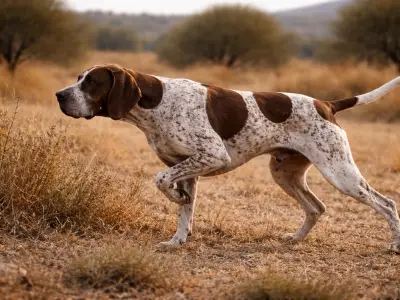
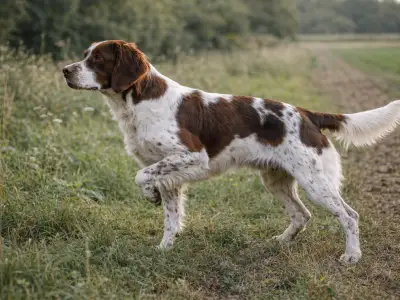
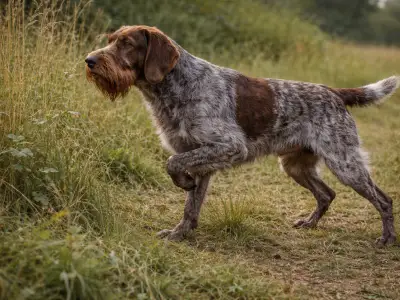
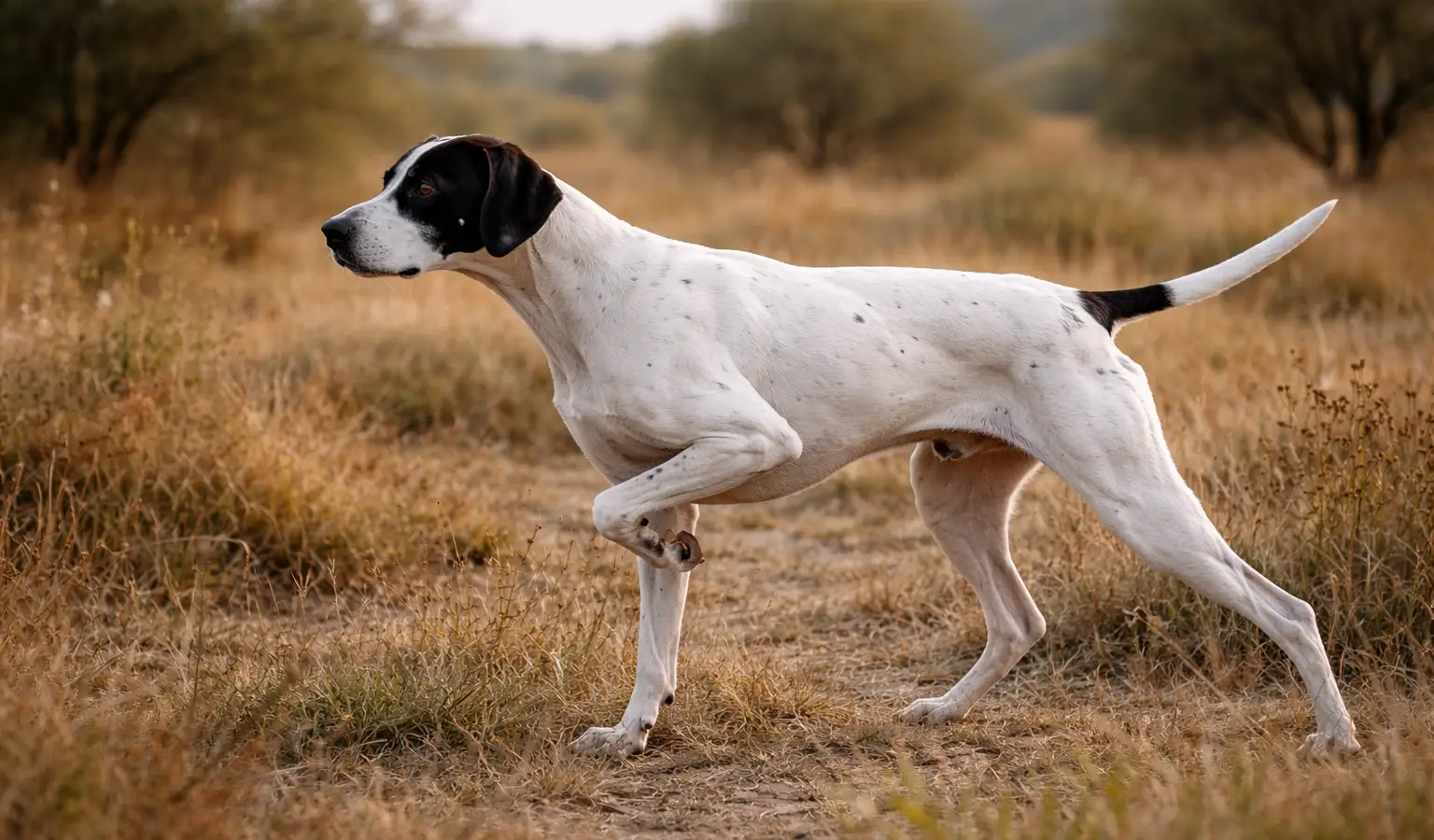
The Puy Pointer is an old French pointing dog breed that is now extinct or extremely rare. Historically used for hunting, it was valued for its endurance, nose quality and ability to adapt to difficult terrain, and it influenced several modern pointing breeds.
Life expectancy
12 – 14 years
Price
700 – 1200 €
Monthly budget
60 €
Size
Medium
Profile
Puy Pointer
Origin
France
Year of origin
1800
Developed by
Hunters from Auvergne
Size
Medium
Coat type
Short coat
Owner profile
Active owner
Hypoallergenic
No
Litter size
7
Life expectancy
12 – 14 years
Price
700 – 1200 €
Female
- Height : 55 – 60 cm
- Weight : 18 – 25 kg
Male
- Height : 58 – 63 cm
- Weight : 22 – 30 kg
Temperament & abilities
Affectionate
4/5
Calm
3/5
Independent
3/5
Intelligence
4/5
Obedience
4/5
Hunting instinct
5/5
Energy level
4/5
Good with children
4/5
Dog-friendly
4/5
Friendly with strangers
4/5
Hunting profile
Stamina
4/5
Hunting drive
3/5
Independence
3/5
Trainability
3/5
Beginner-friendly
3/5
Family compatibility
4/5
Feather game
4/5
Fur game
2/5
Underground work
0/5
Water work
2/5
These indicators help compare breeds and choose the right one for your hunting style.
Game & abilities
Estimated ability level by game type.
Budget
Purchase price
700 – 1200 €
The price may vary depending on the breeder, bloodline, and region.
Average monthly cost
60 €
Estimated average: food, healthcare, accessories, and grooming.
A light, fast pointing dog best suited to active handlers who value range, style, and daily engagement.
Is the Puy Pointer a good hunting dog?
The Puy Pointer can be a very capable hunting dog for the right person, especially if you want a quick, elegant pointing breed with stamina, sensitivity, and an active field style. In practical terms, Puy Pointer hunting is most coherent for hunters looking for a bird dog that covers ground efficiently, uses its nose well, and works with speed rather than brute force. It is not usually the easiest choice for every household or every type of hunting, but in suitable hands it can be an appealing companion in the field.
As a hunting dog, the Puy Pointer is generally associated with a lively search pattern, good natural pointing instinct, and the kind of athleticism that suits open or lightly varied terrain. Its build suggests efficiency and endurance, and many people interested in Puy Pointer abilities are drawn to that combination of reach, pace, and finesse. Handling matters, though: this is the sort of dog that often does best with a calm, consistent trainer who develops recall, steadiness, and cooperation early. A harsh approach can easily dull initiative or create avoidable friction in a sensitive pointing breed.
Its strengths tend to make the most sense for hunters who want an active walking companion with real field purpose, rather than a kennel-only specialist or a low-effort pet. Depending on the individual dog, bloodline, and training, the breed may be better known for finding and indicating game than for heavy retrieving work. That does not mean retrieve training is impossible, only that expectations should be realistic and education should be patient and structured.
- Best use cases: upland bird hunting, active handlers, ground-covering search, owners who enjoy training.
- Main strengths: speed, stamina, nose, pointing instinct, elegant working style.
- Main demands: daily exercise, reliable recall, mental stimulation, steady handling.
- Possible limitations: may be too energetic for sedentary homes and not the most straightforward fit for people wanting a highly versatile retrieve-focused dog.
In everyday life, the Puy Pointer temperament is usually easiest to live with when the dog gets meaningful outlets for both body and mind. A well-managed individual can be affectionate and pleasant at home, but this is rarely a breed for owners who want only a short walk and a quiet afternoon indoors. For someone comparing several pointing breeds, the Puy Pointer makes the most sense if you value field style, movement, and a responsive partnership, and you are prepared to meet the breed halfway with training, time, and regular work.
Fast, ground-covering search
The Puy Pointer is widely associated with a light, athletic frame and an efficient search pattern that can cover open country quickly. For hunters working plains, stubble, or broad fields, that speed can be a real advantage. It tends to suit people who enjoy an active pointing dog rather than a slower, close-working specialist.
Air scenting nose
This breed is generally appreciated for finding game with a high head carriage and a nose adapted to moving scent in open terrain. In practical hunting, that can mean earlier contact with birds and cleaner location work when conditions are favorable. As with any pointing dog, nose quality also depends on line, experience, and the way the dog has been developed.
Stylish, readable points
A good Puy Pointer is often described as showing clear, elegant pointing behavior that is easy for the handler to read at distance. That visible style is not only attractive; it can help coordination during a walk-up hunt or when several hunters are covering ground. Hunters who value classic pointing dog manners often find this trait especially appealing.
Built for open-country work
The breed’s reputation is strongest in open landscapes where its stride, reach, and forward drive can be used properly. It may be less naturally suited to very dense cover than heavier, more close-quarters gundogs, but in open bird country it can offer a fluid and efficient day’s work. This makes it a better match for hunters with space to let a dog range.
Responsive to a steady handler
When training is calm and consistent, the Puy Pointer is often considered pleasant to handle, especially for hunters who want a dog that works with purpose without constant pressure. It usually benefits from clear direction, regular field exposure, and enough exercise outside the season. Heavy-handed handling could dull initiative in some individuals, so a thoughtful approach tends to pay off.
Stamina with a light build
One of the practical attractions of the Puy Pointer is the combination of endurance and relative elegance. In suitable condition, it can stay active across long outings without looking cumbersome, which is useful for hunters covering large areas on foot. Daily life should reflect that energy level: this is not a breed likely to thrive on short walks alone.
Who the Puy Pointer suits best
The Puy Pointer is likely to suit a hunter who values a light, fast, wide-ranging pointing dog and enjoys covering ground on foot. It tends to make the most sense for active owners who want a responsive field companion rather than a purely decorative pet. In practical terms, this breed profile fits people who can provide regular off-lead exercise, structured training, and enough outdoor time to channel a naturally athletic temperament. For hunting, it is generally best matched with those who appreciate pace, initiative, and a dog that may work with style rather than constant close handling.
It is usually less suitable for very sedentary households, first-time owners looking for an easy low-energy dog, or homes expecting the Puy Pointer to be content with brief walks and little mental work. It may also be a poor match for hunters who prefer a very close-working dog in tight cover, depending on the individual and training. In family life, the best fit is often a calm but active household that enjoys training, routines, and time outdoors. Without enough exercise, direction, and day-to-day involvement, this breed could become difficult to live with simply because its working instincts and stamina are underused.
How the breed’s history shaped its style in the field and its character at home
Origins and Development of the Puy Pointer
The Puy Pointer, or Braque du Puy, is a rare French pointing dog whose history appears to be tied to the old pointer traditions of southwestern and central France. Most accounts place its development in the 19th century, with breeders seeking a lighter, faster, more elegant gun dog than some of the heavier continental braques of the time. As with several old regional hunting breeds, not every historical detail is perfectly documented, but the general picture is consistent: this was a dog selected for covering ground efficiently, locating game birds with intensity, and working in a more agile, racy style.
That background helps explain the breed’s present-day profile. The Puy Pointer is often described as finer-built and more leggy than many traditional French pointing dogs, and that likely reflects deliberate selection for speed, reach, and stamina in open country. Rather than a slow, methodical hunting style, the breed has long been associated with a more flowing search pattern and a lively but not usually frantic temperament. For hunters, that can mean an appealing dog for fields and broad terrain, but it also suggests a breed that generally needs regular exercise, consistent handling, and enough work to stay mentally settled.
Its rarity today also matters. The Puy Pointer declined significantly over time and never achieved the broad modern popularity of better-known pointing breeds. As a result, individual dogs may vary quite a bit depending on bloodline, breeder priorities, and how strongly working traits have been preserved. In practical terms, someone interested in the breed should not rely on old descriptions alone. It is wise to look closely at the actual dogs behind a pedigree, especially if the goal is a capable hunting companion rather than simply a rare breed profile.
In everyday life, the historical selection for field use still offers useful clues. This is generally the kind of pointing dog that is likely to suit an active owner who appreciates sensitivity, movement, and cooperative training rather than heavy-handed handling. Many pointers bred for bird work do best with:
- regular off-lead exercise in safe areas
- structured training that channels drive without dulling initiative
- a home that can meet both physical and mental needs
- owners who value a hunting dog’s athleticism and focus
Seen in that context, the Puy Pointer’s history is not just a matter of breed lore. It helps explain why admirers are drawn to its blend of elegance, energy, and field purpose, while also showing why it may be a better fit for active handlers and hunters than for households looking for an easy, low-demand companion.
French sporting roots
The Braque du Puy is generally described as a rare French pointing dog developed for upland hunting. Historical accounts vary in detail, but the breed is usually linked to fast, elegant gundogs selected to cover ground efficiently while locating game birds. That background still shapes how many enthusiasts describe the Puy Pointer today: athletic, functional, and very much a hunter’s dog.
Built for range
Compared with heavier pointing breeds, the Puy Pointer is often portrayed as lighter-framed and more speed-oriented in the field. The working idea is not brute force but fluid movement, stamina, and a stylish search pattern. For hunters, that can mean a dog better suited to open country, active walking days, and handlers who enjoy a lively, forward-moving pointing dog.
Sensitive but driven
Temperament is often described as alert, intelligent, and responsive rather than hard-headed. In practice, this usually means the breed may do best with calm, consistent training and regular contact with its handler. Heavy-handed methods are unlikely to get the best out of a sensitive pointing dog, while structured work, clear routines, and praise tend to support steadier progress.
Not a low-energy house dog
This is unlikely to be the right match for owners wanting a casual companion with modest exercise needs. A Puy Pointer generally needs real daily activity, not just a brief walk around the block. Hunting, field training, long off-lead outings where legal and safe, and mentally engaging routines are important if you want a settled dog at home.
Best with active handlers
The breed is usually a better fit for experienced sporting-dog owners, regular hunters, or very active homes that understand high-drive dogs. It may be less straightforward for first-time owners if its exercise, recall training, and need for purposeful work are underestimated. In the right hands, though, that energy can be channeled into a cooperative and enjoyable daily partner.
Lean dog, practical upkeep
Care is often fairly manageable thanks to the short coat, but easy grooming does not mean low overall maintenance. What really matters is conditioning, regular exercise, and enough recovery after hard work. Because the breed is built for movement, many owners pay close attention to muscle tone, paw condition, and weather exposure during hunting season or long training outings.
Practical answers for people considering the Braque du Puy as a gun dog and companion
Puy Pointer FAQ: hunting, training, and everyday life
Is the Puy Pointer a good hunting dog for modern hunters?
The Puy Pointer is generally described as a light, fast, elegant pointing dog developed for field work, so its profile can appeal to hunters who value range, nose, and style. In practice, suitability depends heavily on the individual dog, the line behind it, and the quality of early exposure and training. It may be especially interesting for hunters looking for a responsive pointing breed for upland work rather than a heavy, slow-going dog. Anyone considering one for serious hunting should ask detailed questions about working ability, steadiness, recall, and how the dog handles birds and gunfire in real conditions.
What kind of game and terrain may suit a Braque du Puy best?
The breed is often associated with open ground, active searching, and classic pointing work, which may make it better suited to upland hunting than dense, punishing cover. A lighter-built dog can be pleasant to handle over long distances, but rough terrain, thick brambles, and extreme weather may not suit every individual equally well. Hunters should think about their real conditions: wide fields, rolling farmland, moor-like terrain, or mixed cover all ask slightly different things from a dog. If most outings involve all-day movement and ground-covering search, the Puy Pointer may be attractive, provided the dog has the stamina, structure, and training for that job.
Is the Puy Pointer easy to train for hunting and home life?
Many pointing breeds learn well when training is clear, fair, and consistent, and the Puy Pointer is often thought of as a sensitive, athletic type rather than a dog that thrives under harsh handling. That usually means it can respond nicely to structured work, but sloppy timing, repetitive drilling, or too much pressure may create avoidable problems. For hunting, the basics matter: recall, cooperation, bird introduction, gun conditioning, and steadiness should be built step by step. At home, the same dog usually benefits from calm routines, daily expectations, and enough mental work that it does not invent its own entertainment.
Can a Puy Pointer live as a family dog when it is not hunting every week?
Potentially, yes, but only if the household truly enjoys an active dog and can meet its physical and mental needs. A well-managed pointing dog can be affectionate and pleasant in the home, yet daily life is much easier when the dog has regular exercise, training, and some outlet for its natural searching and exploring instincts. Without that structure, a lively hunting breed may become restless, noisy, or difficult to settle. Families who like long walks, outdoor weekends, and dog training often fit this kind of breed better than people wanting a low-maintenance pet.
Is the Braque du Puy suitable for apartment living?
Apartment living is not automatically impossible, but it is rarely the easiest setup for an energetic pointing dog. What matters most is not the size of the home alone, but whether the dog gets meaningful daily exercise, off-lead training where legal and safe, and enough mental engagement to come back indoors ready to rest. A Puy Pointer that spends long hours under-stimulated may find apartment life frustrating, especially during adolescence. In contrast, a committed owner with excellent routines, outdoor access, and realistic expectations may manage it better than someone in a large house who barely exercises the dog.
How much exercise does a Puy Pointer usually need?
Most dogs of this general type need more than a short leash walk around the block. Expect a strong need for daily movement, free running in secure areas where permitted, and activities that engage the nose and brain as well as the legs. Training games, recall practice, quartering exercises, and structured outdoor time usually help more than simple repetitive exercise alone. Young dogs in particular need a balanced routine: enough activity to prevent frustration, but not endless overstimulation that teaches them to stay in a constant state of excitement.
Who is the Puy Pointer best suited to, and who may struggle with it?
This breed may suit an active owner who genuinely wants a versatile pointing dog, enjoys training, and understands that a sporting dog needs guidance as much as exercise. It may also appeal to hunters who like a lighter, stylish field dog and are prepared to select carefully from credible stock. People most likely to struggle are those wanting a highly independent outdoor dog with no daily training, or a calm couch companion with minimal exercise needs. First-time owners are not automatically excluded, but success is more likely when they have strong support, access to good training advice, and realistic expectations about energy and management.