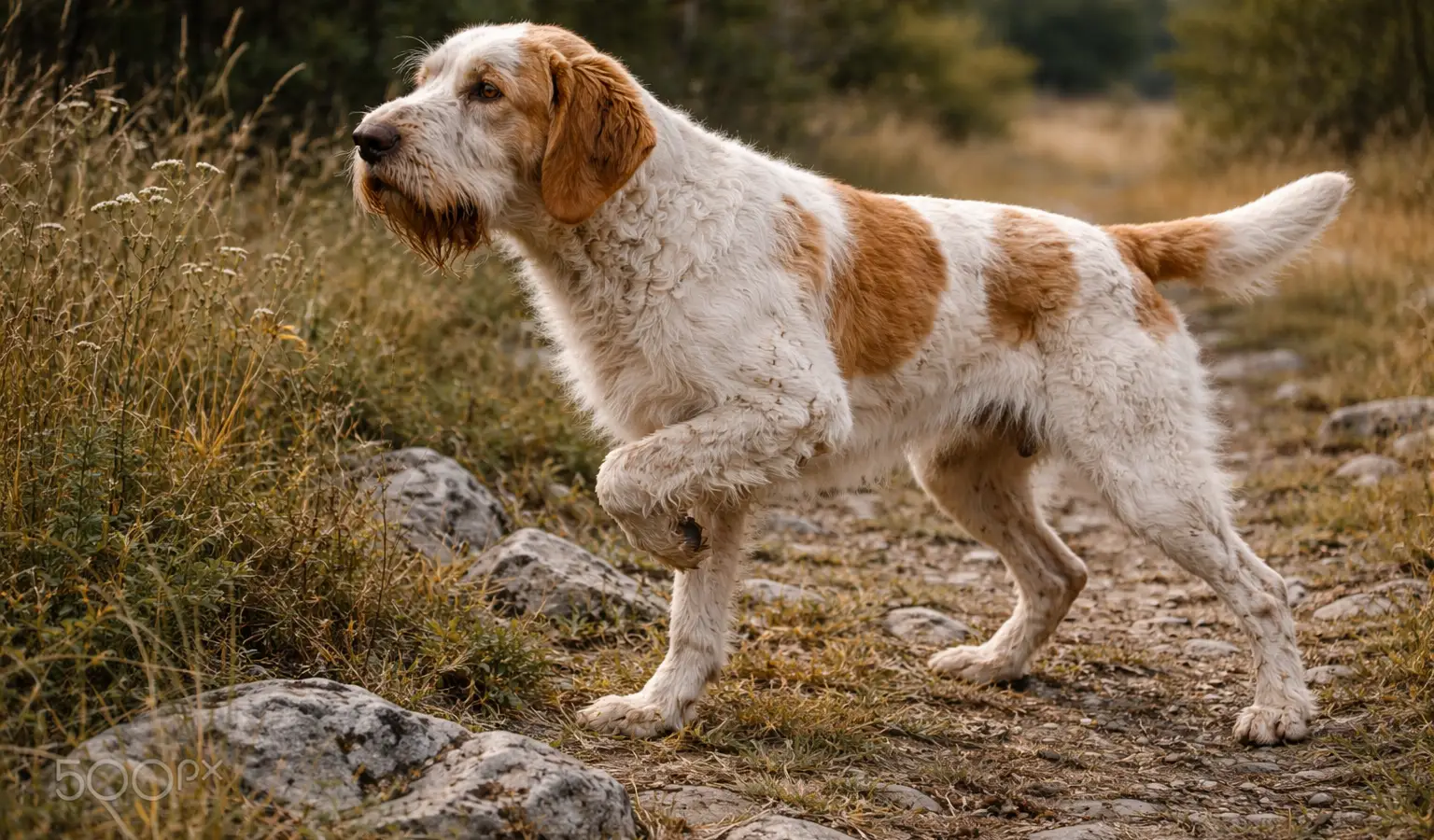
Italian Spinone
The Italian Spinone is an ancient and versatile pointing dog, known for its great endurance and gentle temperament. Equipped with an excellent nose, it works methodically and persistently across all types of terrain, including challenging environments. Calm, affectionate and strongly attached to its family, it suits both hunting activities and active companion life.
Life expectancy
10 – 12 years
Price
1000 – 1800 €
Monthly budget
75 €
Size
Large
Profile
Italian Spinone
Origin
Italy
Year of origin
1500
Developed by
Italian hunters
Size
Large
Coat type
Wire coat
Owner profile
Calm owner
Hypoallergenic
No
Litter size
6
Life expectancy
10 – 12 years
Price
1000 – 1800 €
Female
- Height : 60 – 65 cm
- Weight : 28 – 34 kg
Male
- Height : 63 – 70 cm
- Weight : 32 – 40 kg
Temperament & abilities
Affectionate
5/5
Calm
4/5
Independent
2/5
Intelligence
4/5
Obedience
4/5
Hunting instinct
5/5
Energy level
3/5
Good with children
5/5
Dog-friendly
5/5
Friendly with strangers
4/5
Hunting profile
Stamina
4/5
Hunting drive
3/5
Independence
3/5
Trainability
5/5
Beginner-friendly
5/5
Family compatibility
5/5
Feather game
4/5
Fur game
4/5
Underground work
3/5
Water work
5/5
These indicators help compare breeds and choose the right one for your hunting style.
Game & abilities
Estimated ability level by game type.
Budget
Purchase price
1000 – 1800 €
The price may vary depending on the breeder, bloodline, and region.
Average monthly cost
75 €
Estimated average: food, healthcare, accessories, and grooming.
A slow-to-moderate, methodical pointing dog with real stamina, strong cooperation, and a temperament that often fits family life better than many harder-driving gundogs.
Is the Italian Spinone a good hunting dog?
The Italian Spinone is widely considered a good hunting dog, especially for hunters who value a calm, thorough, highly cooperative worker over extreme speed. In the field, the breed is better known for nose, patience, and steady handling than for explosive range. A well-bred Italian Spinone can be very useful as a versatile hunting dog for pointing and retrieving, particularly in mixed terrain and for people who want a dog that stays connected rather than constantly pushing out to the horizon.
Its hunting style is typically methodical and measured. The Spinone often works at a slower pace than many continental pointing breeds, but that pace is part of its appeal: it tends to search carefully, use its nose honestly, and remain manageable for the handler. In rough cover, woodland edges, damp ground, and situations where game can hold tight, that deliberate search pattern may suit some hunters extremely well. Many Spinoni also show natural willingness to retrieve, and their practical courage in bramble, cold weather, or unpleasant ground is often valued more than flashy speed.
The trade-off is clear. If you want a very fast, wide-ranging field trial style dog for covering huge acreage at pace, the Italian Spinone may feel too deliberate. Trainability is usually good when the approach is fair, consistent, and patient, but this is not typically the breed for harsh handling or drilling at high pressure. Recall, steadiness, delivery to hand, and obedience still need real work, and some individuals mature mentally at their own rhythm. The breed often responds best to calm repetition, clear expectations, and regular exposure to game and varied terrain.
- Best fit: hunters wanting a biddable pointing dog with a close partnership style
- Key strengths: nose, stamina, cooperation, retrieve potential, practical versatility
- Possible limits: less speed and range than more intense pointing breeds, training may require patience
- Daily life: usually easier to live with than many high-octane gundogs, but still needs exercise, structure, and meaningful work
For everyday life, the Italian Spinone often offers an appealing balance between field performance and home temperament. It is generally not a low-energy pet, yet it is often more settled indoors than sharper, more restless hunting breeds when its needs are met. This makes it a coherent choice for the hunter who wants one dog for the field and family life, provided they genuinely want a steady, sensible working style rather than a hard-charging specialist.
Methodical nose
The Italian Spinone is widely valued for a strong, practical nose and a steady way of using it. Rather than rushing ground, many Spinoni work scent carefully and thoroughly, which can be especially useful in mixed cover, damp conditions, or hunts where missed birds matter more than raw speed.
All-day stamina
This is a pointing dog often appreciated for durable, even effort over long outings. The Spinone may not hunt with the explosive pace of lighter, racier breeds, but many individuals keep working in a measured rhythm that suits hunters who want endurance, consistency, and a dog that can stay useful deep into the day.
Useful in rough ground
The breed’s rustic build and calm determination can make it well suited to thorny cover, uneven terrain, and cooler, wetter conditions. A good Italian Spinone often shows the confidence to push on without becoming frantic, which appeals to hunters who need a practical dog for difficult ground rather than a purely high-speed specialist.
Natural game recovery
Many Italian Spinoni are appreciated not only for finding and pointing birds, but also for recovering shot game in a composed way. Retrieving ability can vary with breeding and training, yet the breed often offers a helpful combination of soft mouth tendencies, willingness to carry, and the concentration needed for clean pick-ups.
Cooperative handling
The Spinone usually suits hunters who prefer teamwork over constant conflict. Many dogs in the breed are responsive, biddable, and inclined to stay connected with the handler, which can make training more straightforward for patient owners. They tend to do best with calm repetition and clear expectations, not heavy-handed pressure.
Versatile hunting companion
For the right owner, the Italian Spinone can cover several jobs in one dog: searching, pointing, tracking wounded game, and retrieving. That versatility is one of its real strengths. It is often best matched with hunters who value reliability, nose, and manageable daily life more than extreme speed or hard-driving field-trial style intensity.
Who the Italian Spinone suits best
The Italian Spinone tends to suit hunters who want a steady, cooperative pointing dog rather than a high-strung speed specialist. It often fits people who enjoy mixed terrain, practical hunting days, and a dog that can work at a thoughtful pace while staying connected to the handler. In family life, the breed is usually a better match for active households that like long walks, field time, training, and close day-to-day companionship than for owners wanting a low-maintenance dog.
It is often well suited to owners who appreciate a softer, sometimes slightly independent temperament and who can train with consistency instead of pressure. Less suitable profiles include very sedentary homes, people expecting sharp guard-dog behavior, or hunters wanting extreme range, explosive pace, and constant intensity. A Spinone can also be a mismatch for owners who leave the dog alone for long hours or underestimate its need for structured exercise, scent work, and regular human involvement.
How an old Italian gundog became the steady, close-working pointing dog known today
Origins and development of the Italian Spinone
The Italian Spinone is widely regarded as one of Italy’s oldest pointing breeds, though its exact beginnings are not perfectly documented. Most breed historians place its development in northern Italy, where rough-coated hunting dogs were shaped over time for practical field use in varied terrain, from wetlands to thorny cover and upland ground. Rather than being refined for speed alone, the Spinone appears to have been selected for endurance, scenting ability, cooperation, and a coat that could handle rough country. That early purpose still helps explain the modern dog: a deliberate worker, usually less frantic than many pointing breeds, and often especially valued by hunters who prefer a methodical search pattern.
The breed’s history likely reflects a mix of old continental pointing dog types rather than a single clean origin story. References to wire-coated Italian hunting dogs go back centuries, but breed development in the modern sense became clearer much later, especially as regional types were stabilized and breeding became more systematic. Like many European working breeds, the Italian Spinone was affected by social change and war, and numbers are thought to have dropped significantly in the twentieth century before enthusiasts rebuilt the breed. That recovery mattered because breeders were not only preserving a look, but also a style of work: calm, tough, biddable, and capable of covering difficult ground without wasting energy.
Today’s Spinone still carries that heritage in ways prospective owners should understand. This is generally not a high-octane pointing dog bred to slash across huge acreage at top speed. In the field, many Spinoni work at a sensible pace, use their noses carefully, and stay connected to the handler. For hunting, that can make them attractive to shooters who want a versatile, manageable gundog for mixed days and real-world terrain. At home, the same background often translates into a dog that is steady and people-oriented, but not effortless. The breed still needs regular exercise, patient training, and meaningful outlets for its instincts.
Its historical role also helps explain some of the breed’s strengths and limitations for modern life:
- Strengths: endurance, a harsh protective coat, close cooperation, and a generally thoughtful working style.
- Limitations: less natural fit for handlers wanting extreme pace, sharpness, or a highly stylized field-trial type performance.
- Best suited to: hunters and active homes that appreciate a steady, trainable dog with substance, patience, and a practical all-terrain background.
In that sense, the Italian Spinone’s history is not just a story about age or national origin. It is the reason the breed is still recognized for a particular balance of grit, softness, and usefulness. For the right owner, that old-fashioned, workmanlike character is exactly the appeal.
Old Italian roots
The Italian Spinone is widely regarded as one of Italy’s oldest pointing breeds, shaped for practical field work rather than speed alone. Its exact ancestry is debated, but the breed is commonly linked to old rough-coated gun dogs used across varied terrain, from farmland and marsh edges to heavier cover.
Built for methodical hunting
Unlike more explosive pointing dogs, the Spinone typically works at a steady, deliberate pace. That style can suit hunters who want a dog that keeps contact, handles rough ground with determination, and points game without racing out of range. In the right lines, it may also show useful tracking and retrieving ability.
Gentle but not soft
The breed is often described as kind, patient, and people-oriented, which helps explain its strong reputation as a family hunting dog. Even so, a Spinone is not simply a calm pet with a beard. It usually needs consistent guidance, early socialization, and meaningful daily activity to stay balanced and easy to live with.
Best for hands-on owners
This is usually a better fit for owners who enjoy training, outdoor time, and close day-to-day involvement with their dog. Many Italian Spinoni respond best to calm, fair handling rather than heavy pressure. Harsh methods can dull initiative or cooperation, while patient repetition often produces a reliable companion in field and home life.
Space helps, routine matters more
A large yard is useful, but it does not replace regular exercise and mental engagement. Most Spinoni do best in homes where they can move, explore, and spend time with their people. Long walks, scent work, retrieving games, and structured training are often more important than square footage alone.
Low glamour, real upkeep
The rough coat gives the breed a rustic look, but maintenance is still part of daily life. Owners should expect routine brushing, attention to beard cleanliness, and regular checks after field outings, especially in thick cover. The coat is practical rather than decorative, yet it still needs steady care to remain comfortable and tidy.
Practical questions about hunting ability, training, exercise, family life, housing, and owner fit
Italian Spinone hunting and daily life FAQ
Is the Italian Spinone a good hunting dog for beginners?
The Italian Spinone can suit a beginner hunter, especially someone who values a steady, cooperative dog over extreme speed. It is generally known for working at a thoughtful pace, using its nose well, and staying relatively connected to the handler, which many new owners find easier to manage than a very wide-ranging pointing breed. That said, it is still a true hunting dog with strong instincts, so early training, field exposure, and consistency matter. A novice owner usually does best with guidance from a breeder, trainer, or hunting club familiar with versatile pointing dogs.
What kind of hunting is the Italian Spinone best suited for?
The breed is often appreciated as a versatile gundog that can point, track wounded game in some contexts, and retrieve on land and sometimes in water, depending on the individual dog and training. Its style tends to be methodical rather than flashy, which can be an advantage in rough cover, mixed terrain, and slower, deliberate hunting days. Many hunters like the Spinone for upland work where endurance, nose quality, and cooperation are more important than raw speed. It may not match the range or intensity preferred by every competitive field hunter, but it can be very effective for practical shooting and all-around use.
Are Italian Spinoni easy to train for hunting and obedience?
Many Italian Spinoni are trainable and willing, but they are not usually at their best under harsh or repetitive handling. They often respond better to calm structure, clear expectations, and patient repetition than to pressure-heavy methods. Because the breed can mature at its own pace, some dogs need time to become fully reliable in the field and in everyday obedience. Owners who are fair, consistent, and attentive to motivation usually get better results than those expecting instant precision.
Can an Italian Spinone live as a family dog if it also hunts?
In many homes, yes. The Italian Spinone is often described as affectionate, people-oriented, and calmer indoors than many hard-charging hunting breeds, provided its exercise and mental needs are met. It can fit well with families who enjoy an involved dog that wants to be near its people, but its size, muddy coat, and outdoor enthusiasm are part of the package. A well-bred, well-managed Spinone may move comfortably between hunting days and family life, though manners, recall, and household routines still need to be taught.
How much exercise does an Italian Spinone need when it is not hunting?
This is not a breed that is satisfied with a short walk around the block every day. Most adult Spinoni need substantial daily activity, plus chances to sniff, explore, train, and use their brains, especially outside the hunting season. Long walks, structured retrieves, tracking games, field training, and off-lead exercise in safe areas can all help keep the dog balanced. Without enough physical and mental work, some individuals may become noisy, restless, stubborn, or creatively destructive.
Can an Italian Spinone live in an apartment or does it need a big house?
A large house is not strictly necessary, but easy access to outdoor exercise is. An Italian Spinone can adapt to smaller living spaces if the owner is committed to giving it meaningful daily activity and does not expect the dog to self-regulate without guidance. What matters most is not square footage alone, but whether the dog gets enough movement, training, companionship, and time outside. Prospective owners should also be realistic about drool, dirt, wet coats, and the general mess that can come with a rugged hunting breed.
Who is the Italian Spinone the right choice for, and who may struggle with this breed?
The breed often suits hunters and active households who want a cooperative, versatile pointing dog with a relatively steady temperament and a strong bond with its people. It can also appeal to owners who prefer an old-style working companion over a very high-strung or ultra-fast field dog. People may struggle if they want a low-maintenance pet, a dog that thrives on minimal exercise, or instant obedience with little training effort. It is usually a better match for patient, involved owners who enjoy outdoor life, ongoing training, and living with a substantial dog that takes up both space and attention.