
Irish Red and White Setter
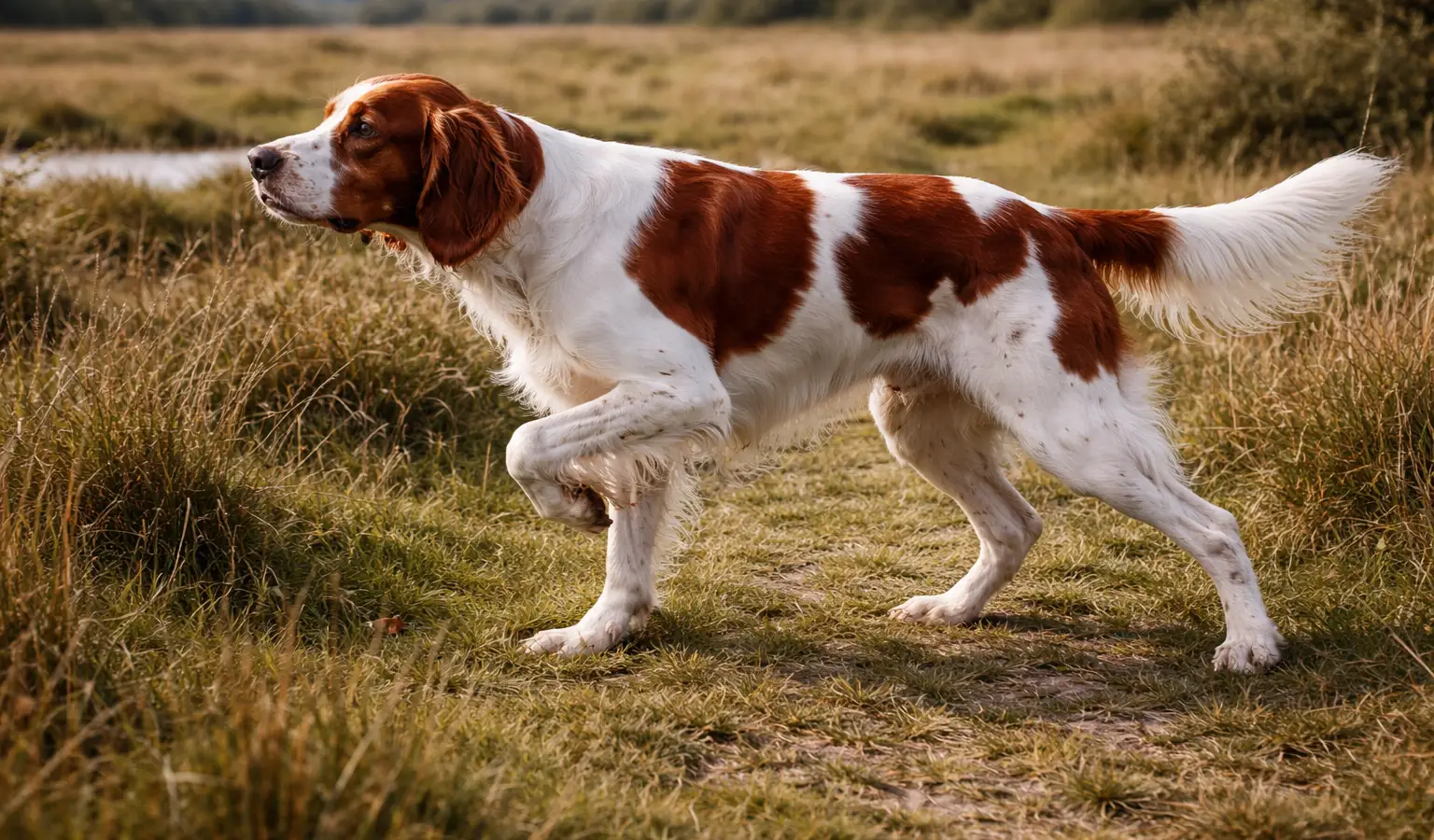
The Irish Red and White Setter is an elegant and enduring pointing dog, considered the ancestor of the red Irish Setter. More methodical and composed in its search, it is valued for its accurate nose and efficiency in bird hunting. Affectionate, well-balanced and closely bonded to its owner, it suits both hunting and active family life.
Life expectancy
11 – 14 years
Price
1100 – 2000 €
Monthly budget
75 €
Size
Large
Profile
Irish Red and White Setter
Origin
Ireland
Year of origin
1700
Developed by
Irish gentry and hunting breeders
Size
Large
Coat type
Long coat
Owner profile
Active owner
Hypoallergenic
No
Litter size
6
Life expectancy
11 – 14 years
Price
1100 – 2000 €
Female
- Height : 54 – 61 cm
- Weight : 22 – 28 kg
Male
- Height : 57 – 66 cm
- Weight : 25 – 32 kg
Temperament & abilities
Affectionate
4/5
Calm
3/5
Independent
3/5
Intelligence
4/5
Obedience
3/5
Hunting instinct
5/5
Energy level
4/5
Good with children
4/5
Dog-friendly
4/5
Friendly with strangers
4/5
Hunting profile
Stamina
4/5
Hunting drive
4/5
Independence
3/5
Trainability
4/5
Beginner-friendly
4/5
Family compatibility
5/5
Feather game
5/5
Fur game
1/5
Underground work
1/5
Water work
3/5
These indicators help compare breeds and choose the right one for your hunting style.
Game & abilities
Estimated ability level by game type.
Budget
Purchase price
1100 – 2000 €
The price may vary depending on the breeder, bloodline, and region.
Average monthly cost
75 €
Estimated average: food, healthcare, accessories, and grooming.
A stylish pointing breed with real field ability, but best suited to active handlers who want both a hunting partner and a lively home companion.
Is the Irish Red and White Setter a good hunting dog?
The Irish Red and White Setter is widely regarded as a capable hunting dog, especially for upland game work where a good nose, flowing search, and steady handling matter more than sheer hardness or extreme range. In the field, this breed is typically appreciated for its pointing instinct, athletic movement, and cooperative temperament. For many hunters, the key appeal is balance: the Irish Red and White Setter can offer genuine hunting ability without feeling as intense or specialized as some harder-driving field lines in other pointing breeds.
Its working style often suits hunters who like a dog that covers ground with purpose but stays reasonably connected. Many Irish Red and White Setters hunt with enthusiasm, use the wind well, and show enough stamina for a solid day out when properly conditioned. They are often most coherent for walked-up shooting, mixed rough cover, and general versatile bird hunting rather than highly competitive field trial expectations. Retrieve ability can be present, but as with many pointing dogs, reliability depends heavily on breeding, early exposure, and training rather than breed label alone.
Handling is usually one of this breed's attractive qualities. A well-bred, well-trained dog may be responsive, biddable, and pleasant to direct, which helps with recall, quartering, and keeping the search pattern useful rather than chaotic. That said, this is still an energetic setter with a sensitive side. Training tends to go best with consistency, repetition, and calm pressure rather than heavy-handed correction. Without enough outlets, the same energy that looks stylish in the field can turn into restlessness at home.
Potential owners should be realistic about demands. The Irish Red and White Setter is not usually the easiest choice for someone wanting a low-maintenance pet that hunts a few times per year. It generally fits better with people who enjoy regular training, long exercise sessions, and an active daily routine. In practical terms, this breed often suits:
- hunters who want a pointing dog that is cooperative and trainable
- active homes able to provide substantial exercise beyond short leash walks
- owners looking for a field-capable dog that can also live closely with the family
- people comparing versatile hunting companions rather than extreme specialist performers
As an all-around choice, the Irish Red and White Setter can be a very appealing hunting and family breed when the lifestyle match is right. Its strengths are style, temperament, workable handling, and enough stamina for real sporting use. Its limitations are just as important: it needs time, education, and regular activity, and some hunters wanting maximum range, very high intensity, or the toughest all-terrain specialist may look elsewhere.
Methodical hunting nose
The Irish Red and White Setter is widely valued for a practical, game-finding nose paired with a searching style that often feels organized rather than reckless. In real hunting, that can make the dog easier to read on varying ground, especially for handlers who want a pointing dog that locates birds without wasting too much effort in scattered movement.
Strong all-day stamina
This breed was developed for active field work, and many individuals show the endurance needed for long outings over rough country. Its stamina is one of the most useful traits for hunters who cover serious ground, but it also means the dog usually needs substantial exercise, training, and mental engagement outside the shooting season to stay balanced at home.
Cooperative to handle
Compared with harder, more independent gundogs, the Irish Red and White Setter often appeals to hunters who want a responsive partner rather than a dog that constantly challenges distance and control. With consistent training, many are quite workable on recall, quartering patterns, and steadiness, though sensitivity and maturity can vary by line and individual temperament.
Useful mix of range and contact
A good Irish Red and White Setter can cover ground with purpose while still remaining mentally connected to the handler. That balance suits hunters who like a pointing dog with reach but do not want to lose practical field control. In daily use, this often translates into a dog that can hunt energetically without becoming chaotic or unreadable.
Versatile game-bird worker
The breed is primarily known as a pointing dog, yet its overall hunting profile can be versatile enough for mixed shooting days, depending on training and breeding. Many owners value it as a capable upland companion with the athleticism and willingness to adapt to different terrain, weather, and field routines rather than a narrow specialist for one exact scenario.
Animated but serious on point
One of the breed’s appealing field qualities is the combination of lively action with genuine pointing intent. When properly developed, that can give the hunter a dog that hunts with visible drive yet still settles into useful concentration around scent. It suits people who enjoy style in a bird dog but still need practical, readable work in front of the gun.
Who the Irish Red and White Setter suits best
The Irish Red and White Setter tends to suit a hunter or active owner who wants a true pointing dog with stamina, range, and a cooperative nature. It often fits best with people who enjoy training, regular field outings, and long walks beyond the occasional weekend adventure. In a hunting home, it can be a strong match for those seeking a versatile upland companion that works with enthusiasm but still benefits from patient handling, clear structure, and steady exposure to birds, cover, and recall work.
As a family dog, it usually does best in households that like outdoor life and can give it both exercise and mental engagement. It is often less suitable for very sedentary owners, homes where the dog is left alone for long hours, or handlers wanting a low-maintenance pet that is content with a quick daily stroll. First-time owners can do well with this breed if they are consistent and committed, but common mismatches include underestimating its energy, expecting instant off-switch behavior without training, or providing too little work for a dog bred to hunt.
How the breed’s early development still shapes its temperament and hunting style
Origins of the Irish Red and White Setter
The Irish Red and White Setter is generally regarded as the older of the two Irish setter types. Before the all-red Irish Setter became more widely fashionable in the show world, red-and-white setters were already valued in Ireland as practical gundogs for finding game birds across varied ground. Exact early timelines are not always perfectly documented, but most breed historians agree that these dogs were developed for function first: stamina in the field, a reliable nose, and a visible coat pattern that handlers could pick out at distance.
That working origin helps explain the breed seen today. The Irish Red and White Setter was shaped as a pointing dog expected to quarter ground with purpose, locate birds, and work in close cooperation with the hunter rather than simply run for itself. In many lines, this still shows in a style that can feel energetic and athletic yet relatively connected to the handler when properly trained. Owners often describe a dog that is lively, affectionate, and intelligent, but not one that thrives with a sedentary routine or inconsistent guidance.
By the nineteenth century, the red-and-white pattern appears to have become less common as solid red setters gained popularity, and the breed may have come close to disappearing in some periods. Its survival is usually credited to dedicated breeders who preserved and rebuilt it from remaining working stock. Because of that history, the modern Irish Red and White Setter is often appreciated less as a purely ornamental setter and more as a dual-purpose dog: capable in the shooting field and pleasant in an active home. That does not mean every individual will hunt with the same intensity, but the breed’s background still matters.
For a prospective owner, the historical takeaway is practical. This is a setter with strong hunting roots, a need for regular exercise, and a temperament that usually benefits from patient training and meaningful activity. It can suit hunters who want a stylish pointing dog with biddable tendencies, and it can also suit families who genuinely enjoy outdoor life. It is less convincing for homes looking for a low-effort companion, because the breed’s development favored drive, movement, and engagement over passivity.
Older Irish roots
The Irish Red and White Setter is widely regarded as the older of Ireland’s setter types. Before the solid red Irish Setter became more fashionable in show circles, red-and-white dogs were valued as practical bird dogs, bred to cover ground, locate game, and work in partnership with the handler rather than simply stand out for appearance.
Bred for field sense
This breed was selected first as a hunting dog, and that working background still shapes its identity. A good Irish Red and White Setter usually combines an active nose, a natural pointing instinct, and a steady willingness to range out while remaining responsive. For hunters, that often means a dog suited to walked-up shooting and varied countryside rather than a purely ornamental setter.
Friendly, not soft
In daily life, the breed is often described as affectionate, sociable, and people-oriented, but it is not typically a low-drive house dog. Many individuals are cheerful and biddable when handled fairly, yet they can also be lively, excitable, and slow to settle if underexercised. That balance matters for owners wanting both a family companion and a serious sporting dog.
Needs room and routine
An Irish Red and White Setter usually thrives in a home that offers space, structure, and regular outdoor activity. A small urban routine may work for some dogs, but only with committed exercise and training. This is generally a breed for people who enjoy long walks, field work, scent games, and an active lifestyle rather than a brief trip around the block.
Train with patience
Training is often most successful when it channels the breed’s enthusiasm instead of trying to suppress it. These setters tend to respond well to calm, consistent guidance, early recall work, and progressive exposure to birds, scent, and distractions. Heavy-handed handling can dull confidence, while inconsistent rules may encourage selective listening, especially in energetic young dogs.
Feathering needs upkeep
Coat care is manageable, but it should not be ignored. The silky feathering can pick up burrs, mud, and field debris, particularly after hunting or long walks in rough cover. Regular brushing, attention to ears and feet, and a habit of checking the dog after work help keep the coat practical and the dog more comfortable through an active season.
Practical answers about hunting ability, training, exercise, home life, and owner fit
Irish Red and White Setter hunting and lifestyle FAQ
Is the Irish Red and White Setter a good hunting dog for modern upland hunting?
For many hunters, the Irish Red and White Setter can be a very capable upland pointing dog, especially where ground coverage, nose, and cooperative range matter. The breed is generally valued for quartering methodically, finding birds with purpose, and working in a style that can suit walked-up shooting better than extremely wide-ranging dogs. Individual range, pace, and bird sense still vary with breeding, early exposure, and training. It often appeals to people who want a hunting partner that can work seriously in the field but still live closely with the family the rest of the week.
Are Irish Red and White Setters easy to train for hunting and obedience?
They are often considered trainable, but they usually do best with calm, consistent handling rather than heavy pressure. Many respond well to clear routines, repetition, and varied sessions that keep drive and enthusiasm intact. Because setters can be sensitive and easily distracted by scent and movement outdoors, recall, steadiness, and check-in habits should be built early and reinforced regularly. A novice owner can succeed, but the process is usually smoother if they enjoy training, have access to birds or field opportunities, and are willing to spend time on both manners and hunting basics.
How much exercise does an Irish Red and White Setter need when it is not hunting?
This is typically an active sporting breed that needs more than a brief leash walk around the block. Most individuals do best with a mix of free running in safe areas, structured training, scent-based activities, and daily physical exercise that lets them use both body and brain. Without enough outlet, some may become noisy, restless, or inventive in unhelpful ways around the house. People considering this breed should picture a dog that usually wants a real job, whether that is hunting, regular field-style exercise, long hikes, or consistent canine sports.
Can an Irish Red and White Setter live happily as a family dog as well as a hunting dog?
In the right home, yes, this breed can often balance working ability with affectionate family life. Many are social, people-oriented dogs that enjoy being included in daily routines rather than left outside or ignored between hunting days. They can be very pleasant companions, but their size, enthusiasm, and energy mean they usually fit best with families who appreciate an active dog and can teach polite indoor behavior early. Good outcomes depend a lot on exercise, training, and how well the dog learns to switch from field excitement to calm time at home.
Is the Irish Red and White Setter suitable for apartment living or small homes?
It can be difficult in a small space unless the dog's exercise and mental needs are met very consistently. The issue is usually not just square footage but whether the owner can provide enough daily movement, training, and off-lead or field-style outlets in a safe setting. A well-managed individual may adapt better than people expect, but many will be easier to live with in a house that offers convenient outdoor access and room for active routines. Anyone in an apartment should be realistic about time, noise, adolescent energy, and wet, muddy days during hunting season.
Is this breed a good choice for first-time owners or first-time bird hunters?
It can be, but it is rarely the easiest route if someone wants a very simple, low-maintenance first dog. The Irish Red and White Setter tends to suit first-time owners who are genuinely active, open to learning, and interested in training rather than just hoping exercise will happen on its own. For first-time bird hunters, the breed can be rewarding because it often offers natural pointing dog qualities and close partnership, but progress usually depends on access to guidance, birds, and patient development. It is a better match for engaged beginners than for casual owners wanting a quiet, undemanding companion.
What kind of owner or hunter is the Irish Red and White Setter best suited to?
This breed often suits someone who wants one dog to do several things well: hunt upland birds, train regularly, join outdoor activities, and live closely with the household. It tends to match owners who enjoy an interactive dog rather than a highly independent one, and hunters who appreciate a purposeful worker with style but also a cooperative temperament. It may be less suitable for people who are away all day, dislike grooming and field maintenance, or want a dog that settles naturally with very little effort. In practical terms, the best home is usually active, structured, and genuinely interested in the dog's working heritage.