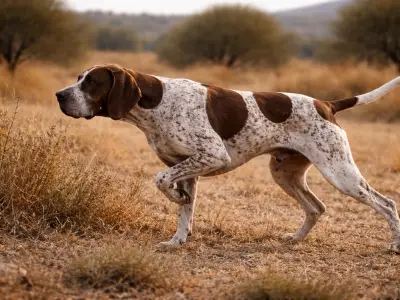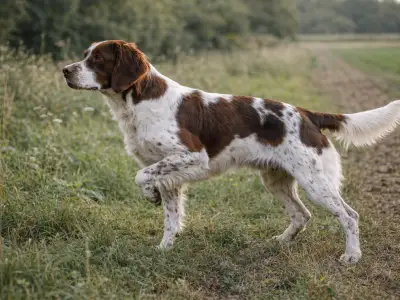
French Pointer
The French Pointer is a versatile and elegant pointing dog, valued for its outstanding nose and natural cooperation with hunters. Intelligent, people-oriented and easy to train, it combines efficiency in the field with a calm and affectionate temperament at home. With enough physical activity and mental stimulation, it adapts very well to family life.
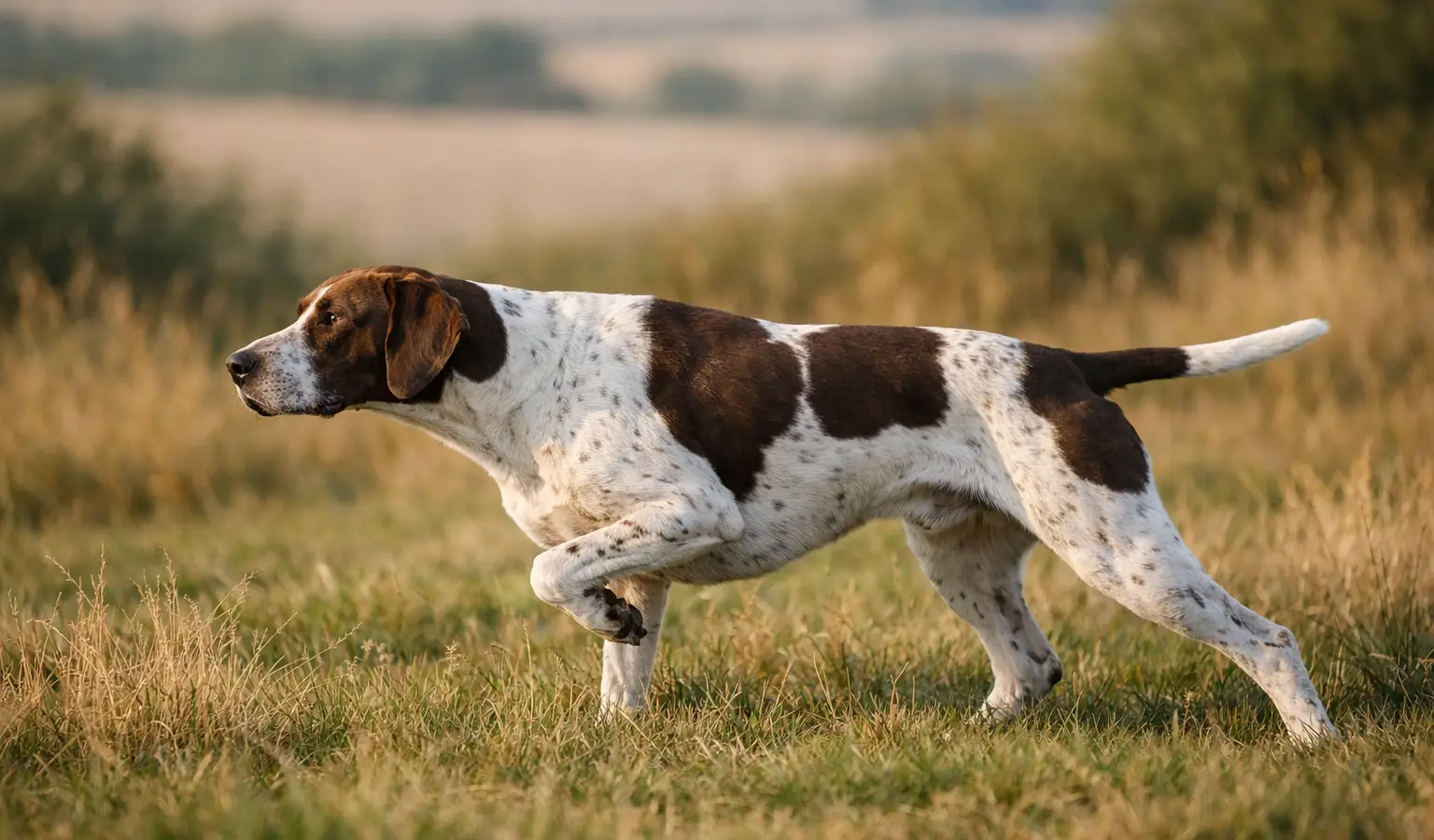
Life expectancy
12 – 14 years
Price
800 – 1400 €
Monthly budget
65 €
Size
Large
Profile
French Pointer
Origin
France
Year of origin
1600
Developed by
French hunters
Size
Large
Coat type
Short coat
Owner profile
Active owner
Hypoallergenic
No
Litter size
7
Life expectancy
12 – 14 years
Price
800 – 1400 €
Female
- Height : 54 – 60 cm
- Weight : 20 – 25 kg
Male
- Height : 56 – 62 cm
- Weight : 22 – 30 kg
Temperament & abilities
Affectionate
4/5
Calm
3/5
Independent
3/5
Intelligence
4/5
Obedience
4/5
Hunting instinct
5/5
Energy level
4/5
Good with children
4/5
Dog-friendly
4/5
Friendly with strangers
4/5
Hunting profile
Stamina
4/5
Hunting drive
4/5
Independence
3/5
Trainability
4/5
Beginner-friendly
4/5
Family compatibility
5/5
Feather game
5/5
Fur game
2/5
Underground work
0/5
Water work
3/5
These indicators help compare breeds and choose the right one for your hunting style.
Game & abilities
Estimated ability level by game type.
Budget
Purchase price
800 – 1400 €
The price may vary depending on the breeder, bloodline, and region.
Average monthly cost
65 €
Estimated average: food, healthcare, accessories, and grooming.
A balanced look at hunting ability, working style, training demands, and everyday livability
Is the French Pointer a Good Hunting Dog?
The French Pointer is widely considered a very capable hunting dog, especially for hunters who want a practical pointing breed that can work game effectively without feeling extreme or difficult to live with. In the field, the Braque français is generally valued for a good nose, cooperative handling, useful stamina, and a search pattern that is often more manageable than that of some faster, wider-ranging continental pointing dogs. For many people, that balance is the breed's main appeal: it can be a serious hunting companion while still fitting more naturally into family life.
Its working style usually suits hunters who prefer a dog that stays connected rather than constantly pushing the edge of range. Many French Pointers show a steady, efficient search, natural pointing instinct, and enough versatility for mixed upland work. Depending on the line and the individual dog, some also develop into willing retrievers, though retrieve quality and consistency should not be taken for granted without training. The breed often makes the most sense for walking hunters, rough shooters, and people covering moderate ground where cooperation, recall, and readable handling matter as much as raw speed.
Training demands are real, but they are often more approachable than with harder, sharper, or more independent field breeds. A French Pointer usually benefits from early exposure to birds, clear recall work, and consistent development of steadiness and retrieve habits. Harsh handling is rarely the best route. This breed tends to respond well to patient, structured training that preserves drive while building reliability. For first-time gundog owners, it may be one of the more coherent pointing breeds to consider, provided they are ready to give it regular work, field outlets, and daily structure.
- Strengths: cooperative temperament, useful nose, practical range, trainability, and a good balance of field ability and home life.
- Limitations: not always the ideal choice for hunters seeking the biggest range, the highest intensity, or a highly specialized competitive field style.
- Best use cases: upland hunting, mixed shooting days, moderate terrain, and owners who want one dog for hunting season and normal family living.
In everyday life, the French Pointer is usually easier to imagine as a house dog than some more high-strung hunting breeds, but it is still an athletic working dog with real energy. Without regular exercise, training, and mental engagement, that manageable temperament can become restless or noisy. For the right owner, though, the breed offers a convincing middle path: enough courage, stamina, and hunting instinct to be genuinely useful in the field, with handling and temperament that often remain more forgiving in daily life.
Practical, game-finding nose
The French Pointer is widely valued for a nose that works in a useful, efficient way rather than showy excess. In mixed terrain, many dogs can locate game birds with steady confidence and make sensible use of wind. For hunters who want a pointing dog that helps produce chances without constant correction, that pragmatic scenting ability is a real strength.
Natural, readable pointing
One of the breed’s most appreciated field qualities is a point that tends to be easy to read and easy to handle. Many French Pointers show clear body language on birds, which helps the hunter move in calmly and stay organized during the flush. That straightforward style often suits people who prefer functional hunting over dramatic but less practical performances.
Cooperative range
The French Pointer often appeals to hunters who want a dog that covers ground without hunting for itself. Depending on line and training, many work at a moderate range and keep useful contact with the gun. That makes the breed especially attractive for walked-up hunting, smaller parcels, and owners who value teamwork more than extreme independence.
All-day workable stamina
This is generally a durable sporting dog with enough stamina for real hunting days, yet often without the frantic intensity seen in some harder-driving pointers. In practical terms, that can mean steady output across varied cover and a dog that remains mentally available to the handler. For active hunters, it is a balanced kind of endurance that tends to be easy to live with.
Trainable, people-oriented handling
A major hunting advantage of the French Pointer is often its willingness to work with people. Many individuals respond well to calm, consistent training and do not need overly heavy handling to stay connected. That can help first-time pointing-dog owners as well as experienced hunters who want a biddable companion that transitions smoothly between field work and family life.
Useful versatility
Although best known as a pointing breed, the French Pointer can also be a versatile hunting companion when properly developed. Some dogs handle bird work, basic retrieves, and different types of country with good common sense. It is not always the most specialized option for every task, but for hunters seeking one adaptable gundog, that flexibility is often a strong selling point.
Who the French Pointer suits best
The French Pointer usually suits the hunter who wants a cooperative, close-working pointing dog rather than an extreme specialist that needs very hard handling. It often fits people who hunt mixed ground, appreciate a dog that can quarter sensibly, point with purpose, and then settle well at home after real exercise. For active owners outside hunting, this breed can work in a family setting if daily life includes training, long walks, off-lead outlets where safe, and meaningful interaction instead of a quick garden routine.
It is often less suitable for households wanting a low-effort pet, very sedentary owners, or handlers drawn to a highly independent dog that works far out with minimal contact. Common mismatches include apartment life with too little exercise, inconsistent training, and homes that underestimate how much this breed benefits from structure, recall work, and calm indoor habits. In the right hands, the Braque franais can be adaptable and affectionate; in the wrong setup, boredom and frustration may show up quickly.
How its history shaped the modern Braque français
Origins and development of the French Pointer
The French Pointer, or Braque français, is one of the old continental pointing breeds, developed in France as a practical gun dog for hunters who wanted a close-working, cooperative partner rather than a hard-driving specialist. References to French pointing dogs go back several centuries, although exact bloodlines are not always fully documented. What seems clear is that breeders selected for a dog able to locate game birds, hold point reliably, and remain manageable on foot across varied country. That long emphasis on usefulness helps explain why the breed is still known for a balanced hunting style and an easy, people-oriented temperament.
Over time, the French Pointer developed in hunting regions where versatility mattered. It was expected to search, point, and adapt to real field conditions rather than work as an extreme-distance dog. In practice, this produced a pointer that often hunts at a moderate range, checks in naturally, and tends to be responsive to the handler. Those traits can make the breed especially appealing to hunters who prefer a cooperative pointing dog for walked-up shooting or mixed terrain, and to owners who want a sporting dog that can also settle into family life when properly exercised.
The modern breed is usually discussed in two regional types, the larger Gascogne and the lighter, more agile Pyrénées. Both belong to the same French Pointer tradition, though they may differ somewhat in frame, speed, and style depending on lineage. In general, the historical selection favored dogs with a good nose, steady pointing instinct, and a softer, more biddable character than some more independent field breeds. That does not mean every individual is easy by default: young Braque français dogs still need structured training, regular outlet for their energy, and gentle but consistent handling.
For today’s owner, the breed’s history is more than background. It helps explain why the French Pointer often suits active homes that value trainability, companionship, and practical hunting ability over extreme intensity. Its heritage points toward several strengths:
- close cooperation with the handler
- versatile use on game birds in everyday hunting conditions
- a generally affectionate, adaptable nature in the home
- enough energy and drive to need regular work, training, and outdoor time
That blend of field sense and domestic livability is one reason the Braque français continues to attract hunters and sporting families. It is not usually the best match for a very sedentary household or for someone wanting a highly specialized competitive field dog, but for people who appreciate a classic French pointing dog with substance, sensitivity, and practical hunting instincts, its historical development still feels highly relevant.
Old French gundog roots
The Braque français is widely regarded as one of the old continental pointing breeds, shaped in France for practical field work rather than showy exaggeration. Over time, regional types developed, but the common thread remained a versatile hunting dog valued for finding game, holding point, and working in close partnership with the hunter.
Selected for workable range
Compared with some faster, wider-ranging pointers, the French Pointer is often appreciated for a more manageable hunting pattern. Many lines have been selected for useful ground coverage, steady contact, and a style that can suit hunters who prefer a dog that checks in naturally instead of disappearing over the horizon.
Gentle but still purposeful
A well-bred French Pointer is often described as soft-natured, biddable, and people-oriented, yet still serious about birds in the field. That combination can make the breed appealing to active families and hunters alike. Even so, sensitivity varies by individual, so harsh handling is usually less effective than calm, consistent training.
Best with active daily life
This is not usually a breed for a sedentary household. Most French Pointers do best with regular exercise, outdoor time, and mental engagement through training, scent work, or hunting. In return, many settle well indoors when their needs are met, but boredom can lead to restless behavior and difficult household manners.
Field style over brute force
In the hunting world, the French Pointer is often valued for efficiency, nose, and cooperation more than raw speed alone. Depending on bloodline and training, it may suit upland hunting, mixed terrain, and hunters who want a dog that feels connected to the gun. It is often a practical worker rather than a dramatic specialist.
Simple care, serious commitment
Coat care is usually straightforward, with basic brushing and routine checks after field outings. The bigger commitment is time: training, recall work, exposure to varied terrain, and enough exercise to keep body and mind balanced. The breed often suits owners who enjoy hands-on involvement rather than those seeking an easy, low-output companion.
Practical answers about field work, trainability, exercise, family life, and who this breed suits best.
French Pointer hunting and ownership FAQ
Is the French Pointer a good hunting dog for beginners?
The French Pointer can be a very appealing hunting breed for a beginner, especially for someone who wants a versatile pointing dog with a generally cooperative nature. Many individuals are known for working at a practical distance, making them easier to handle than some wider-ranging field dogs. That said, success depends heavily on bloodline, early exposure, and consistent training, not just breed reputation. A first-time owner who is active, willing to learn handling basics, and committed to regular field practice may do well with this breed. A beginner looking for a low-effort dog with little training input may find any pointing breed more demanding than expected.
What kind of hunting is the French Pointer best suited for?
The French Pointer is usually associated with upland bird hunting, where its pointing instinct, nose, and steady field pattern can be put to good use. Depending on the line and the individual dog, it may suit hunters pursuing partridge, pheasant, woodcock, quail, or similar game over varied terrain. Many people appreciate the breed for practical, all-around hunting rather than highly specialized trial-style work. Some dogs also retrieve willingly, but retriever-level water work should not be assumed without proper training and the right individual. It often suits hunters who want a thoughtful, biddable partner rather than an extremely hard-driving dog that ranges far out.
Are French Pointers easy to train for hunting and everyday obedience?
French Pointers are often described as trainable and responsive, particularly when the handler is calm, consistent, and fair. They usually benefit from a balanced approach built around repetition, clear expectations, recall work, and steady exposure to birds, terrain, and distractions. Harsh handling can reduce confidence in some dogs, so many owners get better results with patient structure than with heavy pressure. For daily life, basic obedience, leash manners, settling in the house, and reliable recall should start early rather than waiting for hunting season. Their field potential tends to come through best when hunting training and household training are developed together.
Can a French Pointer live happily as a family dog when not hunting every week?
In many homes, a French Pointer can be a pleasant family companion if its physical and mental needs are met consistently. This is not usually a breed that thrives on a short walk and a mostly sedentary routine, so non-hunting owners need to replace field work with serious daily exercise, training, and purposeful activity. Many individuals are affectionate and people-oriented at home, but they may become restless, noisy, or destructive if under-stimulated. Families who enjoy hiking, scent games, structured play, and outdoor time often find the breed easier to live with. House manners still need to be taught, because an athletic gun dog does not automatically know how to relax indoors.
How much exercise does a French Pointer need each day?
Most French Pointers need more than casual exercise, and many do best with a mix of running, training, off-leash work in safe areas, and mentally engaging tasks. For a healthy adult, one quick outing is rarely enough if you want a settled dog at home. Regular opportunities to use the nose, practice recall, search for hidden dummies, or work in the field can make a noticeable difference in behavior. Puppies and adolescents need exercise managed with some care, because endless free-for-all activity is not the same as productive conditioning. In practical terms, this breed tends to suit owners who genuinely enjoy building exercise into daily life, not just weekend plans.
Is the French Pointer a good choice for apartment living or small homes?
A French Pointer can sometimes adapt to a smaller home if the owner is very committed to daily exercise, training, and outdoor time, but the breed is usually easier to manage in a home with straightforward access to open space. The main issue is not square footage alone; it is whether the dog has enough routine, freedom to move, and chances to decompress constructively. A bored pointing dog in a cramped environment can become frustrating to live with. Many owners find that a house with a secure yard simplifies daily management, though a yard is not a substitute for real activity. For city living, success often depends on schedule, access to training grounds, and the individual dog's temperament.
Who is the French Pointer really best for?
The French Pointer is often best for people who want an active, close-working hunting companion and who also enjoy living with an engaged, athletic dog the rest of the week. It can suit hunters, rural or semi-rural owners, and sporty families who value trainability and field instinct more than a purely laid-back pet temperament. It may be less suitable for owners who are away for long hours, dislike structured training, or want a dog that is easy with minimal exercise. The breed often makes the most sense for someone who likes to be outdoors regularly and wants a relationship-based working dog. In the right home, that combination can be very rewarding, but it is usually not the easiest fit for a passive lifestyle.