Bohemian Wirehaired Pointing Griffon
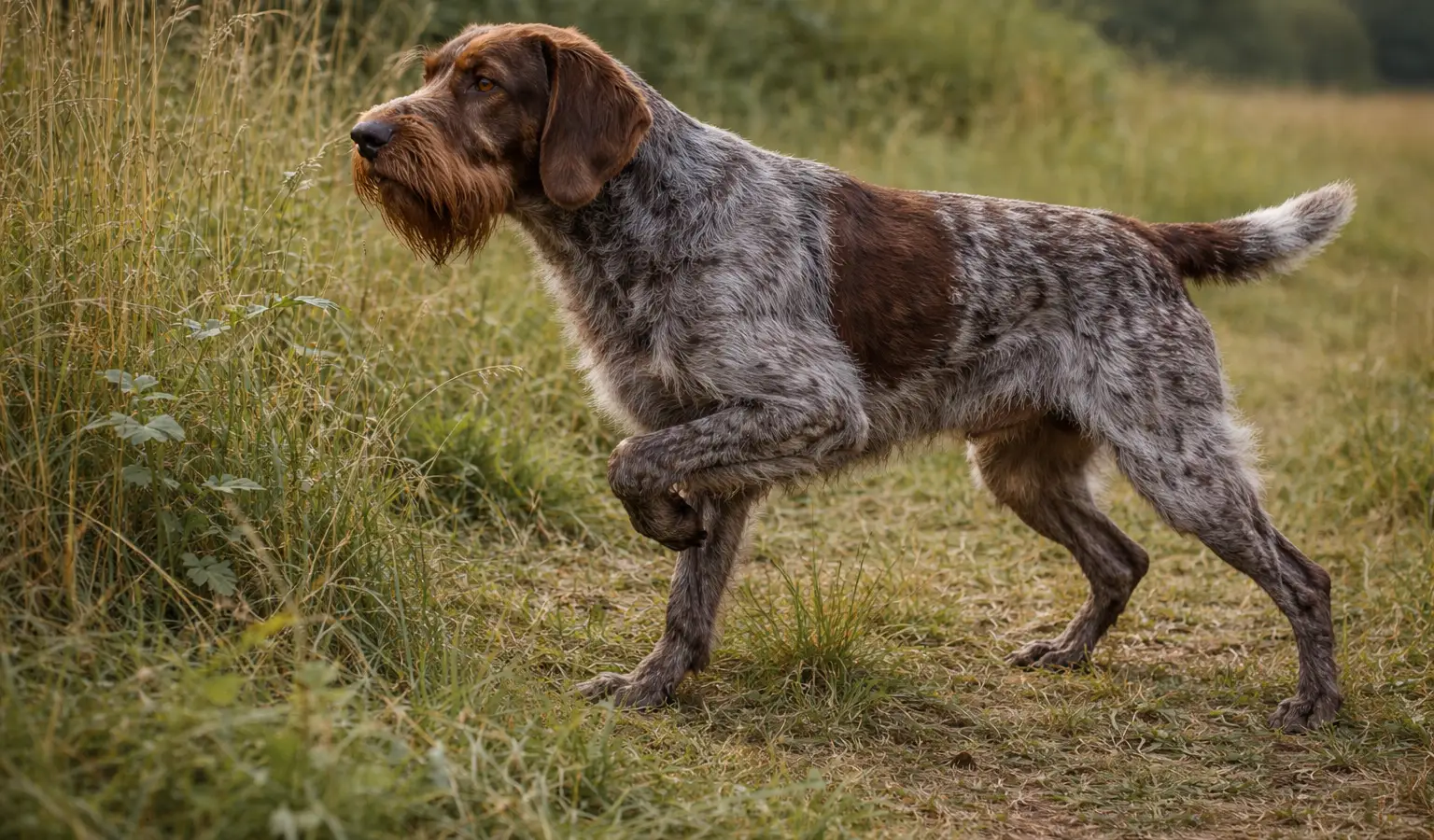
The Bohemian Wirehaired Pointing Griffon is a hardy and versatile hunting dog originating from the Czech Republic. Known for its excellent nose, endurance and adaptability, it performs well in fields, forests and wetlands. Loyal, cooperative and people-oriented, it suits active hunters and sporty families alike.
Life expectancy
12 – 15 years
Price
900 – 1600 €
Monthly budget
70 €
Size
Large
Profile
Bohemian Wirehaired Pointing Griffon
Origin
Czech Republic
Year of origin
1900
Developed by
Czech hunters
Size
Large
Coat type
Wire coat
Owner profile
Active owner
Hypoallergenic
No
Litter size
7
Life expectancy
12 – 15 years
Price
900 – 1600 €
Female
- Height : 56 – 60 cm
- Weight : 20 – 28 kg
Male
- Height : 60 – 66 cm
- Weight : 25 – 34 kg
Temperament & abilities
Affectionate
4/5
Calm
3/5
Independent
3/5
Intelligence
4/5
Obedience
4/5
Hunting instinct
5/5
Energy level
4/5
Good with children
4/5
Dog-friendly
4/5
Friendly with strangers
3/5
Hunting profile
Stamina
5/5
Hunting drive
5/5
Independence
4/5
Trainability
3/5
Beginner-friendly
3/5
Family compatibility
4/5
Feather game
5/5
Fur game
5/5
Underground work
4/5
Water work
4/5
These indicators help compare breeds and choose the right one for your hunting style.
Game & abilities
Estimated ability level by game type.
Budget
Purchase price
900 – 1600 €
The price may vary depending on the breeder, bloodline, and region.
Average monthly cost
70 €
Estimated average: food, healthcare, accessories, and grooming.
Where the Bohemian Wirehaired Pointing Griffon fits best in the field and at home
A versatile hunting dog with real range, nose, and stamina
The Bohemian Wirehaired Pointing Griffon can be a very capable hunting dog for someone who wants a versatile pointing breed with enough nose, stamina, and cooperation to work varied ground. In practical terms, it is generally best suited to hunters looking for an all-round gundog rather than a specialist built only for speed or only for heavy cover. Its appeal usually lies in the balance: it can point, search with purpose, and often bring a useful retrieve, while still being manageable enough for people who value a dog they can live with outside the hunting season.
In the field, the breed is typically appreciated for a methodical working style rather than an overly flashy one. Many individuals show a good nose, honest game-finding ability, and the kind of search pattern that covers ground efficiently without always pushing beyond practical gun range. That can make handling easier for hunters who prefer contact and control over extreme independence. On rough terrain, mixed farmland, woodland edges, and varied central European-style hunting conditions, this type of dog often makes the most sense. It may be less coherent for someone seeking the biggest-running field trial profile or a very hard-driving specialist for one narrow task.
Temperament and handling are a large part of the breed's value. A good Barbu tchèque is often described as willing, workable, and connected to its person, but that should not be confused with low maintenance. The energy level is still substantial, and the dog usually needs regular physical exercise, structured training, and meaningful outlets for its hunting instincts. Recall, steadiness, retrieving manners, and calmness in everyday life should be taught early and reinforced consistently. Trainability is often good when the handler is clear and fair, but a sensitive, intelligent hunting dog may lose quality if trained too harshly or left mentally underused.
- Strengths: versatile hunting profile, useful nose, solid stamina, cooperative handling, and a practical balance between field work and home life.
- Demands: daily activity, regular training, enough space to move, and an owner who enjoys channeling drive rather than merely containing it.
- Best use cases: mixed hunting, pointing work with retrieve, varied terrain, and hunters comparing versatile continental breeds.
- Potential limitations: not always the ideal match for people wanting a very easy pet, a low-energy house dog, or an extreme specialist.
For the right owner, this breed can offer one of the more coherent compromises in the pointing dog group: enough courage and stamina for serious work, but often enough cooperation and adaptability for family life. That balance is exactly what makes the Bohemian Wirehaired Pointing Griffon worth considering, especially for hunters who want one dog to do many jobs reasonably well and still settle into everyday routines with proper exercise and guidance.
Methodical nose work
The Bohemian Wirehaired Pointing Griffon is generally valued for a practical, searching nose that can work ground scent and airborne scent with good consistency. In the field, this often translates into a dog that hunts productively rather than frantically, making it useful for handlers who want game found efficiently across mixed cover.
Steady pointing instinct
One of its most useful strengths is a clear pointing style that tends to suit walked-up hunting and versatile gun dog work. With the right breeding and training, many dogs show enough concentration on scent to hold game and give the hunter time to approach, read the situation, and prepare a clean shot.
True versatile gundog
This breed is often appreciated by hunters who want one dog for several jobs rather than a narrow specialist. It may handle upland birds, rougher terrain, some tracking tasks, and retrieving duties with credible all-round ability, which can be especially appealing for practical hunters with varied seasons and limited kennel space.
Tough in harsh cover
The harsh coat and robust build are part of why the breed is often seen as capable in difficult country. Bramble, wet vegetation, cold mornings, and uneven ground are usually less discouraging to this type of dog than to lighter, more delicate workers, provided conditioning and foot care are managed sensibly.
Reliable retrieve drive
Many Bohemian Wirehaired Pointing Griffons bring useful retrieving willingness to the field, including on feathered game and, in some lines, water retrieves. They are not simply find-and-freeze dogs; a good individual can help finish the job calmly after the shot, which matters for hunters who value complete, cooperative work.
Cooperative with a handler
For an active owner who enjoys training, this breed often offers a workable balance of initiative and responsiveness. It usually suits hunters who want a dog that ranges with purpose but remains mentally connected, rather than an ultra-independent field trial type that may require more specialized handling and constant channeling.
Who this breed suits best
The Bohemian Wirehaired Pointing Griffon tends to suit the person who wants a versatile gundog rather than a decorative companion. It is usually a better match for active hunters who value an all-round pointing dog with stamina, weather resistance, and the willingness to work across varied terrain. Outside the field, this breed often fits homes that enjoy long walks, structured training, and regular outdoor time. With consistent handling, many individuals can be steady family dogs, but they are rarely at their best in a low-activity household.
Less suitable profiles include owners looking for an easy, low-maintenance pet, people away from home most of the day, or first-time handlers unwilling to invest in recall, impulse control, and constructive outlets for drive. A Bohemian Wirehaired Pointing Griffon may also be a frustrating choice for someone who wants high performance in the field but provides little training between hunts. The best match is usually a calm, engaged owner who appreciates working-dog temperament, can channel energy productively, and wants a dog that is both a hunting partner and an active part of daily life.
How a Czech hunting dog’s history shaped its modern character in the field and at home
Origin and development of the Bohemian Wirehaired Pointing Griffon
The Bohemian Wirehaired Pointing Griffon, known in Czech as the Cesky fousek and sometimes referred to in English as the Barbu tcheque, developed in the Czech lands as a versatile gundog for mixed terrain, varied game, and demanding weather. Historical references suggest that rough-coated pointing dogs existed in the region for centuries, but the modern breed took clearer shape through more deliberate selection in the late 19th and early 20th centuries. Breeders aimed for a practical hunting companion: a dog able to point, search methodically, retrieve on land and from water, and remain workable under a handler rather than becoming overly independent.
That background helps explain the breed’s present-day style. The Bohemian Wirehaired Pointing Griffon is generally valued less for extreme speed than for balance, endurance, nose, and cooperation. In hunting terms, it was shaped to be useful across a full day rather than brilliant in only one phase of the work. Its harsh coat, strong constitution, and adaptable hunting pattern reflect a dog expected to handle cold cover, wet ground, and different forms of game. For modern owners, this often translates into a serious, energetic, trainable dog that usually does best with regular structure, meaningful exercise, and some outlet for its natural searching and retrieving instincts.
The breed’s history was not entirely linear. Like many continental hunting breeds, it appears to have been affected by war, shifting kennel structures, and periods of rebuilding. In those rebuilding phases, careful breeding likely focused on preserving the dog’s wire coat, pointing instinct, biddability, and all-round usefulness. That matters today because the breed often appeals to hunters who want one dog for several tasks, but it also means pet buyers should not mistake it for a low-maintenance companion breed. Even in a family setting, many individuals retain a strong work ethic and can become restless if their minds and bodies are underused.
In practical terms, the breed’s development points to the type of owner it suits best:
- Active hunters who value versatility over specialization.
- Engaged owners willing to train consistently and channel natural drive.
- Homes with space and routine rather than very sedentary urban lifestyles.
- Families who appreciate a serious working dog that can be affectionate, but usually thrives when given a job.
Seen in that historical context, the Bohemian Wirehaired Pointing Griffon makes sense as a breed of balance: rugged but manageable, keen yet often cooperative, and versatile enough for hunters who want a dog that can point, track, retrieve, and live closely with its people. Line, upbringing, and training still matter greatly, but the breed’s origin strongly influences the dependable, work-focused temperament for which it is still appreciated.
Czech hunting roots
The Bohemian Wirehaired Pointing Griffon, often associated with the Czech hunting tradition, was developed as a versatile gun dog for varied terrain and mixed game. In practice, that background points to a breed valued for field usefulness rather than showy exaggeration, with an emphasis on scenting ability, cooperation, and an all-weather working coat.
Selected for versatility
This is generally considered a multipurpose pointing dog rather than a narrow specialist. Breeding has typically favored dogs able to search, point, retrieve, and remain workable across farmland, woodland, and wetter ground. For hunters, that can make the breed appealing when one dog is expected to cover different tasks over the course of a season.
Close-working character
Many individuals are described as biddable, steady, and people-oriented, often preferring to work with the handler rather than far beyond gun range. That can suit hunters who want regular contact and a manageable pattern in the field. At home, the same trait may translate into a dog that likes company and does not thrive on long periods of isolation.
Needs a real outlet
Although usually balanced in the house when properly exercised, this is not a low-demand breed. Daily life tends to go best with meaningful physical activity, scent work, retrieves, and structured training rather than a quick walk alone. Owners looking for a calm but capable sporting dog often do well if they can provide routine, space, and purpose.
Practical coat, regular upkeep
The harsh wire coat is meant to protect the dog in rough cover and poor weather, but it still needs consistent maintenance. Brushing, checking ears and feet after outings, and occasional hand-stripping may help keep the coat functional and tidy. For active hunters, grooming is less about cosmetics than about comfort, skin condition, and field readiness.
Best for engaged owners
This breed tends to suit people who enjoy training, outdoor routines, and a dog with both hunting instinct and family presence. First-time owners can manage one, but usually with time, guidance, and realistic expectations about exercise and education. It is often a stronger match for active households than for very sedentary homes or purely ornamental companionship.
Practical answers about hunting ability, training, family life, exercise, housing, and owner fit
Bohemian Wirehaired Pointing Griffon Hunting FAQ
Is the Bohemian Wirehaired Pointing Griffon a good hunting dog for versatile work?
In the right hands, the Bohemian Wirehaired Pointing Griffon can be a very capable versatile gundog. It is generally appreciated for combining pointing instincts with a willingness to work over varied ground, and some lines may also show useful retrieving and tracking ability. As with many hunting breeds, the real level of versatility depends on breeding, early exposure, and patient field training rather than breed label alone. Hunters who want one dog for mixed outings often find this type appealing, but it usually performs best when its education is structured and consistent.
Is this breed easy to train for hunting and obedience?
Most Bohemian Wirehaired Pointing Griffons are considered trainable, but they usually do best with calm, clear handling rather than harsh corrections. They tend to respond well when the work is made meaningful, with regular repetition in the field, short sessions, and steady expectations at home. A novice owner can succeed, but this is not usually the easiest pointing breed for someone who wants quick results without learning timing, recall work, and basic game introduction. Sensitive but firm guidance often brings out the best balance between drive, control, and cooperation.
Can a Bohemian Wirehaired Pointing Griffon live as a family dog if it also hunts?
Yes, many can live well as family dogs, provided their working needs are taken seriously. A well-bred, well-exercised individual is often affectionate, engaged with its people, and easier to live with than its rugged hunting look might suggest. The main mistake is assuming that a hunting dog will be calm indoors without enough exercise, training, and mental occupation. Families who enjoy outdoor life, regular walks, and active weekends are usually a better match than households looking for a low-maintenance companion.
How much exercise does a Bohemian Wirehaired Pointing Griffon need when not hunting?
This is usually an active pointing dog that needs more than a short walk around the block. On non-hunting days, most individuals benefit from a mix of brisk walks, free running in safe areas, scent games, recall practice, and structured training that gives them something to think about. Without enough physical outlet and mental work, some dogs may become restless, noisy, or difficult to settle. People considering this breed should picture a lifestyle with consistent daily activity, not only occasional weekend exercise.
Can this breed live in an apartment, or does it need a house in the country?
A country home can make life easier, but it is not the only possible setup. A Bohemian Wirehaired Pointing Griffon may adapt to smaller housing if it receives serious daily exercise, outdoor time, and clear routines, though this is usually more work for the owner than with a less active breed. A secure yard is helpful but does not replace walks, training, or hunting exposure. In practice, the breed tends to suit people with easy access to fields, woodland, or open spaces where the dog can move and use its nose regularly.
Is the Bohemian Wirehaired Pointing Griffon a good choice for first-time hunting dog owners?
It can be, but only for a first-time owner who is genuinely prepared for an active, trainable working breed. This is often a better fit for someone ready to learn about pointing dog development, recall, steadiness, and constructive daily management than for a casual pet owner who simply likes the look of a wirehaired gundog. A good breeder, early socialization, and access to training advice can make a major difference. If you want a dog that can hunt, live closely with the family, and stay busy with you year-round, it may be a rewarding choice.
Who is the Bohemian Wirehaired Pointing Griffon best suited to?
This breed is usually best suited to active owners who want a real working companion rather than a decorative sporting dog. It tends to match hunters who value cooperation, outdoor stamina, and a dog that can share both field life and home life, especially when given enough guidance and exercise. It may be less suitable for very sedentary households, people away from home for long hours, or owners unwilling to invest in training. The ideal home is often one that enjoys routine, structure, countryside access, and regular engagement with the dog’s instincts.