Hungarian Vizsla
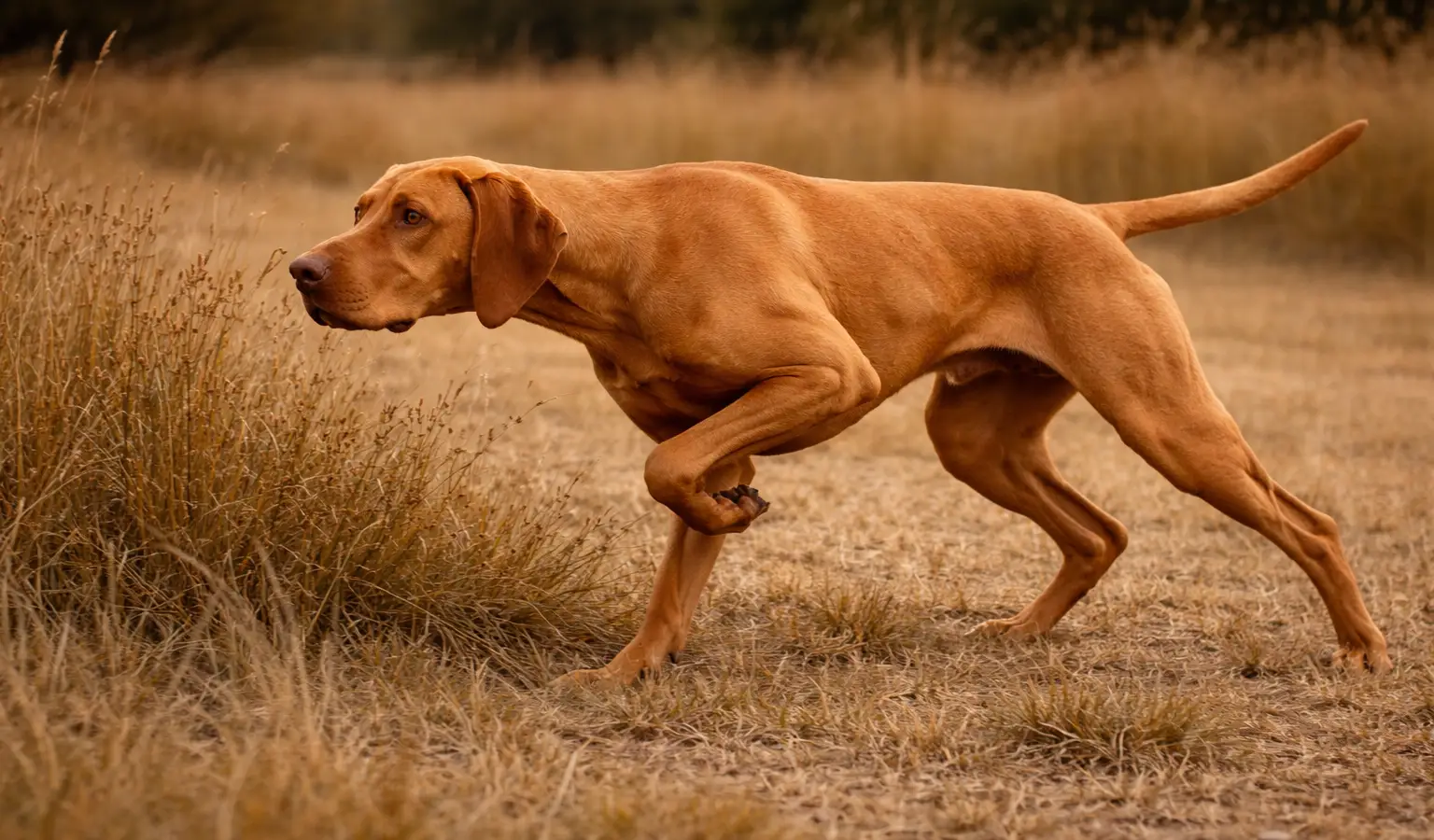
The Hungarian Vizsla is an athletic pointing dog known for its sensitivity, intelligence and excellent nose. Enduring and versatile, it enjoys field work, retrieving and close cooperation with its handler. Affectionate and people-oriented, it needs positive training, plenty of daily exercise and mental stimulation to prevent boredom and frustration.
Life expectancy
12 – 15 years
Price
900 – 1500 €
Monthly budget
65 €
Size
Medium
Profile
Hungarian Vizsla
Origin
Hungary
Year of origin
1000
Developed by
Magyar hunters
Size
Medium
Coat type
Short coat
Owner profile
Active owner
Hypoallergenic
No
Litter size
7
Life expectancy
12 – 15 years
Price
900 – 1500 €
Female
- Height : 54 – 60 cm
- Weight : 18 – 25 kg
Male
- Height : 58 – 64 cm
- Weight : 22 – 30 kg
Temperament & abilities
Affectionate
5/5
Calm
3/5
Independent
2/5
Intelligence
5/5
Obedience
4/5
Hunting instinct
5/5
Energy level
5/5
Good with children
5/5
Dog-friendly
4/5
Friendly with strangers
4/5
Hunting profile
Stamina
4/5
Hunting drive
4/5
Independence
3/5
Trainability
5/5
Beginner-friendly
5/5
Family compatibility
5/5
Feather game
5/5
Fur game
3/5
Underground work
0/5
Water work
4/5
These indicators help compare breeds and choose the right one for your hunting style.
Game & abilities
Estimated ability level by game type.
Budget
Purchase price
900 – 1500 €
The price may vary depending on the breeder, bloodline, and region.
Average monthly cost
65 €
Estimated average: food, healthcare, accessories, and grooming.
A versatile pointing dog with style, sensitivity, and real daily-life demands
Is the Hungarian Vizsla a good hunting dog?
The Hungarian Vizsla is widely considered a very good hunting dog for the right handler. It is a versatile pointing breed valued for an efficient nose, fluid search pattern, natural cooperation, and useful retrieve, especially on feathered game and mixed walked-up hunting. In the field, many Vizslas work with pace and enthusiasm without feeling as hard or as independent as some more intense pointing breeds, which makes them attractive to hunters who want a capable dog that also remains manageable at home.
Its hunting style usually suits people who appreciate close handling and regular contact with the dog. A good Vizsla often checks in naturally, responds well to body language, and can be pleasant to guide on foot across farmland, light cover, hedgerows, and varied everyday terrain. Stamina is generally good, but this is not always the breed chosen by hunters seeking the most extreme range, the hardest charging pattern, or maximum pressure in very rough ground. Courage and drive are certainly present in many lines, yet the breed is often at its best when trained and hunted with clarity rather than force.
Trainability is one of the Hungarian Vizsla's biggest strengths, but it comes with an important nuance: this is usually a sensitive dog. Harsh handling can flatten initiative, affect recall reliability, or create tension around birds and retrieving work. Consistent early training, good exposure, and calm repetition tend to produce better results than heavy correction. For hunters who want a responsive hunting dog with a soft mouth, steady progress in retrieve work, and a generally biddable temperament, the Vizsla can be a very coherent choice.
As an all-round companion, the balance between field performance and family life is a major part of the breed's appeal. A well-bred, well-exercised Vizsla often lives very closely with its people and usually does not thrive as a kennel-only dog. That closeness is a strength for recall, handling, and day-to-day companionship, but it also means the breed needs time, training, and meaningful activity. Without enough exercise and structure, its energy level can become difficult in the house.
- Best for hunters wanting a cooperative, versatile pointing dog with natural handling.
- Often well suited to walked-up days, mixed shooting, and active owners who also want a family dog.
- Less ideal for people seeking a very hard, highly independent, or purely high-range field specialist.
Overall, the Hungarian Vizsla is a strong option for the hunter who values trainability, connection, and practical versatility. It tends to suit an involved owner who will hunt regularly, train thoughtfully, and provide an active home life rather than expecting the dog to switch on only during the season.
Sensitive, efficient nose
The Hungarian Vizsla is widely valued for a fine nose that can work game scent in changing cover and light wind without needing a very wide pattern. In practical hunting, this often means a dog that can locate birds methodically and stay useful on mixed ground, especially when handled by someone who prefers contact and control over extreme range.
Close-working range
Many Vizslas hunt at a moderate distance, checking in naturally and staying readable in the field. That makes the breed appealing to walked-up hunters and to handlers who want a pointing dog that remains connected rather than disappearing over the horizon. The exact range varies by line, training, and game pressure, but cooperation is often one of its practical assets.
Very biddable under training
A good Vizsla usually responds well to calm, consistent handling, which can make steadiness, recall, and directional work more accessible than with harder, more independent pointing breeds. This trainability is a real hunting advantage, not just a family trait: it helps shape a dog that can adapt to the shooter, the terrain, and the pace of the day.
Useful on land and water
Although often seen first as a bird dog for the field, the Hungarian Vizsla can also be a capable retriever on shot game, including in water when properly introduced and conditioned. It suits hunters who want one versatile gundog rather than a narrow specialist, though enthusiasm for cold water and heavy retrieves may depend on the individual dog.
Endurance without heaviness
The breed combines athletic movement with a relatively light, agile build, which supports long hunting days when fitness has been developed sensibly. A Vizsla can cover ground efficiently without the impression of pushing through work by sheer power. For active owners, that translates into a dog that often needs regular exercise and meaningful outlet well beyond the season.
Animated but focused point
When mature and properly schooled, the Vizsla can offer stylish, expressive pointing with enough concentration to be genuinely useful on game. It is often appreciated by hunters who want both field performance and visible intensity. Younger dogs may show plenty of drive and emotion, so channeling that energy into steadiness is usually an important part of development.
Who the Hungarian Vizsla suits best
The Hungarian Vizsla tends to suit a hunter who wants one close-working, biddable pointing dog for mixed days in the field rather than a very hard, independent specialist. It often fits active owners who enjoy training, regular off-lead exercise where legal and safe, and a dog that lives closely with the family. In practical terms, this breed usually works best for people who want a sensitive, athletic companion that can hunt, hike, learn quickly, and settle indoors after enough physical and mental activity.
It is often less suitable for households looking for a low-maintenance pet, owners away for long hours, or handlers who prefer a tough, pressure-resistant dog. Many Vizslas are quite people-oriented and may struggle if under-exercised, under-trained, or left alone too much. Common mismatches include very sedentary homes, inconsistent training, and buyers drawn mainly to the elegant look without being ready for daily engagement. For the right owner, the appeal is clear: an affectionate family dog with real hunting ability, provided its energy, sensitivity, and need for involvement are taken seriously.
How a classic Hungarian pointing dog became the close-working, highly responsive companion known today
Origins and development of the Hungarian Vizsla
The Hungarian Vizsla is generally understood as an old Hungarian hunting breed shaped for versatile field work, especially with game birds. Precise details of its earliest development are not always fully documented, but the breed is commonly linked to the hunting dogs used by the Hungarian nobility and landed hunters over several centuries. What matters for today’s owner is that the Vizsla was not developed as a kennel ornament: it was selected to work in close cooperation with people, using nose, speed, pointing instinct, and a willing, biddable nature.
As firearms hunting became more established, the breed appears to have been refined into a lighter, elegant pointing dog suited to open country, with enough stamina to search ground efficiently without ranging so far that the handler lost contact. That history helps explain the modern Vizsla’s style. Many individuals are energetic and athletic, but they often look back naturally, respond well to direction, and tend to thrive with human involvement rather than distant, independent work. In practical terms, this can make the breed especially appealing to hunters who want a responsive partner and to active homes that enjoy training and outdoor life.
The breed’s development was not entirely smooth. Numbers reportedly declined during periods of political and social upheaval, and careful breed preservation played a role in keeping the Vizsla established in Hungary and later abroad. As the breed spread, some lines were emphasized more strongly for field ability, while others were selected with greater attention to conformation or dual-purpose balance. That variation still matters today: not every Hungarian Vizsla will show the same intensity, range, or steadiness in hunting situations, and prospective owners should look closely at bloodlines, breeder priorities, and the dog’s actual temperament.
Its history also helps explain daily life with the breed. The Vizsla was shaped to work alongside people for long stretches, so many dogs combine sensitivity, trainability, and a strong need for company. Those qualities can be a real strength, but they also mean the breed often suits owners who want an involved, hands-on dog rather than an easy, low-maintenance pet. In the field, that heritage may produce a stylish, cooperative hunting dog; at home, it often creates an affectionate companion that needs exercise, structure, and calm, consistent handling to feel settled.
Old Central European roots
The Hungarian Vizsla is generally linked to old hunting dogs of Hungary, shaped over time for practical field work on feather and fur. While exact lines are not always perfectly documented in early history, the breed is widely associated with noble estates, open country, and a need for a fast, biddable pointing dog that could work closely with people.
Selected for versatility
This is not just a stylish gundog. The breed was refined to point, track, and retrieve, which helps explain its broad appeal among hunters who want one dog for varied tasks. In many lines, that versatility comes with a cooperative attitude rather than a highly independent working style, making the Vizsla easier to handle than some harder-driving pointing breeds.
Close-working hunting style
Many Hungarian Vizslas tend to hunt in regular contact with the handler, covering ground with speed but usually without disappearing into the distance. That pattern can suit walked-up hunting, mixed terrain, and owners who enjoy directing their dog rather than simply following it. Individual range still varies with breeding, training, and game density.
Sensitive, people-oriented temperament
A well-bred Vizsla is often affectionate, alert, and highly tuned in to human cues. That sensitivity can be a real advantage in training, especially with calm, consistent handling. It also means the breed may struggle with harsh methods, chaotic routines, or long periods of isolation. Many do best with owners who want an engaged dog nearby in daily life.
Needs more than a backyard
The breed’s athletic build and active mind call for genuine daily outlets, not occasional exercise alone. Most Vizslas need a mix of running, training, scent work, and close interaction to stay settled indoors. They can adapt to family life very well, but they are usually a poor match for households looking for a low-energy, independent, or mostly decorative dog.
Light coat, hands-on routine
Coat care is simple, but overall upkeep is not effortless. The short coat offers little insulation compared with heavier hunting breeds, so weather, rest time, and comfort matter in colder conditions. Day to day, the bigger commitment is mental and physical management: steady recall work, polite house manners, and enough purposeful activity to channel the breed’s enthusiasm.
Practical answers on hunting ability, training, exercise, family life, housing, and owner suitability
Hungarian Vizsla hunting and lifestyle FAQ
Is the Hungarian Vizsla a good hunting dog for beginners?
The Hungarian Vizsla can be a very good hunting dog for a beginner, especially for someone who wants one versatile pointing breed rather than a highly specialized dog. Many Vizslas are cooperative, people-oriented, and responsive to handling, which can make training more accessible than with harder, more independent lines. That said, they are still energetic working dogs with strong drive, so a novice owner usually does best with guidance from a good trainer, field club, or experienced hunter. Choosing the right breeder and bloodline matters a great deal, because some dogs are better suited to serious field work while others are bred more for companionship.
What kind of hunting is a Hungarian Vizsla best suited for?
The Vizsla is generally known as a versatile hunting dog, most often associated with upland bird hunting and field work where pointing, quartering, and close cooperation with the handler are valued. Many individuals also enjoy tracking wounded game or working in rough cover, and some can retrieve willingly on land and from water if trained carefully. In practice, the breed often suits hunters who prefer an athletic, medium-sized dog that works at a manageable range rather than disappearing over the horizon. Actual performance depends on breeding, training, terrain, and the dog’s temperament, so it is wise to match the individual dog to the type of hunting you do most.
Are Hungarian Vizslas easy to train, or are they too sensitive for firm handling?
Hungarian Vizslas are usually considered highly trainable, but they tend to respond best to calm, consistent handling rather than heavy pressure. Many are quite sensitive to tone and correction, so harsh methods can reduce confidence, slow progress, or create avoidable conflict in the field and at home. Short, clear sessions, repetition without drilling, and early exposure to birds, recall work, lead manners, and steadiness often produce better results than force. They are not fragile dogs, but they are often at their best with a handler who is patient, observant, and able to channel enthusiasm without turning training into a battle.
Can a Hungarian Vizsla live happily as a family dog if it also hunts?
For many homes, the answer is yes: the Vizsla is one of the classic examples of a dog that can hunt hard outdoors and still be affectionate and companionable indoors. They often form strong bonds with their people and usually want to be included in daily life rather than left alone for long stretches in a kennel or yard. The main condition is that the dog’s physical and mental needs must actually be met, because an underexercised Vizsla may become noisy, restless, clingy, or destructive. Families who enjoy training, walking, outdoor weekends, and regular interaction usually find the breed easier to live with than families wanting a low-maintenance pet.
How much exercise does a Hungarian Vizsla really need every day?
A Hungarian Vizsla usually needs far more than a quick walk around the block. Most adults do best with substantial daily activity that combines running, brisk walking, free movement in safe areas, training, scent work, retrieves, or other jobs that engage both body and mind. Exercise needs vary with age, breeding, and individual temperament, but this is generally not a breed that stays balanced on minimal output. Many owners find that structured outlets matter just as much as raw mileage, because a dog that can think, search, and work often settles better than one that is only physically tired.
Is a Hungarian Vizsla suitable for apartment living or a small home?
A Vizsla can live in an apartment or smaller home if the owner is genuinely committed to daily exercise, training, and companionship, but the housing itself is only part of the picture. This breed is usually more affected by boredom, isolation, and lack of routine than by square footage alone. A dog that gets meaningful outings, practice in settling indoors, and regular contact with its people may adapt well, while a dog left alone too much can become difficult even in a house with a large yard. Prospective owners should be realistic: convenient access to outdoor activity and time for the dog matter more than simply having extra rooms.
Who is the Hungarian Vizsla best for, and who should probably choose another breed?
The Hungarian Vizsla often suits active owners who want a close-working, athletic dog for hunting, training, hiking, running, or a very engaged family routine. It can be an excellent match for people who enjoy a responsive dog with natural drive and a strong desire to work with its handler. It may be a poor fit for owners who are away most of the day, want an independent outdoor kennel dog, dislike ongoing training, or expect a calm companion without substantial exercise. Hunters looking for a versatile pointing dog with a softer, more people-focused style often appreciate the breed, while those wanting a very hard, highly rugged, or especially independent worker may prefer a different type.