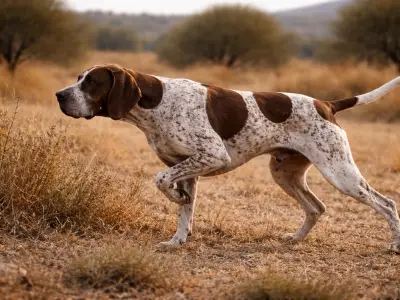
English Pointer
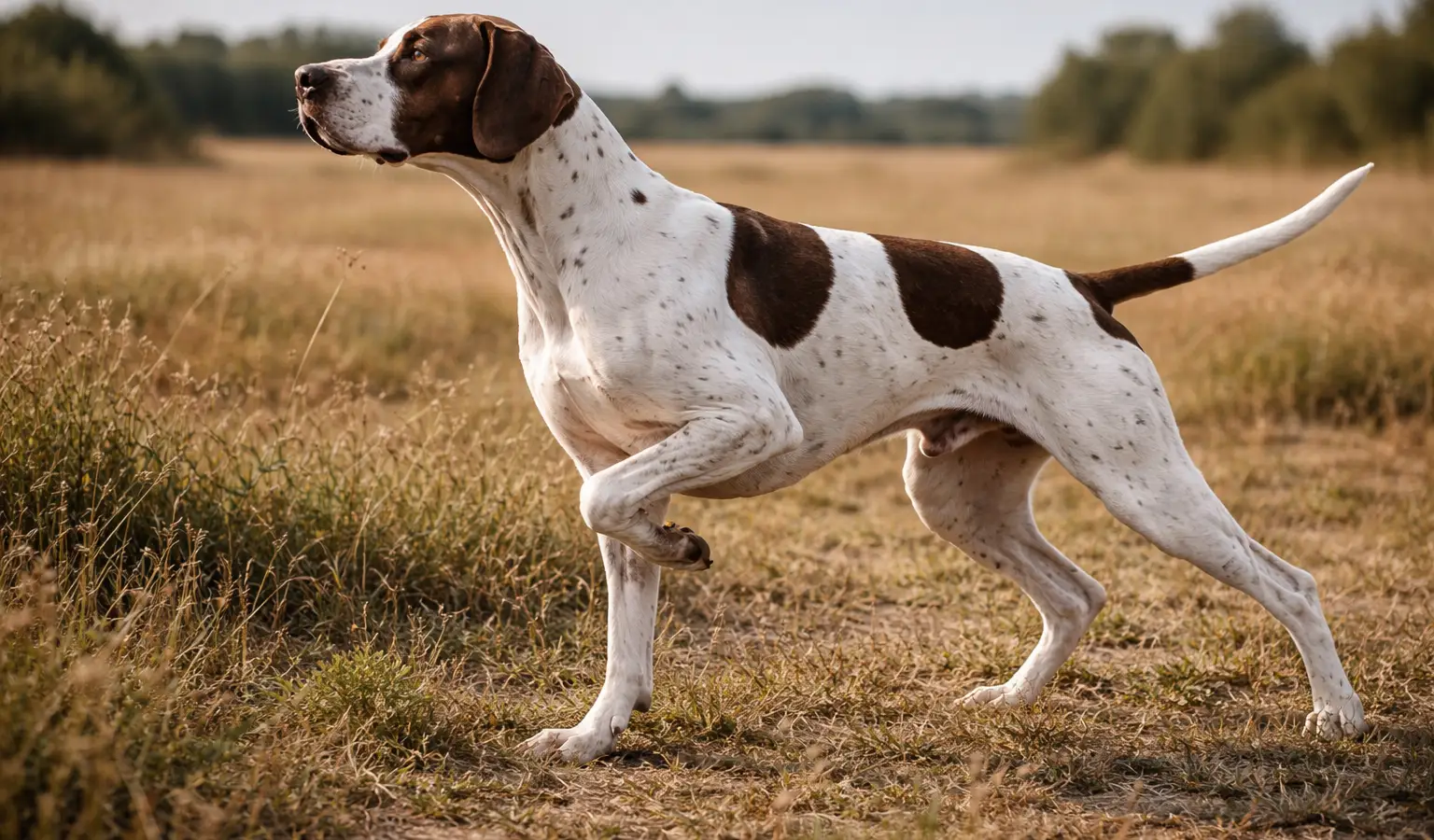
The English Pointer is an elegant and athletic pointing dog, famous for its speed, endurance and stylish field work. Specialised in bird hunting, it has an exceptional nose and a very pronounced point. Affectionate yet independent, it requires an active owner, plenty of space and daily exercise.
Life expectancy
12 – 15 years
Price
900 – 1600 €
Monthly budget
70 €
Size
Large
Profile
English Pointer
Origin
United Kingdom
Year of origin
1650
Developed by
British hunters
Size
Large
Coat type
Short coat
Owner profile
Very active / athletic
Hypoallergenic
No
Litter size
7
Life expectancy
12 – 15 years
Price
900 – 1600 €
Female
- Height : 58 – 63 cm
- Weight : 20 – 25 kg
Male
- Height : 63 – 69 cm
- Weight : 25 – 34 kg
Temperament & abilities
Affectionate
4/5
Calm
2/5
Independent
4/5
Intelligence
4/5
Obedience
3/5
Hunting instinct
5/5
Energy level
5/5
Good with children
4/5
Dog-friendly
4/5
Friendly with strangers
4/5
Hunting profile
Stamina
5/5
Hunting drive
5/5
Independence
3/5
Trainability
4/5
Beginner-friendly
3/5
Family compatibility
4/5
Feather game
5/5
Fur game
1/5
Underground work
0/5
Water work
2/5
These indicators help compare breeds and choose the right one for your hunting style.
Game & abilities
Estimated ability level by game type.
Budget
Purchase price
900 – 1600 €
The price may vary depending on the breeder, bloodline, and region.
Average monthly cost
70 €
Estimated average: food, healthcare, accessories, and grooming.
Fast, far-ranging and highly bird-focused, but best suited to active handlers who can channel its drive.
Is the English Pointer a good hunting dog?
The English Pointer is widely considered an excellent hunting dog for upland bird work, especially when a hunter wants speed, range, a strong nose, and stylish pointing. In the field, many Pointers cover ground with an efficient, forward search pattern and the kind of stamina that suits long days over open country. For hunters comparing pointing breeds, the Pointer often stands out as a more athletic, higher-octane specialist rather than an all-purpose dog for every task.
Its core strengths are easy to recognize: it hunts with intensity, tends to use wind well, and can locate game at a distance when conditions allow. The typical working style is bold, animated, and ground-covering, which makes the breed particularly coherent for quail, partridge, pheasant, and similar bird hunting in fields, prairie, heath, or other expansive terrain. Many English Pointers show notable courage in cover and a natural desire to find birds, but the exact range, pace, and cooperation level can vary with breeding, training, and how the dog is hunted.
Handling matters. A Pointer is often most satisfying in the hands of someone who appreciates a dog with drive and can build reliable recall, steadiness, and responsiveness without dulling initiative. Trainability is usually good, but this is not always the easiest breed for a casual owner who wants low effort. Energy level is high, and daily life tends to go best when the dog gets meaningful exercise, off-lead running where safe and legal, and structured work for body and mind. Without that outlet, the same stamina that makes the breed impressive in the field can feel demanding at home.
Potential limitations are worth weighing honestly. The English Pointer is not always the most natural fit for hunters who want close-working range in tight cover, frequent handling at short distance, or a strong emphasis on waterfowl retrieving. Some individuals retrieve willingly and can be trained to do useful recovery work, but the breed's clearest use case remains finding and pointing game birds. For the right owner, that specialization is a major advantage.
- Best fit: active bird hunters, especially in open terrain, who value range, nose, speed, and stylish point.
- More demanding for: first-time handlers, low-exercise homes, or people wanting a calm, low-maintenance companion.
- Everyday life: affectionate and livable in many homes, but usually easier with space, routine training, and regular hard exercise.
Big-running nose
The English Pointer is widely valued for the way it searches ground quickly while still using air scent efficiently. In open country, a well-bred dog can locate game at impressive distance and sort out shifting scent with very little fuss. This makes the breed especially appealing to hunters who want speed, reach, and strong bird-finding ability rather than close, methodical quartering.
Classic high-intensity point
Few gundogs are more closely associated with a stylish, arresting point. Many English Pointers freeze with obvious intensity, giving the handler a clear read on where game is holding. For upland hunters, that visible concentration is not just beautiful to watch, it is practical in big covers where a split-second hesitation from the dog can make bird work less precise.
Built for long days
This is an athletic pointing dog with the stamina to keep hunting when softer, heavier dogs begin to fade. English Pointers are often at their best with owners who cover serious ground on foot or horseback and hunt large areas. The trade-off is obvious in daily life: the same endurance that helps in the field usually calls for substantial exercise and structured outlets at home.
Best in open upland country
The breed tends to shine in open fields, moorland, prairie, and other landscapes where speed and range are assets. In very dense cover or in situations that demand a naturally close-working dog, some Pointers may require more handling and training to stay connected. Hunters who like to watch a dog cast boldly across country often find this breed especially rewarding.
Responsive with a light hand
English Pointers are often highly intelligent and quick to read their handler, but they usually respond best to calm, consistent training rather than heavy pressure. With thoughtful development, many become efficient, easy-moving field companions that handle cleanly at distance. They generally suit hunters who enjoy shaping a sensitive, high-drive dog instead of trying to overpower one.
Bird specialist first
The English Pointer is primarily admired as a pointing dog for upland birds, and that specialization is a strength. It is usually chosen for finding and pinning game birds, not as an all-purpose hunting dog for every task. Some individuals retrieve willingly, especially with training, but the breed's main appeal remains bird sense, speed, and dependable pointing focus.
Who the English Pointer suits best
The English Pointer tends to suit the hunter who wants range, pace, and a natural pointing dog for open country, upland birds, and long days on the move. Many do best with owners who enjoy training, regular field work, and a dog that is athletic rather than laid-back. In family life, the breed often fits homes that are calm indoors but genuinely active outdoors, with time for running, structured exercise, and consistent handling. A Pointer can be affectionate and pleasant at home, but usually makes the most sense when hunting or serious outdoor activity is part of normal life.
It is usually a weaker match for people looking for a compact, low-maintenance pet, a close-working hunting companion, or a dog content with brief leash walks and backyard time. First-time owners can do well with one, but not if they underestimate the breed’s stamina, sensitivity, and need for purposeful outlet. Common mismatches include very sedentary households, inconsistent training, and handlers who want constant off-switch without providing enough physical and mental work.
How selective breeding shaped one of the classic pointing dogs
Origin and development of the English Pointer
The English Pointer was developed in Britain as a specialist bird dog, bred above all to locate game over open ground and indicate it with speed, range, and a strikingly steady point. Its exact foundation is not perfectly documented, but most historians believe early British sportsmen drew on several continental and British hunting types over time, likely including pointing dogs from Spain or Portugal alongside foxhound, greyhound, and setter influence. That mixed heritage helps explain the modern Pointer: a dog built for ground-covering gallop, keen nose, visual elegance, and a highly charged hunting style.
As shooting culture changed between the 17th and 19th centuries, breeders increasingly favored dogs that could search large areas efficiently, find upland birds, and hold game for the hunter. The Pointer became known less as a close, methodical worker and more as a fast, forward-ranging dog for open country. This history still shows in today’s breed. A well-bred English Pointer often combines athletic intensity in the field with a sensitive, people-aware nature at home, but it is rarely a low-energy companion. Many need significant daily exercise, structured training, and enough room to move if they are to settle well in family life.
The breed’s long selection for initiative and range also affects handling. Pointers tend to shine with owners who appreciate a dog that hunts with drive and purpose rather than constant dependence. In practical terms, that can mean a dog that responds best to calm, consistent training and regular opportunities to use its nose and body. Harsh handling often works against the breed’s natural style, while under-stimulation can leave an athletic Pointer frustrated. For active homes and hunters who enjoy covering ground, that background is a major advantage; for sedentary households, it can be a real mismatch.
Understanding the Pointer’s history helps explain why the breed still appeals to upland bird hunters, field trial enthusiasts, and very active dog owners. Its development rewarded speed, endurance, bird sense, and a bold search pattern, not apartment-level inactivity or purely ornamental companionship. Individual dogs vary by line, training, and environment, but the broad picture is consistent: the English Pointer was shaped as a high-performance pointing dog, and its present-day temperament, energy level, and working style make the most sense when viewed through that history.
Built for open-country pointing
The English Pointer was shaped in Britain as a specialist bird dog, valued for speed, range, and the classic ability to freeze on scent. It became especially associated with upland game shooting, where a dog that could cover ground efficiently and point with style was highly prized. That heritage still explains much of the breed’s athletic build and forward drive.
Selection favored style and nose
Generations of breeding focused on a blend of qualities: scenting ability, a high head carriage, clean movement, responsiveness in the field, and enough stamina for long outings. Depending on bloodline, some Pointers lean more toward competitive field performance, while others are somewhat more moderate and easier for mixed hunting-and-family homes.
Energetic but usually gentle at home
Outside, the Pointer often shows intensity, speed, and strong interest in birds. Indoors, many are affectionate, sensitive dogs that prefer close contact with their people. This contrast can surprise first-time owners: the breed is not typically a couch potato, but with enough daily exercise and calm handling, many settle well in the house.
Best with active handlers
This is usually a poor fit for households wanting a low-maintenance companion. English Pointers tend to do best with owners who enjoy training, regular outdoor time, and structured outlets for energy. Hunters, runners, and highly active families often suit them better than sedentary homes, especially if the dog comes from strong working lines.
Exercise is a real daily requirement
A quick walk around the block rarely meets the needs of this breed. Most Pointers benefit from meaningful daily movement, chances to run safely, and brain work that uses scent, recall, and cooperation. Without enough activity, some individuals may become restless, overexcited, or harder to manage, particularly during adolescence and early adulthood.
Simple coat, demanding lifestyle
Coat care is refreshingly easy, with short hair that usually needs only light routine maintenance. The greater commitment is not grooming but management: training a reliable recall, channeling prey drive, and providing enough space and time for the dog to move well. In practical terms, the Pointer is easy to groom but not always easy to under-exercise.
Practical answers on hunting ability, training, exercise, home life, and owner fit
English Pointer hunting and ownership FAQ
Is the English Pointer a good hunting dog for beginners?
An English Pointer can be an excellent hunting dog, but it is not always the easiest first breed for a beginner handler. The breed often brings strong range, speed, bird drive, and natural pointing instinct, which are major advantages in the field but can feel like a lot to manage without a clear training plan. Beginners usually do best with a well-bred dog from lines known for cooperation and with support from an experienced trainer or hunting club. If you want a stylish upland dog and are willing to learn handling, recall, and steadiness properly, a Pointer can be very rewarding.
What kind of hunting is the English Pointer best suited for?
The English Pointer is best known as an upland bird dog, especially for hunters who value finding birds over large ground and holding a clear, intense point. It is commonly associated with quail, pheasant, partridge, grouse, and similar game birds, although exact suitability depends on line, terrain, and training. Many Pointers shine in open country where their gait, nose, and forward pattern can be used fully. In tighter cover or for hunters who want a naturally close-working dog, some individuals may need more handling and careful selection.
Are English Pointers easy to train for hunting and home life?
English Pointers are often intelligent and responsive, but they are usually at their best with calm, consistent training rather than heavy-handed methods. Their drive and sensitivity can exist at the same time, so clear structure matters more than constant pressure. For hunting, early work on recall, check-ins, bird exposure, and steadiness pays off because excitement can easily outrun manners if the foundation is weak. In the home, they generally learn routines well, but they tend to do better when daily exercise, predictable rules, and enough mental engagement are already in place.
How much exercise does an English Pointer really need every day?
Most English Pointers need a high level of daily exercise, and a short walk around the block is rarely enough for long-term balance. Many adults do best with room to run safely, structured off-lead work where legal and reliable, training sessions, and regular opportunities to use their nose. Without enough physical outlet, some can become restless, noisy, or difficult to settle indoors. For many homes, the realistic question is not whether the dog can live quietly inside, but whether the owner can consistently provide the kind of activity this athletic pointing breed usually needs.
Can an English Pointer be a good family dog as well as a hunting dog?
Yes, many English Pointers can be affectionate, gentle family companions when their exercise and training needs are genuinely met. They often bond closely with their people and may be pleasant, soft-natured dogs in the house after they have had enough work and movement. Around children, success depends on supervision, manners, and the individual dog's energy level, because a lively Pointer can be exuberant and physically bouncy. Families who enjoy outdoor activity often find the breed easier to live with than very sedentary households do.
Is the English Pointer suitable for apartment living or a small home?
An English Pointer can live in a smaller home in theory, but it is usually not the easiest breed for apartment life unless the owner's routine is exceptionally active and consistent. Space inside matters less than the ability to provide meaningful daily exercise, training, and decompression outdoors. A young or underworked Pointer in a cramped setting may struggle with frustration, overexcitement, or difficulty settling. For most people, a home with easy access to safe running areas, training grounds, or regular countryside outings is a much more practical match.
Who is the English Pointer the right choice for, and who should look at another breed?
The English Pointer usually suits active owners, bird hunters, runners of big country, and people who admire a fast, stylish dog with strong natural hunting instinct. It often fits best with handlers who enjoy training, can manage a high-energy dog, and want a breed developed to search boldly and point game with intensity. It may be a less comfortable choice for owners wanting a low-maintenance pet, a naturally close-working all-purpose dog, or a breed that is easy to exercise in a very limited urban routine. Choosing by bloodline and breeder priorities matters a great deal with this breed, especially if your goal is both field performance and stable daily life.