Bracco Italiano
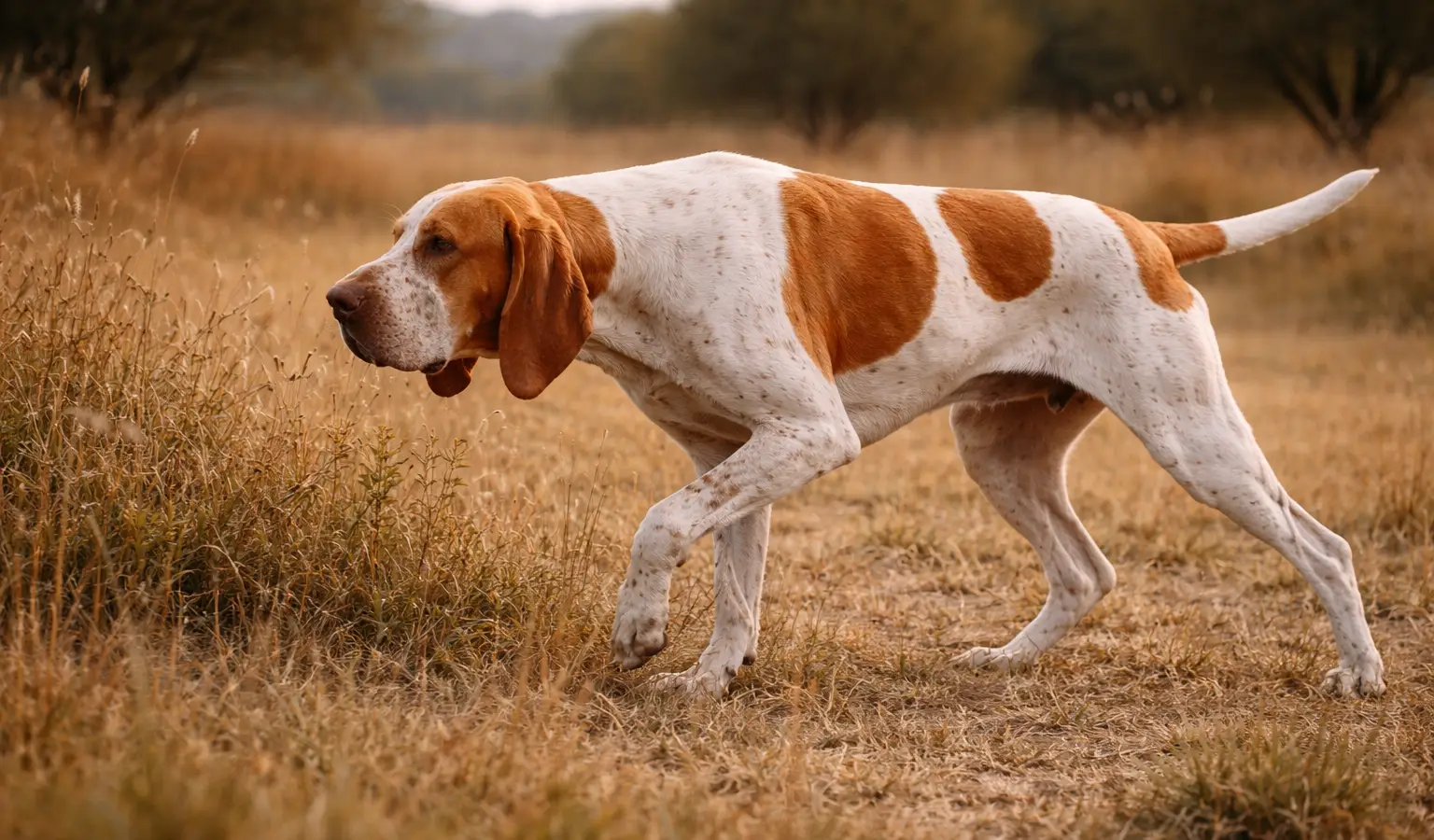
The Bracco Italiano is a large, elegant and powerful pointing dog, valued for its excellent nose, cooperation and steady working style. Enduring and versatile, it can hunt across varied terrain and game. Affectionate with its family, it benefits from consistent training, daily exercise and scent work to stay fulfilled.
Life expectancy
11 – 14 years
Price
900 – 1600 €
Monthly budget
75 €
Size
Large
Profile
Bracco Italiano
Origin
Italy
Year of origin
400
Developed by
Italian nobility
Size
Large
Coat type
Short coat
Owner profile
Active owner
Hypoallergenic
No
Litter size
8
Life expectancy
11 – 14 years
Price
900 – 1600 €
Female
- Height : 55 – 62 cm
- Weight : 25 – 32 kg
Male
- Height : 58 – 67 cm
- Weight : 32 – 40 kg
Temperament & abilities
Affectionate
5/5
Calm
3/5
Independent
3/5
Intelligence
4/5
Obedience
4/5
Hunting instinct
5/5
Energy level
4/5
Good with children
4/5
Dog-friendly
4/5
Friendly with strangers
4/5
Hunting profile
Stamina
5/5
Hunting drive
4/5
Independence
3/5
Trainability
4/5
Beginner-friendly
4/5
Family compatibility
5/5
Feather game
5/5
Fur game
3/5
Underground work
0/5
Water work
4/5
These indicators help compare breeds and choose the right one for your hunting style.
Game & abilities
Estimated ability level by game type.
Budget
Purchase price
900 – 1600 €
The price may vary depending on the breeder, bloodline, and region.
Average monthly cost
75 €
Estimated average: food, healthcare, accessories, and grooming.
A versatile pointing dog with style, stamina, and a sensitive handling profile
Bracco Italiano hunting ability and everyday reality
The Bracco Italiano is generally a very good hunting dog for people who want a versatile pointing breed with a strong nose, steady field sense, and a cooperative nature. In practical terms, Bracco Italiano hunting ability tends to shine in upland bird work and mixed shooting days where methodical search, pointing instinct, and willingness to retrieve all matter. It is usually less about extreme speed or hard-driving independence than about rhythm, contact with the handler, and efficient work that can be sustained over time.
In the field, many Bracchi work with a distinctive style: a purposeful search pattern, good use of scent, and enough range to cover ground without disappearing from the gun. They are often appreciated by hunters who like a dog that hunts with them rather than simply out in front of them. This can make handling more comfortable for shooters who value regular check-ins, manageable range, and a dog that remains mentally connected. Their stamina is often solid, but they are not always the first choice for people seeking the fastest, widest-ranging pointing dog for highly competitive field use.
Training matters with this breed. The Bracco Italiano temperament is often described as gentle, intelligent, and sensitive, which can be a real advantage for recall, retrieve work, and general trainability when the approach is calm and consistent. Heavy-handed handling may flatten initiative or create avoidable friction. Early exposure to birds, terrain, gunfire, and basic obedience is important, and so is teaching the dog how to settle at home. For many owners, the best results come from patient repetition, clear structure, and enough hunting opportunities to keep the dog's instincts engaged.
As a day-to-day companion, the Bracco Italiano can offer a more livable balance than some harder, more frenetic hunting breeds, but it is still a working dog with real exercise and mental needs. It tends to suit hunters and active families who want one dog for field work, outdoor life, and close human company. It may be less coherent for people wanting a low-maintenance pet, very sporadic hunting use, or a specialist built for the biggest range and highest intensity. In the right home, it can be an appealing middle ground: capable in the field, biddable in handling, and generally easier to share everyday life with than a more extreme hunting profile.
Powerful scenting nose
The Bracco Italiano is widely valued for its ability to work scent methodically and stay connected to game in difficult conditions. On mixed ground, many individuals show a practical balance of air scenting and ground scent work, which can help when birds are running, scent is thin, or cover is uneven.
Deliberate, workable range
Rather than hunting in a frantic blur, the Bracco often works at a measured pace that many handlers find easy to read. This can be a real advantage for hunters who want a pointing dog that covers ground honestly without constantly disappearing, especially in hedgerows, woodland edges, and varied European-style terrain.
Steady pointing style
One of the breed’s most appreciated field qualities is its classic point: visible, composed, and usually easy for the handler to interpret. That steadiness can improve shooting opportunities and make the dog feel reliable in day-to-day hunting, although polish and consistency still depend heavily on line, maturity, and training.
Cooperative with the gun
The Bracco Italiano often suits hunters who prefer a dog that works with them rather than merely ahead of them. Many are biddable, responsive to calm handling, and naturally inclined to check in. For novice or intermediate handlers, that cooperative attitude can make field training more straightforward than with harder, more independent pointing breeds.
Endurance over brute speed
This is usually not a breed chosen for explosive, all-out pace across huge open country. Its strength is more often sustained effort: covering ground for hours, keeping mental focus, and holding a useful rhythm through a full hunting outing. For people who value durability and consistency, that can be more useful than raw speed.
Useful natural retrieve
Many Bracchi show a helpful instinct to pick up and carry game, which adds to their versatility as a hunting dog. They are not identical in retrieving drive, and some need patient finishing work, but the breed often offers a practical foundation for hunters who want one dog to point, track wounded game, and retrieve capably.
Who the Bracco Italiano suits best
The Bracco Italiano tends to suit a hunter or active owner who wants a close-working, people-oriented gundog rather than an independent, kennel-hardened specialist. In the field, it is often appreciated by handlers who enjoy a methodical pointing dog with a strong nose, good cooperation, and enough biddability to hunt as a team. It can also suit a rural or semi-rural household that genuinely includes the dog in daily life, gives it regular exercise, and enjoys structured training beyond occasional walks.
It is usually a weaker match for very sedentary homes, owners who want a low-maintenance pet, or hunters expecting nonstop intensity with minimal guidance. This breed may be less ideal for people who are often away for long hours, have little interest in training, or live in tight urban spaces without a real outlet for movement and scent work. The best fit is often an engaged owner who likes long walks, outdoor weekends, and a gentle but substantial dog that needs both physical activity and regular human contact.
How the breed’s history helps explain its temperament, nose, pace, and style in the field today
Origins of the Bracco Italiano: an old Italian pointing dog shaped for practical hunting
The Bracco Italiano is widely regarded as one of Europe’s oldest pointing breeds, with roots in northern Italy that likely reach back several centuries. Historical references and artwork suggest that dogs of this general type were already valued by Italian nobility and hunters well before modern kennel standards existed, though the exact lineage is not fully documented. What is clearer is the purpose behind the breed’s development: to create a versatile hunting dog with a strong nose, reliable pointing instinct, and the stamina to work varied terrain while staying connected to the handler.
Over time, the Bracco Italiano was selected for practical field use rather than sheer speed alone. That helps explain the breed’s recognizable working style today. Many Bracchi move with a ground-covering but measured gait, often described as efficient rather than frantic, and they tend to hunt with persistence and method. This background also helps make sense of the breed’s typical temperament: many are affectionate, sensitive dogs that respond best to calm, consistent handling, yet they still retain real drive, independence of nose, and the need for regular mental and physical work.
Historically, regional types appear to have existed within Italy, and later breeding efforts worked to preserve and unify the Bracco Italiano as a distinct national breed. As firearms changed hunting practices, versatile pointing dogs became especially valuable, and the Bracco’s ability to search, point, and remain manageable in the field likely helped it endure. Even today, many enthusiasts value the breed less for all-out competitive speed than for cooperation, scenting ability, and a style that suits hunters who enjoy a thoughtful, close-working or medium-ranging gun dog rather than an ultra-high-octane specialist.
For modern owners, that history has practical meaning. A Bracco Italiano can be a rewarding choice for someone who wants a traditional hunting companion with a gentle home life, but it is rarely a decorative or low-maintenance breed. Its development as a working pointing dog means it often does best with structure, training, and regular outlets for nose work or field activity. In the right hands, the breed’s old Italian heritage still shows clearly: a dog bred to hunt with purpose, live closely with people, and work as a steady partner rather than as a machine driven only by speed.
Old Italian roots
The Bracco Italiano is widely regarded as one of Italy’s oldest pointing breeds, with roots that likely reach back several centuries. It was developed as a versatile gun dog for locating and indicating game over varied terrain. That long history still shows in the breed’s balanced build, deliberate style, and strong link to traditional European bird hunting.
Selected for practical hunting
Breeding appears to have focused on a dog that could search, point, and work closely enough with the hunter to remain manageable in the field. Compared with some faster, hotter pointing dogs, many Bracchi are appreciated for methodical coverage, good nose use, and a cooperative attitude. As always, working intensity can vary with line, training, and game exposure.
Gentle but not soft
At home, the Bracco Italiano is often described as affectionate, steady, and people-oriented. In the field, that softness with family does not necessarily mean lack of substance: many individuals show persistence, focus, and real desire to work. They usually respond best to calm, consistent handling rather than harsh pressure, which can dull confidence in a sensitive dog.
A measured working style
This is not typically the breed people choose for a frantic, nonstop pace. The Bracco Italiano is better known for an efficient, rhythmic search, with a distinctive trot and a tendency to work with thought as well as drive. For hunters who value readability, nose work, and partnership over raw speed alone, that style can be very appealing.
Needs room and routine
Daily life with a Bracco Italiano usually goes best when the dog has both exercise and a clear role. A large house is not essential, but regular outdoor time, training contact, and mental engagement are. This breed often suits active owners, hunters, or serious dog people better than households expecting a low-maintenance companion with minimal daily demands.
Manageable care, real upkeep
Coat care is generally straightforward, but overall maintenance should not be underestimated. Long ears need sensible attention, especially after field outings, and a large athletic dog benefits from steady conditioning rather than weekend-only exercise. The breed is often easiest to live with when owners are prepared for muddy walks, training time, and a dog that prefers being included instead of parked aside.
Practical answers for people considering the Bracco Italiano as a hunting partner and family dog
Bracco Italiano FAQ: hunting, training, and daily life
Is the Bracco Italiano a good hunting dog for beginners?
The Bracco Italiano can suit a beginner hunter, but usually does best with an owner who is willing to learn handling, consistency, and field training. It is widely valued as a versatile pointing dog with a cooperative nature, a strong nose, and a methodical search style that many hunters appreciate. Compared with harder, more explosive gundogs, it is often described as softer in temperament, which can make heavy-handed training a poor fit. A beginner who wants a close-working hunting companion and is ready to invest in patient training may do very well with this breed. A beginner who wants instant performance with minimal structure may find the Bracco more demanding than expected.
How easy is a Bracco Italiano to train for hunting and obedience?
Many Bracchi are intelligent, willing, and responsive, but they are not usually at their best under constant pressure. They often respond well to calm repetition, fair expectations, and a handler who builds confidence rather than forcing speed. In hunting work, recall, steadiness, quartering pattern, and retrieve foundations should be taught early and practiced regularly, because natural ability still needs direction. In home life, the same applies: clear rules, daily routine, and enough mental work matter as much as physical exercise. For many owners, the breed feels trainable rather than automatic, meaning progress is good when the relationship and method are right.
Does the Bracco Italiano have enough drive for serious bird hunting?
Many Bracco Italiano lines have real bird-dog ability, including scenting skill, point, and the stamina for a full day in the field, but intensity can vary with breeding and individual temperament. The breed is often appreciated for a more deliberate, ground-covering style rather than frantic speed, which suits some hunters very well and disappoints others who want a faster dog. In practical terms, it can be a strong choice for hunters who value cooperation, nose work, and a dog that stays connected to the handler. If your priority is competitive field-trial style pace, you may prefer a different pointing breed or a particularly driven Bracco line. Asking breeders detailed questions about working parents is especially important here.
Can a Bracco Italiano live in an apartment or does it need a big property?
A large property is helpful, but it is not the deciding factor on its own. A Bracco Italiano can adapt to apartment living if it gets enough structured exercise, time outdoors, training sessions, and chances to use its nose, but a bored Bracco may become noisy, restless, or difficult to settle. What matters most is whether the owner can provide daily physical outlets and meaningful engagement rather than just quick leash walks. This is not usually a breed for a very sedentary household. Many do best in homes where someone enjoys regular outdoor activity and can make the dog part of that routine.
Is the Bracco Italiano a good family dog with children and other pets?
The breed is often described as affectionate, gentle, and strongly people-oriented, which can make it a pleasant family companion in the right home. With children, success usually depends on supervision, basic manners, and teaching the dog not to barrel through the house when excited, because it is a substantial sporting dog rather than a delicate pet. With other dogs, many Bracchi do well, especially when socialized early. With cats or small animals, outcomes vary more because hunting instinct is part of the breed, so introductions should be careful and expectations realistic. Families who want a warm, involved dog often like the Bracco, but they should also be ready for its size, energy, and need for companionship.
How much exercise does a Bracco Italiano really need when it is not actively hunting?
Most Bracco Italiano dogs need more than a couple of short walks a day to stay balanced. A good routine often includes one longer outing, chances to sniff and explore, some off-lead running where safe and legal, and short training or retrieval games that engage the brain. Because it is a sporting breed, mental work matters nearly as much as mileage; a dog that never hunts still benefits from scent games, obedience practice, and structured outdoor time. Young adults can be especially energetic and slow to switch off if their needs are not met. In many homes, the challenge is not extreme exercise, but providing steady, meaningful activity every day.
Who is the Bracco Italiano best suited for, and who should probably choose another breed?
The Bracco Italiano tends to suit people who want a close companion first and a capable pointing dog second, rather than a purely kennel-style working machine. It can be an excellent fit for hunters who value cooperation, for active families who enjoy the outdoors, and for owners who like training through patience and relationship. It may be less suitable for people who are away all day, want a very low-maintenance dog, or prefer a highly independent, hard-driving field dog with a naturally faster edge. It is also not ideal for owners who dislike drool, large indoor dogs, or the slow, steady work of early training. In the right hands, it often feels deeply rewarding, but it usually asks for time, involvement, and consistency.