Portuguese Pointer
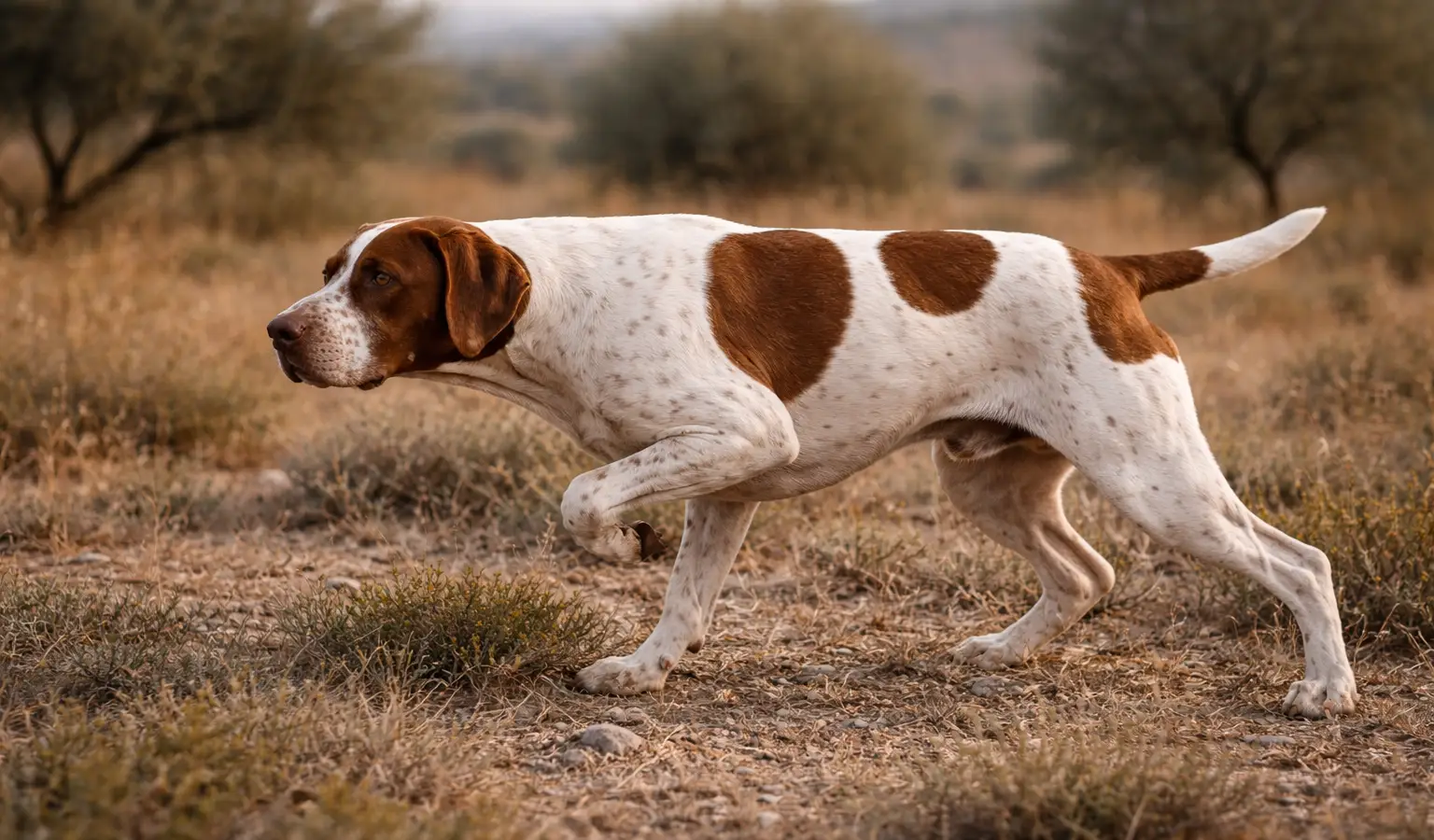
The Portuguese Pointer is an ancient and versatile pointing dog, traditionally used for bird hunting. Known for its excellent nose and balanced temperament, it works closely with its handler. Affectionate, obedient and sociable, it adapts well to family life when provided with regular exercise and mental stimulation.
Life expectancy
12 – 14 years
Price
700 – 1300 €
Monthly budget
60 €
Size
Medium
Profile
Portuguese Pointer
Origin
Portugal
Year of origin
1200
Developed by
Portuguese nobility
Size
Medium
Coat type
Short coat
Owner profile
Active owner
Hypoallergenic
No
Litter size
6
Life expectancy
12 – 14 years
Price
700 – 1300 €
Female
- Height : 48 – 54 cm
- Weight : 16 – 22 kg
Male
- Height : 52 – 56 cm
- Weight : 20 – 27 kg
Temperament & abilities
Affectionate
4/5
Calm
3/5
Independent
3/5
Intelligence
4/5
Obedience
4/5
Hunting instinct
4/5
Energy level
4/5
Good with children
4/5
Dog-friendly
4/5
Friendly with strangers
3/5
Hunting profile
Stamina
4/5
Hunting drive
4/5
Independence
3/5
Trainability
3/5
Beginner-friendly
3/5
Family compatibility
4/5
Feather game
5/5
Fur game
2/5
Underground work
0/5
Water work
2/5
These indicators help compare breeds and choose the right one for your hunting style.
Game & abilities
Estimated ability level by game type.
Budget
Purchase price
700 – 1300 €
The price may vary depending on the breeder, bloodline, and region.
Average monthly cost
60 €
Estimated average: food, healthcare, accessories, and grooming.
A close-working pointing breed with practical field sense and an easier home life than many high-drive specialists
Is the Portuguese Pointer a Good Hunting Dog?
The Portuguese Pointer is generally a good hunting dog for the right person, especially if you want a versatile pointing breed that works at a moderate range, stays connected to the handler, and can transition into daily family life without feeling as intense as some larger continental pointers. In the field, its best qualities are often its nose, natural game-finding instinct, willingness to cooperate, and a search pattern that tends to remain manageable rather than excessively wide. For hunters asking whether Portuguese Pointer hunting ability is serious enough for real work, the answer is usually yes, particularly for walked-up hunting and practical shooting days where control matters as much as speed.
Its working style is often described as purposeful, energetic, and biddable. Many Portuguese Pointers hunt with good animation but also with a clear desire to check in, which can make handling easier for people who do not want a dog that disappears over the horizon. This breed can suit rough cover, mixed farmland, and varied terrain, though individual stamina, boldness, and range will depend on breeding and training. It is not usually the first choice for someone seeking an extreme-distance field trial type, but it can be very appealing for hunters who value steady contact, practical pointing work, and a dog that feels like a partner rather than a projectile.
Training demands are real, but they are often more about consistency than force. The Portuguese Pointer tends to respond best to clear structure, frequent exposure to birds, and patient development of recall, steadiness, and retrieve habits. Trainability is one of the breed's attractive points, yet that should not be confused with being effortless. Without enough field outlet, mental work, and boundaries, energy can spill into restlessness at home. Early socialization and regular handling matter, because a hunting dog with natural enthusiasm still needs manners, impulse control, and reliable cooperation.
- Best fit: Hunters wanting a close to medium-ranging pointing dog with strong handler focus.
- Likely strengths: Nose, cooperation, workable recall, practical search pattern, adaptable family temperament.
- Possible limitations: May be less suited to people wanting a very big-running specialist or a low-exercise companion.
- Daily life reality: Usually easier to live with than some harder-driving gun dogs, but still needs meaningful exercise and training.
As an all-round choice, the Portuguese Pointer makes the most sense for active owners who genuinely hunt, train, or spend a lot of time outdoors and who want a dog that balances field performance with a more manageable temperament. It can be a coherent option for someone comparing versatile hunting breeds and looking for courage, stamina, and handling without the most extreme level of independence. In the right home, that balance is exactly the breed's appeal.
Close-working nose
The Portuguese Pointer is widely valued for a methodical nose that works well at practical gun range. Rather than covering ground in a huge pattern, many individuals search in a connected, cooperative way that helps hunters follow the dog, read the terrain, and stay involved in the action on partridge, quail, and similar game.
Firm, readable point
One of the breed’s most useful hunting qualities is a clear, steady point that tends to be easy to read. For the handler, that means fewer doubts about whether the dog is on scent, relocating, or truly holding birds. This visible concentration can make the Portuguese Pointer especially satisfying for hunters who enjoy close teamwork in the field.
Biddable under the gun
The Portuguese Pointer often appeals to hunters who want a pointing dog that takes guidance without losing drive. With fair, consistent training, many show strong responsiveness to handling, recalls, and changes of direction. That makes the breed a good fit for people who prefer a manageable hunting companion over a very wide-ranging, more independent field style.
Brave in rough cover
This breed is known for working with determination in dense Mediterranean-style cover, bramble, and uneven ground. It often shows enough courage to push into difficult places where birds sit tight, yet still remains practical for hunters on foot. That balance of boldness and control is one reason the Portuguese Pointer has long been appreciated as a working gun dog.
Useful all-day stamina
The Portuguese Pointer is not usually described as an extreme-distance specialist, but it commonly offers the kind of stamina many day-to-day hunters actually need: enough endurance for repeated casts, steady searching, and multiple outings in a season. It suits active owners best, especially those wanting a dog that can hunt hard without feeling frantic at every moment.
Practical versatility
Although primarily a pointing dog, the Portuguese Pointer can be a versatile hunting partner when training and bloodline support it. Some dogs also handle basic retrieves and adapt well to mixed small-game days. It is usually at its best for hunters who want one cooperative, multi-purpose field dog rather than a highly specialized competitor built for only one style of work.
Who the Portuguese Pointer suits best
The Portuguese Pointer generally suits a hands-on owner who wants an active, close-working gundog rather than a decorative pet. It tends to fit hunters who value a cooperative pointing dog for walked-up shooting or practical field work, and it can also suit sporty households willing to train, exercise, and involve the dog in everyday life. In the right home, the Braque portugais often combines field drive with a strong wish to stay connected to its person, which many owners find appealing both in hunting and at home.
It is usually less suitable for very sedentary households, people who want an independent kennel dog with minimal interaction, or first-time owners expecting an easy dog without ongoing training. This breed may become frustrating if its energy, nose, and working instincts are underused. A good match is someone who enjoys structured exercise, recall and steadiness work, and a dog that wants guidance. A poorer match is an owner away for long hours, a household wanting a low-maintenance companion, or a hunter needing extreme range and very hard-driving specialist performance in every line.
How a traditional Iberian gundog shaped the breed seen today
Origins and development of the Portuguese Pointer
The Portuguese Pointer, or Braque Portugais, is an old Iberian pointing breed developed in Portugal for practical hunting work, especially with game birds. Most breed histories trace its roots back several centuries, likely to early peninsular pointing dogs used by falconers and later by hunters on foot. As with many old working breeds, some details are difficult to verify with complete certainty, but the broad picture is clear: this is a dog shaped less by fashion than by usefulness in the field.
Portuguese hunters traditionally needed a dog that could search methodically, use its nose well, hold game reliably on point, and remain manageable in close partnership with the handler. That selection helps explain the breed’s present-day character. The Portuguese Pointer is often described as energetic and keen without being as expansive or hard-driving as some modern field-bred continental pointers. Many individuals work at a practical range, stay attentive to their person, and show the kind of cooperation that suits walked-up hunting and mixed rural terrain.
Its development also seems to have favored a balanced temperament. In daily life, that often translates into a dog that is affectionate, people-oriented, and responsive to training when handled with clarity and consistency. At the same time, it remains a genuine hunting breed, not a low-maintenance companion. Prospective owners should expect a dog with drive, stamina, and a real need for physical exercise, scent work, and regular engagement. Without that outlet, its intensity can be harder to live with indoors.
Historically, the breed went through periods of decline and recovery, as happened with many regional working dogs when hunting practices and rural life changed. Modern preservation has generally aimed to keep the Portuguese Pointer recognizable as a versatile traditional gundog rather than turn it into an exaggerated specialist. For hunters, that means a breed often valued for cooperation, nose, point, and sensible handling. For active non-hunting homes, it can be an appealing choice only if the family genuinely wants a lively, trainable dog with working instincts still close to the surface.
Old Iberian roots
The Portuguese Pointer, or Braque portugais, is an old pointing breed from Portugal, developed as a practical gun dog for local terrain and hunting traditions. It is generally described as part of the old southern European pointer family, valued less for showy speed than for cooperation, nose, and reliable work in the field.
Selected for close partnership
This breed was shaped to hunt in contact with the handler rather than at extreme distance. That selection still matters today: many Portuguese Pointers tend to check in naturally, work at a manageable range, and respond well to calm guidance. For hunters who prefer control and teamwork over wide, independent casts, that can be a real advantage.
Soft but willing temperament
In daily life, the Portuguese Pointer is often described as affectionate, people-oriented, and sensitive rather than hard-headed. Training usually works best with consistency, repetition, and clear feedback instead of heavy pressure. A harsh approach may shut some dogs down, while patient handling often brings out their biddability and steady working attitude.
Best for active homes
This is not usually a breed for a sedentary household. Even when kept mainly as a companion, the Portuguese Pointer generally needs regular off-lead exercise, scent-based activity, and meaningful interaction with its people. It may fit well with active owners who enjoy training and outdoor routines, but less well with homes expecting a low-maintenance dog.
Field style in practice
As a hunting dog, the Portuguese Pointer is typically appreciated for methodical quartering, a useful nose, and a pointing style suited to walked-up shooting. Depending on the line and education, some dogs may be more energetic or more measured, but the breed’s reputation centers on practical bird work, cooperation, and adaptability over flashy excess.
Simple coat, real daily needs
The short coat is relatively easy to maintain, so grooming is rarely the main challenge. The bigger commitment is daily management: exercise, recall training, steadiness around game scent, and enough companionship to keep the dog settled indoors. For the right owner, care is straightforward; for an under-stimulated dog, restlessness can become the harder issue.
Practical answers about hunting ability, training, home life, exercise, and owner fit
Portuguese Pointer FAQ
Is the Portuguese Pointer a good hunting dog for beginners?
The Portuguese Pointer can suit a beginner, but usually does best with someone willing to learn handling, recall work, and consistent field training. It is generally valued as a pointing dog with a close-working style, which many hunters find easier to manage than a very wide-ranging dog. That said, success depends a lot on breeding, early exposure to game, and the quality of training rather than breed alone. A first-time hunting owner who wants a cooperative dog and is ready to train regularly may find it a realistic choice, especially for upland hunting and mixed family life.
What is the Portuguese Pointer like to train for hunting and obedience?
This breed is often described as responsive and people-oriented, which can make training smoother than with more independent pointing breeds. Most Portuguese Pointers benefit from short, clear sessions, calm repetition, and plenty of practical field exposure instead of harsh correction. They usually need reliable basics first: recall, steadiness appropriate to the owner's goals, lead manners, and the ability to settle at home. Sensitive handling often works better than pressure, because some dogs may shut down or become worried if training is too heavy-handed.
Can a Portuguese Pointer live as a family dog if it also hunts?
In many homes, yes. A well-bred and well-exercised Portuguese Pointer can be affectionate, close to its people, and easier to live with indoors than some owners expect from a working gundog. The key is meeting both sides of the dog: enough physical exercise, enough mental work, and clear household routines. Without that outlet, an active pointing dog may become restless, vocal, or overly busy in the home, so family compatibility is often strongest when daily life includes training, walks, and regular purposeful activity.
How much exercise does a Portuguese Pointer need every day?
This is usually not a breed for a quick walk around the block and little else. Most adults need a solid amount of daily movement plus brain work, such as structured training, scent games, retrieving practice, or field sessions when available. A fenced yard can help, but it does not replace guided exercise and time spent with the owner. Young dogs in particular need a balance: enough activity to stay satisfied, but not chaotic overexcitement that teaches them to live permanently at top speed.
Can a Portuguese Pointer live in an apartment or is it better in the countryside?
A countryside home can be convenient, but it is not automatically required if the dog's needs are met properly. An apartment Portuguese Pointer can work with a committed owner who provides daily outdoor exercise, training, and calm structure, especially if the dog also gets hunting or other serious working outlets. Space inside the home matters less than lifestyle, routine, and the owner's consistency. For many households, the bigger question is not square footage but whether the dog will get enough purposeful activity and enough help learning to switch off indoors.
Is the Portuguese Pointer a good choice for families with children and other dogs?
Often it can be, provided the dog is well socialized and the household is sensible about supervision and boundaries. Many individuals are friendly and attached to their family, but an energetic hunting dog can be boisterous when young, so children should not be expected to manage the dog alone. With other dogs, compatibility is often good if introductions are handled well and the dog has learned polite manners early. Homes with small pets may need more caution, because prey interest can vary between individuals.
Who is the Portuguese Pointer best suited to, and who may struggle with this breed?
The Portuguese Pointer tends to suit active owners who want a versatile pointing dog that can share both field time and home life. It often fits hunters who prefer a cooperative dog, people who enjoy training, and families willing to build their routine around exercise and engagement. It may be a poor match for owners wanting a very low-maintenance pet, long hours alone every day, or a dog that can self-exercise in the yard. As with most working breeds, the happiest outcomes usually come when the dog's natural drive is given direction instead of being treated as a problem.