Weimaraner
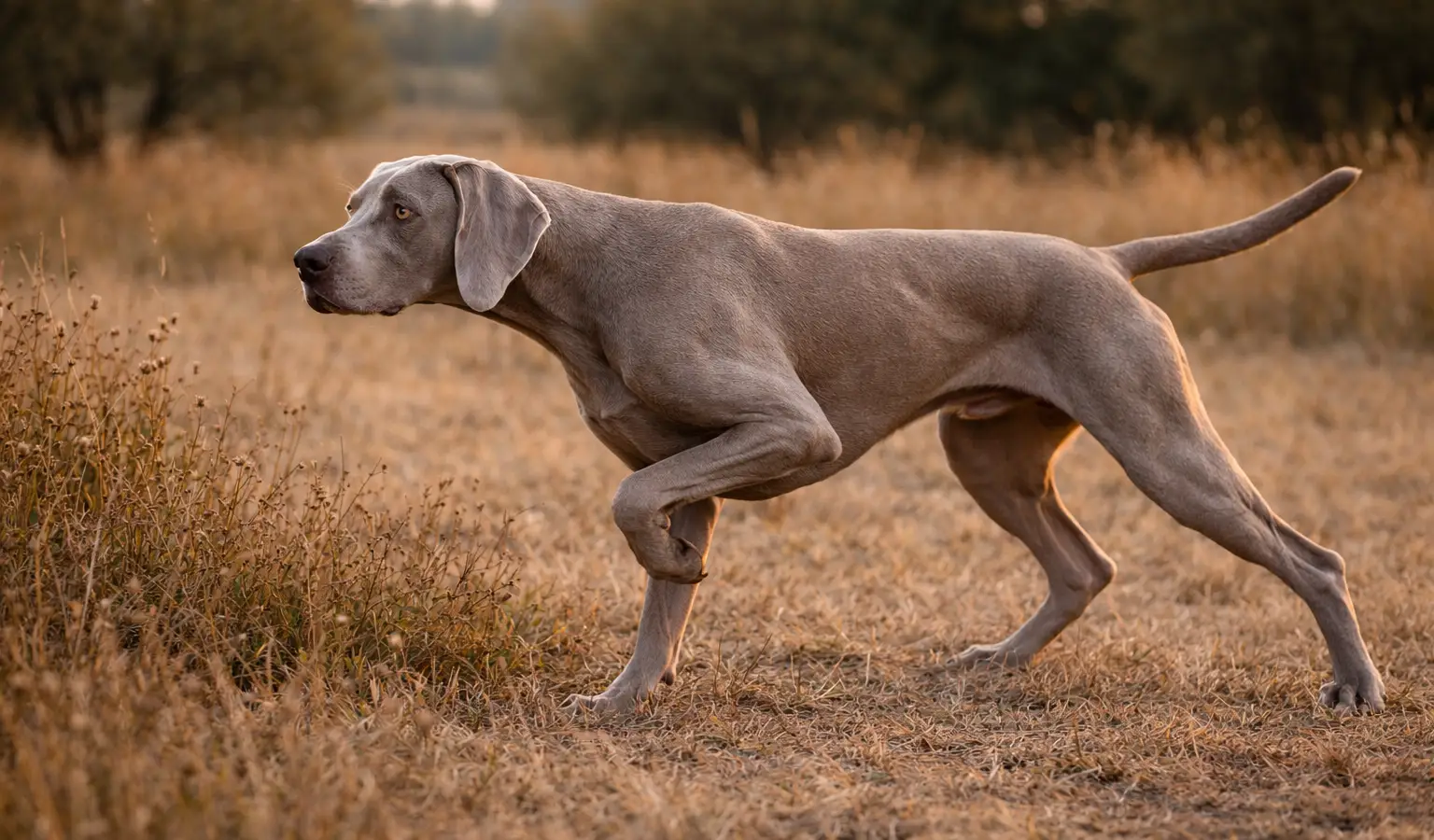
The Weimaraner is an elegant, athletic pointing dog known for its grey coat and striking eyes. Enduring, intelligent and versatile, it excels at tracking, searching and retrieving when properly trained. Highly people-oriented and sensitive, it needs consistent training, substantial daily exercise and scent work to prevent boredom and unwanted behaviors.
Life expectancy
10 – 13 years
Price
1000 – 1800 €
Monthly budget
75 €
Size
Large
Profile
Weimaraner
Origin
Germany
Year of origin
1800
Developed by
Weimar nobility
Size
Large
Coat type
Short coat
Owner profile
Very active / athletic
Hypoallergenic
No
Litter size
8
Life expectancy
10 – 13 years
Price
1000 – 1800 €
Female
- Height : 57 – 63 cm
- Weight : 25 – 32 kg
Male
- Height : 60 – 70 cm
- Weight : 30 – 40 kg
Temperament & abilities
Affectionate
4/5
Calm
2/5
Independent
3/5
Intelligence
4/5
Obedience
3/5
Hunting instinct
5/5
Energy level
5/5
Good with children
4/5
Dog-friendly
3/5
Friendly with strangers
3/5
Hunting profile
Stamina
5/5
Hunting drive
5/5
Independence
4/5
Trainability
3/5
Beginner-friendly
2/5
Family compatibility
4/5
Feather game
4/5
Fur game
4/5
Underground work
0/5
Water work
4/5
These indicators help compare breeds and choose the right one for your hunting style.
Game & abilities
Estimated ability level by game type.
Budget
Purchase price
1000 – 1800 €
The price may vary depending on the breeder, bloodline, and region.
Average monthly cost
75 €
Estimated average: food, healthcare, accessories, and grooming.
A versatile pointing dog with speed, stamina, and real demands in training and daily life
Is the Weimaraner a Good Hunting Dog?
The Weimaraner is widely considered a very capable hunting dog, especially for hunters who want an energetic, versatile pointing breed with a strong nose, good range, and the willingness to work closely enough to be handled. In the field, a well-bred and well-trained Weimaraner can point game effectively, cover ground with drive, and often show useful retrieving ability. It is usually most coherent as an all-round hunting companion for active handlers rather than as a low-maintenance specialist.
Its hunting style tends to combine athletic movement, initiative, and visible intensity. Many Weimaraners work with speed and stamina, making them relevant for varied terrain and longer outings, but that same energy level can become hard to manage if obedience and recall are not built carefully. Compared with some calmer pointing dogs, the Weimaraner may feel more demanding in handling, particularly when young. Trainability is often good, yet it usually responds best to consistent structure, frequent practice, and a handler who channels drive rather than simply trying to suppress it.
For practical use, the breed often makes the most sense for mixed hunting where pointing is central but retrieve and general versatility are also valued. Depending on the individual dog, bloodline, and education, a Weimaraner may suit upland work, rougher cover, and active days where courage and endurance matter. It can be less convincing for owners who want a naturally easy dog, a very compact search pattern, or a dog that settles quietly with minimal exercise between hunts.
- Strengths: stamina, strong motivation, useful nose, versatile hunting profile, often stylish field presence
- Watch points: high energy, training demands, steadiness and recall can require serious work, daily exercise needs are significant
- Best fit: experienced or committed handlers who want one dog for hunting and active family life
As a family companion, the Weimaraner can be affectionate, attached, and highly engaged with its people, but everyday life is easier when hunting work, training, and physical activity are part of the routine. This is not usually the best choice for someone comparing breeds and looking for the easiest first gundog. For the right owner, though, Weimaraner hunting ability is real: it offers field performance, character, and versatility, provided the dog gets enough structure, outlets, and competent handling.
Fast ground coverage
The Weimaraner is built to hunt with pace and purpose. Many dogs cover terrain quickly while still checking in enough to stay useful for an attentive handler. This makes the breed appealing for hunters who work larger fields or mixed ground and want a pointing dog that can search actively rather than plod through cover.
Strong prey drive
A well-bred Weimaraner often shows intense game interest, which can be a real advantage in the field. That natural drive helps the dog hunt with commitment, push into likely holding areas, and stay engaged during long outings. The trade-off is that this enthusiasm usually needs steady training and clear control, especially in young dogs.
Endurance for long days
This is generally a high-energy hunting breed with the stamina for extended work when properly conditioned. Many Weimaraners stay effective over long walks, repeated casts, and demanding terrain, which suits active hunters who spend serious time outdoors. In daily life, that same endurance means the breed usually needs far more exercise than the average family dog.
Versatile game work
The Weimaraner has long been valued as a versatile hunting dog rather than a narrow specialist. Depending on line, training, and local hunting style, it may contribute to pointing, tracking, and retrieving duties. That flexibility can be attractive for owners who want one dog for varied outings, but versatility only becomes practical when the dog is carefully developed.
Useful retrieving ability
Many Weimaraners bring a willing retrieve that adds practical value after the shot. A dog that marks well and carries game confidently can save time and reduce lost birds, especially in rough cover. Some individuals are naturally keen retrievers, while others benefit from more structured work to make delivery, steadiness, and reliability fully usable in hunting situations.
Responsive to a skilled handler
When training is fair, consistent, and purposeful, the Weimaraner can be very rewarding to handle. The breed often forms a close working bond and may respond well to regular field structure. It tends to suit owners who enjoy active training and clear communication more than those looking for an easy, low-maintenance gun dog that matures itself.
Who the Weimaraner suits best
The Weimaraner usually suits an active owner who wants a close-working, highly engaged dog rather than a kennel ornament or occasional weekend companion. In hunting terms, it often fits someone who values a versatile pointing dog with drive, speed, and the willingness to stay mentally connected to the handler. Many do best with regular field work, structured training, and enough daily exercise to prevent restless, noisy, or destructive habits at home.
As a family dog, the breed can work well in households that genuinely enjoy outdoor life and can live with a dog that wants company, direction, and meaningful activity. It is often less suitable for very sedentary homes, first-time owners who want an easy dog, or hunters who prefer a naturally low-key, low-maintenance temperament. Common mismatches include people away for long hours, households expecting instant off-switch indoors without enough work outside, or handlers who underestimate how much consistency and training this breed may need.
How a German hunting dog evolved into the energetic, close-working companion people know now
Origins of the Weimaraner and What They Still Explain Today
The Weimaraner, or Braque de Weimar, is generally traced to Germany in the nineteenth century, with its development most often linked to the court of Weimar. Exact details of the earliest crosses are not fully documented, but the breed appears to have been shaped from several continental hunting dogs and possibly large game-tracking stock used at the time. What matters for today’s owner is that the Weimaraner was not created as a decorative dog: it was selected to be a versatile hunting partner with stamina, initiative, and a strong desire to work closely with people.
As hunting practices changed, the breed seems to have moved from use on larger game toward more practical all-round work on birds and small game. Breeders valued a dog able to search ground efficiently, point game with intensity, and remain useful in varied field conditions. That heritage still helps explain the modern Weimaraner’s style. Many are fast, athletic, eager to cover country, and highly engaged with their handler. They often combine pointing instinct with determination and a level of drive that can feel impressive in the field but demanding in everyday life.
The breed’s historical selection also sheds light on temperament. A Weimaraner often forms a strong bond with its people and usually does best with regular contact, guidance, and purposeful activity. This can be a real strength for hunters who want a responsive dog that works as a partnership rather than at great distance. The same trait can be harder for owners expecting an easy, low-maintenance family pet. Without enough exercise, training, and structure, some individuals may become restless, vocal, or difficult to live with indoors.
In practical terms, the Weimaraner tends to suit active handlers who appreciate a sensitive, powerful pointing dog and are prepared to channel its energy. Well-bred and well-trained dogs can be very capable on upland game and in versatile hunting roles, but the breed is not always the simplest choice for beginners. Its history points to a dog with real working ability, quick reactions, and a need for involvement. For the right owner, that legacy is exactly the appeal; for the wrong home, it can be too much dog.
German sporting roots
The Weimaraner, or Braque de Weimar, is generally linked to Germany and to noble hunting circles around Weimar in the 19th century. It was developed as a versatile gun dog for serious field use, not simply as an elegant companion. That background still matters today: this breed tends to combine athleticism, close human focus and a strong need for purposeful activity.
Selected for versatility
Early selection appears to have favored an all-around hunting dog able to search, point and recover game across changing terrain. Compared with some highly specialized pointing breeds, the Weimaraner often carries a broader working profile. In practical terms, many lines show a mix of nose, drive, endurance and cooperation, though the balance can vary with breeding, training and hunting tradition.
Energetic, close-working mind
A typical Weimaraner is alert, intelligent and deeply attached to its people. That sensitivity can be a strength for training, but it also means handling usually works best when it is calm, consistent and structured. Many individuals do poorly with a casual lifestyle: without enough exercise, learning and contact, they may become restless, vocal or difficult to settle indoors.
Best for active homes
This is rarely the easiest choice for a low-key household. Most Weimaraners fit best with owners who enjoy long daily outings, regular training and a dog that wants to be included in routines. They often prefer living close to their family rather than being left alone for long periods, so the breed suits people ready for involvement, not occasional interaction.
Field style and hunting use
In hunting contexts, the Weimaraner is often appreciated for range, stamina and willingness to work with its handler. Depending on line and education, it may suit hunters looking for a pointing dog that can cover ground while staying engaged with the team. It tends to appeal more to active handlers who enjoy shaping a driven dog than to those seeking a naturally undemanding worker.
Simple coat, serious daily needs
Coat care is usually straightforward, which can mislead new owners into thinking the breed is easy overall. The real maintenance lies elsewhere: exercise, recall work, impulse control, social learning and mental occupation. A Weimaraner often needs a full daily routine rather than a quick walk, especially during adolescence, when its size and enthusiasm can become hard to manage.
Practical answers on hunting ability, training, exercise, family life, housing, and owner fit
Weimaraner hunting and lifestyle FAQ
Is a Weimaraner a good hunting dog?
The Weimaraner was developed as a versatile hunting dog, and many individuals still show strong pointing instinct, speed, stamina, and a real desire to work with their handler. In the field, the breed is often appreciated for covering ground efficiently and for staying engaged when properly trained. That said, hunting quality can vary a lot between lines, especially between dogs bred mainly for work and those bred more for show or companion homes. If hunting is your priority, it is worth looking closely at the parents, the breeder's selection goals, and the dog's early exposure to game, recall, steadiness, and gunfire.
Are Weimaraners easy to train for hunting and obedience?
Many Weimaraners are intelligent, eager, and quick to learn, but they are not always effortless for beginners. They often respond best to clear structure, calm repetition, and regular work rather than harsh handling or inconsistent rules. Because the breed can be sensitive and highly driven, training usually goes better when obedience, impulse control, recall, and field skills are built together from a young age. A well-managed Weimaraner can become a very rewarding working partner, but owners should expect daily training and not assume natural talent will replace education.
How much exercise does a Weimaraner really need every day?
A Weimaraner usually needs much more than a short walk around the block. Most adults do best with a mix of physical exercise and mental work, such as running in safe areas, structured retrieves, scent games, obedience sessions, and time in the field or countryside. Simply letting the dog burn energy is often not enough, because this breed also tends to need direction and engagement. Without enough activity and routine, some Weimaraners may become noisy, restless, destructive, or difficult to settle indoors.
Can a Weimaraner live in an apartment, or does it need a big property?
A Weimaraner can live in an apartment if its exercise, training, and daily supervision are truly taken seriously. Large property is convenient, but it does not replace meaningful outings, recall work, and time spent doing something purposeful with the dog. This breed is often people-oriented and usually wants to be close to its family, so space alone is not the main issue. The bigger question is whether the owner can provide enough movement, structure, and companionship every day, including during bad weather and busy weeks.
Are Weimaraners good family dogs with children and other pets?
Many Weimaraners can be affectionate family dogs and form very close bonds with their people. With children, success often depends on the dog's manners, energy level, and how well adults supervise play, because this is a powerful, lively breed that can be unintentionally overwhelming. With other pets, caution is sensible, especially around small animals, since prey drive may be strong in some individuals. Early socialization, reliable training, and honest management matter more than wishful thinking, particularly in homes that want a calm household as well as a capable hunting dog.
Who is the Weimaraner best suited for, and who may struggle with the breed?
The Weimaraner often suits active owners who want a hands-on dog and genuinely enjoy training, outdoor life, and close day-to-day involvement. It can be a strong match for hunters, serious hobby trainers, runners, or experienced dog owners who want a responsive but demanding companion. People who prefer a low-maintenance dog, spend long hours away from home, or want an easy first hunting breed may find the intensity hard to manage. In the right home, the breed can be deeply rewarding, but it usually asks for time, patience, consistency, and a real plan.
Is a Weimaraner a good choice for a first-time hunting dog owner?
It can be, but only if the owner is realistic and committed. A well-bred Weimaraner with good guidance can teach a new handler a great deal, yet the breed's energy, sensitivity, and drive may feel demanding compared with some more forgiving pointing dogs. First-time owners usually do best when they work with a knowledgeable breeder, join training groups, and start early with recall, steadiness, socialization, and handling skills. If you want a stylish, athletic hunting companion and are ready for regular practice, the breed may fit; if you want simple and easy, another option may be more suitable.