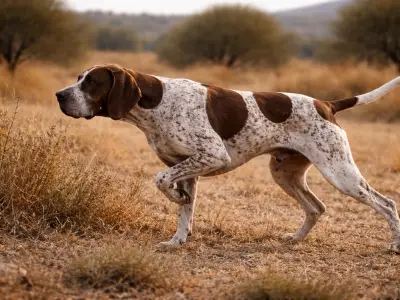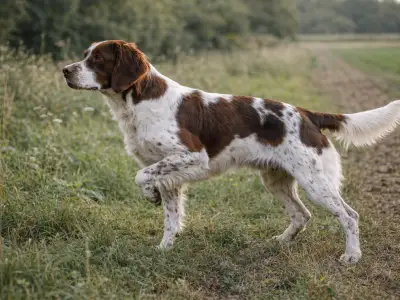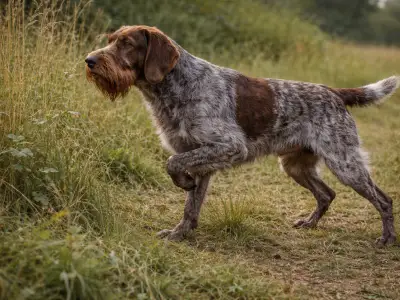
Bourbonnais Pointer
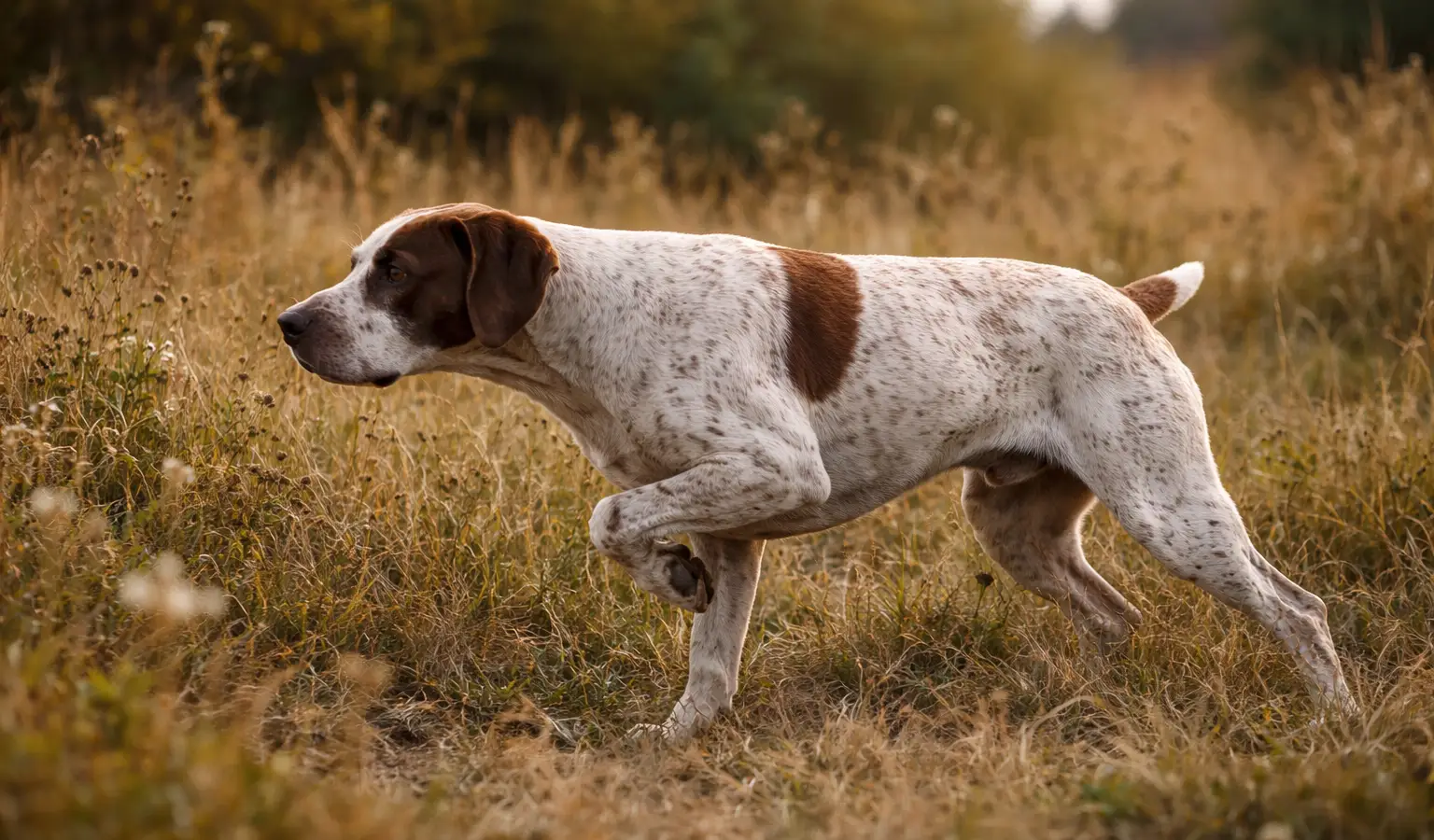
The Bourbonnais Pointer is a compact and powerful French pointing dog, known for its excellent nose and discreet hunting style. Sensitive, loyal and well-balanced, it is also affectionate at home. It thrives on regular exercise and a close bond with its owner.
Life expectancy
12 – 14 years
Price
800 – 1500 €
Monthly budget
60 €
Size
Medium
Profile
Bourbonnais Pointer
Origin
France
Year of origin
1600
Developed by
Bourbonnais hunters
Size
Medium
Coat type
Short coat
Owner profile
Active owner
Hypoallergenic
No
Litter size
6
Life expectancy
12 – 14 years
Price
800 – 1500 €
Female
- Height : 48 – 54 cm
- Weight : 18 – 23 kg
Male
- Height : 50 – 57 cm
- Weight : 20 – 25 kg
Temperament & abilities
Affectionate
5/5
Calm
3/5
Independent
3/5
Intelligence
4/5
Obedience
4/5
Hunting instinct
5/5
Energy level
4/5
Good with children
5/5
Dog-friendly
4/5
Friendly with strangers
4/5
Hunting profile
Stamina
4/5
Hunting drive
3/5
Independence
3/5
Trainability
4/5
Beginner-friendly
4/5
Family compatibility
5/5
Feather game
5/5
Fur game
2/5
Underground work
0/5
Water work
2/5
These indicators help compare breeds and choose the right one for your hunting style.
Game & abilities
Estimated ability level by game type.
Budget
Purchase price
800 – 1500 €
The price may vary depending on the breeder, bloodline, and region.
Average monthly cost
60 €
Estimated average: food, healthcare, accessories, and grooming.
A versatile pointing dog with close cooperation, useful range, and real at-home livability
Is the Bourbonnais Pointer a Good Hunting Dog?
The Bourbonnais Pointer is generally considered a very good hunting dog for the shooter who wants a versatile, biddable pointing breed rather than an extreme field specialist. In practical terms, Bourbonnais Pointer hunting ability tends to stand out in upland work, where a good nose, natural point, workable search pattern, and willing cooperation with the handler matter more than sheer range. Many individuals show enough drive and stamina for active hunting days, but the breed is usually most coherent for hunters who value control, contact, and a dog that can switch from field work to family life without constant friction.
In the field, the Braque du Bourbonnais often appeals to people who prefer a medium-ranging dog with a readable working style. It typically hunts in partnership rather than as an independent long-distance prospecting dog. That can be a real advantage for mixed terrain, walking hunters, and those who want a dog that checks in naturally and remains manageable under the gun. A good Bourbonnais Pointer may show solid pointing instinct, honest use of nose, and enough courage for varied cover, though exact intensity and range can vary with bloodline, training, and individual temperament.
Training demands are real, but this is not usually a breed chosen for stubborn theatrics. The Bourbonnais Pointer is often described as sensitive, trainable, and responsive to fair handling. That makes recall, steadiness, and general handling easier than with some harder, more self-directed hunting breeds, provided early structure is in place. Heavy-handed methods can dull initiative or confidence, while inconsistent rules may create avoidable confusion. For many owners, the sweet spot is calm repetition, clear cues, and regular exposure to birds, terrain, and retrieving situations.
- Best suited to: upland hunting, walked-up shooting, mixed-use gun dog homes, hunters who want cooperation and manageable range
- Possible strengths: nose, point, trainability, natural handling, family temperament, adaptable field style
- Possible limitations: not always the biggest-running dog, may be too soft for rough handling, needs regular exercise and purposeful training
As an everyday companion, the breed often offers one of its strongest arguments. A well-bred, well-exercised Bourbonnais Pointer can live pleasantly in a family setting, but it is still an athletic working dog with real energy. Daily life is easiest when there is enough physical outlet, off-lead training where legal and safe, and mentally engaging work. For a hunter comparing several breeds, this is often a sensible choice if you want a versatile Bourbonnais Pointer hunting dog that remains close, trainable, and pleasant to live with, rather than a high-octane specialist built to push far beyond the average owner’s needs.
Methodical nose work
The Bourbonnais Pointer is often appreciated for a practical, efficient nose rather than flashy excess. In the field, many dogs work scent carefully and honestly, which can be especially useful on upland game where birds are moving or holding unevenly. That steady scenting style tends to help handlers who value readable, reliable bird finding over unnecessary range.
Naturally useful point
A good Bourbonnais Pointer typically offers a clear, purposeful point that suits real hunting conditions. Many show enough intensity to hold game with conviction, yet remain connected enough for the hunter to approach and manage the situation. For shooters who want a pointing dog that feels cooperative instead of theatrical, this can be a very practical quality.
Close-working partnership
One of the breed’s strongest advantages is how often it hunts in contact with its person. The Bourbonnais Pointer commonly suits hunters who prefer a dog that checks in, adjusts to the gun, and stays huntable without constant correction. That handling style can make it easier on foot, on mixed terrain, and during hunts where teamwork matters as much as speed.
Versatile game dog
Although best known as a pointing breed, the Bourbonnais Pointer is widely valued as an all-around hunting companion. Depending on the individual dog and training, it may handle upland birds, track lightly wounded game, and retrieve usefully after the shot. That versatility appeals to hunters who want one dog for varied days rather than a narrow specialist only.
Biddable under training
The breed is often described as willing and fairly responsive, which can be a major hunting asset. A Bourbonnais Pointer usually benefits from calm, consistent training and tends to make more sense for handlers who want cooperation instead of hard-headed independence. This does not remove the need for structure, but it often helps produce a dog that is pleasant to guide in the field.
Practical stamina
The Bourbonnais Pointer generally offers enough energy for active hunting days without always feeling extreme to live with at home. In many lines, the stamina is balanced rather than overwhelming: capable of covering ground, searching with purpose, and staying mentally available to the handler. That mix can suit hunters who want real working ability but also a manageable family dog between seasons.
Who the Bourbonnais Pointer suits best
The Bourbonnais Pointer generally suits the hunter or outdoor owner who wants a close-working, versatile pointing dog that can live as a real household companion. It often fits people who hunt on foot, value cooperation over hard-headed independence, and enjoy regular training, field outings, and calm time at home. In many lines, this is a sensitive, people-oriented breed, so it tends to do best with handlers who are fair, consistent, and involved rather than heavy-handed.
It is usually less suitable for very sedentary homes, owners who want a kennel-only dog, or hunters expecting extreme range, nonstop pressure, or a highly mechanical style. Daily life typically works best when the dog gets meaningful exercise, mental work, and close contact with its people. Common mismatches include first-time owners drawn only by looks, busy households with little training time, and anyone wanting a low-maintenance weekend dog.
- Best match: active owner, walking hunter, trainable family gundog.
- Less ideal: low-activity home, harsh handling, very limited off-lead or field time.
- Good to know: fit varies with breeding, early socialization, and how much work the dog is given.
How an old French pointing dog became the compact, versatile hunter people know today
Origins and development of the Bourbonnais Pointer
The Bourbonnais Pointer, or Braque du Bourbonnais, is an old French pointing breed associated with the Bourbonnais region in central France. Historical references suggest dogs of this type were known for centuries, valued as practical gun dogs rather than ornamental kennel dogs. As with many old continental pointing breeds, the exact early mix of bloodlines is not always fully documented, but the breed appears to have been shaped for one clear purpose: a close-working, adaptable hunting companion able to find game efficiently and handle varied terrain without unnecessary excess.
That original selection helps explain the breed’s modern style. The Bourbonnais Pointer is often described as a compact, natural hunter with a cooperative temperament, a useful nose, and a tendency to work in contact with its handler. Compared with some bigger-running pointing dogs, it is frequently appreciated by hunters who prefer a manageable range and a dog that feels connected rather than independent to a fault. In daily life, that same history often shows up as an affectionate, people-oriented dog that generally wants to be included, though it still needs meaningful exercise and structured outlets for its drive.
The breed’s history was not entirely smooth. Like several traditional hunting breeds, the Bourbonnais Pointer appears to have gone through periods of decline, and older breeding choices may at times have emphasized appearance over field practicality. Dedicated breeders later worked to preserve and rebuild the dog with renewed attention to hunting ability, sound structure, and workable temperament. That recovery matters for buyers today: a well-bred Bourbonnais Pointer is usually expected to be more than a handsome rare breed. It should still reflect the practical qualities that made it useful in the field in the first place.
For modern owners, the key takeaway is that the breed’s past still shapes its present. This is generally not the best fit for a purely sedentary home, and it may suit active people best, especially hunters or outdoors-oriented owners who want a responsive pointing dog with a relatively handy format. Its history points toward versatility, cooperation, and natural game-finding instincts, but individual dogs can vary depending on lineage, early socialization, and training. Anyone considering a Bourbonnais Pointer should look for breeding programs that can speak credibly about both temperament and real working ability, not just rarity or looks.
French roots
The Braque du Bourbonnais comes from central France, where it developed as a versatile pointing dog for hunters who wanted a compact, efficient companion in the field. It is often associated with the old province of Bourbonnais, and its identity has long been tied to practical hunting ability rather than showy exaggeration.
A breed rebuilt carefully
Like several traditional hunting breeds, the Bourbonnais Pointer went through periods of decline, and modern lines were rebuilt through selective breeding. That history matters because type, drive, and style can still vary somewhat between bloodlines. For buyers, it is wise to look closely at breeding goals, field aptitude, and the breeder’s priorities.
Soft but serious worker
This breed is often described as gentle at home yet focused outdoors. Many Bourbonnais Pointers respond best to calm, consistent training rather than heavy-handed handling. They can be cooperative and eager to work with their person, which suits hunters and active owners who want a biddable dog, not an overly independent one.
Close-working hunting style
In the field, the Bourbonnais Pointer is generally appreciated for a practical range, useful nose, and natural pointing instinct. Many work at a distance that remains comfortable for hunters on foot, especially in mixed terrain. It can be a very appealing choice for someone who values contact, steadiness, and an adaptable pointing dog.
Best with an active routine
Although medium in size, this is not a low-demand breed. Daily life is usually easiest when the dog gets meaningful exercise, training, and chances to use its nose. A Bourbonnais Pointer may settle well in the house if its needs are met, but a sedentary home often will not bring out its best balance.
Low-frill care, real commitment
Coat care is usually straightforward, which appeals to owners who prefer a practical gun dog. The bigger commitment is not grooming but time: recall work, field exposure, social development, and regular activity all shape the adult dog. This breed tends to suit people who want to live with their dog, train consistently, and spend time outdoors.
Practical answers for hunters, active families, and first-time owners considering the Braque du Bourbonnais.
Bourbonnais Pointer FAQ: hunting, training, and daily life
Is the Bourbonnais Pointer a good hunting dog for beginners?
The Bourbonnais Pointer can be a very appealing hunting dog for a beginner, especially for someone who wants a cooperative pointing breed rather than an extremely hard-driving specialist. Many individuals are known for staying connected to the handler, which can make field work feel more manageable for a novice. That said, beginner-friendly does not mean self-training: this breed still benefits from structured exposure to birds, recall work, steadiness, and consistent handling from a young age. A first-time hunter usually does best with a well-bred dog, guidance from an experienced trainer or club, and realistic expectations about maturation.
What kind of hunting is the Braque du Bourbonnais best suited for?
The Braque du Bourbonnais is generally associated with upland bird hunting, where its pointing ability, nose, and cooperation are most valued. It often suits hunters who prefer a dog that works at a practical gun range rather than disappearing over the horizon. Depending on the individual dog, bloodline, and training, some can also handle retrieving duties and mixed hunting days, but they are usually chosen first for finding and pointing game birds. For hunters who want a stylish but sensible field companion for quail, pheasant, partridge, or similar work, the breed can be a strong match.
How much exercise does a Bourbonnais Pointer need when it is not hunting?
This is not a breed that stays balanced on a brief walk around the block. Most Bourbonnais Pointers need substantial daily activity, plus chances to use their brain through training, scent games, retrieves, or off-lead running in a safe area. A fit adult often does best with a mix of physical exercise and purposeful work, because mental frustration can show up as restlessness, overexcitement, or nuisance behavior at home. On non-hunting days, owners should think in terms of an active lifestyle rather than occasional exercise.
Are Bourbonnais Pointers easy to train?
They are often considered trainable, especially when the handler uses clear, calm, consistent methods. Many respond well to a cooperative style of training and may shut down or lose confidence under overly harsh pressure, so heavy-handed handling is usually counterproductive. Basic obedience, recall, lead manners, place training, and early exposure to birds and environments tend to pay off quickly if started young. They are not typically the kind of breed you can ignore for a year and then expect to become polished overnight, but with steady work they often develop into very enjoyable partners.
Can a Bourbonnais Pointer be a good family dog as well as a hunting dog?
In the right home, yes. Many Bourbonnais Pointers are affectionate, people-oriented dogs that enjoy close daily contact and can settle well indoors after proper exercise. They often fit best with families who genuinely want an active dog in their routine, not just a dog that is calm by default. Around children and other pets, outcomes depend on socialization, household management, and the individual dog's temperament, but the breed is often appreciated for combining field ability with a companionable nature.
Can a Bourbonnais Pointer live in an apartment or small home?
A small home is not automatically a problem, but a low-activity lifestyle usually is. This breed can live in an apartment if the owner is exceptionally committed to daily exercise, training, and mental engagement, and if the dog is taught how to switch off indoors. What matters most is access to routine outlets for energy and hunting instincts, not simply square footage. For many households, a home with easy access to fields, trails, or secure open space will make life easier than relying on quick toilet walks alone.
Who is the Bourbonnais Pointer best suited for, and who should think twice?
This breed tends to suit active owners who want a versatile pointing dog and are happy to invest time in training, exercise, and regular interaction. It can be a strong choice for hunters who value cooperation, manageable range, and a dog that also lives closely with the family. People who want an independent kennel dog, a very low-maintenance pet, or a breed that is content with minimal activity may find the fit difficult. Anyone considering a Bourbonnais Pointer should be honest about time, access to outdoor work, and whether they truly want to channel a sporting dog every day, not only during hunting season.