Gordon Setter
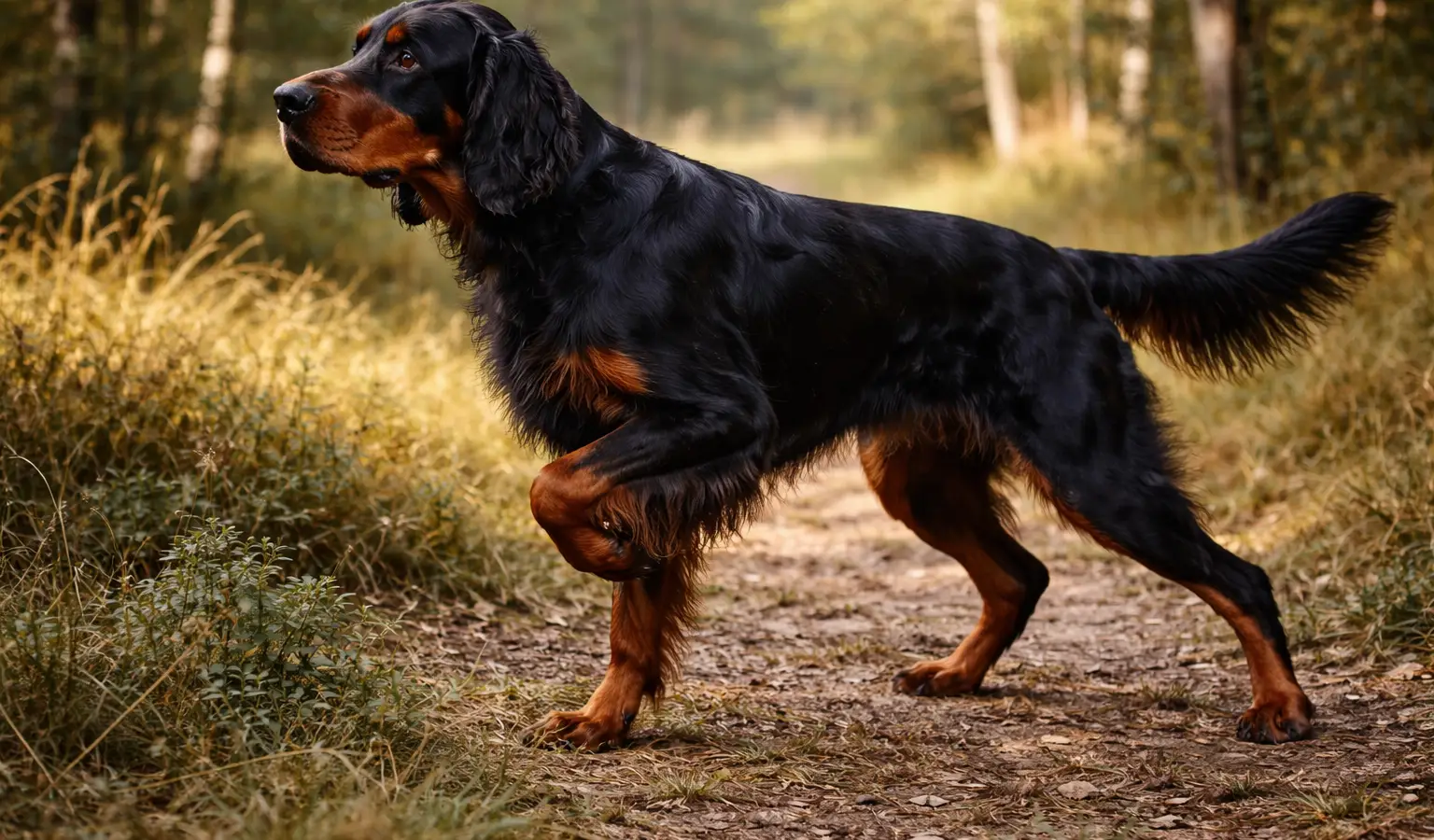
The Gordon Setter is a powerful and elegant pointing dog, easily recognised by its black and tan coat and noble appearance. More methodical and steady than other setters, it is valued for its stamina, determination and precise nose in bird hunting. Loyal, affectionate and deeply attached to its family, it requires space, daily exercise and consistent training to thrive.
Life expectancy
10 – 13 years
Price
1000 – 1700 €
Monthly budget
80 €
Size
Large
Profile
Gordon Setter
Origin
United Kingdom
Year of origin
1820
Developed by
Alexander Gordon, 4th Duke of Gordon
Size
Large
Coat type
Long coat
Owner profile
Active owner
Hypoallergenic
No
Litter size
6
Life expectancy
10 – 13 years
Price
1000 – 1700 €
Female
- Height : 58 – 62 cm
- Weight : 20 – 28 kg
Male
- Height : 61 – 66 cm
- Weight : 25 – 36 kg
Temperament & abilities
Affectionate
4/5
Calm
3/5
Independent
3/5
Intelligence
4/5
Obedience
3/5
Hunting instinct
5/5
Energy level
4/5
Good with children
4/5
Dog-friendly
4/5
Friendly with strangers
3/5
Hunting profile
Stamina
4/5
Hunting drive
4/5
Independence
3/5
Trainability
4/5
Beginner-friendly
3/5
Family compatibility
4/5
Feather game
4/5
Fur game
1/5
Underground work
2/5
Water work
3/5
These indicators help compare breeds and choose the right one for your hunting style.
Game & abilities
Estimated ability level by game type.
Budget
Purchase price
1000 – 1700 €
The price may vary depending on the breeder, bloodline, and region.
Average monthly cost
80 €
Estimated average: food, healthcare, accessories, and grooming.
A powerful pointing breed with range, nose, and stamina, but not the easiest fit for every hunter or household.
Is the Gordon Setter a Good Hunting Dog?
The Gordon Setter is widely considered a very capable hunting dog, especially for upland bird work where a strong nose, methodical search, and staying power matter. In the field, many Gordons show a deliberate, ground-covering hunting style rather than the lightest or fastest pattern seen in some other setters. That can make the breed especially appealing to hunters who value thoroughness, scenting ability, and the kind of pace that remains workable over a long day.
As a Gordon Setter hunting dog, the breed often combines solid bird sense with real physical stamina and the courage to push through heavier cover. Many individuals are comfortable in rough terrain, moorland, mixed upland country, and cooler, demanding conditions. Their search pattern is often described as more measured than flashy, with less frantic speed and more persistence. For some hunters, that is a major strength; for others who want a very wide-ranging, ultra-fast dog, it may feel less ideal. Retrieving ability can be good, but it is often best viewed as something to develop and maintain through training rather than assume automatically in every line.
Handling and training are an important part of the equation. Gordon Setter temperament in working lines is often intelligent, sensitive, and independent enough to require thoughtful education. They usually respond better to calm consistency than to heavy-handed correction. Recall, steadiness, and cooperative handling should be taught early, because this is a breed with energy, nose, and enough determination to make weak foundations obvious. Trainability is generally good when the dog has regular structure, meaningful exercise, and a handler who is patient enough to channel enthusiasm instead of simply trying to suppress it.
For everyday life, the same qualities that support field performance also create demands at home. A Gordon Setter is often best suited to an active owner who genuinely wants a sporting dog, not just a beautiful companion with occasional walks. Without enough physical work, training, and mental engagement, some individuals can become restless or difficult to live with. In the right home, though, many are affectionate, loyal, and more settled indoors than their field energy might suggest.
In practical terms, the Gordon Setter tends to suit:
- Hunters who want a versatile upland pointing dog with stamina and substance
- People who appreciate a thorough working style over pure speed
- Handlers willing to invest in recall, steadiness, and regular training
- Active homes where the dog can work, train, and exercise consistently
If you are comparing pointing breeds, the Gordon Setter often makes the most sense for someone who wants a serious hunting companion with presence, endurance, and a slightly more deliberate working style, while accepting that this is not usually a low-maintenance breed in the field or in daily life.
Strong bird-finding nose
A well-bred Gordon Setter is widely valued for its ability to locate game birds with a deep, searching nose. In practical hunting, that often means useful work on ground where scent is thin, weather shifts, or birds are holding tight. It is especially appreciated by hunters who want a dog that can methodically produce contacts rather than simply cover ground fast.
Built for long days
The Gordon Setter is usually known for stamina more than explosive speed. That makes it a strong choice for hunters who walk big acreage, rough moorland, heather, or mixed upland terrain and want a dog that can keep working over time. Daily life matters here too: this is generally a breed that needs substantial exercise and regular outlets for its energy.
Steady, thoughtful range
Compared with some faster, wider-running pointing dogs, the Gordon Setter often appeals to handlers who prefer a more deliberate hunting pattern. That steadier style can make the dog easier to follow on foot and easier to read in the field. For many owners, this practical balance between drive and control is one of the breed’s most useful hunting qualities.
Concentrated on game
When mature and properly trained, many Gordon Setters show strong concentration once they are working scent. This matters in real hunting because the dog is not just covering space; it is trying to solve the ground in front of it. That focus can suit patient handlers who value careful game finding, though young dogs may still need time to channel their enthusiasm productively.
Responsive with patient handling
The Gordon Setter is often trainable and willing to work with its person, but it usually responds best to calm, consistent handling rather than constant pressure. In hunting terms, that can translate into a useful partnership for owners who enjoy building steadiness, pattern, and manners over time. It is often a better fit for thoughtful trainers than for very heavy-handed handling styles.
Useful all-round shooting companion
Its main reputation is as a pointing dog, but some Gordon Setters can also contribute as practical all-round gundogs when training and individual aptitude line up. Depending on the dog, that may include quartering, holding point, and making sensible retrieves. For hunters wanting one dog for field work and active home life, that versatility can be a real advantage.
Who the Gordon Setter suits best
The Gordon Setter tends to suit a hunter or active owner who genuinely wants to live with a substantial, energetic pointing dog rather than simply own one. In the field, it is often appreciated by people who like a methodical bird dog with stamina, nose, and a strong connection to its handler. Outside hunting season, this usually remains a dog that needs regular exercise, training, and a real place in family life. It often fits best with people who enjoy long walks, structured activity, and patient, consistent handling.
Less suitable profiles are easy to picture too: households wanting a low-maintenance pet, owners away for most of the day, or novice handlers expecting instant obedience with minimal training. A Gordon Setter may also feel like a lot of dog for very sedentary homes or anyone without space for daily movement and mental work.
- Best match: active hunters, outdoorsy families, and owners who enjoy training and routine.
- Possible mismatch: apartment life without enough exercise, inconsistent handling, or a purely ornamental role.
- Works best when: its hunting instincts, companionship needs, and energy level are all taken seriously.
How a Scottish pointing dog became the steady, powerful setter known today
Origin and development of the Gordon Setter
The Gordon Setter developed in Scotland as a black-and-tan setting dog selected for serious work over moorland and rough ground. The breed is closely associated with the kennels of the Duke of Gordon in the late 18th and early 19th centuries, although its exact early mix is not documented with complete certainty. What is clear is the purpose behind the breeding: a hardy, strong-nosed bird dog able to hunt methodically, hold game with confidence, and cope with difficult terrain and weather. That history still helps explain why the modern Gordon Setter often works in a more deliberate, powerful style than some lighter, faster setters.
Early breeders appear to have favored substance, endurance, and scenting ability over sheer speed. As a result, the Gordon Setter earned a reputation as a capable pointing dog for hunters who valued thorough ground coverage and a dog that could stay effective during long days afield. In practical terms, this background often shows up today as persistence, physical stamina, and a somewhat more measured hunting pattern. Many Gordons are energetic dogs, but not usually frantic ones; they tend to suit handlers who appreciate a dog that hunts with determination and contact rather than constant high-speed ranging.
The same selection that shaped the Gordon Setter in the field also influenced temperament in daily life. Well-bred individuals are often loyal, sensitive to their people, and serious enough to benefit from calm, consistent training. They can mature a little slowly compared with some other sporting breeds, and that matters for owners deciding whether the breed fits their routine. A Gordon Setter may be a strong choice for someone who wants an affectionate family dog with real hunting heritage, but it is rarely an ideal option for a low-activity home or for an owner who expects easy, minimal-effort training.
For today’s hunter or active family, the breed’s history suggests a fairly specific profile:
- Strengths: stamina, scenting ability, steady pointing instinct, and a typically devoted nature at home.
- Possible limitations: slower maturity, a need for regular exercise, and training that usually works best with patience rather than pressure.
- Best fit: people who want a substantial sporting dog for upland work, country life, or an active household willing to give the dog both physical exercise and structured guidance.
In short, the Gordon Setter was shaped as a practical Scottish gun dog, not simply as a handsome show breed. That origin remains visible in the breed’s combination of athleticism, substance, loyalty, and thoughtful working style. For buyers comparing pointing breeds, understanding that history is useful: the Gordon Setter often appeals most to those who want depth, steadiness, and partnership as much as speed.
Scottish roots
The Gordon Setter developed in Scotland, where black-and-tan setters were refined for gamebird work over rough ground and in difficult weather. The breed is often linked to the kennels of the Duke of Gordon, although its history likely includes several regional setter lines shaped by practical hunting needs rather than appearance alone.
A methodical hunting dog
Compared with some faster, lighter pointing breeds, the Gordon Setter is often described as a more deliberate, powerful worker. Many hunters value its ability to quarter ground with purpose, hold a point with seriousness, and stay useful in heather, woodland edges, and mixed terrain where endurance and nose matter as much as speed.
Loyal but not low-key
At home, the Gordon Setter is usually affectionate, attached to its people, and steady once mature, but it is not a low-maintenance companion. This is a sporting dog with real drive, and younger individuals can be exuberant, strong, and easily bored if daily life offers too little exercise, training, and structured interaction.
Best with active owners
This breed generally suits people who enjoy long walks, field training, scent work, or hunting-oriented activities rather than a purely sedentary household. A Gordon Setter can adapt to family life, but it usually does best with space, routine, and owners willing to channel energy into purposeful outlets instead of expecting the dog to self-settle all day.
Training needs patience
Gordon Setters are often intelligent and willing, yet they may show a certain independence, especially when scent and birds are involved. Training tends to go best with calm consistency, early recall work, and regular exposure to real-world distractions. Heavy-handed handling can dull initiative, while fair structure usually produces a more reliable pointing dog and companion.
Coat and upkeep
The breed’s handsome coat needs more than occasional brushing, particularly around the ears, chest, legs, and tail feathering where tangles and field debris can collect. After walks or hunting days, owners should expect routine checks for burrs and moisture. Ongoing coat care is manageable, but it is part of living with a Gordon Setter.
Practical answers for hunters, active families, and future owners
Gordon Setter hunting and daily life FAQ
Is the Gordon Setter a good hunting dog for beginners?
A Gordon Setter can work well for a beginner, but it is usually easier for someone who is ready to learn handling, consistency, and field training rather than someone looking for a low-effort dog. The breed is known for a serious hunting style, good nose, and willingness to work, but many individuals are strong-minded enough to notice unclear guidance. A novice hunter often does best with a dog from practical hunting lines and with support from a trainer, club, or experienced mentor. For the right owner, the breed can be very rewarding, but it is not usually the simplest choice for a completely casual first dog.
What kind of hunting is the Gordon Setter best suited for?
The Gordon Setter is primarily valued as a pointing dog for upland game, often appreciated for covering ground methodically and using scent carefully. Many hunters like the breed in open country, moorland, mixed fields, and rougher terrain where stamina and concentration matter. Compared with some faster, lighter setters, Gordons are often described as more deliberate in their search, though style varies by line and training. They can suit hunters who prefer a thoughtful dog that stays engaged with the work rather than one that simply runs big for the sake of range.
Are Gordon Setters easy to train for hunting and obedience?
They are trainable, but they usually respond best to calm, consistent work rather than heavy-handed corrections. A Gordon Setter often matures a bit gradually, so patience matters: early lessons should focus on recall, steadiness basics, bird exposure, and building cooperation before expecting polished field work. In daily life, they can learn house manners and obedience well, but they generally do not thrive with repetitive drilling that ignores their drive and intelligence. Owners who are fair, structured, and active usually get much better results than owners who are inconsistent for weeks and strict only when problems appear.
Can a Gordon Setter live as a family dog if it also hunts?
In many homes, yes. A well-bred and well-exercised Gordon Setter can be affectionate, loyal, and pleasant with family life while still keeping strong hunting instinct. The main condition is that the dog needs enough physical activity, mental engagement, and routine; without that outlet, a sporting dog may become noisy, restless, or difficult indoors. Many Gordons do best with families who enjoy long walks, training sessions, outdoor weekends, and a dog that wants to be included rather than left alone for most of the day.
Is a Gordon Setter suitable for apartment living?
Apartment living is possible in some cases, but it is rarely the easiest setup for this breed. A Gordon Setter is a large, active pointing dog that typically needs substantial daily exercise, room to stretch out, and regular chances to run safely, train, and use its nose. The issue is not just square footage indoors; it is whether the owner can reliably provide enough work outside every day in all seasons. In a small home with a very committed, outdoorsy owner, some individuals adapt well, but for many households a house with easy access to open space is the more realistic match.
How much exercise does a Gordon Setter really need?
Most Gordon Setters need more than a couple of short leash walks. As a general rule, they do best with a mix of brisk exercise, free movement in a safe area, scent-based activity, and regular training that gives them a job to think about. For an adult dog, that often means at least one substantial outing daily, with more on days when hunting or field training is possible. Young dogs still need exercise, but it should be managed sensibly so the focus stays on developing coordination, confidence, and habits rather than simply trying to tire them out.
Who is the Gordon Setter the right breed for, and who should probably choose another dog?
The Gordon Setter tends to suit people who genuinely enjoy living with an active sporting dog: hunters, hikers, runners, and hands-on owners who like training and routine. It can be a strong match for someone who wants one dog for field use and home life, especially if they appreciate a breed with substance, endurance, and a close bond with its people. It may be less suitable for owners wanting a low-maintenance pet, very easy off-switch, or a dog content with brief daily exercise. People who are away for long hours, dislike grooming and training, or do not want to manage adolescent energy may find another breed easier to live with.