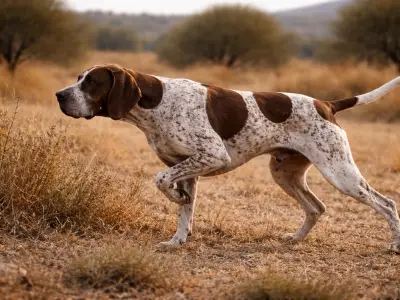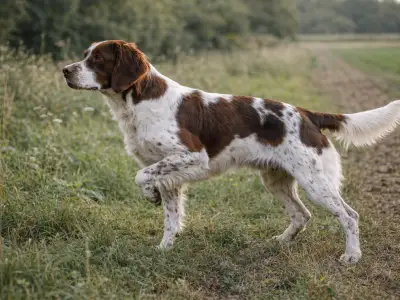
Saint-Germain Pointer
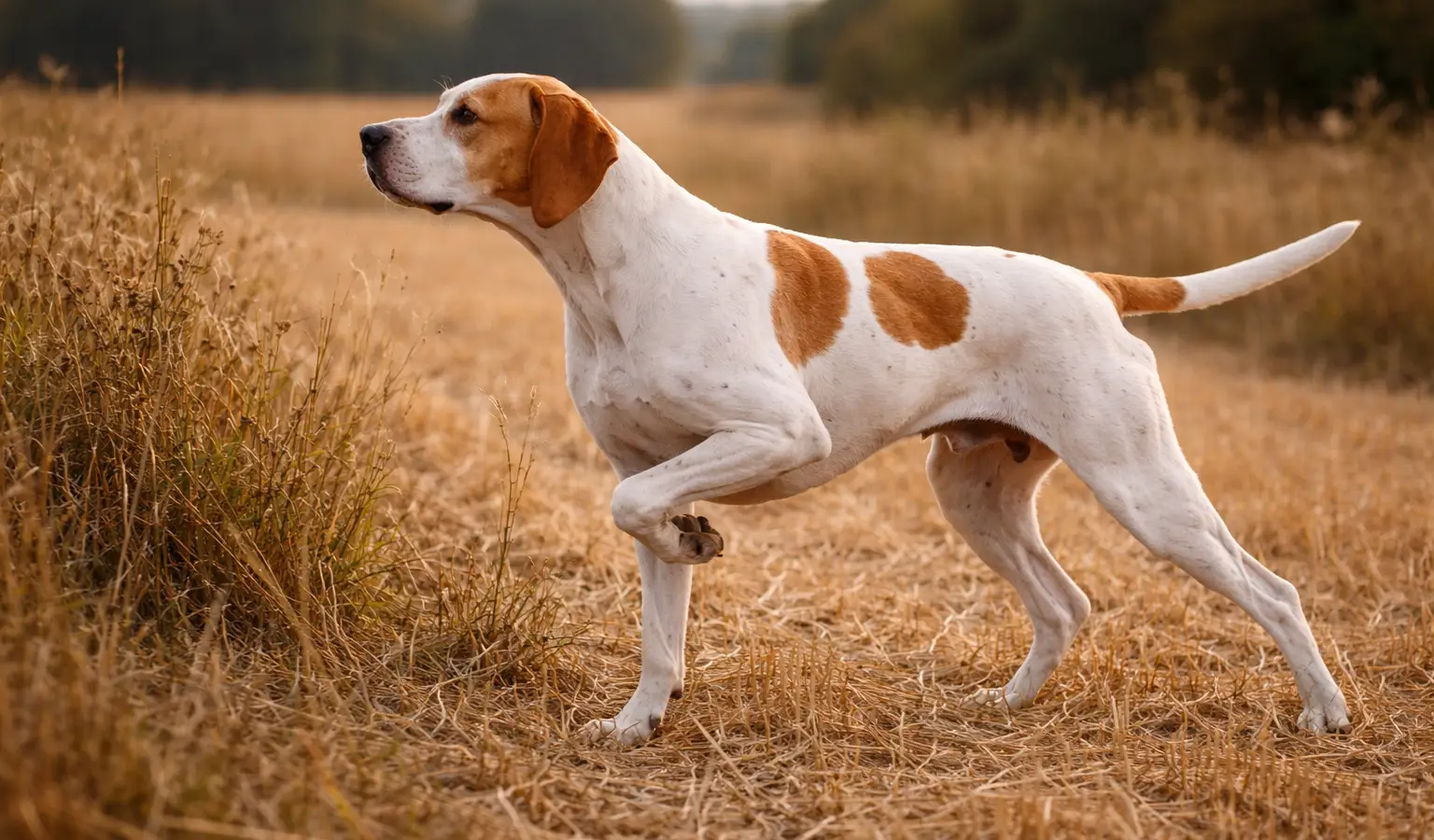
The Saint-Germain Pointer is an elegant French pointing dog developed from continental pointers and English Pointers. Known for its excellent nose, trainability and gentle temperament, it performs well in the field and also makes a pleasant companion for active families.
Life expectancy
11 – 13 years
Price
900 – 1600 €
Monthly budget
65 €
Size
Large
Profile
Saint-Germain Pointer
Origin
France
Year of origin
1830
Developed by
French royal kennels
Size
Large
Coat type
Short coat
Owner profile
Active owner
Hypoallergenic
No
Litter size
7
Life expectancy
11 – 13 years
Price
900 – 1600 €
Female
- Height : 54 – 60 cm
- Weight : 22 – 28 kg
Male
- Height : 56 – 62 cm
- Weight : 25 – 35 kg
Temperament & abilities
Affectionate
4/5
Calm
3/5
Independent
3/5
Intelligence
4/5
Obedience
3/5
Hunting instinct
5/5
Energy level
4/5
Good with children
4/5
Dog-friendly
4/5
Friendly with strangers
4/5
Hunting profile
Stamina
4/5
Hunting drive
4/5
Independence
3/5
Trainability
4/5
Beginner-friendly
4/5
Family compatibility
5/5
Feather game
5/5
Fur game
2/5
Underground work
0/5
Water work
3/5
These indicators help compare breeds and choose the right one for your hunting style.
Game & abilities
Estimated ability level by game type.
Budget
Purchase price
900 – 1600 €
The price may vary depending on the breeder, bloodline, and region.
Average monthly cost
65 €
Estimated average: food, healthcare, accessories, and grooming.
A balanced pointing dog with real field ability, provided its energy and training needs are taken seriously.
Is the Saint-Germain Pointer a good hunting dog?
The Saint-Germain Pointer is generally considered a capable hunting dog, especially for hunters who want a stylish pointing breed with a cooperative nature and enough pace for active days in the field. In the right hands, it can be an effective all-around gun dog for upland work, combining a good nose, animated search, and solid contact with the handler. It is not usually described as the most extreme specialist in power or range, but that balance is exactly what makes the breed appealing to many people comparing versatile pointing dogs.
In practical hunting terms, the Braque Saint-Germain tends to suit walked-up shooting and medium-to-large ground where a dog can quarter with enthusiasm without becoming difficult to control. Many individuals show a fluid search pattern, natural pointing instinct, and the stamina to work for a good stretch when properly conditioned. Handling is often one of the breed's attractive points: this is typically a dog that likes to work with its person rather than independently at great distance. That can make recall, direction changes, and general field management more straightforward than with harder, more self-willed lines of pointing dogs, although training quality and breeding still matter a great deal.
The breed's strengths usually come with clear demands. A Saint-Germain Pointer is an energetic dog, and its hunting temperament often carries over into everyday life. Without regular exercise, mental work, and structured training, it may become restless or overly intense at home. Early education is important for steadiness, recall around game, and channelling drive without dulling enthusiasm. Retrieving ability can be serviceable, but it should not be assumed to be equally strong in every dog; some will need more deliberate development if you want a polished retrieve alongside point and search.
- Best fit: active hunters wanting a responsive pointing dog with good field manners and family potential.
- Less ideal for: very sedentary homes or owners who want a low-maintenance companion with only occasional outlets.
- Most coherent use cases: upland hunting, mixed field days, and homes that can provide training, movement, and regular engagement.
As a family companion, the Saint-Germain Pointer can be pleasant, affectionate, and easier to live with than some more hard-driving field dogs, but only if its working needs are respected. For someone choosing between hunting breeds, this dog makes most sense when you want a genuine hunting partner that can also integrate into daily life, not a kennel-only specialist and not a casual pet. That field-to-home balance is one of the breed's main strengths, but it depends on commitment, routine, and enough real activity to match the dog's natural engine.
Efficient bird-finding nose
The Saint-Germain Pointer is generally valued for a nose that can locate game birds at useful hunting distance without becoming chaotic. In the hands of a steady handler, this can translate into practical bird finding on open ground, light cover, and mixed terrain where scenting conditions change through the day.
Stylish, readable pointing
One of the breed’s most appreciated field qualities is a clear, elegant point that is easy for the hunter to read from a distance. That matters in real shooting situations: a dog that shows game cleanly gives the handler more time to approach, assess the bird, and keep the sequence calm and organized.
Balanced field pace
This is not usually described as a frantic specialist that must hunt at maximum speed all day to be effective. Many Saint-Germain Pointers work with a balanced rhythm, covering ground with purpose while remaining manageable. For hunters who prefer control as much as range, that balance can be a real advantage.
Handler-friendly trainability
When well bred and educated with consistency, the Saint-Germain Pointer often shows the kind of biddable temperament that suits cooperative gundog work. It tends to appeal to hunters who want a pointing dog that can take guidance, maintain contact, and develop into a polished companion rather than a constant battle of wills.
Useful all-day stamina
The breed is typically built for active days rather than short bursts followed by a rapid drop in focus. With proper conditioning, many individuals can hold a workable level of energy through long outings. That makes the Saint-Germain Pointer especially relevant for people who want a dog for repeated hunting days, not just occasional sessions.
Versatile for practical hunters
The Saint-Germain Pointer often suits hunters looking for a versatile pointing dog instead of a narrow specialist. Depending on the individual dog, line, and training, it may handle searching, pointing, and some retrieving duties in a rounded way. That flexibility also tends to fit family life better than an extremely hard-driving field dog.
Who the Saint-Germain Pointer suits best
The Saint-Germain Pointer tends to suit a hunter who wants a stylish, athletic pointing dog for walked-up hunting or varied field work, especially where cooperation matters as much as range. It is often a good match for an active owner who enjoys training, regular outdoor exercise, and a dog that lives closely with the family rather than being treated as a kennel-only worker. Many individuals are responsive and pleasant to handle, but they usually do best with calm, consistent guidance and enough daily activity to prevent frustration.
It is usually less suitable for very sedentary households, first-time owners expecting an easy low-maintenance pet, or hunters wanting an extremely hard-driving dog that can thrive on minimal contact. A Saint-Germain Pointer may also be a poor fit for people who cannot provide off-lead exercise, ongoing recall work, and structured outlets for its nose and energy. In family life, it often fits best with people who want an affectionate, sporty companion and can accept that this is still a real pointing breed, not simply a decorative house dog.
How French breeding history shaped this elegant pointing dog
Origins of the Saint-Germain Pointer
The Saint-Germain Pointer, or Braque Saint-Germain, is a French pointing breed developed in the nineteenth century, most often linked to crosses between old French braques and English Pointer stock. The usual historical account places its early development around the royal hunting kennels of Saint-Germain-en-Laye, which helps explain both its name and its long association with practical gun-dog work. As with many older breeds, some details of the foundation story are repeated more confidently than the surviving records probably justify, but the broad picture is clear: breeders were aiming for a dog that combined French versatility and cooperation with more speed, range, and style in the field.
That origin still helps explain the breed’s modern character. In type and temperament, the Saint-Germain Pointer is often described as a balanced hunter rather than an extreme specialist. It tends to appeal to people who want a pointing dog with a good nose, active ground coverage, and a stylish but generally manageable way of working. Compared with some harder-driving field lines in other pointing breeds, many Saint-Germain Pointers are appreciated for being responsive and relatively pleasant to handle, though this depends greatly on breeding, early socialization, and training.
The breed was shaped in a period when European sportsmen valued efficient game finding, a reliable point, and a dog that could live closely with people outside the hunt. That selection pressure likely contributed to the Saint-Germain Pointer’s reputation for being affectionate at home and animated outdoors. For today’s owner, that history matters: this is usually not a low-maintenance companion that happens to enjoy a walk, but a genuine sporting dog that tends to do best with regular exercise, structured training, and enough mental engagement to prevent frustration or restlessness.
In practical terms, the breed often suits hunters and active households looking for a cooperative, athletic dog with classic pointing-dog instincts. Its historical strengths are usually linked to upland hunting and general gun-dog work rather than sheer toughness in the most demanding terrain or highly specialized modern trial intensity. For that reason, the Saint-Germain Pointer may be especially attractive to people who value a blend of field ability, elegance, and livability, provided they are prepared to give the dog consistent guidance, daily activity, and a home life that does not leave a working breed underused.
French sporting roots
The Saint-Germain Pointer, or Braque Saint-Germain, is a French pointing breed developed in the nineteenth century and associated with the Saint-Germain area near Paris. It was shaped as a practical gun dog for field work, with an emphasis on scenting ability, cooperation, and a stylish point rather than sheer speed alone.
Bred for balanced work
Selection appears to have favored a versatile hunting companion able to quarter ground efficiently, locate game birds, hold point, and remain manageable for the handler. In good lines, this often produces a dog that combines athletic movement with a relatively even temperament, making it easier to live with than some harder-driving pointing breeds.
Gentle but active temperament
Many Saint-Germain Pointers are described as affectionate, people-oriented, and sensitive in their handling. That usually means they respond best to calm, consistent training rather than heavy pressure. They can be pleasant family dogs in the right home, but they are rarely suited to a sedentary routine or long days with too little interaction.
Best for open-air living
This breed generally fits owners who enjoy regular outdoor time and can provide meaningful exercise several days a week. A house with space helps, but the real issue is not square footage alone. The Saint-Germain Pointer tends to do best when it can run, use its nose, and share daily activity with its people.
Field style and handling
In the field, the Braque Saint-Germain is typically valued for a classic pointing style, good nose use, and a cooperative attitude. It often suits hunters who prefer a dog that works with the gun rather than far beyond it. Individual range and drive can vary, especially depending on breeding, training, and the type of game pursued.
Simple care, real daily needs
Coat maintenance is usually straightforward thanks to the short hair, but easy grooming should not be confused with low commitment. This is a dog that often needs structured outlets for energy, recall training, and regular mental engagement. Without enough work, exercise, or guidance, boredom and restlessness may become part of daily life.
Practical answers for future owners, active families, and hunters considering the Braque Saint-Germain.
Saint-Germain Pointer hunting and lifestyle FAQ
Is the Saint-Germain Pointer a good hunting dog for modern upland work?
The Saint-Germain Pointer was developed as a pointing dog, and many individuals still show the qualities people look for in upland hunting breeds: field search, nose, point, and a cooperative style. In practice, suitability depends a lot on breeding, early exposure, and how the dog is started, so not every dog will perform at the same level. Many hunters appreciate a dog that works with pace but remains relatively handleable compared with harder, more independent field types. It tends to suit people who want a versatile pointing companion for game birds and who value trainability and steadiness as much as raw speed.
Is the Braque Saint-Germain easy to train for hunting and recall?
Many Saint-Germain Pointers are considered willing, sensitive, and responsive when training is consistent and fair. They often do better with calm repetition, clear cues, and regular field exposure than with heavy-handed correction. Recall and check-ins usually improve when the dog has enough exercise and has been taught engagement from a young age, because an underworked pointing dog can become harder to manage outdoors. For first-time handlers, the breed may be more approachable than some very high-drive continental or British field dogs, but it still needs structure, timing, and real practice around scent and birds.
Can a Saint-Germain Pointer live as a family dog if it also hunts?
Often, yes, provided its working needs are taken seriously. A well-bred and well-exercised Saint-Germain Pointer can be affectionate, social, and pleasant in the home, especially if it gets daily outlets for movement, sniffing, and training. Families usually do best when they understand that this is not only a companion dog but also an active pointing breed that may be excitable if bored. With sensible boundaries, enough outdoor time, and early socialization, many can switch from field dog to house companion quite well.
How much exercise does a Saint-Germain Pointer really need every day?
This is typically a high-energy sporting dog, so a quick walk around the block is rarely enough. Most adults need substantial daily activity that combines physical exercise with mental work, such as off-lead running in safe areas, structured training, scent games, and regular time in open country. On non-hunting days, many owners find that one long active outing plus shorter sessions of training or enrichment works better than several brief leash walks. If the dog is from strong working lines, the need for stamina, purposeful movement, and field-type exercise can be even more pronounced.
Is the Saint-Germain Pointer suitable for apartment living?
Apartment living is possible in some cases, but it is usually not the easiest setup for this breed. What matters most is not square footage alone, but whether the dog gets enough daily exercise, calm indoor habits, and access to real outdoor activity rather than only short pavement walks. A Saint-Germain Pointer that is trained to settle and given meaningful physical and mental outlets may cope well, while an under-stimulated dog may become restless, vocal, or difficult to live with. For many households, a home with easy access to fields, trails, or large exercise areas is a more natural fit.
Who is the Saint-Germain Pointer best suited to: experienced hunters, active families, or first-time owners?
The best match is usually an active owner who genuinely enjoys training and outdoor life, whether that means hunting, regular field walks, or dog sports that use the dog's nose and cooperation. Experienced bird hunters may appreciate the breed's traditional pointing-dog qualities, but motivated first-time owners can also succeed if they are realistic about exercise, recall training, and daily structure. It is less suited to very sedentary homes or people wanting an easy, low-maintenance pet. In the right environment, it can suit both a practical hunting home and an active family that wants a capable dog with a working temperament.
Does the Saint-Germain Pointer get along with children and other dogs?
Many individuals are sociable and can live well with children and other dogs when raised with good manners and supervision. Because this is an athletic pointing breed, excitement can be part of the picture, so younger children may need help learning how to interact calmly and safely. With other dogs, compatibility is often good if socialization starts early and the dog has enough outlets for energy, though individual temperament always matters. Around small pets or birds, caution is sensible, since prey interest can be stronger in some lines or individuals than in others.