Pont-Audemer Spaniel
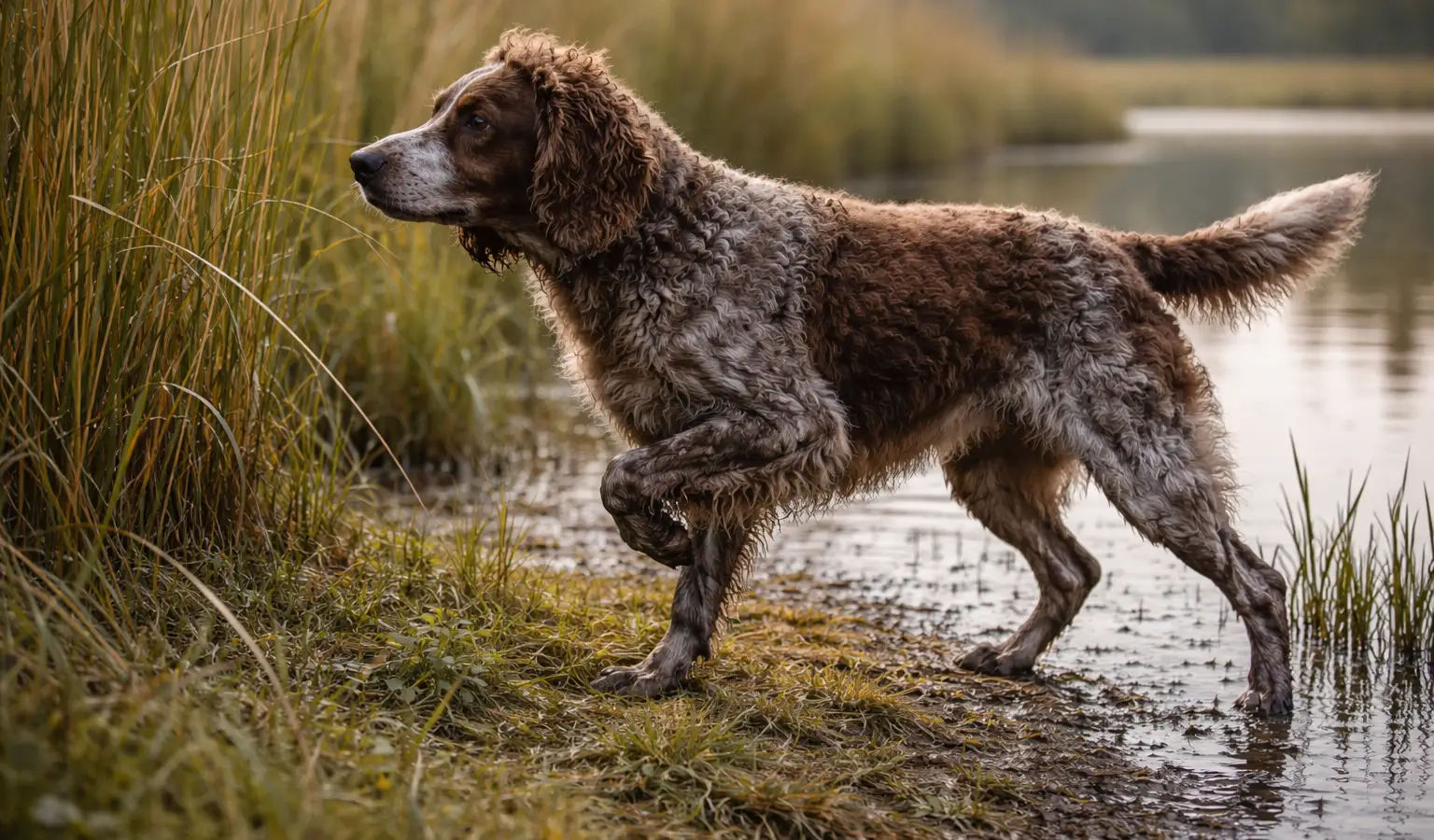
The Pont-Audemer Spaniel is a rare French hunting dog specialized in wetlands and marshes. Recognizable by its distinctive head and curly coat, it is valued for a strong nose and a cheerful temperament. Affectionate and energetic, it needs regular outdoor activity and a close bond with its owner to stay balanced.
Life expectancy
11 – 13 years
Price
900 – 1600 €
Monthly budget
70 €
Size
Medium
Profile
Pont-Audemer Spaniel
Origin
France
Year of origin
1800
Developed by
Norman hunters
Size
Medium
Coat type
Curly coat
Owner profile
Calm owner
Hypoallergenic
No
Litter size
5
Life expectancy
11 – 13 years
Price
900 – 1600 €
Female
- Height : 50 – 56 cm
- Weight : 18 – 24 kg
Male
- Height : 52 – 58 cm
- Weight : 20 – 28 kg
Temperament & abilities
Affectionate
4/5
Calm
4/5
Independent
3/5
Intelligence
4/5
Obedience
3/5
Hunting instinct
5/5
Energy level
3/5
Good with children
4/5
Dog-friendly
4/5
Friendly with strangers
3/5
Hunting profile
Stamina
3/5
Hunting drive
3/5
Independence
3/5
Trainability
3/5
Beginner-friendly
3/5
Family compatibility
4/5
Feather game
4/5
Fur game
3/5
Underground work
0/5
Water work
5/5
These indicators help compare breeds and choose the right one for your hunting style.
Game & abilities
Estimated ability level by game type.
Budget
Purchase price
900 – 1600 €
The price may vary depending on the breeder, bloodline, and region.
Average monthly cost
70 €
Estimated average: food, healthcare, accessories, and grooming.
A versatile, close-working gundog best suited to thoughtful handlers, wet ground, and practical mixed shooting days
Is the Pont-Audemer Spaniel a good hunting dog?
The Pont-Audemer Spaniel can be a very good hunting dog for the right person, especially if you want a versatile, biddable pointing breed with real usefulness in marshy ground and a strong natural retrieve. It is not usually the first choice for someone seeking maximum speed, huge range, or hard-driving trial style. Its appeal lies more in a cooperative working manner, a good nose, adaptability in difficult cover, and the kind of temperament that often balances field work with manageable family life.
In the field, the breed is generally valued for a fairly close to medium search pattern, practical handling, and willingness to stay in touch with the hunter. That can make the Pont-Audemer Spaniel especially attractive to people who hunt on foot, shoot over varied ground, or prefer a dog that does not disappear over the horizon. Many admirers also point to its comfort in wet terrain, reeds, and rough cover, where courage and persistence matter more than flashy range. As with any rare breed, working intensity and style can vary noticeably between lines and individuals, so it is wise to look closely at proven hunting stock rather than rely on reputation alone.
Training demands are moderate rather than light. The Pont-Audemer Spaniel is often described as intelligent and willing, but that does not mean self-training. Recall, steadiness, delivery to hand, and calmness around game still need structured education from an early age. Heavy-handed handling is unlikely to get the best from a sensitive, cooperative dog; clear repetition, consistency, and regular contact with birds usually make more sense. For a novice hunter, this breed may be easier to live with than some more intense pointing dogs, but it still needs purposeful work and regular outlets for its energy.
As a hunting companion, the most coherent use cases are practical walked-up days, mixed hunting where pointing and retrieving both matter, and environments that include damp cover or water. It may be less convincing for hunters who want all-day high-octane range on wide open ground or a specialist built purely for competitive field performance.
- Strengths: versatile hunting dog, good nose, cooperative handling, useful retrieve, comfort in wet or dense terrain
- Demands: regular training, enough exercise, bird contact, and a handler who values teamwork over raw speed
- Best fit: an active owner who wants one dog for hunting and everyday companionship, not a kennel-only specialist
That balance is a large part of the breed's charm. A well-bred, well-trained Pont-Audemer Spaniel can offer enjoyable, practical hunting without feeling excessively sharp or difficult at home. For someone comparing breeds, it makes most sense when temperament, versatility, and workable range matter as much as pure field ambition.
Built for marsh and wet ground
The Pont-Audemer Spaniel is especially associated with wetland hunting. Its coat, frame, and traditional use suggest a dog that can work through reeds, muddy edges, and cold water with more confidence than many lighter field dogs. For hunters who spend time around ponds, marshes, and flooded cover, that natural ease in difficult footing is a real advantage.
Soft, useful retrieving instinct
One of this breed’s most practical hunting qualities is its retrieving ability, particularly on waterfowl and downed game in dense cover. Many individuals show a willing, cooperative retrieve rather than a hard-mouthed or chaotic one. With steady training, this can make the breed appealing to hunters who want one dog to find, flush, and bring game back cleanly.
Close-working and handler aware
The Pont-Audemer Spaniel often suits hunters who prefer a dog that stays connected instead of ranging too wide. That closer pattern can be valuable in broken cover, along banks, or during mixed shooting days where control matters as much as speed. It is generally better matched to people who like regular contact and active handling than to those seeking a very independent search.
Steady nose in dense cover
In practical hunting terms, this breed is appreciated for working scent in places where visibility is poor and birds may sit tight. A careful, methodical nose is often more useful there than flashy range. That makes the Pont-Audemer Spaniel interesting for hunters who work hedgerows, wet thickets, rushes, or woodland edges and need a dog that hunts with concentration.
Versatile for mixed days
Although relatively rare, the breed has a reputation as a versatile hunting spaniel-type gun dog rather than a narrow specialist. Depending on line and training, it may handle pointing-related work, flushing tasks, and retrieving duties in the same outing. That flexibility can suit small-scale hunters who want one adaptable dog for varied terrain instead of keeping separate dogs for each role.
Trainable without being flat
The Pont-Audemer Spaniel is often described as willing and responsive, which helps when teaching recall, steadiness, and water work. At the same time, it is still an energetic sporting dog and usually needs regular outlet, structure, and calm repetition to stay reliable in season. It tends to suit handlers who want cooperation and sensitivity, but who are prepared to train consistently.
Who the Pont-Audemer Spaniel suits best
The Pont-Audemer Spaniel tends to suit hunters who want a versatile gundog for marshes, wet ground, and mixed shooting days, but who also value a close-working companion at home. This breed is often a strong fit for active owners who enjoy regular training, long walks, and practical field work rather than occasional weekend exercise. Many do best with patient handling, steady routines, and an owner who appreciates a sensitive, cooperative pointing dog instead of a hard, highly independent worker.
It may be less suitable for very sedentary households, people wanting a low-maintenance pet, or hunters expecting a kennel dog that switches on only a few days each season. The breed can be a poor match for owners who prefer harsh training methods or who cannot provide enough daily outlets for energy, scent work, and companionship. In the right home, the Pont-Audemer Spaniel can be an affectionate family dog and useful hunting partner; in the wrong one, boredom, frustration, or inconsistent work may become more likely.
A rare French marsh spaniel shaped by wetland hunting
Origins and development of the Pont-Audemer Spaniel
The Pont-Audemer Spaniel, or Épagneul de Pont-Audemer, is generally associated with the marsh country around Pont-Audemer in Normandy, where hunters needed a versatile gundog able to work water, thick cover, and wet ground. Most breed histories describe it as a French spaniel developed for practical shooting over marshland, especially wildfowl, with selection focused less on speed in open country than on nose, willingness, and ease of work in difficult terrain. Some details of its earliest development are not perfectly documented, so older accounts should be read with a little caution, but the link between the breed and wetland hunting is widely accepted.
Its development appears to have involved regional spaniel stock, and many sources suggest influence from water-oriented hunting dogs used in northwestern France. What matters for a modern owner is that this background helps explain the breed’s profile today: the Pont-Audemer Spaniel is often described as a close-to-medium ranging pointing dog with a soft, cooperative style rather than an extreme, hard-driving field-trial type. In the field, that can suit hunters who want a dog that hunts with them, checks in naturally, and handles mixed ground without constant conflict.
The breed also carries the mark of a practical rural hunting culture. It was expected to find game, point, and remain manageable around water and cover, which likely contributed to its reputation for sensitivity and trainability when handled fairly. This is not usually the kind of dog that thrives under heavy-handed methods. A calm, consistent approach often makes more sense, especially because dogs from softer temperaments may lose confidence if training becomes too sharp or repetitive.
Its rarity is also part of its history. The Pont-Audemer Spaniel came close to disappearing, particularly after the disruptions of the twentieth century, and rebuilding the population inevitably depended on a limited base. That helps explain why the breed remains uncommon and why individuals can vary more than in larger, more standardized hunting breeds. For buyers or hunters, the practical lesson is simple: bloodline, breeder priorities, and early development matter a great deal.
Today, the breed’s history points toward a fairly specific type of home and handler. It tends to make the most sense for someone who appreciates a rare French pointing dog with wetland heritage, moderate hunting range, and a cooperative nature, rather than for a person seeking maximum pace, very high-volume kennel toughness, or a purely ornamental family pet. In daily life, that usually means a dog that benefits from regular work, outdoor time, and thoughtful training, while often fitting best with owners who value partnership over pressure.
Born in the marshes
The Pont-Audemer Spaniel comes from Normandy in northern France, where wetlands, reeds, and rough ground shaped its reputation as a versatile gundog. It is often linked with marsh hunting and waterfowl work, and its build, coat, and stamina suggest a dog developed for damp, cold conditions rather than purely ornamental breeding.
A rare French hunting breed
This is one of the lesser-known French pointing breeds, and its numbers have remained modest for a long time. That rarity matters to buyers: finding a well-bred dog may take patience, and quality can vary between lines. For hunters and active owners, it is worth looking for breeders who still value field ability, steadiness, and balanced character.
Soft, willing working style
In the field, the Pont-Audemer Spaniel is generally described as cooperative, close-working, and easier to handle than some more independent hunting dogs. Many appreciate its natural connection with the handler, especially in mixed terrain and around water. It may suit people who want a responsive pointing dog without an excessively hard or hectic style.
Gentle nature, real energy
At home, this breed is often valued for its affectionate and fairly even temperament, but it should not be mistaken for a low-demand companion. Daily life usually goes best when the dog gets meaningful exercise, training, and outdoor time. Without enough activity and structure, a bright hunting spaniel can become noisy, restless, or difficult to settle.
Best with space and purpose
The Pont-Audemer Spaniel tends to fit best with people who enjoy country walks, regular training, and practical outdoor life. A rural or semi-rural setting can make management easier, especially for a dog used for hunting or frequent retrieving games. It may adapt to family life well, but usually not with a completely sedentary routine.
Coat and ear upkeep matter
The breed’s curly, somewhat rustic coat contributes to its distinctive look, but it also means grooming should not be ignored. After muddy outings or work in heavy cover, owners often need to check the coat, ears, and feet carefully. Regular maintenance helps keep the dog comfortable and is especially practical for an active dog that spends time in water.
Practical answers on hunting ability, trainability, exercise, home life, and the kind of owner this rare French gundog tends to suit best.
Pont-Audemer Spaniel hunting and ownership FAQ
Is the Pont-Audemer Spaniel a good hunting dog for modern hunters?
The Pont-Audemer Spaniel can be a very appealing hunting companion for people who want a versatile, cooperative gundog rather than an extreme specialist. Traditionally associated with marshy ground and wet environments, it is often described as comfortable around water and useful for mixed shooting days that may involve searching, flushing, pointing, and retrieving. In practice, suitability depends a great deal on the individual dog's breeding, early exposure, and training quality. For hunters who value manageable size, close partnership, and a dog that tends to work with the handler rather than far away, the breed can be a strong fit.
What kind of hunting work does a Pont-Audemer Spaniel do best?
This breed is often most appreciated in the kind of hunting that rewards nose, adaptability, and willingness in difficult ground, especially damp cover, marsh edges, and mixed terrain. Many enthusiasts look to it for practical all-round field work rather than pure field-trial speed or huge range. It may suit walked-up hunting and situations where a dog needs to stay connected to the gun, handle game carefully, and recover downed birds reliably. If you want a very wide-running pointing dog for open expanses, other breeds may fit that goal better depending on line and training.
Is the Pont-Audemer Spaniel easy to train for hunting and recall?
The Pont-Audemer Spaniel is often seen as willing and handler-aware, which can make training enjoyable when methods are calm, consistent, and fair. It usually responds better to patient repetition and clear structure than to heavy-handed correction, especially in the early stages of obedience and field basics. Recall, steadiness, and delivery should not be left to chance just because the breed may seem naturally cooperative. With regular short sessions, early game exposure, and enough real-world practice, many dogs develop into pleasant hunting partners, but they still need proper education.
Can a Pont-Audemer Spaniel live as a family dog as well as a hunting dog?
Many Pont-Audemer Spaniels can combine family life with hunting life very well, provided their physical and mental needs are taken seriously. At home, they are often described as affectionate and people-oriented, and many do best when they are included in daily routines rather than treated as kennel-only dogs. That said, this is still an active working breed, so a calm house temperament usually depends on enough exercise, training, and outlet for natural instincts. Families who enjoy outdoor time, structured play, and regular engagement are generally a better match than very sedentary households.
How much exercise does a Pont-Audemer Spaniel need when it is not hunting?
Outside the hunting season, this breed still needs meaningful activity, not just a quick walk around the block. Most individuals benefit from a combination of brisk walks, off-lead running in safe areas, retrieving games, scent work, and obedience sessions that keep the brain busy as well as the body. A dog with strong working instincts may become noisy, restless, or difficult to settle if daily life is too inactive. For many owners, the realistic baseline is one to two solid outings a day plus training or enrichment, with more needed for especially driven dogs.
Is the Pont-Audemer Spaniel suitable for apartment living or first-time owners?
Apartment living is possible in some cases, but it is rarely ideal unless the owner is very committed to exercise, training, and outdoor time every day. The key issue is not only square footage but whether the dog has enough chances to move, use its nose, and decompress. As for first-time owners, the breed can be manageable for a motivated beginner who wants a trainable sporting dog and is ready to learn about gundog handling. It is usually less suitable for someone looking for a low-maintenance pet with minimal exercise needs.
Who is the Pont-Audemer Spaniel best suited to: active pet owners, rough shooters, or serious field enthusiasts?
The breed often suits active owners who genuinely enjoy training and outdoor life, especially those who appreciate a rare, traditional hunting dog with practical working ability. Rough shooters and hunters who want a biddable companion for varied ground may find it especially attractive, as long as they choose lines with the qualities they want and invest in proper development. It can also suit non-hunting homes that offer a very active lifestyle, but that home should still respect the dog's working heritage. People seeking either a pure couch dog or a highly specialized competitive field machine may find a different breed more straightforward.