Blue Picardy Spaniel
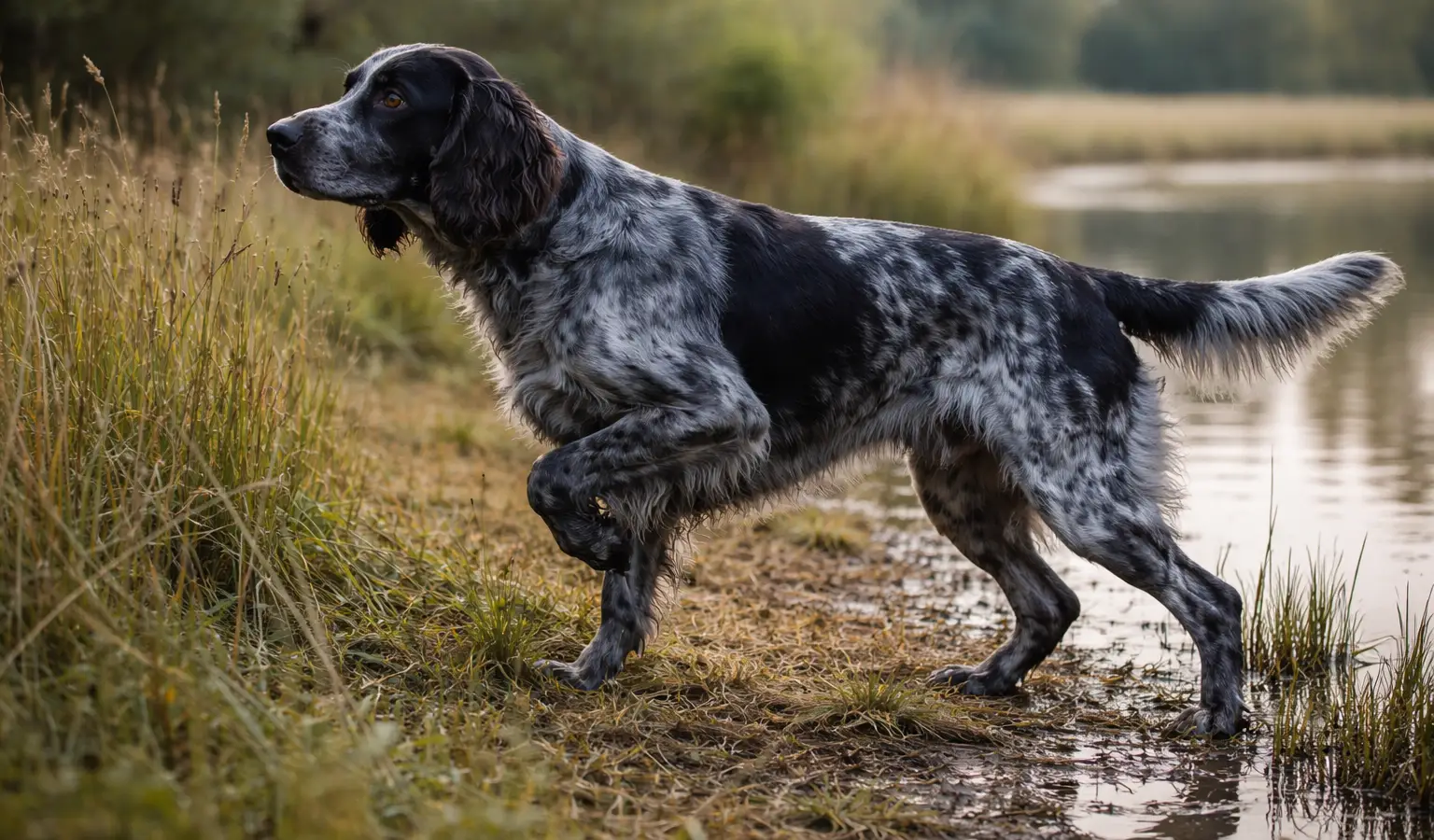
The Blue Picardy Spaniel is an elegant and enduring French pointing dog, recognizable by its blue-grey mottled coat. Known for a fine nose, steady work and a calm temperament, it performs well in wetlands as well as open fields. Affectionate and gentle, it bonds closely with its family and thrives with regular exercise and outdoor activities.
Life expectancy
12 – 14 years
Price
800 – 1400 €
Monthly budget
65 €
Size
Large
Profile
Blue Picardy Spaniel
Origin
France
Year of origin
1900
Developed by
Picardy hunters
Size
Large
Coat type
Long coat
Owner profile
Calm owner
Hypoallergenic
No
Litter size
6
Life expectancy
12 – 14 years
Price
800 – 1400 €
Female
- Height : 55 – 60 cm
- Weight : 20 – 25 kg
Male
- Height : 57 – 62 cm
- Weight : 23 – 30 kg
Temperament & abilities
Affectionate
5/5
Calm
4/5
Independent
2/5
Intelligence
4/5
Obedience
4/5
Hunting instinct
5/5
Energy level
3/5
Good with children
5/5
Dog-friendly
5/5
Friendly with strangers
4/5
Hunting profile
Stamina
4/5
Hunting drive
4/5
Independence
3/5
Trainability
4/5
Beginner-friendly
4/5
Family compatibility
5/5
Feather game
5/5
Fur game
3/5
Underground work
0/5
Water work
4/5
These indicators help compare breeds and choose the right one for your hunting style.
Game & abilities
Estimated ability level by game type.
Budget
Purchase price
800 – 1400 €
The price may vary depending on the breeder, bloodline, and region.
Average monthly cost
65 €
Estimated average: food, healthcare, accessories, and grooming.
A versatile pointing dog with a calm head, useful nose, and enough stamina for real field work
Is the Blue Picardy Spaniel a Good Hunting Dog?
The Blue Picardy Spaniel is generally considered a good hunting dog for people who want a versatile, cooperative pointing breed rather than a hard-driving specialist. In the field, it is valued for a good nose, steady search, natural game-finding ability, and a temperament that often makes handling easier than with hotter, more independent dogs. For many hunters, the appeal is the balance: enough drive and stamina for practical hunting, but usually a more manageable everyday temperament than some high-octane pointing breeds.
Its working style tends to suit hunters who prefer methodical coverage over frantic speed. The Blue Picardy Spaniel often works at a moderate range, stays usefully connected to the handler, and can adapt to mixed terrain including fields, edges, light cover, and damp ground. Many lines are appreciated for their retrieve and willingness to work in rough or wet conditions, which helps explain why the breed is often described as versatile. That said, actual hunting ability depends a lot on breeding, early exposure, and training quality, so one dog may be notably bolder, wider-ranging, or softer than another.
In terms of handling and trainability, this is usually not the breed for someone seeking extreme intensity and all-day speed at any cost. It often responds best to consistent, calm training, clear recall work, and regular field practice rather than heavy pressure. A Blue Picardy Spaniel can be a strong choice for the hunter who wants a dog that points, searches with purpose, and remains biddable enough for a realistic partnership. It may be less ideal for handlers who want maximum range, a very sharp competitive edge, or a dog that thrives on minimal guidance.
- Strengths: cooperative handling, useful nose, versatile hunting style, often good retrieve instinct, practical stamina, generally pleasant temperament
- Demands: regular exercise, structured training, field exposure, mental engagement, reliable recall work
- Best use cases: walked-up hunting, mixed game days, hunters wanting one dog for field and family life, owners who value control and steadiness over sheer pace
For everyday life, the breed often makes sense for active homes that can provide both physical exercise and meaningful work. It is usually easier to live with than a very intense field-bred dog, but it is still a genuine hunting breed, not a casual pet for a sedentary household. For someone comparing several pointing dogs, the Blue Picardy Spaniel stands out as a thoughtful middle ground: capable in the field, trainable in the right hands, and often easier to integrate into family life when its energy level and working instincts are properly respected.
Cold, practical nose
The Blue Picardy Spaniel is widely appreciated for scenting ability that can be very useful in damp ground, marsh edges, and mixed cover. Rather than relying on flashy speed, many work bird scent in a calm, readable way, which helps hunters follow the dog and understand how game is moving.
Steady pointing style
In the field, this breed often shows a composed, purposeful point instead of an overexcited approach. That steadiness can be a real advantage for hunters who want clearer setups on upland birds, especially when working at moderate range and valuing control over constant long-distance casting.
Useful retriever after the shot
Many Blue Picardy Spaniels bring a genuine willingness to retrieve, making them appealing to hunters who want one dog to help before and after the flush. With training, that can translate into practical recovery work on downed birds in rough grass, wet edges, or light marsh conditions.
Built for long outings
This is generally a dog with solid field stamina rather than explosive, short-burst intensity. It tends to suit hunters who cover ground for hours and want a dog that can keep working with focus through a full morning or day, provided conditioning, weather, and terrain are managed sensibly.
Versatile in mixed terrain
The breed is often chosen by people who hunt a mix of environments instead of one very narrow specialty. A good Blue Picardy Spaniel may adapt well to woodland edges, hedgerows, fields, and wet ground, which is helpful for hunters wanting a flexible pointing dog for varied game days.
Responsive to thoughtful handling
Blue Picardy Spaniels are often easiest to appreciate in the hands of calm, consistent handlers. They usually respond better to clear guidance than to harsh correction, and that cooperative temperament can make them pleasant hunting companions for people who want a biddable dog with enough sensitivity to stay connected in the field.
Who the Blue Picardy Spaniel suits best
The Blue Picardy Spaniel often suits hunters who want one versatile pointing dog for varied days afield rather than an ultra-specialized field-trial style animal. It tends to make sense for people who hunt woodcock, pheasant, duck, or mixed game and value a dog that can work at a sensible range, use its nose well, and stay manageable in partnership. Outside the hunting season, it is usually best with an active owner who enjoys regular walks, training, and a dog that wants to be involved in daily life.
It is often a strong fit for households that like a gentle, trainable sporting breed but do not want a hard, sharp temperament. That said, it may be less suitable for very sedentary homes, owners looking for a low-maintenance dog, or handlers who expect reliable performance with little training. Some Blue Picardy Spaniels are easygoing in the home, but they still need exercise, structure, and meaningful work. A common mismatch is the buyer who loves the rustic look of the breed but cannot provide enough activity, recall training, or opportunities to use the dog’s hunting instincts constructively.
How its history shaped its hunting style and everyday character
Origin and development of the Blue Picardy Spaniel
The Blue Picardy Spaniel developed in northern France, especially in the Picardy region, where hunters wanted a versatile gun dog able to work marshes, wet meadows, and mixed farmland. The breed is generally understood to descend from old French spaniel stock, with later influence from English Setters introduced to the area. That cross-regional history helps explain why the Blue Picardy Spaniel often combines the softer expression and biddable nature of a spaniel with a more ranging, methodical pointing style than many flushing dogs.
Its distinctive blue-grey coat is usually linked to black-and-white ancestry and careful selection rather than to a separate ancient breed. Historical details can vary depending on source, but the broader picture is consistent: hunters in Picardy favored dogs that could search efficiently, point game with enough steadiness for the gun, and keep working in cold, damp conditions. This practical selection likely shaped the breed more than appearance alone. Even today, Blue Picardy Spaniels are often appreciated less for flashy speed than for their balanced field sense, useful nose, and willingness to stay connected to the handler.
That background matters for modern owners. In the field, the breed is often described as adaptable, cooperative, and capable on feather and, in some lines, on varied game in difficult terrain. At home, the same history tends to show up as a dog that usually wants close contact with its people and responds best to calm, consistent training rather than heavy-handed handling. It is not typically the right choice for someone wanting a purely ornamental dog with minimal exercise needs. The breed generally suits active households, hunters who value a manageable partner over extreme independence, and handlers prepared to provide regular work, training, and outdoor time.
The Blue Picardy Spaniel remains relatively uncommon outside its home country, which can be a strength and a limitation. Well-bred dogs may preserve the breed’s practical hunting identity, but day-to-day temperament, range, and intensity can still vary with bloodline and education. For buyers, the breed’s history offers a useful guide: expect a pointing dog shaped by real field use, usually gentle in manner, energetic without being chaotic, and best matched with owners who appreciate a steady, versatile hunting companion that can also live closely with the family.
Born in the Picardy marshes
The Blue Picardy Spaniel is closely associated with northern France, especially the Picardy region and its wet, game-rich landscapes. The breed’s development is generally linked to local spaniels shaped by practical hunting needs, with British setter influence often mentioned in its background. That heritage helps explain its blue-mottled coat, elegant outline, and reputation as a versatile pointing dog.
Selected for practical hunting
This is not a purely ornamental spaniel. The Blue Picardy was bred for field usefulness: locating game, holding a point, and working in varied cover with a steady, cooperative style. Hunters often appreciate it for balancing nose, range, and biddability rather than pushing to extremes. In the right hands, it can suit walked-up shooting and mixed terrain better than very high-octane pointing breeds.
Soft manner, serious worker
At home, the breed is often described as gentle, affectionate, and fairly easy to live with when its exercise needs are met. In the field, that softer temperament usually comes with a willing, handler-focused attitude. Harsh training may backfire, while calm structure and consistent repetition tend to bring out the best in a Blue Picardy Spaniel, especially in recall, steadiness, and game-finding confidence.
Needs room and routine
The Blue Picardy Spaniel is rarely a good match for a sedentary household. It usually does best with regular outdoor time, mental engagement, and a clear routine that includes training or sporting outlets. Country living can be ideal, but committed active owners in other settings may also do well if the dog gets enough purposeful exercise. Boredom can show up as restlessness rather than outright stubbornness.
Coat and upkeep are manageable
For a working gundog, maintenance is fairly reasonable, though not negligible. The medium-length coat benefits from regular brushing, particularly after field outings where mud, burrs, and tangles can build up around the ears, legs, and feathering. Owners should also expect routine ear care and basic post-hunt checks. The breed is generally easier to keep than some heavier-coated sporting dogs, but it is not a wash-and-forget companion.
Best for calm, active owners
This breed tends to suit people who want a hunting dog with a kind temperament and a close partnership style. It can be a strong choice for hunters who value responsiveness, moderate handling, and a dog that can also settle into family life. It may be less suitable for owners seeking a very independent field dog or for households unable to provide regular exercise, training time, and outdoor purpose.
Practical answers for hunters, active families, and first-time owners considering this versatile pointing dog.
Blue Picardy Spaniel hunting and family life FAQ
Is the Blue Picardy Spaniel a good hunting dog for upland birds and waterfowl?
The Blue Picardy Spaniel is generally regarded as a capable all-round hunting dog, especially for hunters who want a pointing breed that can also work in wet ground and cold conditions. Many individuals show a steady nose, useful range, and a cooperative style that suits walking hunters better than those wanting a very wide-running dog. In the field, they are often appreciated for balancing search, point, and retrieve rather than excelling in only one phase. Actual hunting quality still depends heavily on breeding, exposure to game, and training, so not every dog will perform at the same level.
Are Blue Picardy Spaniels easy to train for hunting and obedience?
For many owners, this breed is quite trainable because it tends to combine working drive with a fairly handler-oriented temperament. That said, sensitive dogs often respond best to calm, consistent training rather than hard corrections or repetitive drilling. Early work on recall, steadiness, retrieving habits, and comfort around gunfire usually pays off more than trying to rush advanced field work. A Blue Picardy Spaniel often does best with a trainer who is structured and patient, not overly harsh, and willing to build skill through regular practical sessions.
Can a Blue Picardy Spaniel live as a family dog if it also hunts?
In the right home, this breed can make a pleasant family companion while still being used for hunting. Many Blue Picardy Spaniels are affectionate, gentle in the house, and closely attached to their people, but they are not simply low-maintenance pets that can be exercised around the block. They usually settle best when they get meaningful daily activity, time with the family, and some outlet for their nose and retrieving instincts. Homes that enjoy outdoor routines, training, and regular engagement are often a better match than very sedentary households.
How much exercise does a Blue Picardy Spaniel need when it is not hunting?
This is usually an active sporting dog that needs more than casual exercise, even outside hunting season. A short leash walk alone is rarely enough; most individuals benefit from a mix of brisk outings, free running in safe areas, retrieving games, scent work, and training that uses their brain as well as their body. Without enough activity, some dogs may become noisy, restless, or creatively destructive rather than truly aggressive. As a practical guide, they tend to fit owners who can offer real daily movement and regular weekend adventures, not just occasional exercise.
Is the Blue Picardy Spaniel suitable for apartment living?
Apartment living is possible in some cases, but it is not the most natural setup for this breed unless the owner is exceptionally committed. What matters most is not square footage alone, but whether the dog gets enough physical exercise, outdoor time, and calm structure each day. A Blue Picardy Spaniel that is well trained and properly exercised may live quietly indoors, but an under-stimulated dog can be difficult in close quarters. Access to fields, trails, or regular training grounds makes daily life much easier than an urban routine with limited outlets.
Is a Blue Picardy Spaniel a good choice for a first-time hunting dog owner?
It can be a reasonable choice for a beginner who wants a versatile pointing dog and is ready to learn how to train and manage a sporting breed. Compared with some harder, more independent hunting dogs, the Blue Picardy Spaniel is often described as more cooperative and easier to live with, which can help novice handlers. Still, first-time owners should not confuse softness with simplicity: field exposure, consistent obedience, and regular handling matter if you want a reliable companion and useful gun dog. It tends to suit beginners best when they have access to a trainer, hunting club, or experienced mentor.
What type of owner or hunter is the Blue Picardy Spaniel best suited to?
This breed often suits someone who wants a genuine hunting companion that can also share daily family life, rather than a specialist built only for competitive field performance. It is a strong fit for active owners who enjoy long walks, rural life, bird hunting, and regular hands-on training. Hunters who prefer a dog that works within a manageable range and stays connected to the handler may appreciate the Blue Picardy Spaniel more than those seeking extreme speed and independence. It may be less suitable for people away from home all day, very inactive households, or anyone wanting a dog that needs little guidance.