Labrador Retriever
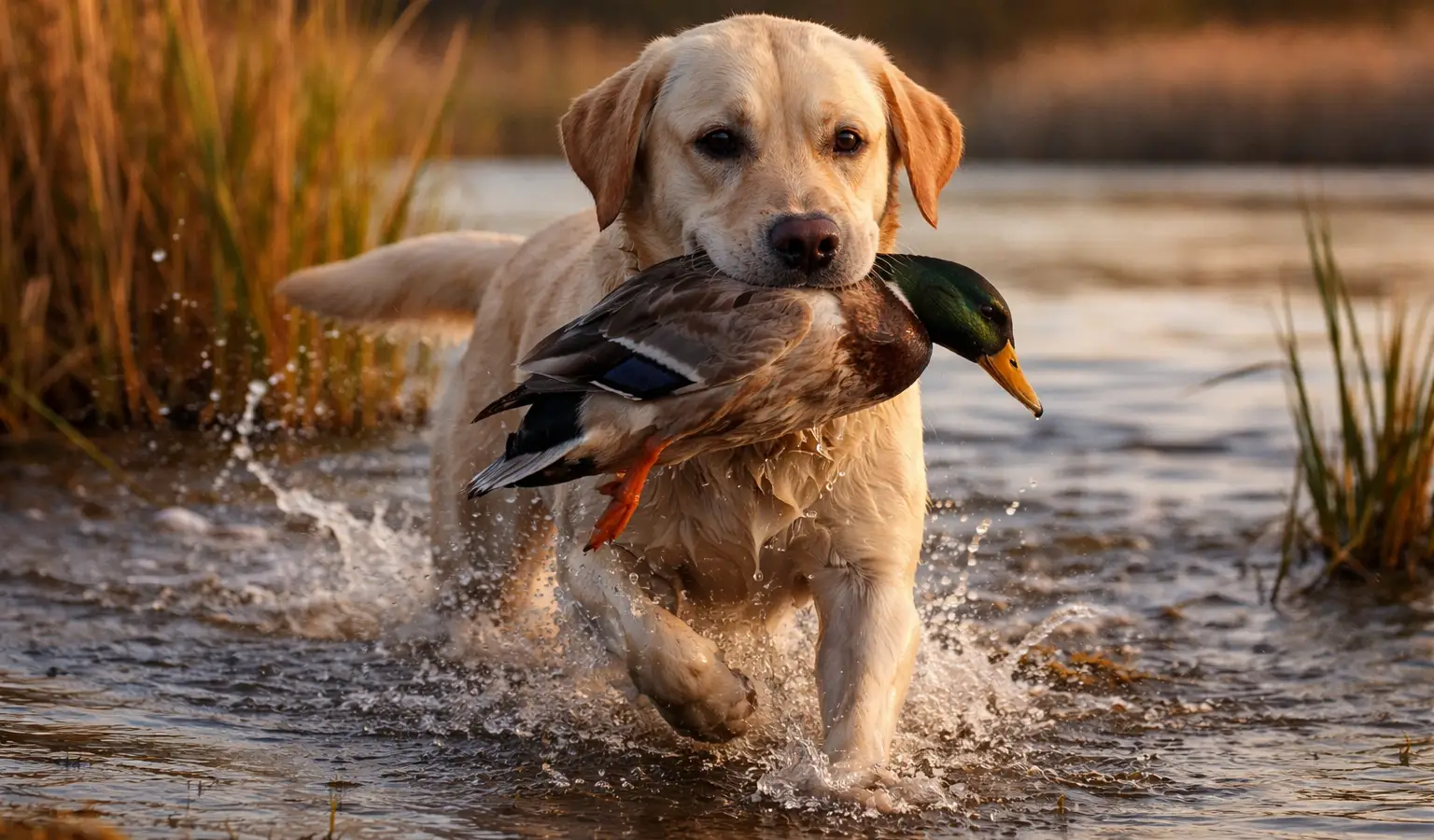
The Labrador Retriever is a versatile retrieving dog renowned for its intelligence, gentle nature and sociable temperament. Originally bred for water retrieving, it excels at game recovery thanks to its excellent nose, endurance and love of swimming. Affectionate and well-balanced, it is also one of the most popular family dogs, provided it receives regular exercise and proper nutrition.
Life expectancy
10 – 12 years
Price
900 – 1800 €
Monthly budget
80 €
Size
Large
Profile
Labrador Retriever
Origin
Canada
Year of origin
1800
Developed by
Canadian fishermen and British breeders
Size
Large
Coat type
Short coat
Owner profile
Active owner
Hypoallergenic
No
Litter size
7
Life expectancy
10 – 12 years
Price
900 – 1800 €
Female
- Height : 54 – 56 cm
- Weight : 25 – 32 kg
Male
- Height : 56 – 57 cm
- Weight : 29 – 36 kg
Temperament & abilities
Affectionate
5/5
Calm
4/5
Independent
2/5
Intelligence
5/5
Obedience
5/5
Hunting instinct
4/5
Energy level
4/5
Good with children
5/5
Dog-friendly
5/5
Friendly with strangers
5/5
Hunting profile
Stamina
4/5
Hunting drive
4/5
Independence
2/5
Trainability
5/5
Beginner-friendly
5/5
Family compatibility
5/5
Feather game
4/5
Fur game
2/5
Underground work
0/5
Water work
5/5
These indicators help compare breeds and choose the right one for your hunting style.
Game & abilities
Estimated ability level by game type.
Budget
Purchase price
900 – 1800 €
The price may vary depending on the breeder, bloodline, and region.
Average monthly cost
80 €
Estimated average: food, healthcare, accessories, and grooming.
A practical look at field ability, trainability, stamina, and everyday life
Is the Labrador Retriever a good hunting dog?
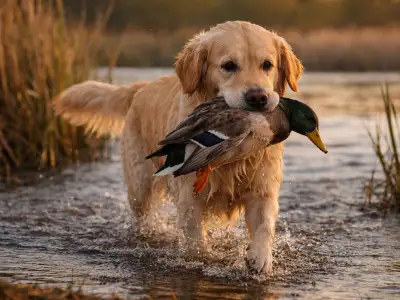
The Labrador Retriever is one of the most proven hunting dogs for practical shooting and versatile retrieving work. In the right hands, a Labrador Retriever hunting dog can be outstanding on waterfowl, upland birds, and rough shooting days that demand steadiness, a reliable retrieve, and close cooperation with the handler. The breed’s main strengths are trainability, soft mouth, willingness to work with people, and the kind of temperament that often makes field performance compatible with family life.
In the field, most Labradors work with an efficient, sensible style rather than dramatic range. They are typically valued for marking ability, nose, persistence in cover, and the courage to enter cold water, reeds, mud, and thick vegetation when asked. A good Labrador Retriever can be especially strong where shot game must be found and brought back cleanly, including on long days with repeated retrieves. Compared with some pointing breeds or more independently hunting dogs, the Labrador usually shines through handling, recall, and cooperation rather than wide searching initiative.
That said, not every Labrador is the same. Field-bred lines often bring more speed, drive, stamina, and intensity, while many show-bred or pet-bred dogs may be calmer, heavier, or less naturally suited to demanding hunting schedules. Training still matters a great deal: steadiness around gunfire and falling birds, delivery to hand, stop whistle, directional handling, and impulse control do not appear fully formed just because the breed has a strong reputation. Without regular work and structure, a smart, energetic Labrador can become noisy, overexcited, or sloppy in retrieves.
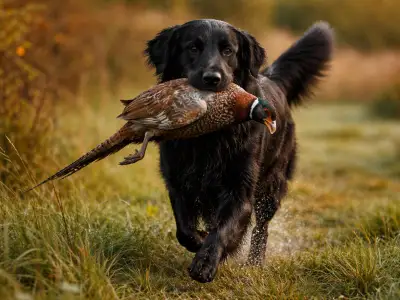
For many hunters, the most coherent use cases are duck and goose shooting, walked-up bird days, pheasant and partridge retrieves, and general picking-up work where a dependable retrieve is more important than huge range. Daily life is often the Labrador’s major advantage. Many individuals settle well in an active home if they get meaningful exercise, training, and human contact. The breed suits owners who want a biddable, sociable dog that can hunt seriously and then live closely with the family, but it may be less ideal for someone seeking a highly independent specialist or a very low-maintenance companion.
Natural retrieving drive
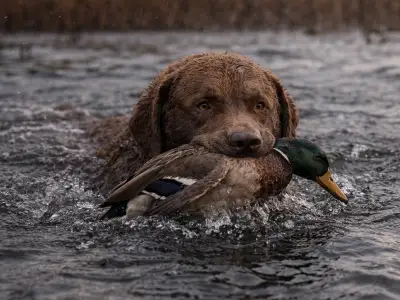
The Labrador Retriever is prized for its willingness to pick up and bring game back cleanly. Many Labs show a strong desire to carry objects from an early age, which can translate well into hunting work when guided properly. For waterfowl hunters especially, that reliable retrieve is one of the breed’s biggest practical advantages.
Steady in water and weather
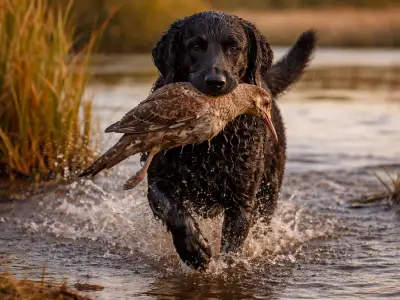
Labs are widely valued for cold-water retrieves, difficult entries, and repeated work in rough conditions. Their build, coat, and attitude often suit marshes, ponds, and wet ground better than many pet owners expect. A well-conditioned Labrador can keep working with good enthusiasm, though stamina still depends on fitness, breeding, and handling.
Highly trainable under pressure
One of the Labrador’s strongest hunting traits is how readily it takes direction. Good Labs often respond well to structured retriever training, blind retrieve work, and steadiness drills. That makes the breed appealing to hunters who want a dog that can be polished carefully, not just one that relies on instinct in the moment.
Useful nose and game finding
Although best known as a retriever, the Labrador also offers solid scenting ability for locating downed birds in cover, reeds, or edges that are easy to lose by eye. In practical hunting terms, that can mean fewer lost birds and cleaner recoveries. Some individuals are especially strong at tracking wounded game over short to moderate distances.
Versatile across hunting styles
A Labrador Retriever can fit more than one hunting routine. Many work capably on ducks and geese, but some also adapt well to doves, pheasants, or mixed hunting days where obedience, patience, and a dependable retrieve matter most. This flexibility suits owners who want one dog for family life and several types of field use.
Good focus with the right outlet
When its energy is managed well, the Labrador can combine drive with concentration. Many settle nicely in a blind, watch marks carefully, and stay mentally engaged through long periods of waiting between retrieves. That balance is important in real hunting situations, but it usually depends on maturity, consistent training, and enough exercise outside the season.
Who the Labrador Retriever suits best
The Labrador Retriever is usually a strong match for the hunter or active owner who wants a willing, biddable dog with real retrieving instinct and an easygoing off-switch in the home, provided daily exercise and training are in place. Many Labs suit waterfowl hunters, mixed shooting days, and handlers who value steadiness, cooperation, and a dog that generally works close and takes direction well. They also fit many family homes because they tend to be social, adaptable, and highly trainable, but they are rarely low-maintenance in adolescence.
This breed is less suitable for people who want a naturally independent hunter, very little shedding, or a dog content with short walks and casual attention. A Labrador can be a poor match for households that underestimate food motivation, mouthing in youngster phases, and the need for structured outlets. Working-line and show-line Labradors can differ noticeably in drive and intensity, so the best fit often depends on bloodline as much as breed label.
- Best suited to: hunters needing a reliable retriever, active families, first-time gundog owners willing to train consistently
- Less suited to: very sedentary homes, owners wanting a highly guarding dog, people without time for daily work, exercise, and handling
How a practical working dog from the North Atlantic became one of the world’s most reliable retrievers
Origin and development of the Labrador Retriever
The Labrador Retriever traces back to the St. John’s water dogs of Newfoundland, where fishermen used compact, eager retrieving dogs to haul lines, recover fish that slipped loose, and work in cold, wet conditions. Although the exact mix of early dogs is not fully documented, most breed histories agree that these capable water dogs were the foundation of the modern Labrador. Imported to Britain in the 19th century, they were refined by sporting estates and gamekeepers who valued a dog that could mark fallen birds, carry game gently, and remain steady around guns and other dogs.
That selective breeding helps explain the Labrador’s modern temperament. The breed was shaped less for flashy independence than for cooperation, biddability, and practical efficiency in the field. A good Labrador typically wants to work with its handler, accepts repetition better than many breeds, and combines enthusiasm with a fairly even, manageable nature. This is one reason Labradors have remained so popular with duck hunters, rough shooters, and trainers who want a retriever that can adapt to both structured training and busy family life.
Over time, Labradors developed along somewhat different lines. Field-bred Labradors are often lighter, faster, and more intense, with higher drive and greater day-to-day exercise needs. Show-bred or primarily companion-bred dogs may be heavier in build and, in some cases, less naturally hard-charging in demanding hunting work. That does not mean one type is better overall, but it does matter for buyers: the history of selection within a bloodline strongly influences energy level, trainability, and the kind of home or hunting role the dog is likely to suit.
For present-day owners, the breed’s history is more than background. It explains why many Labradors thrive when given retrieving games, water work, scent tasks, and regular training instead of only casual walks. It also helps clarify the breed’s limitations: this is usually not a low-maintenance dog if you want the best version of its temperament. The Labrador Retriever tends to suit people who appreciate an active, people-oriented dog with a strong desire to carry, fetch, and participate, whether that means serious shooting days, weekend gundog training, or an energetic family routine with clear structure.
From water dog to retriever
The Labrador Retriever traces back to the St. John’s water dogs of Newfoundland, where fishermen relied on sturdy, willing dogs to help around boats and cold water. In Britain, the type was refined into the modern Labrador, with strong emphasis on a soft mouth, biddability, and reliable retrieving ability on land and in marshy conditions.
Selected for cooperation
Few sporting breeds have been shaped so clearly for teamwork with people. Generations of selection favored dogs that marked falls well, carried game gently, handled repeated retrieves, and stayed responsive under excitement. That history helps explain why many Labradors are easier to train than more independent hunting breeds, although field-bred and show-bred lines can differ in intensity.
Steady by nature
A good Labrador is typically known for an even, social temperament and a strong desire to be involved in whatever the household is doing. That makes the breed popular with families, first-time gundog owners, and active handlers. Still, friendliness should not be confused with low energy: many Labradors remain lively, mouthy, and enthusiastic well past puppyhood.
A practical hunting style
In the field, the Labrador Retriever is valued less for flash than for efficiency. The breed often shines as a versatile gun dog for ducks, upland birds, and general retrieving work, especially where water, cover, and long working days are involved. Many owners appreciate the combination of nose, drive, patience in the blind, and dependable recall when training is consistent.
Daily life needs structure
This is usually not a breed that thrives on a quick walk and little else. Most Labradors do best with regular exercise, retrieving games, training sessions, and close contact with their people. Without enough physical outlet and mental work, some can become overexcited, destructive, or chronically food-focused, which is important to consider in busy family homes.
Best for active owners
The Labrador Retriever often suits people who want one dog that can live comfortably as a companion while still doing serious outdoor work. It can be an excellent match for hunters, hikers, and engaged families who enjoy training and routine. It may be less suitable for owners who prefer a naturally calm, low-maintenance dog or have little time for daily interaction.
Practical answers about field ability, training, home life, exercise, and owner fit
Labrador Retriever hunting and family FAQ
Is a Labrador Retriever a good hunting dog for beginners?
For many beginners, a Labrador Retriever is one of the more forgiving hunting breeds to start with. A well-bred Labrador often combines natural retrieving instinct, willingness to work with people, and a temperament that can handle mistakes in early training. They are especially popular for waterfowl and versatile rough-shooting situations where steadiness, marking, and practical retrieves matter more than extreme range. That said, success still depends on the individual dog, the bloodline, and consistent training. A novice owner who wants an easy, low-effort dog may still find a young Lab demanding during adolescence.
What kind of hunting is the Labrador Retriever best suited for?
The Labrador Retriever is best known as a gundog for retrieving shot game, particularly ducks, geese, and other waterfowl. Many also do very well on upland birds when used as flushing and retrieving dogs, especially in practical hunting where close teamwork matters. Their strengths usually include soft mouth, good nose, biddability, and confidence in cold water and difficult cover. Compared with some pointing breeds or larger-ranging flushers, most Labradors work at a more handler-focused distance. That makes them especially appealing to hunters who want control, reliability, and a dog that stays engaged with the gun.
Are Labrador Retrievers easy to train for hunting and daily obedience?
Labradors are often considered highly trainable, but that does not mean they train themselves. Most respond well to clear repetition, reward-based work, and fair structure, and many enjoy formal retrieving drills because the job makes sense to them. Their food motivation can be a major advantage in obedience, recall, place work, and steadiness training. Common challenges include overexcitement, rushing retrieves, and selective hearing when arousal is high. Owners usually get the best results by building calm habits early rather than relying only on the breed's natural enthusiasm.
Can a Labrador Retriever be both a serious hunting dog and a good family pet?
In many homes, that balance is exactly why the Labrador remains so popular. A stable, well-exercised Lab can often shift from field work to family life better than more intense specialist breeds, provided the dog gets enough structure and outlet. They are typically social, people-oriented, and tolerant of busy households, though exuberance can be an issue with small children if manners are not taught. Hunting ability does not automatically make a dog difficult at home, but unmanaged energy often does. Families tend to do best with regular routines, training expectations, and enough time for both physical exercise and mental work.
Can a Labrador Retriever live in an apartment or small house if it also hunts?
A Labrador Retriever can live in a smaller home if its daily needs are met consistently, but easy indoor living should not be confused with low exercise needs. Many Labs settle well inside because they are companion-oriented, yet they usually need meaningful activity outside the home to stay balanced. For a hunting Lab, that often means a mix of walks, retrieves, obedience, exposure to cover and water, and regular field training when in season or preparing for it. Space matters less than routine, supervision, and owner commitment. A bored young Labrador in a small home can become noisy, destructive, or relentlessly demanding.
How much exercise does a Labrador Retriever really need when not hunting?
Most Labradors need more than a quick walk around the block, especially in adolescence and early adulthood. A good routine often includes brisk daily movement plus tasks that use the brain, such as retrieve games, scent work, steadiness practice, or short obedience sessions. Many owners underestimate how much controlled exercise helps compared with simply letting the dog get overstimulated. Off-season hunting dogs still benefit from conditioning, water confidence, and handling practice so they do not lose fitness and focus. The exact amount varies with age, breeding, and temperament, but this is usually not a breed for sedentary households.
Who is the Labrador Retriever the best fit for, and who might prefer another breed?
The Labrador Retriever often suits hunters and active families who want one dog for companionship, trainability, and practical field use. It is a strong fit for owners who value cooperation, reliable retrieving, and a dog that can integrate into everyday home life without being overly sharp or independent. It may be less ideal for people who want a naturally low-key dog, have very limited time for exercise, or prefer the wider-ranging style of some pointing or flushing breeds. Some hunters also want more specialization than a general-purpose Lab typically offers. In the right home, though, the breed can be notably versatile and easy to live with.