Chesapeake Bay Retriever
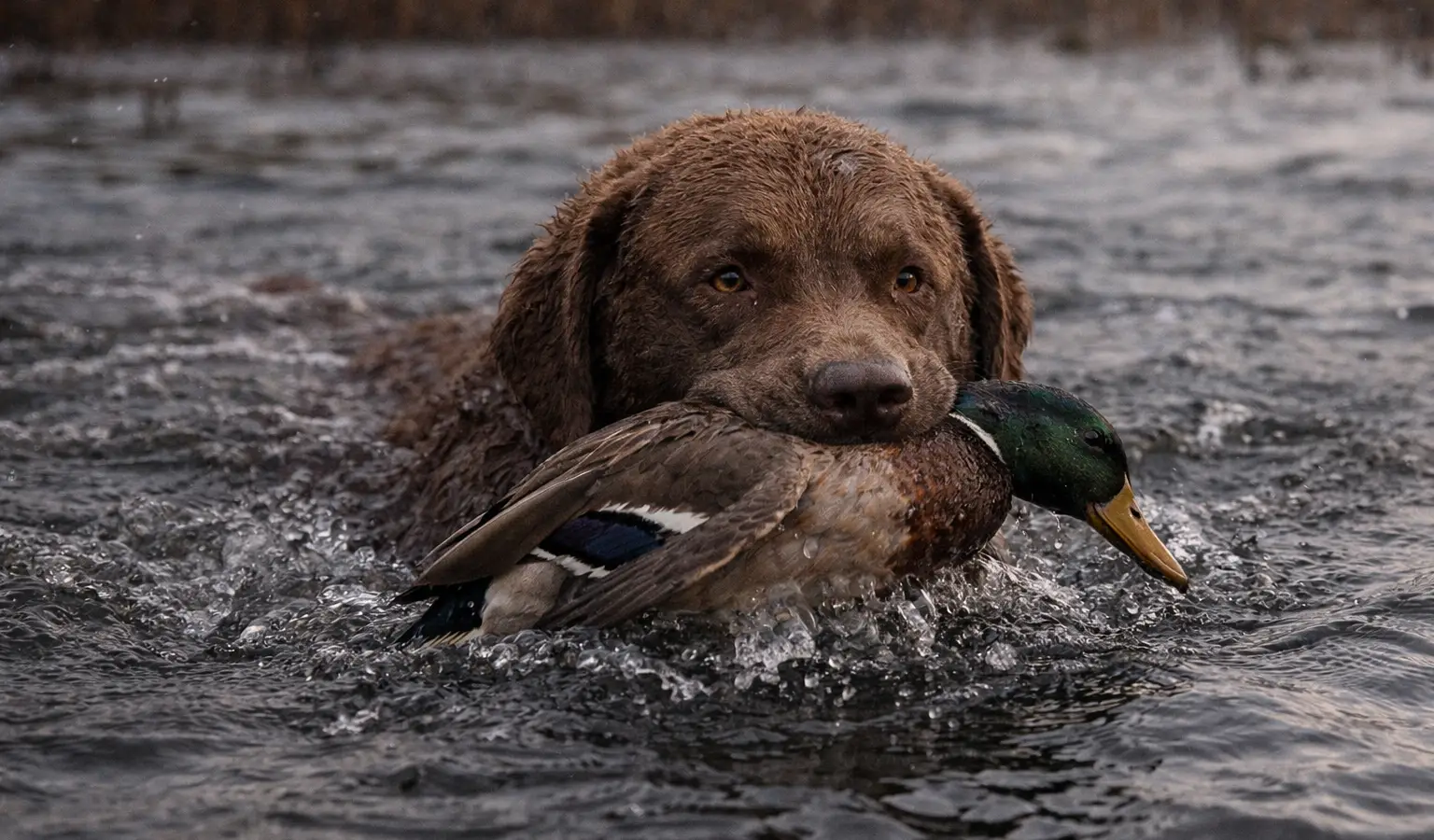
The Chesapeake Bay Retriever is a powerful and resilient retrieving dog, developed to recover waterfowl in harsh weather conditions. Its dense, oily coat provides excellent protection against cold water. Known for its determination, strength and courage, it is more reserved than other retrievers but remains loyal and protective toward its family, requiring firm and fair training.
Life expectancy
10 – 12 years
Price
1000 – 2000 €
Monthly budget
85 €
Size
Large
Profile
Chesapeake Bay Retriever
Origin
United States
Year of origin
1807
Developed by
American hunters (Chesapeake region)
Size
Large
Coat type
Short coat
Owner profile
Experienced owner
Hypoallergenic
No
Litter size
7
Life expectancy
10 – 12 years
Price
1000 – 2000 €
Female
- Height : 53 – 61 cm
- Weight : 25 – 32 kg
Male
- Height : 58 – 66 cm
- Weight : 30 – 36 kg
Temperament & abilities
Affectionate
3/5
Calm
3/5
Independent
4/5
Intelligence
4/5
Obedience
3/5
Hunting instinct
5/5
Energy level
4/5
Good with children
3/5
Dog-friendly
3/5
Friendly with strangers
2/5
Hunting profile
Stamina
5/5
Hunting drive
5/5
Independence
4/5
Trainability
3/5
Beginner-friendly
1/5
Family compatibility
3/5
Feather game
3/5
Fur game
2/5
Underground work
0/5
Water work
5/5
These indicators help compare breeds and choose the right one for your hunting style.
Game & abilities
Estimated ability level by game type.
Budget
Purchase price
1000 – 2000 €
The price may vary depending on the breeder, bloodline, and region.
Average monthly cost
85 €
Estimated average: food, healthcare, accessories, and grooming.
What the Chesapeake Bay Retriever does well in the field, and what it asks of its owner at home
A Powerful Retriever for Serious Waterfowl Work
The Chesapeake Bay Retriever is widely considered a very good hunting dog, especially for waterfowl work in cold, wet, demanding conditions. A well-bred, well-trained Chessie typically offers courage, stamina, a strong retrieve, and the kind of determination hunters value when birds fall into rough water, cattails, mud, or icy cover. It is not always the easiest retriever for every handler, but for the right person it can be an exceptionally capable partner.
In practical hunting terms, the breed is most coherent as a duck and goose dog rather than an all-purpose beginner retriever. The Chesapeake Bay Retriever often works with a serious, purposeful style: strong swimming, persistence in difficult terrain, and a willingness to push through cover instead of skirting around it. Many also have a good nose and enough independence to hunt efficiently, but that same independence can make handling more demanding than with some softer, more naturally biddable retrievers. If you want a dog that takes pressure lightly and lives to please every second, another retriever may be easier.
Training matters a great deal with this breed. Chessies are usually intelligent and trainable, but they often respond best to calm, fair, consistent handling rather than repetitive drilling or heavy-handed corrections. Recall, steadiness, delivery to hand, and whistle control should be built carefully from an early age. Their temperament can include a protective or reserved streak, so broad socialization and clear boundaries are important if the dog is expected to switch smoothly between the marsh, the truck, and family life.
- Best use cases: waterfowl hunting, cold-weather retrieves, rough marsh and shoreline work, hunters who want grit and stamina
- Possible limitations: not always the easiest first retriever, can be strong-willed, may require more thoughtful handling than softer breeds
- Daily life fit: best with active owners who can provide structure, training, and regular work, not just occasional weekend exercise
As a home companion, the Chesapeake Bay Retriever can be loyal, steady, and deeply bonded to its people, but it is usually not a low-maintenance pet. Energy level is substantial, and mental engagement matters almost as much as physical exercise. For hunters who want a durable working retriever and appreciate a dog with character, toughness, and real field presence, the breed makes sense. For households seeking an easygoing, highly social, highly forgiving dog, it may feel more demanding than its retriever label suggests.
Cold-water retrieving power
The Chesapeake Bay Retriever is best known for hard, determined retrieves in rough, cold water. Its dense, oily coat, strong build, and purposeful swimming style make it especially well suited to duck and goose hunting in harsh weather. For hunters who spend long mornings in marshes, tidal water, or late-season conditions, this is one of the breed’s clearest working advantages.
Grit in difficult cover
Many Chesapeakes show real courage when the job gets physical, whether that means punching through reeds, icy banks, muddy edges, or thick shoreline cover to complete a retrieve. That toughness can be a major asset on wounded birds and awkward falls, though it usually needs channeling with steady training so determination stays useful rather than headstrong.
Long-day stamina
This is a substantial working retriever with the engine for demanding hunting days when properly conditioned. A Chesapeake Bay Retriever often handles repeated marks, multiple retrieves, and poor weather better than softer or lighter-built dogs. In daily life, that stamina also means it generally needs regular exercise, structured work, and meaningful outlets rather than only short walks.
Strong marking and memory
Well-bred and well-trained Chesapeakes are often valued for remembering falls and staying locked on the retrieve task. In practical hunting terms, that concentration helps when birds drop into broken cover, choppy water, or visually confusing backgrounds. They are not always the flashiest workers, but many are efficient, serious retrievers that keep their mind on the job.
Independent but trainable
The breed often brings a useful mix of problem-solving ability and handler awareness. A Chesapeake Bay Retriever may not train exactly like a highly biddable field Labrador, but with fair, consistent handling it can become a dependable hunting partner that works with initiative. This tends to suit owners who enjoy structured training and want a dog with substance, judgment, and working character.
Versatile for mixed retrieves
Although strongly associated with waterfowl, the Chesapeake can also be practical in broader retrieving work when training and opportunity support it. Many individuals are capable of handling land retrieves, marsh work, and varied terrain without losing intensity. It is usually the best fit for hunters who want a serious, all-weather retriever first, and a family dog second rather than the reverse.
Who the Chesapeake Bay Retriever suits best
The Chesapeake Bay Retriever usually fits best with a serious, hands-on owner who wants a tough retriever for real work and an active dog at home. For waterfowl hunters, especially those who value cold-weather stamina, determination, and a dog that can push through rough cover or icy water, the Chessie can be an excellent match. Outside hunting season, it tends to suit households that enjoy structured training, regular exercise, and a dog with some independence rather than constant easygoing compliance.
It is often less suitable for first-time gundog owners, very casual pet homes, or people expecting the instantly social, highly biddable style seen in some other retrievers. Many Chesapeake Bay Retrievers do best with fair, consistent handling and clear boundaries; heavy-handed methods can backfire, while undertraining can leave you with a strong-willed, underoccupied dog. This breed may suit families who appreciate loyalty, outdoor life, and a bit of character, but it can be a mismatch for low-activity homes, owners away for long days, or anyone wanting a soft, universally outgoing dog.
A hard-weather retriever developed for cold water, rough conditions, and independent work
How the Chesapeake Bay Retriever Was Shaped
The Chesapeake Bay Retriever originated along the Chesapeake Bay in the eastern United States, where hunters needed a powerful water dog that could retrieve large numbers of ducks in icy, windy conditions. Most accounts trace the breed back to two St. John’s water dogs rescued from a shipwreck in the early nineteenth century, then bred with local retrievers, hounds, and possibly other working dogs. Some details of that early development are not perfectly documented, but the overall picture is clear: the Chessie was selected for stamina, weather resistance, strong marking ability, and the toughness to work in cold water for long periods.
That history helps explain why the modern Chesapeake Bay Retriever often feels different from many other retriever breeds. While still a retriever at heart, the Chessie was shaped to be more self-reliant and resilient than a purely soft, easygoing gundog. Hunters valued a dog that could push through chop, reeds, mud, and freezing temperatures without quitting. In daily life, that can translate into a serious, determined temperament, plenty of physical drive, and a dog that usually does best with clear structure rather than casual handling.
The breed’s famous coat was part of that practical design. Its dense undercoat and harsh, oily outer coat helped repel water and protect the dog in difficult conditions, while its strong build supported repeated retrieves from boats, marsh edges, and open water. This is one reason the Chesapeake Bay Retriever remains especially appreciated by waterfowl hunters who want a dog capable of demanding retrieves rather than only light family recreation.
For modern owners, the breed’s background is more than historical trivia; it is a guide to what living with a Chessie may be like. Many are loyal, deeply bonded to their people, and highly capable workers, but they are not always the easiest fit for first-time dog owners or homes that want a low-effort companion. Early training, consistent boundaries, and meaningful exercise usually matter a great deal. In the right hands, the Chesapeake Bay Retriever can be a formidable hunting partner and a steady family dog, but its origin as a tough, purposeful retriever still shows in its handling needs and working style today.
Born for rough water
The Chesapeake Bay Retriever developed along the mid-Atlantic coast of the United States, where retrievers were expected to work in cold water, wind, chop, and demanding marsh conditions. Its history is closely tied to waterfowling, and that background still shows in the breed’s powerful build, weather-resistant coat, and serious attitude toward retrieving.
Selected for grit and stamina
Unlike some retrievers bred mainly for a soft, easygoing style, the Chessie was shaped for endurance, resilience, and independent problem-solving in difficult hunting conditions. Many individuals are persistent workers with a strong retrieve drive, but that same toughness can mean they often do best with clear training, fair structure, and a handler who values steadiness over constant softness.
A more serious retriever
Chesapeake Bay Retrievers are often described as loyal, protective of their people, and somewhat reserved with strangers. They can be affectionate family dogs, but they are not always as socially casual as a typical Labrador. For many homes, early socialization and consistent manners work are especially important so confidence does not turn into pushiness or over-guarding.
Best matched to active owners
This breed usually fits people who enjoy regular training, outdoor time, and purposeful exercise rather than a purely decorative pet lifestyle. A Chesapeake Bay Retriever may adapt to suburban living if its daily needs are met, but long periods of boredom can create frustration. Hunters, active families, and experienced retriever owners often appreciate the breed most.
Needs a job, not just a walk
Most Chessies need more than a quick leash outing. Retrieving drills, swimming when safe, scent games, obedience practice, and structured off-leash exercise usually suit them better than repetitive neighborhood walks alone. Mental work matters as much as physical activity, especially in young dogs that are energetic, strong, and inclined to invent their own entertainment.
Practical coat and care
The breed’s dense, oily double coat was developed to help shed cold water, so grooming is usually more about maintenance than styling. Regular brushing helps manage shedding, and many owners avoid frequent bathing because it can reduce the coat’s natural protective qualities. Good conditioning, weight control, and routine ear care are also important for an active water dog.
Practical answers for hunters, active families, and first-time breed researchers
Chesapeake Bay Retriever hunting and ownership FAQ
Is the Chesapeake Bay Retriever a good hunting dog for ducks and cold-water retrieves?
The Chesapeake Bay Retriever is widely respected as a serious waterfowl dog, especially where cold weather, rough water, and demanding retrieves are part of the job. Many Chessies have the strength, coat, determination, and mental toughness that hunters want in a duck dog, and the breed has a long association with retrieving in difficult coastal conditions. That said, hunting quality still depends on the individual dog, breeding, early exposure, and training. A well-bred, well-prepared Chesapeake can be an excellent choice for duck hunting, but it is not automatic just because the breed has a strong working reputation.
Are Chesapeake Bay Retrievers easy to train for hunting and obedience?
They are usually trainable, but they are not always the easiest retriever for novice handlers. Chesapeake Bay Retrievers often think independently and may respond best to calm, consistent training rather than repetitive drilling or heavy-handed correction. Many do very well when the handler is fair, clear, and experienced enough to balance standards with patience. For hunting work, early retrieving games, bird exposure, steadiness foundations, and reliable recall matter a lot, and obedience should be built alongside field skills rather than treated as an afterthought.
Can a Chesapeake Bay Retriever be a family dog as well as a hunting dog?
In the right home, a Chesapeake can absolutely be both a working retriever and a devoted family companion. Many are deeply loyal to their people and enjoy having a real role in daily life, whether that means training, hiking, retrieving, or simply being included. They are often more reserved with strangers than some other retrievers, which some owners appreciate and others may find less easygoing. Good socialization, household rules, and enough physical and mental activity are important if you want a dog that settles well at home after doing its job outdoors.
Do Chesapeake Bay Retrievers do well with children and other pets?
Many Chesapeake Bay Retrievers live successfully with children and other animals, but management and early social experience matter more than people sometimes expect. They are sturdy, energetic dogs, so interactions with young children should be supervised, especially during adolescence when enthusiasm can be high. With other dogs, some individuals are easy and social, while others can be more selective or more assertive than the average laid-back retriever. If you already have pets, it is smart to choose a breeder or rescue that can describe the dog's temperament honestly and to plan introductions carefully.
Can a Chesapeake Bay Retriever live in an apartment or small home?
A Chesapeake Bay Retriever can adapt to a smaller home if its exercise, training, and routine are handled well, but this is usually not the easiest breed for cramped or inactive living. What matters most is not square footage alone but whether the dog gets meaningful daily work, structured walks, retrieving sessions, and enough downtime training to stay mentally satisfied. A bored Chesapeake may become noisy, restless, or overly self-directed. Owners in apartments generally need to be realistic about time, access to outdoor space, and the dog's need for regular off-property activity in all seasons.
How much exercise does a Chesapeake Bay Retriever need outside the hunting season?
This is typically an active, durable breed that needs more than a quick walk around the block, even when hunting season is over. Most adults do best with a mix of aerobic exercise, retrieving, structured training, and mentally engaging tasks that give them a job to do. Swimming, field-style retrieves, hiking, scent games, and obedience sessions often suit them better than unstructured yard time alone. Exercise needs vary by age and individual temperament, but many Chesapeake owners find that the dog is easiest to live with when both body and brain are worked consistently.
Who is the Chesapeake Bay Retriever best suited for, and who should think twice?
This breed often fits hunters, outdoors-oriented owners, and experienced dog people who want a capable retriever with substance, drive, and a strong sense of purpose. It can be a very rewarding choice for someone who enjoys training, values resilience in rough conditions, and wants a dog that feels more serious than a purely social pet. On the other hand, first-time owners, very casual households, or people expecting an effortlessly easygoing retriever may find the Chesapeake more demanding than expected. It tends to suit people who are prepared to lead consistently, train regularly, and channel the dog's working instincts into real daily structure.