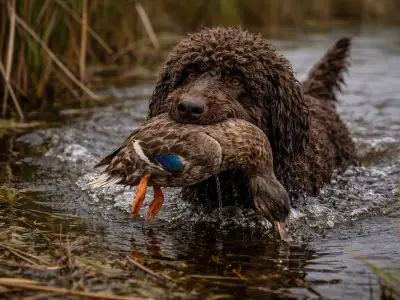
Nova Scotia Duck Tolling Retriever
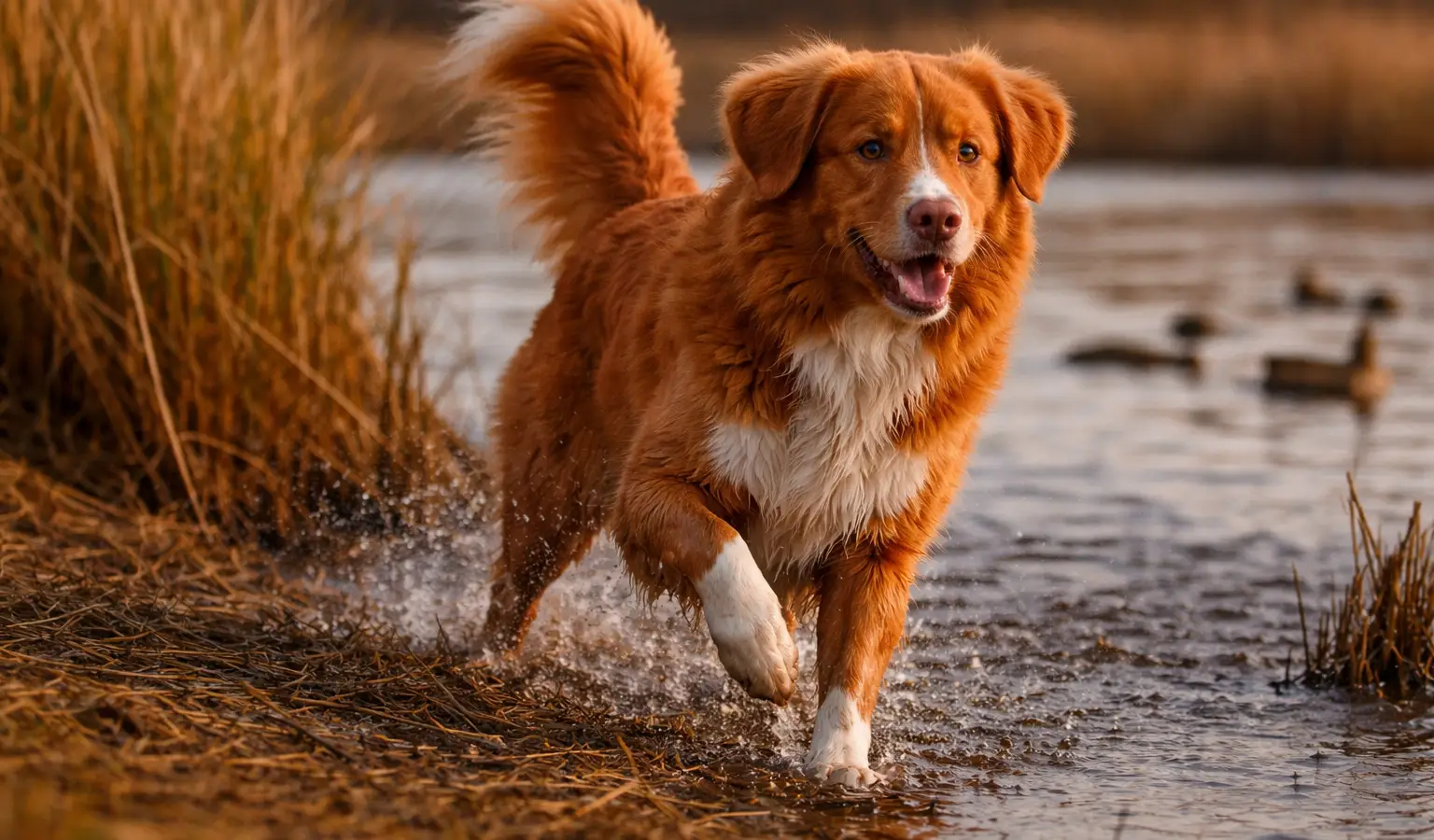
The Nova Scotia Duck Tolling Retriever is the smallest of the retrievers and was developed to lure and retrieve waterfowl using the unique “tolling” technique. Highly intelligent, energetic and playful, it stands out for its excellent nose and strong working drive. Deeply attached to its owner, it requires regular physical and mental stimulation along with consistent training.
Life expectancy
12 – 14 years
Price
1200 – 2200 €
Monthly budget
75 €
Size
Medium
Profile
Nova Scotia Duck Tolling Retriever
Origin
Canada
Year of origin
1900
Developed by
Canadian hunters (Nova Scotia)
Size
Medium
Coat type
Double coat
Owner profile
Active owner
Hypoallergenic
No
Litter size
6
Life expectancy
12 – 14 years
Price
1200 – 2200 €
Female
- Height : 45 – 48 cm
- Weight : 17 – 20 kg
Male
- Height : 48 – 51 cm
- Weight : 20 – 23 kg
Temperament & abilities
Affectionate
4/5
Calm
2/5
Independent
3/5
Intelligence
5/5
Obedience
4/5
Hunting instinct
5/5
Energy level
5/5
Good with children
4/5
Dog-friendly
4/5
Friendly with strangers
3/5
Hunting profile
Stamina
4/5
Hunting drive
4/5
Independence
3/5
Trainability
4/5
Beginner-friendly
3/5
Family compatibility
4/5
Feather game
4/5
Fur game
2/5
Underground work
0/5
Water work
4/5
These indicators help compare breeds and choose the right one for your hunting style.
Game & abilities
Estimated ability level by game type.
Budget
Purchase price
1200 – 2200 €
The price may vary depending on the breeder, bloodline, and region.
Average monthly cost
75 €
Estimated average: food, healthcare, accessories, and grooming.
A compact retriever with real field ability, high energy, and a strong need for training and engagement
Is the Nova Scotia Duck Tolling Retriever a good hunting dog?
The Nova Scotia Duck Tolling Retriever can be a very good hunting dog for the right person, especially for waterfowl work and versatile retrieving in a smaller, agile package. A well-bred Toller often combines enthusiasm, quickness, strong retrieving instinct, and close cooperation with the handler. It is not usually chosen for brute power or the widest all-purpose hunting role, but for hunters who want a lively retriever with good trainability, a keen nose, and the ability to work marsh, shoreline, light cover, and mixed terrain, the breed makes a coherent and often very enjoyable choice.
In the field, the Toller tends to work with speed, animation, and a fairly responsive handling style. Many show a natural desire to retrieve and a willingness to stay connected to their person, which can help with recall, direction changes, and steadiness when training has been done carefully. Their size can be an advantage in tight blinds, small boats, and daily transport, and many Tollers have enough stamina for regular hunting days without being as physically heavy as some larger retrievers. That said, working style can vary by line, and not every individual has the same degree of calmness, resilience in cold water, or natural composure around repeated gunfire and high excitement.
The breed’s strengths come with real demands. Nova Scotia Duck Tolling Retriever temperament is often intense, bright, and sensitive rather than easygoing. This is usually not the best fit for a casual owner who wants a hunting dog to mature almost automatically. Tollers generally need structured training, clear handling, impulse control, and enough mental work to prevent frustration or noise, overarousal, and self-directed habits. Harsh methods can backfire, while inconsistent training may leave you with a talented dog that is difficult to channel.
- Best use cases: duck and goose retrieves, upland work with retrieving duties, hunters who value biddability and an active partnership.
- Main strengths: agility, enthusiasm, trainability, compact size, good retrieve drive, close handler focus.
- Possible limitations: sensitivity, high energy indoors if underworked, variable tolerance for cold and pressure, less suited to people wanting a low-maintenance gundog.
For everyday life, the Toller can be a rewarding family companion, but usually only when its working mind is taken seriously. This is a dog that often does best with regular training, purposeful exercise, and owners who enjoy an interactive, switched-on temperament. If you are comparing hunting breeds, think of the Nova Scotia Duck Tolling Retriever as a specialized, energetic retriever that can shine in hunting and home life when given direction, consistency, and enough outlet for its drive.
Natural tolling action
The Toller’s standout specialty is the lively, teasing movement that can help draw curious ducks within range when worked correctly from cover. Not every individual shows the same intensity, and success depends heavily on timing and handling, but this breed’s animated style is one of the most distinctive hunting traits in the retriever world.
Strong water retrieves
Well-bred Nova Scotia Duck Tolling Retrievers are often enthusiastic water dogs with the drive to mark, enter cold water willingly, and bring birds back cleanly to hand. Their medium size makes them easier to lift in and out of boats or blinds than some larger retrievers, while still offering enough substance for serious duck work.
Responsive, close handling
This breed often suits hunters who want a biddable dog that works in partnership rather than at long independent distance. Tollers typically respond well to thoughtful training, whistle cues, and steady repetition, though many are sensitive enough that heavy-handed handling can reduce confidence and precision instead of improving performance.
Agile in mixed terrain
The Nova Scotia Duck Tolling Retriever is a practical choice for hunters covering marsh edges, small ponds, brushy banks, and uneven woodland ground. Its athletic build supports quick turns, nimble movement, and efficient coverage without the bulk of heavier retrievers, which can be especially useful in tighter setups and varied shooting locations.
Good drive without oversized bulk
A capable Toller often brings plenty of energy, prey drive, and retrieving enthusiasm in a more compact package than many traditional duck dogs. For some owners, that balance is a real advantage: enough intensity for regular hunting and training, but a size that can fit more easily into everyday family life, travel, and smaller vehicles.
Versatile for active handlers
Beyond classic waterfowl work, some Tollers adapt well to a broader role that includes upland retrieves, blind work, and advanced training games that sharpen focus and control. They tend to do best with engaged handlers who enjoy regular practice, because their ability usually shows most clearly when mental work and physical exercise are both taken seriously.
Who the Nova Scotia Duck Tolling Retriever suits best
The Nova Scotia Duck Tolling Retriever tends to suit an active owner who wants a compact gundog with real working ability and an off-switch that usually depends on enough exercise, training, and daily engagement. For hunting, this breed often fits someone who values a responsive retriever for waterfowl, enjoys handling a dog closely, and is willing to put time into steadiness, recall, and retrieving structure. In family life, Tollers often do best with people who like training, outdoor routines, and a dog that wants to be involved rather than simply left to entertain itself.
It is usually less suitable for a low-activity household, an owner wanting a very laid-back retriever, or a hunter expecting a plug-and-play dog with minimal training. Some individuals can be sensitive, busy, or vocal, and many do best with calm, consistent handling rather than heavy pressure. A good match is often:
- an active family that enjoys hiking, training, and regular dog time
- a hunter wanting a smaller retriever with drive and biddability
- an owner prepared for mental work, not just a quick walk around the block
How a small Canadian water dog became a distinctive retriever with drive, sensitivity, and a very specific working style
Origin and development of the Nova Scotia Duck Tolling Retriever
The Nova Scotia Duck Tolling Retriever developed in eastern Canada, especially in Nova Scotia, where hunters wanted a compact, agile gun dog that could both lure waterfowl within range and retrieve birds from cold water. The key idea behind the breed is reflected in the word tolling: by moving energetically along the shoreline, often in a playful, fox-like way, the dog could attract the curiosity of ducks. Once the birds came closer, the dog would switch from teasing movement to steady retrieving work. That unusual origin helps explain why the breed still combines high animation with strong retrieving instinct.
Its exact early recipe is not perfectly documented, but most breed historians believe local hunting dogs were shaped over time with help from retriever, spaniel, setter, and likely collie-type influences. Rather than being created for show, the Toller was selected for practical field value in harsh coastal conditions: stamina, water confidence, responsiveness to the handler, and enough intelligence to shift between excitement and control. Formal recognition came later, but the working concept was already well established by the time the breed became distinct in Canada.
That background still shows in the modern Nova Scotia Duck Tolling Retriever. Many Tollers are quick, intense, and highly alert dogs that thrive when they have structured activity and meaningful engagement. Compared with some larger retrievers, they often feel faster in their reactions and a bit more sensitive in their handling. For hunters, that can mean an eager, stylish dog well suited to waterfowl and versatile gundog work, especially when training is clear and fair. For family life, it means this is usually not the easiest low-maintenance retriever for households wanting a calm dog with minimal daily demands.
The breed tends to suit owners who appreciate an active, trainable dog with real working instincts and who are prepared to channel energy into retrieving games, field training, and regular outdoor life. In the right hands, the Toller’s history translates into several practical strengths:
- strong desire to work closely with people
- natural enthusiasm for retrieving and water
- compact size compared with many other gundog breeds
- good versatility for hunting, sport, and active family routines
That said, the same heritage can bring intensity, vocal excitement in some lines, and a need for thoughtful socialization and impulse control. Anyone considering the breed should see its history not as a romantic detail, but as a guide to daily reality: the Nova Scotia Duck Tolling Retriever was shaped to be busy, engaged, and useful, and it generally does best when modern life gives it a real job to do.
Born in Nova Scotia
The Nova Scotia Duck Tolling Retriever developed in eastern Canada, most likely in Nova Scotia, where hunters wanted a compact gundog that could lure waterfowl, retrieve from cold water, and live as a practical all-round companion. Its exact early mix is debated, but spaniel, retriever, setter, and collie-type influence is often mentioned in breed history.
A specialist in tolling
What sets this breed apart is tolling: the dog moves with lively, playful energy along the shoreline to spark the curiosity of ducks, then switches to steady retrieving once birds are shot. This unusual job demands animation, responsiveness, and self-control, which helps explain the breed’s mix of drive, quickness, and sensitivity.
Soft but intense temperament
Many Tollers combine an affectionate home life with serious working enthusiasm outdoors. They are often intelligent and trainable, but not usually at their best under heavy-handed handling. A thoughtful owner who uses clear structure, repetition, and fair motivation will often get more reliability than someone who expects a naturally easy, low-maintenance retriever.
Needs more than a walk
This is typically an energetic sporting breed that needs regular physical exercise and mentally engaging work. Fetch, scent games, swimming, obedience, hunting training, and field-style drills usually suit it better than a purely sedentary routine. Without enough outlets, some individuals may become noisy, restless, or overly intense in the house.
Best with active owners
The Nova Scotia Duck Tolling Retriever can adapt to family life, but it generally fits best with people who genuinely enjoy training and outdoor activity. It may suit hunters wanting a smaller retriever for waterfowl and mixed shooting days, and it can also work for sporty non-hunters who are ready for daily involvement rather than occasional exercise.
Coat and daily upkeep
The weather-resistant double coat was made for rough conditions and cold water, so basic care is practical rather than elaborate. Regular brushing helps manage seasonal shedding and keeps feathering from matting. Ears, paws, and post-swim drying deserve attention, especially for dogs that train often in wet ground, marsh edges, or muddy cover.
Practical answers on hunting ability, training, family life, housing, and owner fit
Nova Scotia Duck Tolling Retriever hunting FAQ
Is the Nova Scotia Duck Tolling Retriever a good hunting dog for beginners?
The Nova Scotia Duck Tolling Retriever can be a very capable hunting companion, but it is not always the easiest retriever for a first-time handler. Many Tollers are intelligent, driven, and quick to learn, yet they can also be sensitive, busy, and less forgiving of inconsistent training than some more easygoing gundog breeds. A beginner who enjoys structured training, reads canine body language well, and can provide regular field exposure may do well with one. For someone wanting a highly biddable dog with a very steady off switch from day one, another retriever may sometimes be a simpler starting point.
What kind of hunting is a Nova Scotia Duck Tolling Retriever best suited for?
The breed is best known for waterfowl work, especially as a small retriever with strong enthusiasm for birds, water, and close cooperation with its handler. In practical terms, many Tollers are well suited to duck hunting, marsh work, and mixed retriever tasks where marking, retrieving, and responsiveness matter more than sheer size. Some individuals also do well on upland birds, particularly when their training encourages steadiness and controlled flushing. As with any working line, actual hunting style and natural strengths can vary by breeding, early exposure, and the quality of training.
Are Nova Scotia Duck Tolling Retrievers easy to train for retrieving and gun work?
They are usually very trainable, but they often respond best to thoughtful, fair handling rather than heavy pressure. Many Tollers have plenty of retrieving desire and can develop strong marking and delivery skills, though steadiness, impulse control, and emotional balance may need careful work. Short, varied sessions often suit them better than repetitive drilling that causes boredom or conflict. If gun introduction, bird work, and recall foundations are done progressively, the breed can become a polished hunting partner, but rushed training may bring noise, overarousal, or avoidance in some dogs.
Can a Nova Scotia Duck Tolling Retriever be both a hunting dog and a good family dog?
In the right home, yes. A well-bred, well-trained Toller often combines affectionate family behavior with strong working drive, which is one reason the breed appeals to active owners. The key is that this is usually not a low-maintenance house dog; most need regular physical exercise, training goals, and mental engagement to live pleasantly indoors. They often do best with families who enjoy outdoor life, understand that arousal needs management, and can give the dog both companionship and structure.
How much exercise does a Nova Scotia Duck Tolling Retriever need if it is not hunting every week?
Most Tollers need more than a couple of casual walks around the block. Even when they are not in active hunting season, they usually benefit from daily aerobic exercise, retrieving games, training sessions, and problem-solving activities that use their brain as well as their body. A good routine might include brisk walks, off-lead running where safe and legal, obedience or gundog drills, and regular chances to carry, search, or retrieve. Without enough outlets, some individuals may become noisy, restless, destructive, or difficult to settle.
Is the Nova Scotia Duck Tolling Retriever suitable for apartment living or a small home?
It can work in a smaller home, but success depends far more on lifestyle than square footage. This breed is typically energetic, alert, and easily under-stimulated, so apartment living tends to suit owners who are highly committed to exercise, training, and calm routines indoors. Noise can also be a consideration, because some Tollers are more vocal or excitable than people expect. A house with secure outdoor space may be easier, but a small home is still possible if the dog gets serious daily activity and learns how to switch off.
Who is the Nova Scotia Duck Tolling Retriever best for, and who should think twice?
This breed often suits active people who want a compact hunting dog with real drive, trainability, and close handler engagement. It can be a strong match for hunters, dog sport homes, and outdoorsy families who enjoy ongoing training rather than simply owning an easy pet. People who prefer a very laid-back dog, have limited time for exercise, or dislike vocal, intense, or emotionally sensitive dogs may find the breed more demanding than expected. Choosing carefully matters, because temperament can differ between lines, and the right breeder or rescue assessment makes a big difference.