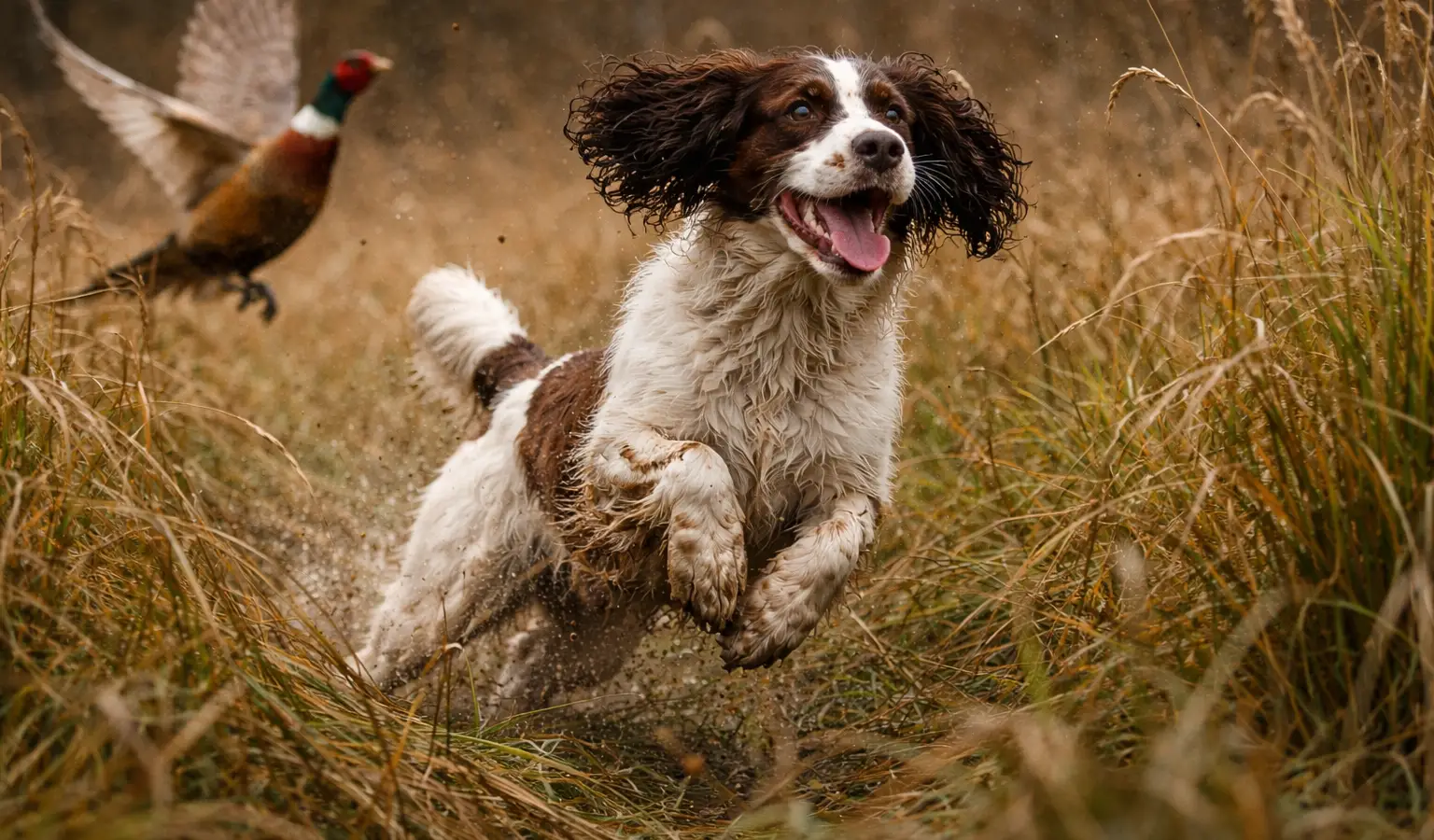
English Springer Spaniel
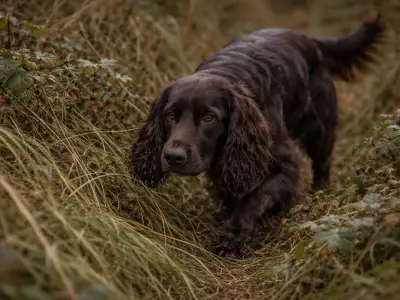
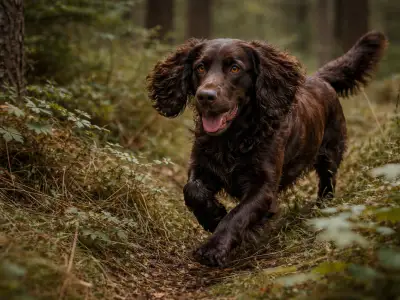
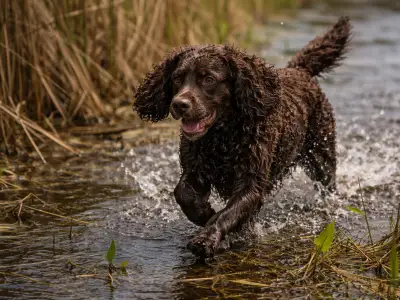
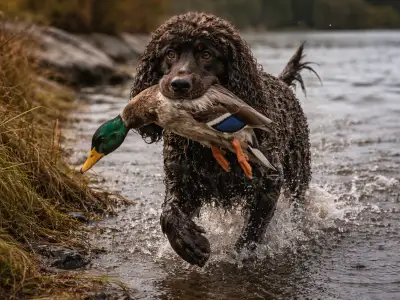
The English Springer Spaniel is a versatile and energetic hunting dog, well known for its intelligence, enthusiasm and excellent nose. Traditionally used to flush and retrieve game, it performs efficiently across varied terrain. Affectionate, sociable and strongly attached to its family, it also makes an excellent active companion when given daily exercise and consistent training.
Life expectancy
12 – 14 years
Price
900 – 1800 €
Monthly budget
75 €
Size
Medium
Profile
English Springer Spaniel
Origin
United Kingdom
Year of origin
1800
Developed by
British breeders
Size
Medium
Coat type
Long coat
Owner profile
Active owner
Hypoallergenic
No
Litter size
7
Life expectancy
12 – 14 years
Price
900 – 1800 €
Female
- Height : 48 – 51 cm
- Weight : 18 – 22 kg
Male
- Height : 51 – 56 cm
- Weight : 20 – 25 kg
Temperament & abilities
Affectionate
5/5
Calm
3/5
Independent
2/5
Intelligence
5/5
Obedience
4/5
Hunting instinct
5/5
Energy level
4/5
Good with children
5/5
Dog-friendly
5/5
Friendly with strangers
5/5
Hunting profile
Stamina
5/5
Hunting drive
5/5
Independence
3/5
Trainability
4/5
Beginner-friendly
4/5
Family compatibility
5/5
Feather game
5/5
Fur game
2/5
Underground work
3/5
Water work
3/5
These indicators help compare breeds and choose the right one for your hunting style.
Game & abilities
Estimated ability level by game type.
Budget
Purchase price
900 – 1800 €
The price may vary depending on the breeder, bloodline, and region.
Average monthly cost
75 €
Estimated average: food, healthcare, accessories, and grooming.
A versatile flushing gun dog with real drive, close partnership, and plenty of energy to manage
Why the English Springer Spaniel Works So Well in the Field
The English Springer Spaniel is widely regarded as a very good hunting dog, especially for flushing game and working closely with a gunner. Its main strengths are a keen nose, lively search pattern, natural eagerness to cover ground, and a style of work that usually keeps the dog within practical handling distance. For hunters looking at an English Springer Spaniel hunting dog, the appeal is clear: this breed can combine drive, biddability, and a useful retrieve in one compact, athletic package.
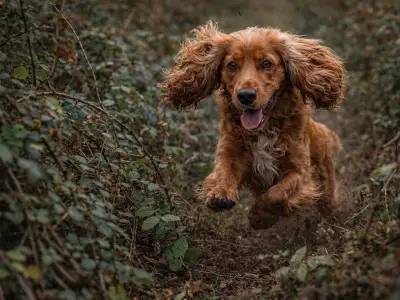
In the field, the Springer typically excels in dense cover, hedgerows, woodland edges, rough grass, and mixed terrain where birds may sit tight. The breed is known for animation and courage in cover, often pushing into bramble, scrub, and wet ground with more enthusiasm than many owners expect. Compared with some wider-ranging hunting breeds, the English Springer Spaniel usually makes the most sense for hunters who want a dog working in contact rather than ranging far out. That close working style can make handling easier, but it still depends heavily on training, breeding, and the dog's level of steadiness.
Trainability is one of the breed's major assets, but it should not be confused with low effort. A Springer is intelligent, quick to learn, and often very responsive to tone and routine, yet that same sensitivity and energy level mean inconsistent handling can create noise, overexcitement, creeping, or messy recall. The best results usually come from structured early training, clear stop and recall work, regular retrieves, and enough physical and mental exercise outside the shooting season. This is not a breed that tends to thrive as an underworked pet with only occasional activity.
For everyday life, the balance is attractive if the household genuinely wants an active dog. A well-bred, well-managed English Springer Spaniel can be affectionate, engaged, and highly companionable at home, but field ability often comes with stamina, persistence, and a need for regular outlets. It is most coherent for people who want one dog for rough shooting, walked-up days, informal retrieving, and active family life, rather than a specialist for very big water retrieves or extreme distance work. In short, the English Springer Spaniel suits hunters who value partnership, trainability, and energetic close-cover performance, and it suits homes prepared to live with a bright, busy working dog.
Close, practical flushing range
The English Springer Spaniel is valued for working at a useful gun range rather than disappearing over the horizon. In cover, many individuals naturally quarter in front of the handler, pushing game out of bramble, hedgerow, rough grass, and woodland edges. That makes the breed especially appealing to hunters who want a dog they can stay connected to on foot.
Sharp nose in thick cover
A good Springer often shows impressive scenting ability when birds are holding tight in dense ground. The breed is built for finding moving scent, old scent, and hidden game in places where visibility is poor. In practical hunting, that nose helps the dog stay productive in wet cover, tangled brush, and mixed terrain where less determined workers may lose intensity.
Natural game-finding drive
This breed usually brings an energetic, purposeful search style that suits walked-up shooting and varied flushing work. A well-bred English Springer Spaniel tends to hunt with enthusiasm, check likely holding spots, and keep pressing through heavy cover instead of skimming around it. That drive is a major asset in the field, though it needs training and outlets to stay manageable at home.
Reliable retrieve potential
Many English Springer Spaniels show strong retrieving instinct alongside their flushing role, which adds real versatility for hunters who want one dog to do more than push birds up. With proper training, they can often mark falls well, pick game cleanly, and return willingly to hand. Some lines are especially appreciated for practical rough shooting and everyday picking-up duties.
Biddable under instruction
One of the breed’s biggest hunting strengths is its usual willingness to work with a handler. English Springer Spaniels often respond well to consistent training, clear direction, and regular field exposure, which helps shape steadiness, patterning, and delivery. They are not automatic dogs, but for many owners, their combination of drive and cooperation is easier to channel than in harder, more independent workers.
All-day field stamina
The English Springer Spaniel is generally capable of sustaining a busy day across mixed country when fit and properly conditioned. Its medium build supports speed, agility, and repeated effort over uneven ground without the heavier feel of some larger gundogs. For active hunters, that endurance is a real advantage, but it also means the breed usually needs substantial daily exercise outside the season.
Who the English Springer Spaniel suits best
The English Springer Spaniel usually suits the hunter or active owner who wants a close-working, biddable dog with real enthusiasm in the field and enough sociability for family life. It tends to fit best with people who enjoy regular training, frequent outdoor time, and a dog that wants to be involved in daily routines rather than left to entertain itself. For walked-up shooting, flushing work, mixed country outings, or an energetic companion for hiking and country living, the breed can be a very natural fit.
It is often less suitable for owners looking for a low-maintenance dog, a calm apartment companion with minimal exercise, or a highly independent hunting dog that works far out on its own. Many Springers need structure, recall work, and outlets for drive and stamina, especially in active working lines. Households that are busy but largely absent may find the breed frustrating, while engaged homes that enjoy training, exercise, and a cheerful dog with plenty of engine often get the best from it.
How the breed’s history shaped its modern working style and family character
Origins of the English Springer Spaniel
The English Springer Spaniel developed in Britain as a practical land spaniel bred to find game in cover and "spring" it into the open for nets, hawks, and later guns. Early spaniels were not always separated into the distinct breeds we know today, and smaller and larger dogs could appear in the same litters. Over time, the larger, longer-legged dogs became associated with springing and flushing work, while smaller spaniels were developed along different lines. That history helps explain why the English Springer Spaniel is still known for ground-covering energy, close-to-medium working range, and a strong instinct to hunt with the handler rather than far away on its own.
As shooting methods evolved, breeders selected dogs that could quarter fields efficiently, push birds out of dense cover, and remain biddable enough to work under direction. The result was a dog that combined stamina with responsiveness: lively, driven, and eager, but typically more handler-focused than many pointing breeds. In modern terms, that often means an English Springer Spaniel thrives with regular activity, training, and jobs that use its nose and brain. For hunters, this background can make the breed especially appealing for flushing gamebirds in varied cover. For non-hunting homes, the same traits can translate into an active, affectionate companion that usually needs more structure and exercise than its friendly expression might suggest.
The breed’s development also led to some divergence between field-bred and show-bred Springers, particularly in countries where competitive field work and conformation showing followed different priorities. Not every dog fits a simple category, but field-oriented lines are often bred with strong hunting drive, speed, and intensity in mind, while show lines may differ somewhat in coat, outline, and working emphasis. For a buyer, this matters: the dog’s individual breeding can influence energy level, trainability, sensitivity, and day-to-day management as much as the breed name itself.
What has remained remarkably consistent is the Springer’s reputation for enthusiasm, trainability, and usefulness in close partnership with people. Its history did not produce a low-maintenance dog. It produced a versatile flushing spaniel that often does best with owners who enjoy training, outdoor time, and an engaged daily routine. That is the clearest link between the English Springer Spaniel’s origin and its present temperament: it was shaped to work hard, stay connected, and keep going.
Old spaniel roots
The English Springer Spaniel comes from old British land spaniel stock developed to find and flush game for hunters. The name “springer” refers to the dog’s job: making birds break cover so a hunter could mark or shoot. Over time, the breed became known for combining nose, drive, and a cooperative attitude in the field.
Bred to work close
Unlike wide-ranging pointing breeds, the English Springer Spaniel was selected to hunt within practical gun range and stay connected to the handler. That working style still matters today. Many Springers naturally quarter the ground in front of the hunter, respond well to direction, and suit people who want an active but handleable flushing dog.
Lively, soft, willing
A well-bred English Springer Spaniel is often described as cheerful, people-oriented, and eager to please, but also highly energetic and sensitive to handling. This is usually a dog that learns best with clear routines and fair training rather than heavy pressure. The combination can be excellent for engaged owners and frustrating for households expecting an easygoing couch dog.
Field lines and show lines
In many countries, English Springer Spaniels have diverged into stronger working lines and more show-focused lines, with some overlap between them. Field-bred dogs often bring more speed, intensity, and day-to-day exercise needs, while show lines may look heavier and vary in working instinct. For hunters, this distinction can matter as much as the breed name itself.
Needs a busy life
This breed usually does best in a home that provides daily movement, training, and mental work. A quick walk around the block is rarely enough for a Springer in full energy. Hunting, scent games, retrieving drills, and structured off-lead exercise can help keep the dog settled, while long periods of boredom may lead to noise, restlessness, or unhelpful habits.
Coat and upkeep
The English Springer Spaniel’s practical working coat still needs regular care. Feathering can collect burrs, mud, and tangles after field outings, and the ears deserve routine attention because they are long and close-fitting. Most owners should expect steady brushing, basic trimming or professional grooming, and frequent post-walk checks rather than low-maintenance care.
Practical answers on hunting ability, training, exercise, family life, housing, and owner fit
English Springer Spaniel hunting and lifestyle FAQ
Is the English Springer Spaniel a good hunting dog for beginners?
The English Springer Spaniel can be a very good choice for a new hunter, especially for someone interested in flushing game birds and working at moderate gun range. The breed is usually biddable, people-oriented, and eager to stay engaged with the handler, which can make early training smoother than with more independent dogs. That said, energy, excitement around birds, and sensitivity to inconsistent handling can challenge a first-time owner who is not prepared to train regularly. A beginner will usually do best with clear obedience foundations, controlled bird exposure, and, when possible, guidance from a trainer familiar with flushing spaniels.
What is an English Springer Spaniel best at in the field?
This breed is best known as a flushing dog that works cover energetically, finds birds, and pushes them into flight for the hunter. Many English Springer Spaniels are especially valued for close to medium-range work, responsiveness, and their ability to hunt thick cover where a dog needs drive without ranging too far. Some lines also retrieve very willingly, particularly on upland birds and smaller waterfowl situations, but strengths can vary by breeding and training. Hunters who want a stylish, fast, highly interactive bird dog often find the Springer especially appealing.
How much exercise does an English Springer Spaniel need if it is not used for hunting every week?
Most English Springer Spaniels need substantial daily activity, not just a short leash walk around the block. A good routine often includes brisk walks, off-lead running in safe areas, retrieving games, scent work, and short training sessions that use the dog's brain as well as its body. Without enough outlet, some individuals may become noisy, restless, or overly enthusiastic indoors rather than truly destructive by default. Even in a family home, this is usually a dog that does best when life includes structure, purpose, and regular opportunities to move.
Are English Springer Spaniels easy to train for hunting and family life?
They are often considered quite trainable, but easy is relative. Many Springers learn quickly because they are attentive, food-motivated, and interested in working with people, which helps with recall, basic obedience, retrieving games, and household manners. At the same time, their enthusiasm can run ahead of their self-control, so training usually works best when it is consistent, calm, and built around repetition rather than harsh correction. For a dog expected to switch between family companion and hunting partner, early steadiness, recall, impulse control, and polite indoor habits matter just as much as field skills.
Can an English Springer Spaniel live in an apartment or small home?
An English Springer Spaniel can live in a smaller home if its exercise, training, and mental stimulation needs are met every day. The main issue is usually not square footage but whether the owner can provide enough activity and prevent boredom, frustration, and over-arousal. A dog from very driven working lines may be more intense in daily life and may need more structured outlets than a more moderate individual. Apartment living is most realistic for owners who enjoy regular outdoor time, enforce routines, and do not expect the dog to be naturally calm without effort.
Is the English Springer Spaniel good with children and family life?
Many English Springer Spaniels fit family life well because they tend to be affectionate, people-focused, and eager to join everyday activity. They often enjoy children, but success depends on the dog's temperament, the level of supervision, and whether the household teaches calm interactions rather than constant rough excitement. Because this is an energetic sporting breed, some individuals can be bouncy when young and may overwhelm very small children if manners are not in place. Families usually have the best experience when they treat the dog as an active companion who needs training, routine, and inclusion rather than a low-maintenance pet.
Who is the English Springer Spaniel the right breed for, and who might struggle with one?
This breed often suits active owners who want a versatile dog for bird hunting, outdoor life, regular training, and close day-to-day companionship. It can be an excellent match for hunters who want a flushing spaniel, as well as for non-hunters who genuinely enjoy hiking, retrieving games, and dog training several times a week. People who may struggle are those looking for a very independent low-effort dog, a naturally sedentary house pet, or a breed that stays content with minimal exercise. In practical terms, the best owner usually enjoys managing energy, reinforcing manners, and giving the dog a job, even if that job is not formal hunting every weekend.