Golden Retriever
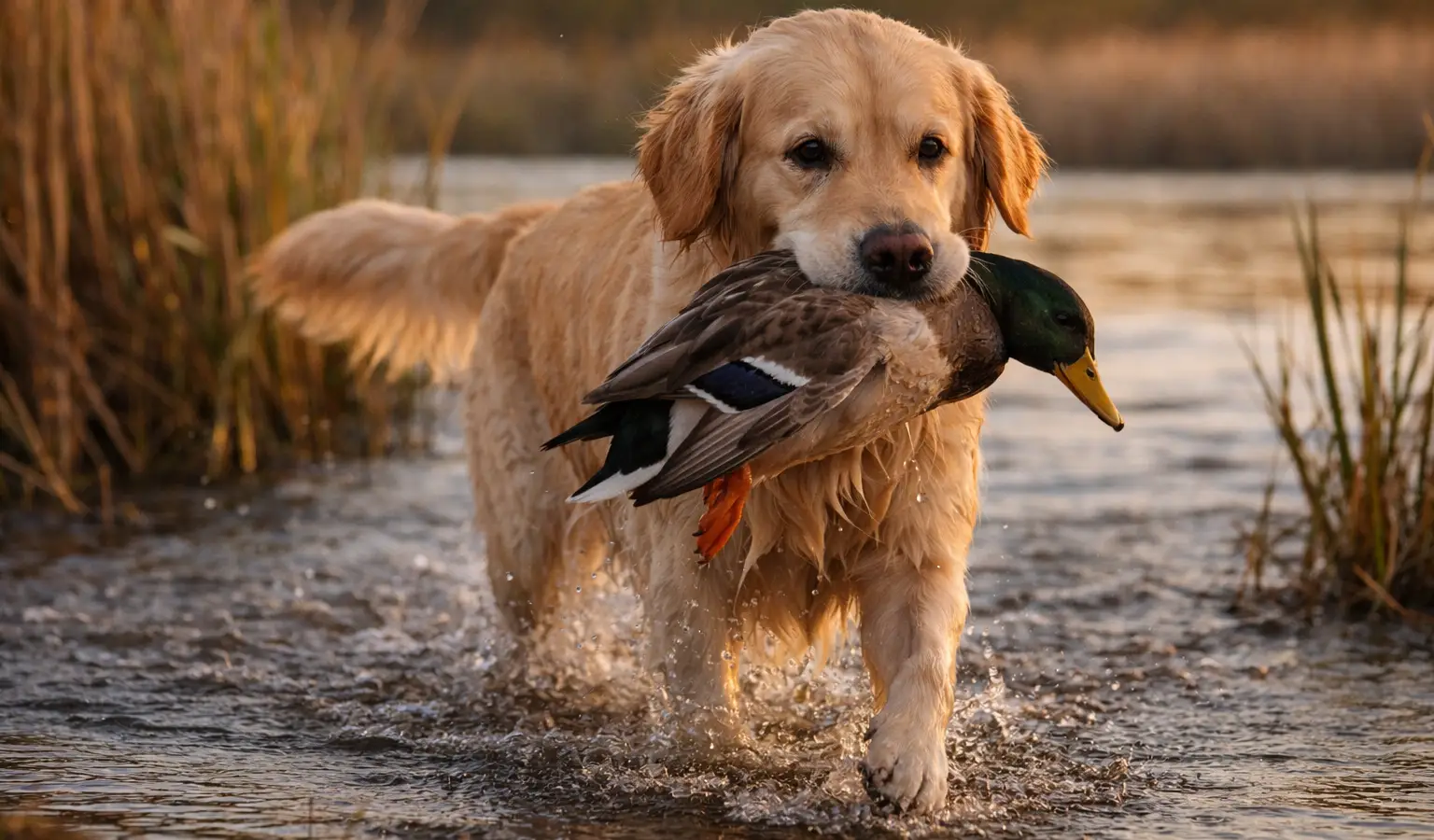
The Golden Retriever is a well-balanced and versatile retrieving dog, renowned for its intelligence, gentle nature and extremely sociable temperament. Originally bred for game retrieving, especially in wet environments, it stands out for its excellent nose, willingness to work and strong learning ability. Affectionate, patient and reliable, it is now one of the most popular family dogs when given daily exercise and consistent training.
Life expectancy
10 – 12 years
Price
1000 – 2200 €
Monthly budget
85 €
Size
Large
Profile
Golden Retriever
Origin
United Kingdom
Year of origin
1868
Developed by
Lord Tweedmouth
Size
Large
Coat type
Long coat
Owner profile
Calm owner
Hypoallergenic
No
Litter size
7
Life expectancy
10 – 12 years
Price
1000 – 2200 €
Female
- Height : 51 – 56 cm
- Weight : 25 – 32 kg
Male
- Height : 56 – 61 cm
- Weight : 30 – 36 kg
Temperament & abilities
Affectionate
5/5
Calm
4/5
Independent
2/5
Intelligence
5/5
Obedience
5/5
Hunting instinct
4/5
Energy level
4/5
Good with children
5/5
Dog-friendly
5/5
Friendly with strangers
5/5
Hunting profile
Stamina
4/5
Hunting drive
3/5
Independence
2/5
Trainability
5/5
Beginner-friendly
5/5
Family compatibility
5/5
Feather game
4/5
Fur game
2/5
Underground work
0/5
Water work
4/5
These indicators help compare breeds and choose the right one for your hunting style.
Game & abilities
Estimated ability level by game type.
Budget
Purchase price
1000 – 2200 €
The price may vary depending on the breeder, bloodline, and region.
Average monthly cost
85 €
Estimated average: food, healthcare, accessories, and grooming.
A versatile retriever with a soft mouth, cooperative handling, and real field potential when bred and trained for work.
Is the Golden Retriever a good hunting dog?
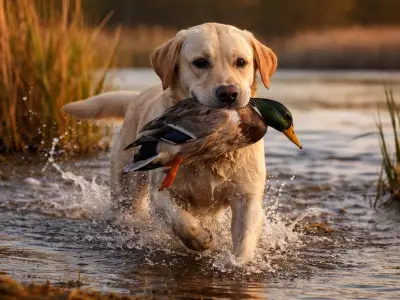
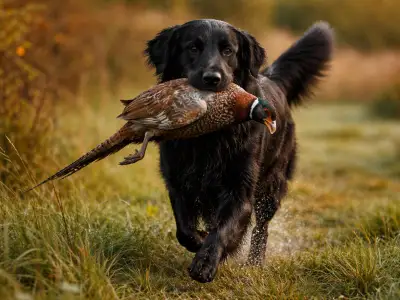
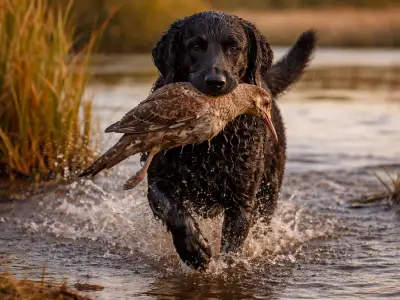
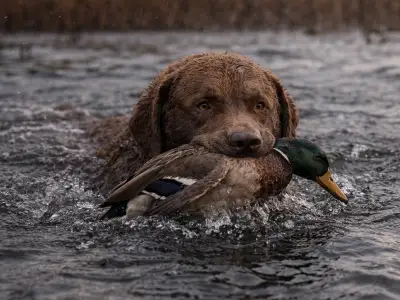
The Golden Retriever can be a very good hunting dog, especially for retrieving shot game on land and from water. At its best, Golden Retriever hunting combines a keen nose, willing cooperation, steady temperament, and a natural desire to carry game back to hand. For many hunters, the breed makes most sense as a versatile gundog for walked-up shooting, waterfowl retrieves, and practical picking-up work rather than as an ultra-specialized field competitor or a hard-driving pointing dog.
In the field, the Golden usually works in a balanced, biddable style. Many have an efficient search pattern, enough stamina for a full day if properly conditioned, and the courage to enter cold water, cover, mud, and awkward ground without much drama. Handling is often one of the breed's strongest assets: a good Golden tends to stay connected to the handler, take direction willingly, and recover from mistakes without becoming hectic. That can make training more straightforward for many owners than with some more independent or sharper hunting breeds.
The main caveat is that not every Golden Retriever is equally suited to hunting. There can be a meaningful gap between field-bred lines and dogs bred mainly for show or companion life. Some individuals have excellent drive, speed, and marking ability, while others are softer, heavier, slower, or less intense in demanding shooting situations. Training still matters: recall, steadiness, delivery to hand, water confidence, and calm behavior around gunfire and game should be built carefully. A Golden's friendly temperament is an advantage in daily life, but it does not replace structured gundog education.
- Best use cases: retrieving ducks, pheasants, and small game; picking-up; novice-to-intermediate handlers who value cooperation.
- Key strengths: trainability, nose, retrieve instinct, handler focus, adaptability between field and home.
- Possible limitations: variable working intensity between bloodlines, coat maintenance, and less natural fit for people wanting the fastest or most hard-edged field style.
For everyday life, the Golden Retriever often offers a particularly attractive balance. It can be an effective hunting dog while still fitting family routines better than some higher-pressure working breeds, provided it gets real exercise, training, and mental work. This breed tends to suit hunters who want one dog that can retrieve competently, live closely with people, and remain pleasant off the field. If your priority is a cooperative retriever with a kind temperament and useful versatility, the Golden is a coherent choice; if you want maximum speed, intensity, or specialist trial style, other breeds may fit better.
Soft, reliable retrieve
The Golden Retriever is best known for bringing game back cleanly and willingly. A well-bred, well-trained dog often carries birds with a gentle mouth and a strong desire to return straight to hand. For rough shooting, walked-up days, or duck work, that dependable retrieve is one of the breed’s biggest practical advantages.
Highly biddable under instruction
Goldens are widely appreciated for taking direction without constant conflict. Many respond well to structured training, clear repetition, and calm handling, which helps when teaching steadiness, delivery, and blind retrieves. They often suit hunters who want a cooperative working partner rather than a hard, highly independent dog that needs firmer management.
Strong marking ability
A good Golden Retriever can be very useful on marked falls, especially when several birds come down in quick succession. The breed often combines visual memory with composure, allowing the dog to stay organized instead of rushing blindly. In practical terms, this can make game recovery cleaner and reduce wasted time in moderate cover.
Useful nose in broken ground
Although not usually described as a specialist tracker in the hound sense, the Golden Retriever often uses its nose well on wounded or hidden game. In reeds, hedgerows, damp cover, and rough field edges, that scenting ability can make a real difference. Success still depends heavily on training, wind, terrain, and the individual dog.
Steady stamina for full days
The breed usually offers a practical balance of drive and endurance. Many Goldens can keep working through long shooting days without becoming frantic or mentally scattered, provided fitness and conditioning are in place. That makes them appealing to handlers who want sustained effort, especially for repeated retrieves over land and from cold water.
Versatile across land and water
Golden Retrievers are often chosen because they adapt to varied field tasks rather than excelling in only one narrow role. They can fit mixed shooting situations that include rough cover, open ground, and water retrieves. For the right owner, this versatility also carries into daily life, since many working lines remain trainable, social, and manageable at home.
Who the Golden Retriever suits best
The Golden Retriever tends to suit the hunter who wants a cooperative, biddable dog for waterfowl, upland retrieves, and mixed shooting days rather than a hard-driving specialist for very rough handling. Many Goldens thrive with owners who enjoy regular training, steadiness work, and an active daily routine, but who also want a dog that can settle into family life after exercise. This breed often fits households that value trainability, sociability, and a softer temperament, provided the dog still gets meaningful physical activity, retrieving outlets, and close human contact.
It is usually a weaker match for people seeking a highly independent dog, a low-maintenance kennel dog, or a breed that is naturally sharp, aloof, or intense in the field all day without careful conditioning. A Golden can be an excellent hunting companion, but the best fit is often an owner who will invest in obedience, retrieve development, and everyday engagement rather than expecting instinct alone to carry the work.
How a Scottish gundog became both a reliable retriever and an easygoing family companion
Origin and development of the Golden Retriever
The Golden Retriever was developed in Scotland in the 19th century as a practical hunting dog for retrieving shot game, especially birds, over wet ground, rough cover, and cold conditions. The breed is most often linked to Dudley Marjoribanks, later Lord Tweedmouth, who is generally credited with shaping a line of yellow retrievers suited to the demands of estate shooting. The broad outline is well supported, even if some details of the exact crosses used over time are still discussed by historians.
What matters for today’s owner is why those early breeders selected the dogs they did. They wanted a biddable retriever with a soft mouth, good scenting ability, steadiness around guns, confidence in water, and enough stamina to work through a full day in the field without becoming difficult to handle. Historical records suggest that yellow retrievers were developed using stock that likely included the now-extinct Tweed Water Spaniel, along with retriever and setter influence. That background helps explain the modern Golden’s combination of trainability, cooperative nature, and enthusiasm for carrying and retrieving.
This history still shows in the breed’s everyday character. A well-bred Golden Retriever often wants to work with people rather than independently against them, which is one reason the breed is popular with novice handlers as well as experienced hunters. In the field, many Goldens are valued for marked retrieves, willingness in water, and a calm, useful balance between drive and manageability. At home, that same selection can translate into a sociable, people-oriented dog that usually does best when given regular activity, structure, and a job to do rather than being left bored.
The breed’s development also explains its limits. Golden Retrievers were not created to range as widely as some pointing breeds, nor to bring the hard-headed intensity some specialist working lines show in other gundog roles. Individual dogs vary a great deal by breeding, training, and lifestyle: some modern Goldens come from strong field lines with more speed and intensity, while others are bred mainly for show or companionship and may be less driven in hunting work. For families and hunters who want a responsive, versatile retriever with a generally gentle temperament, that history remains central to the breed’s appeal.
Scottish gundog roots
The Golden Retriever developed in Scotland during the nineteenth century, where breeders aimed to produce a reliable retriever for shooting estates. The goal was a dog able to mark fallen game, carry it gently, and work in wet ground, heather, and cold conditions. That background still helps explain the breed’s soft mouth, biddable nature, and enthusiasm for water.
Selected to retrieve cooperatively
Unlike more independent hunting breeds, the Golden was shaped to work closely with people. Good lines often show a strong desire to please, steady handling, and a natural tendency to bring objects back rather than range too widely. For hunters, that can mean an enjoyable, trainable partner; for families, it often translates into a dog that likes being involved in everyday life.
Gentle but not low-energy
The breed is widely known for its friendly, tolerant temperament, but that softness should not be mistaken for laziness. Most Golden Retrievers need regular exercise, training, and mental tasks to stay balanced. A well-bred, well-raised dog may settle nicely at home, yet many still need retrieving games, long walks, swimming, or field-style work to feel fully satisfied.
Best with active households
Goldens usually do best with owners who enjoy daily interaction and have time for movement, training, and company. They often adapt well to family homes if their exercise needs are met, but they are not ideal for a very absent lifestyle. Many are social dogs that can become noisy, restless, or overly exuberant when under-stimulated, especially during adolescence.
Feathered coat, real upkeep
The attractive double coat protects the dog in rough weather and cold water, but it brings practical maintenance. Expect regular brushing, seasonal shedding, and some mud or debris after outdoor work. Ears, feet, and feathering need routine attention, particularly in active dogs. For many owners, coat care is manageable, though it is more than with a short-coated gundog.
A versatile companion hunter
In the field, the Golden Retriever often suits people who value cooperation, trainability, and a calm retrieve over extreme speed or hard-driving intensity. Some dogs are excellent on ducks, walked-up shooting, and general picking-up, while others are kept mainly as family companions. The exact hunting ability depends a great deal on breeding, training, and the opportunities the dog is given.
Practical answers on hunting ability, training, exercise, home life, and owner fit
Golden Retriever hunting and family life FAQ
Is a Golden Retriever actually a good hunting dog or mostly a family pet?
A well-bred Golden Retriever can be a very capable hunting dog, especially for waterfowl and upland retrieving. The breed was developed to work closely with people, carry game gently, and stay biddable in the field, which is why many hunters still value it. That said, not every Golden comes from hunting lines, and there can be a real difference between a dog bred for field work and one bred mainly for show or companion life. For someone who wants a dog that can hunt and live comfortably in the home, the Golden Retriever is often one of the more versatile choices.
Are Golden Retrievers easy to train for hunting and obedience?
Golden Retrievers are usually considered highly trainable because they tend to enjoy cooperation, repetition, and praise. Many learn basic obedience quickly, and that willingness often carries over into retrieving drills, steadiness, recall, and simple handling work. Their soft, people-focused temperament can be a strength, but it also means harsh training methods may reduce confidence or enthusiasm in some dogs. Clear routines, short sessions, consistent standards, and early exposure to birds, water, gunfire, and different terrain usually produce better results than trying to rush advanced work.
How much exercise does a Golden Retriever need if I want one for hunting and family life?
Most Golden Retrievers need more than a couple of short walks, especially during adolescence and young adulthood. A hunting-minded Golden often does best with a mix of physical exercise and mental work such as retrieves, scent games, obedience practice, swimming, and structured off-leash activity where safe and legal. Without enough daily outlet, some dogs become overly excitable, mouthy, restless, or difficult to settle indoors. For many households, the breed fits best when the owner genuinely enjoys regular training and active time outside rather than expecting the dog to be calm with minimal effort.
Can a Golden Retriever live in an apartment or does it need a big yard?
A large yard is helpful, but it is not the only factor that determines whether a Golden Retriever will be happy. Many Goldens can live in smaller homes or apartments if their exercise, training, and social needs are met every day in a reliable way. The bigger challenge is often the owner's schedule, because this breed usually wants companionship, activity, and involvement rather than long periods of boredom. If you hunt regularly, train several times a week, and provide meaningful outings, a Golden may adapt well; if you want a low-maintenance dog that entertains itself, this breed is less likely to be an easy fit.
Are Golden Retrievers good with children and other pets?
Golden Retrievers are often chosen by families because many are social, tolerant, and affectionate when properly raised and managed. They commonly do well with children and can live peacefully with other dogs, and many also coexist nicely with household cats, especially when introduced early and supervised carefully. Still, their size, enthusiasm, and tendency to carry objects in the mouth can be a lot for very young children if manners are not taught. Good family fit depends not just on breed reputation but on breeding, early socialization, impulse control, and adults setting clear rules for both dog and children.
What kind of owner is the Golden Retriever best suited for?
The Golden Retriever usually suits people who want an engaged, trainable dog and are willing to put real time into exercise, grooming, socialization, and ongoing education. It can be an excellent match for active families, first-time owners who are open to learning, and hunters who want a cooperative retriever that can also settle into home life. It is often less ideal for people who are away most of the day, dislike shedding, or want a naturally independent kennel-style dog. If you value a dog that likes to work with you rather than simply around you, the breed often makes sense.
Should I choose a Golden Retriever from field lines if I want to hunt, or is any Golden fine?
If hunting performance is a serious goal, looking at field-bred or proven working stock is usually the more practical path. Dogs from those lines may show stronger drive, more athleticism, and greater consistency for demanding retrieving work, although individuals still vary. A pet-bred Golden may enjoy informal retrieves and occasional hunting, but it may not have the same intensity, stamina, or natural marking ability that some hunters want. The best approach is to be honest about whether you want a weekend family companion that also joins a few shoots or a dog expected to train and perform regularly in the field.