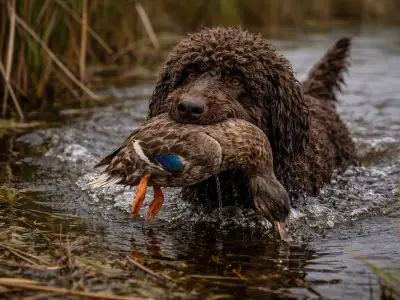
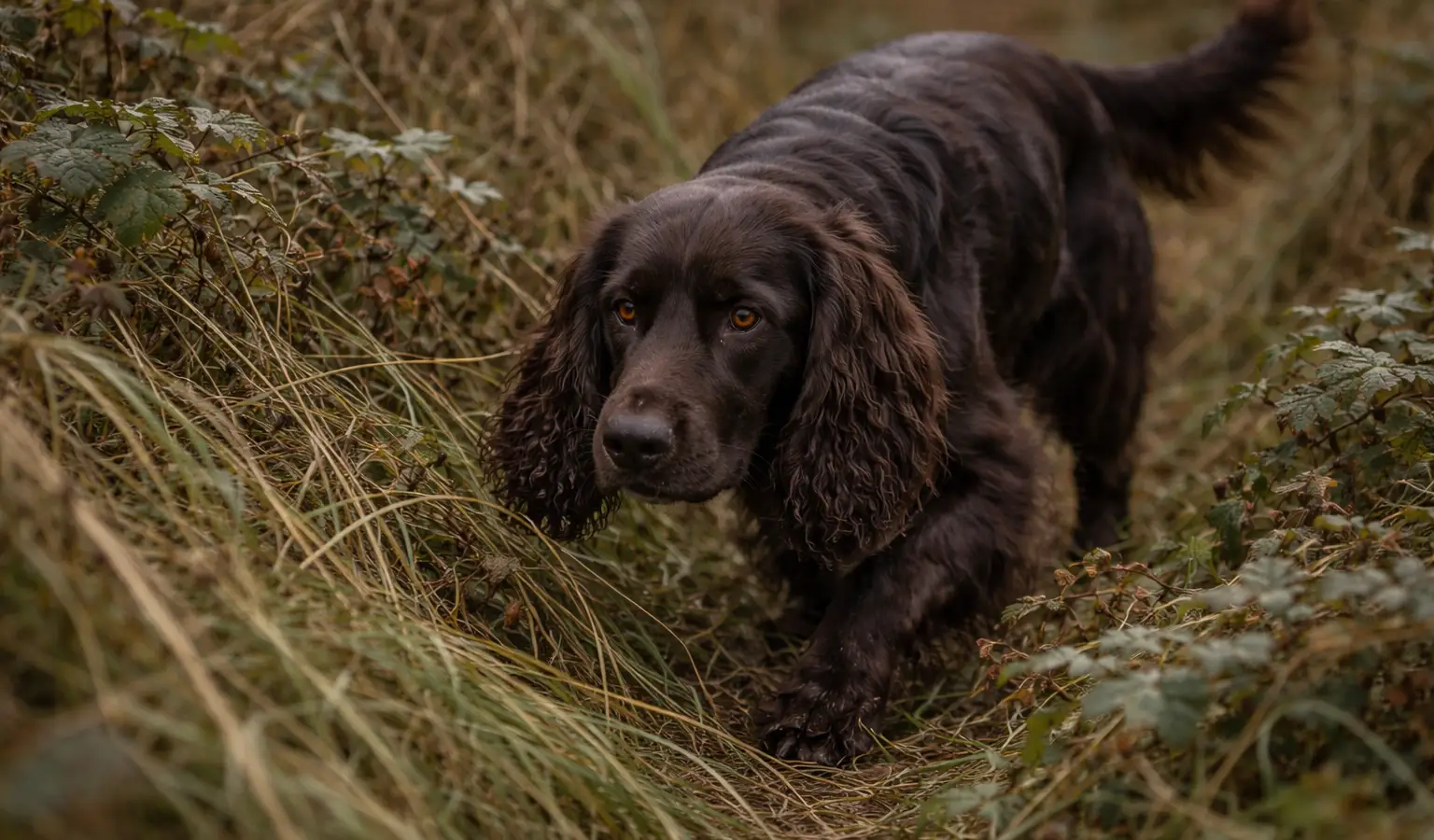
Field Spaniel
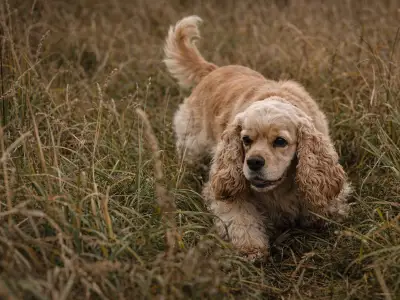
The Field Spaniel is an elegant and well-balanced hunting dog, rarer than other spaniel breeds. Originally used to flush and retrieve game, it is valued for its endurance, accurate nose and calm temperament. Affectionate, sensitive and closely bonded to its owner, it suits both hunting and active family life when given regular exercise and gentle training.
Life expectancy
11 – 13 years
Price
1000 – 2000 €
Monthly budget
75 €
Size
Medium
Profile
Field Spaniel
Origin
United Kingdom
Year of origin
1892
Developed by
British breeders
Size
Medium
Coat type
Long coat
Owner profile
Calm owner
Hypoallergenic
No
Litter size
6
Life expectancy
11 – 13 years
Price
1000 – 2000 €
Female
- Height : 41 – 43 cm
- Weight : 18 – 22 kg
Male
- Height : 43 – 46 cm
- Weight : 22 – 25 kg
Temperament & abilities
Affectionate
4/5
Calm
4/5
Independent
2/5
Intelligence
4/5
Obedience
4/5
Hunting instinct
4/5
Energy level
3/5
Good with children
4/5
Dog-friendly
4/5
Friendly with strangers
4/5
Hunting profile
Stamina
4/5
Hunting drive
3/5
Independence
3/5
Trainability
4/5
Beginner-friendly
4/5
Family compatibility
5/5
Feather game
4/5
Fur game
2/5
Underground work
3/5
Water work
0/5
These indicators help compare breeds and choose the right one for your hunting style.
Game & abilities
Estimated ability level by game type.
Budget
Purchase price
1000 – 2000 €
The price may vary depending on the breeder, bloodline, and region.
Average monthly cost
75 €
Estimated average: food, healthcare, accessories, and grooming.
A steady flushing spaniel with soft handling, useful nose, and a better fit for some hunters than others
Is the Field Spaniel a Good Hunting Dog?
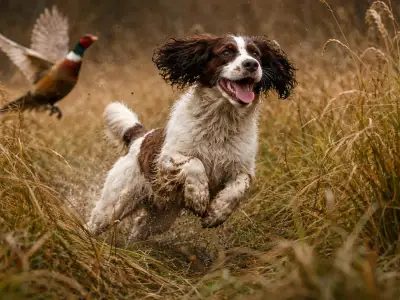
The Field Spaniel can be a good hunting dog for the right person, especially if you want a thoughtful flushing dog with a close-to-medium working style, a good nose, and a cooperative temperament. In the field, the breed is generally better suited to methodical work than to an all-out, high-pressure pace. A well-bred, well-trained Field Spaniel may handle rough cover, flush game within gun range, and retrieve competently, but it is usually not the first choice for hunters seeking maximum speed, extreme range, or the relentless intensity seen in some harder-driving spaniel lines.
Its main strengths tend to be handling, trainability, and natural partnership. Many Field Spaniels work in a way that makes them pleasant to direct, and that matters for hunters who value control, recall, and a dog that checks in rather than constantly pushing out. The breed often shows enough stamina for a useful day in the field, but the energy level is typically more moderate than that of the busiest flushing breeds. That balance can make a Field Spaniel appealing to people who want one dog that can hunt seasonally and still live calmly in the home with regular exercise and training.
As a hunting breed, though, the Field Spaniel usually comes with some demands and limitations. Success depends heavily on the individual dog, the bloodline, and how much early exposure it gets to birds, cover, retrieving work, and steadiness. Some may be sensitive in training, so heavy-handed handling can reduce confidence or style. Others may be perfectly willing workers but not especially forceful in dense cover or cold, difficult retrieves. For that reason, the breed often makes the most sense for the hunter who values a biddable, versatile companion over raw field intensity.
- Best use cases: walked-up shooting, light to moderate flushing work, mixed family-and-field homes, and handlers who prefer a responsive dog over a highly independent one.
- Less ideal for: hunters wanting a very hard-charging spaniel, big running patterns, or a specialist built for constant heavy-cover pressure.
- Daily life fit: usually easier to live with than a more extreme working dog, but still needs regular activity, recall training, and purposeful mental work.
Compared with some more common hunting spaniels, the Field Spaniel is often a more niche choice. For the right owner, that can be a strength: you may get a hunting dog with charm, useful field ability, and a temperament that transitions well into family life. For a buyer comparing breeds, the key question is not simply whether the Field Spaniel can hunt, but whether its steadier working style, moderate drive, and softer handling match the kind of hunting and daily routine you actually have.
Close, sensible quartering
The Field Spaniel is often appreciated for working at a manageable distance rather than ranging excessively wide. For many hunters, that means easier handling in hedgerows, rough cover, and mixed ground where a dog that stays connected is more useful than one that disappears over the horizon. This close pattern can also suit newer handlers who want a flushing dog that remains in touch.
Methodical nose in thick cover
Its scenting style is typically careful rather than frantic. A good Field Spaniel may work out lingering ground scent in bramble, damp woodland edges, and heavy cover where game can sit tight. That measured approach will not look as flashy as some faster spaniels, but it can be an advantage when you want deliberate hunting and fewer missed pockets of cover.
Steady, biddable temperament
One of the breed’s most practical field assets is usually its cooperative nature. Many Field Spaniels respond well to calm, consistent handling and can be easier to keep mentally with the gun than sharper, more hectic spaniel types. For hunters who value control, quiet handling, and a dog that can switch between family life and work, this can be a real strength.
Useful all-day stamina
The Field Spaniel is not built to hunt in a blur, but a fit, well-conditioned dog often has the endurance for a solid day of walking shooting or rough work. Its value is less about explosive speed and more about maintaining useful effort over time. That makes it appealing for people who want sustained hunting energy without constant over-arousal.
Natural retrieve for practical shooting
Many Field Spaniels show a pleasing willingness to pick up and carry game, especially when retrieving has been developed early and sensibly. They are not usually described as specialist retrievers first, but in a mixed shooting day, a well-trained individual can be very handy on straightforward marked retrieves and general game recovery. Soft handling and steadiness matter here.
Best suited to thoughtful handlers
This breed often gives its best to hunters who prefer patient training over pressure and noise. The Field Spaniel can be a strong choice for someone who wants a versatile gundog with an off-switch at home, but it may be less ideal for people seeking maximum pace and intensity. In the right hands, its concentration and composure are part of the appeal.
Who the Field Spaniel suits best
The Field Spaniel tends to suit an owner who wants one dog to bridge country life and home life: a capable flushing companion, a highly people-oriented house dog, and a breed that usually works best with calm, consistent handling rather than hard, forceful methods. For rough shooting, walked-up days, and hunters who value close range, biddability, and a willing nose over sheer pace, the Field Spaniel can be a rewarding fit. Many also suit active families who enjoy long walks, training, and regular outdoor time, not just occasional exercise.
It is usually less suitable for homes wanting a low-maintenance pet, for handlers who prefer a very hard-driving field dog, or for households where the dog will spend long days under-stimulated and alone. This breed often needs daily engagement, patient training, and enough companionship to stay settled. A good match is someone who enjoys living with a sensitive, sporting spaniel and can channel its energy into gundog work, scent games, and practical routines. A common mismatch is expecting a couch dog with no working instincts or, at the other extreme, a high-speed trial specialist.
From versatile land spaniel to steady modern companion and working dog
Field Spaniel history and how it shaped the breed
The Field Spaniel developed in Britain during the nineteenth century from older land spaniel stock, at a time when spaniels were often grouped more by size and purpose than by the sharply fixed breed standards seen today. Early breeders aimed for a medium-sized shooting dog that could quarter ground, flush game, and work with enough steadiness for practical field use. Over time, the breed became more distinct, though its history overlaps with other spaniels and some details of early development are not always described consistently in older records.
As dog shows grew in influence, the Field Spaniel appears to have been pushed for a period toward a longer, lower outline and heavier coat than many working sportsmen would have preferred. That shift likely affected both popularity and function. Later breeders worked to restore a more balanced, athletic dog, and modern Field Spaniels are generally valued for moderation rather than extremes. This matters to owners today: the breed often combines spaniel softness and game awareness with a calmer, less hectic style than some of the more common flushing breeds.
In practical terms, the breed’s history helps explain its present-day temperament. A good Field Spaniel is usually people-oriented, responsive, and capable of serious work, but it is not typically the first choice for handlers wanting maximum speed, relentless drive, or a very hard-charging rough-shooting dog. Instead, the breed tends to suit those who appreciate a thoughtful hunting companion with a closer working range, a willing attitude, and enough adaptability to live comfortably as a family dog when given regular exercise, training, and meaningful activity.
That background also explains some of the breed’s limitations and appeal. Field Spaniels are relatively uncommon, so type and working emphasis can vary by line. Some individuals are strongly field-capable, while others are bred more with companionship and conformation in mind. For buyers and hunters, the sensible approach is to look beyond the name alone and ask what the breeder has selected for.
- Best fit: owners who want a trainable, moderate flushing dog with an affectionate home life.
- Less ideal for: people expecting the intensity or sheer field numbers of the most established gundog breeds.
- Daily reality: this is a sporting spaniel that usually does best with patient handling, regular outings, and close involvement with its people.
Bred as a land spaniel
The Field Spaniel developed in Britain as a working spaniel for covering ground methodically and flushing game on land. Over time, breeders aimed for a dog that combined useful hunting ability with a more balanced outline than some older show fashions. That background still helps explain the breed’s steady temperament, good nose, and natural attraction to cover.
A deliberate working style
Compared with some faster, higher-octane flushing breeds, the Field Spaniel is often described as thoughtful and thorough. In hunting situations, many work at a sensible pace, quartering cover with care rather than rushing blindly ahead. For handlers who prefer control, cooperation, and a dog that stays connected, that style can be a real strength.
Soft, loyal, and sensitive
This breed is usually affectionate and deeply people-oriented, but it is not always as hard-driving or socially carefree as every sporting dog stereotype suggests. Many Field Spaniels respond best to calm, consistent training and fair handling. Harsh methods can dull confidence, while patient education often brings out the breed’s trainability, biddability, and reliable house manners.
Best with active daily life
A Field Spaniel generally fits best with owners who want a sporting companion involved in everyday routines, not a kennel-kept dog with occasional outings. Regular walks, training sessions, scent games, and chances to explore are important. Without enough activity and engagement, some individuals may become bored, noisy, or simply harder to live with indoors.
Coat care is part of ownership
The long, silky coat is attractive but not maintenance-free, especially on a dog that pushes through grass, bramble, and wet ground. Routine brushing helps limit tangles and debris, and feathering may need extra attention after field exercise. Owners considering a Field Spaniel should be comfortable with regular grooming, ear checks, and practical cleanup after muddy days.
Often suits the thoughtful hunter
The Field Spaniel can appeal to hunters who want a close-working flushing dog and to families who value a gentler, more measured character. It may be less suitable for people seeking maximum speed, extreme intensity, or a dog that thrives on constant chaos. In the right home, it often offers a pleasing mix of work ethic and companionship.
Practical answers on hunting ability, training, family life, exercise, and everyday suitability
Field Spaniel hunting and ownership FAQ
Is a Field Spaniel a good hunting dog today?
A Field Spaniel can still be a capable hunting companion, especially for flushing work and close partnership with the handler. The breed is generally valued more for steady, thoughtful work than for extreme speed or hard-driving range, so it often suits hunters who prefer a controlled dog in moderate cover. Individual lines vary, and not every Field Spaniel is bred with the same level of field instinct, so it is worth asking breeders specific questions about working ability and trainability. For the right owner, it can be a versatile choice that blends hunting usefulness with easier day-to-day living than some more intense gundogs.
What kind of hunting is a Field Spaniel best suited for?
This breed is usually most at home in flushing roles, where the dog works within gun range and helps push game from cover in a cooperative way. Many owners are drawn to the Field Spaniel for walked-up shooting, mixed countryside outings, and situations where biddability matters as much as raw pace. It may be less suited to hunters wanting a very wide-ranging, high-octane specialist for demanding all-day field trials. In practical terms, a Field Spaniel often fits the person who wants a useful working spaniel with a calmer style and strong handler focus.
Are Field Spaniels easy to train for hunting and obedience?
Field Spaniels are often described as intelligent, sensitive, and willing, which can make them rewarding to train when the approach is fair and consistent. They usually respond better to calm structure, repetition, and clear expectations than to heavy-handed handling. Because the breed can be soft-natured, poor timing or too much pressure may reduce confidence, especially in younger dogs. Early work on recall, steadiness, lead manners, and retrieving basics tends to pay off, and many do best with regular short sessions rather than intense drilling.
Can a Field Spaniel be both a family dog and a working dog?
For many households, that balance is one of the breed's main attractions. A well-bred, well-managed Field Spaniel can often live pleasantly in the home while still enjoying training, scent work, and occasional hunting. They are usually affectionate and people-oriented, so they tend to want real involvement in family life rather than kennel-style isolation. The main condition is that family companionship should not replace exercise, mental work, and training, because an under-stimulated spaniel may become noisy, restless, or overly attached.
How much exercise does a Field Spaniel need if it is not used for hunting?
Most Field Spaniels need more than a couple of short walks, even when they are not actively worked in the field. A good routine often includes brisk daily exercise, off-lead running where safe, retrieval games, scent-based activities, and ongoing training that gives the dog a job to do. Compared with some highly driven working spaniels, many Field Spaniels are a little easier to live with indoors, but they are still sporting dogs with stamina and curiosity. They usually suit owners who enjoy regular outdoor time rather than people looking for a low-effort companion.
Can a Field Spaniel live in an apartment or small home?
A Field Spaniel can adapt to a smaller home if its physical and mental needs are met consistently, but space alone never tells the full story. What matters more is whether the dog gets enough exercise, training, companionship, and chances to use its nose and brain. In a flat or apartment, boredom can show up quickly if the dog is left alone too long or only exercised in a minimal way. This breed generally does best with owners who can provide a structured routine and meaningful activity outside the home every day.
Who is the Field Spaniel best for, and who might struggle with this breed?
The Field Spaniel often suits active owners who want a close-working gun dog, trainable companion, and affectionate house dog in one package. It can be a strong match for someone who likes patient training, outdoor routines, and a dog that works with them rather than independently at great distance. First-time owners may do well if they are committed and realistic, but people wanting a very easy, low-maintenance pet or a hard-charging competitive field machine may find the breed does not fully match their expectations. In short, it tends to fit thoughtful handlers better than casual owners.