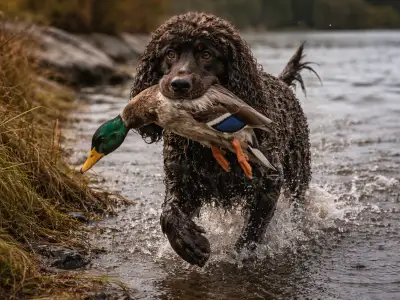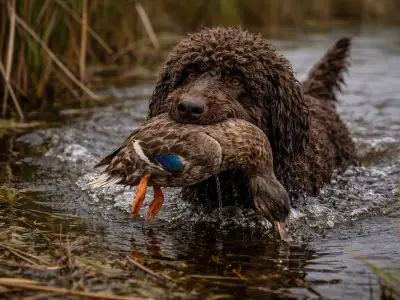
Curly Coated Retriever
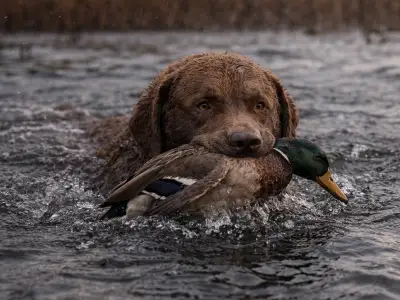
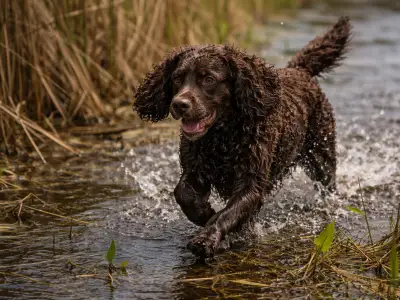
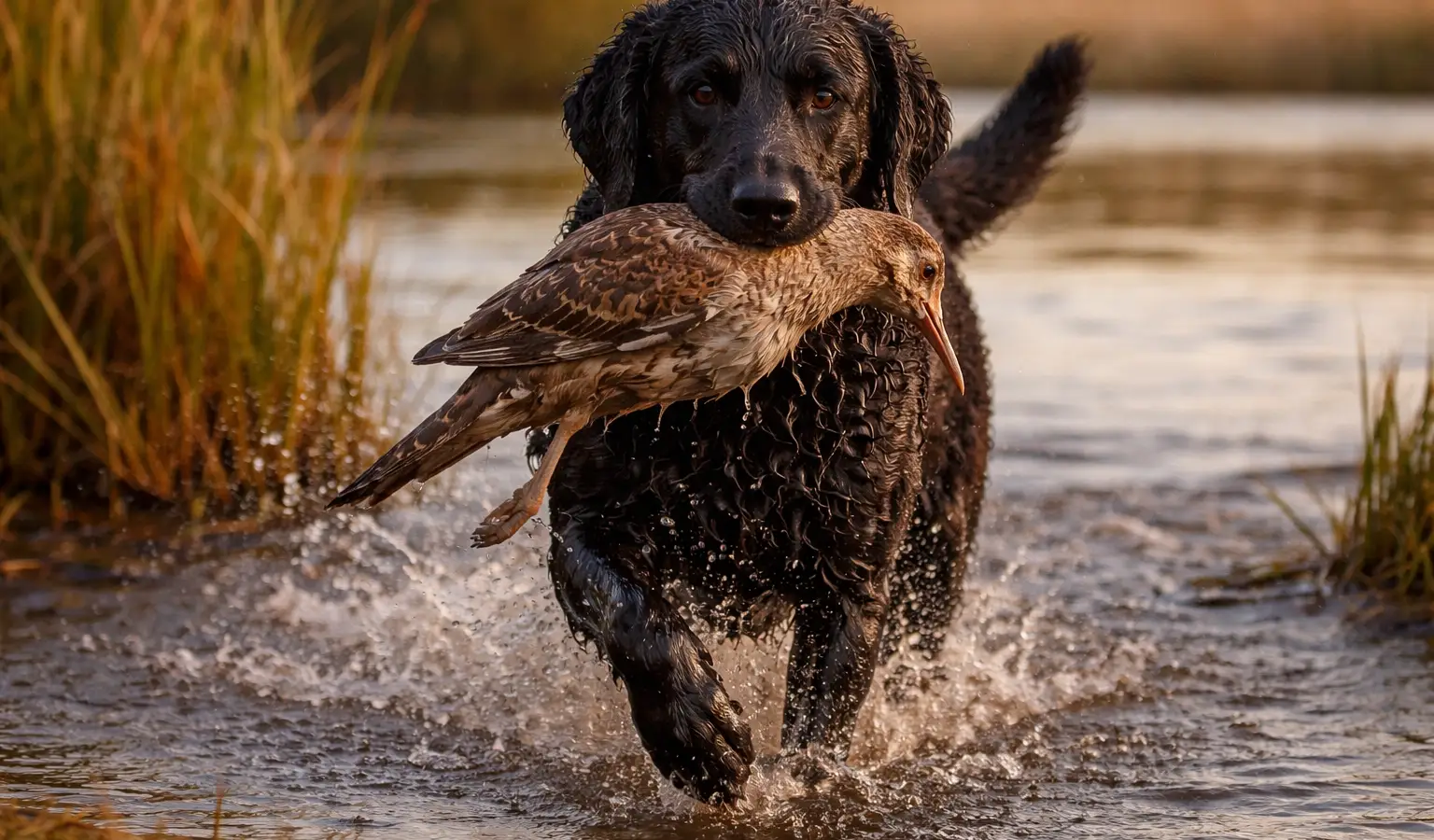
The Curly Coated Retriever is the oldest of the retriever breeds and is easily recognised by its distinctive short, curly coat. Bred for retrieving game on land and in water, it is known for its strength, endurance and excellent swimming ability. More independent than other retrievers, it remains loyal and attentive to its owner but requires consistent training, regular exercise and mental stimulation.
Life expectancy
10 – 12 years
Price
1200 – 2200 €
Monthly budget
85 €
Size
Large
Profile
Curly Coated Retriever
Origin
United Kingdom
Year of origin
1800
Developed by
British breeders
Size
Large
Coat type
Curly coat
Owner profile
Active owner
Hypoallergenic
No
Litter size
6
Life expectancy
10 – 12 years
Price
1200 – 2200 €
Female
- Height : 56 – 61 cm
- Weight : 25 – 35 kg
Male
- Height : 64 – 69 cm
- Weight : 30 – 40 kg
Temperament & abilities
Affectionate
4/5
Calm
3/5
Independent
4/5
Intelligence
4/5
Obedience
3/5
Hunting instinct
4/5
Energy level
4/5
Good with children
4/5
Dog-friendly
3/5
Friendly with strangers
3/5
Hunting profile
Stamina
5/5
Hunting drive
4/5
Independence
4/5
Trainability
3/5
Beginner-friendly
2/5
Family compatibility
4/5
Feather game
3/5
Fur game
2/5
Underground work
0/5
Water work
5/5
These indicators help compare breeds and choose the right one for your hunting style.
Game & abilities
Estimated ability level by game type.
Budget
Purchase price
1200 – 2200 €
The price may vary depending on the breeder, bloodline, and region.
Average monthly cost
85 €
Estimated average: food, healthcare, accessories, and grooming.
A powerful, independent retriever best suited to hunters who value stamina, water work, and a thoughtful working style.
Is the Curly Coated Retriever a good hunting dog?
The Curly Coated Retriever can be a very good hunting dog, especially for hunters who want a tough, capable retriever with stamina, confidence, and strong water ability. Traditionally valued as a game-retrieving breed, the Curly is often most coherent in roles involving marked retrieves, blind retrieves, rough cover, and cold water rather than ultra-fast, high-volume work that demands constant close handling. In the field, many Curlies show determination, a good nose, and the courage to push through difficult terrain, but they are usually not the softest or most instantly biddable retrievers to train.
Its hunting style tends to be steady, athletic, and somewhat independent. That independence can be an advantage when a dog must think for itself in broken ground, reeds, woodland edges, or challenging wetlands, but it also means handling requires real training rather than assumption. A Curly Coated Retriever hunting successfully usually benefits from clear structure, patient repetition, reliable recall work, and early emphasis on delivery, steadiness, and responsiveness to direction. Heavy-handed methods often backfire with a breed that can be intelligent, self-possessed, and selective if the relationship is not well built.
For practical use, this breed often makes the most sense for walked-up shooting, mixed terrain, rough shooting, and retrieving duties where endurance and resilience matter. It may suit hunters who want one dog able to live as an active family companion while still doing serious seasonal work. Compared with some more common retriever breeds, the Curly may be less universally easy for novice trainers, and some lines may vary in drive, sensitivity, and trainability, so breeder selection matters.
- Strengths: stamina, strong retrieve instinct, water confidence, courage in cover, calm off-switch in many well-managed adults
- Demands: consistent training, thoughtful handling, enough exercise, mental work, and a handler comfortable with a slightly independent temperament
- Less ideal for: people wanting a highly automatic, very handler-focused retriever with minimal training complexity
In everyday life, the Curly Coated Retriever is often more settled at home than its field power might suggest, provided it gets meaningful exercise and structured engagement. For the right owner, it can balance hunting ability and family life well. For the wrong match, especially in a low-activity home or with inconsistent training, its energy level, size, and strong mind can feel demanding.
Powerful water retrieves
The Curly Coated Retriever is widely valued for confident work in cold water, rough banks, and demanding retrieves. Its coat and solid build have traditionally suited wet, difficult ground, and many individuals show real determination on marked and blind retrieves. For hunters who split time between marsh, pond, and field, that water resilience can be a major advantage.
All-day field stamina
This breed often brings the endurance needed for long shooting days rather than only short, intense bursts of effort. A well-conditioned Curly can keep working through repeated retrieves, uneven terrain, and changing weather without losing too much drive. That makes it especially appealing to active hunters who want one dog that can stay useful from the first birds to the last pickup.
Steady bird-finding ability
Although best known as a retriever, the Curly Coated Retriever can also be effective at locating downed game in cover, using a practical nose and a purposeful search pattern. It is often appreciated more for sensible game-finding than flashy range. In real hunting terms, that can mean fewer lost birds and more efficient work in grass, reeds, and mixed cover.
Independent problem-solving
One of the breed’s more distinctive field qualities is its ability to work things out without constant handling. That independence can help on complex retrieves, especially when terrain, water, or thick cover interrupts a direct line. It does, however, usually suit handlers who value a thoughtful hunting dog and are prepared to build cooperation through consistent training rather than repetition alone.
Strong memory for falls
Many Curly Coated Retrievers show good focus on where birds land, which supports reliable marked retrieves in practical shooting situations. That concentration is useful when multiple birds are down, visibility is patchy, or the dog must stay composed before being sent. A dog that marks well can save time, reduce handling pressure, and make the retrieve feel cleaner and more efficient.
Best for versatile hunters
The Curly often suits people who want a capable, multipurpose gundog rather than a very specialized field-trial style retriever. Its blend of retrieving drive, toughness, water confidence, and self-reliance can fit mixed hunting days well. For the right owner, especially one who appreciates a slightly more individual working style, that versatility is one of the breed’s biggest practical strengths.
Who the Curly Coated Retriever suits best
The Curly Coated Retriever tends to suit a hunter or outdoor owner who wants a strong, athletic retriever with independence as well as drive. It can be a very good fit for people who spend real time in the field, especially those who want a dog for water retrieves, rough cover, and varied shooting days rather than a purely ornamental pet. In family life, this breed often fits best with experienced, active households that enjoy training, hiking, and structured exercise, and that can live comfortably with a dog that may be a little more self-possessed than some other retrievers.
It is usually less suitable for first-time owners looking for an easy, highly biddable house dog, or for homes expecting a low-key companion content with short walks. A Curly may mature slowly, can be reserved with strangers, and often does best with calm, consistent handling rather than repetitive drilling or heavy pressure. Common mismatches include sedentary households, handlers who want constant close-contact softness, and buyers who like the retriever idea but are not prepared for daily work, training, and mental engagement.
How the breed’s early development shaped its working style and modern temperament
Origins of the Curly Coated Retriever
The Curly Coated Retriever is widely regarded as one of the oldest retriever breeds from Britain, developed to collect game for hunters on both land and water. Its exact recipe is not fully documented, but historians commonly point to a mix of old water dogs, retrieving dogs, and likely influences from breeds such as the Irish Water Spaniel, the now-extinct St. John’s-type dogs, and possibly the Poodle. What matters for today’s owner is that the breed was shaped for practical field work: a tough, self-reliant dog able to mark fallen birds, push through rough cover, and retrieve steadily in cold, wet conditions.
That background helps explain why the Curly often feels a little different from some other retrievers. Rather than being bred only for close, highly biddable companionship, it appears to have been selected for durability, problem-solving, and a certain independence in the field. Many Curly Coated Retrievers are affectionate with their family, but they may be more reserved with strangers and less eager to please in a constant, demonstrative way than a typical Labrador. For hunters and active owners, that can be a strength: the breed often suits people who appreciate a thoughtful dog with working substance rather than nonstop social softness.
Its famous harsh, tight curl was not developed for looks alone. The coat offered useful protection against cold water, bramble, and bad weather, while the breed’s athletic frame supported long days around marsh, riverbank, woodland, and estate shoots. Historically, Curly Coated Retrievers were used by gamekeepers, sportsmen, and sometimes poachers because they could work quietly and efficiently. In modern terms, that heritage still points toward a dog that usually needs meaningful exercise, patient training, and enough mental engagement to avoid becoming bored or aloof.
For daily life, the breed’s history suggests a fairly clear owner profile:
- someone who wants a capable working gundog or active companion, not just a decorative pet
- an owner comfortable with a dog that may mature slowly and think independently
- a household that can provide training, outdoor time, and calm structure
- a hunter who values stamina, water confidence, and a distinctive retriever style
Although modern lines vary, the Curly Coated Retriever’s past still shows in its combination of endurance, intelligence, and reserve. For the right home, that blend can be deeply rewarding. For owners expecting a highly demonstrative, easygoing retriever with minimal handling demands, the breed may feel more serious and more workmanlike than expected.
Old retriever roots
The Curly Coated Retriever is widely regarded as one of the oldest retriever breeds from Britain. Early development likely involved several water and retrieving dogs, with breeders selecting for game-finding ability, stamina, and a weather-resistant coat. That background still helps explain the breed’s blend of endurance, independence, and comfort in rough field conditions.
Built for practical work
This is not just a stylish retriever with a distinctive coat. The Curly was shaped to pick up game on land and in water, often with a steady, efficient approach rather than nonstop flash. Many individuals show strong persistence, a good memory for falls, and the self-possession valued by hunters who want a capable, sensible working companion.
Reserved, not soft
Compared with some other retrievers, the Curly Coated Retriever is often a little more independent and somewhat more reserved with strangers. That can suit owners who appreciate a dog with presence and discernment, but it also means early socialization and thoughtful training matter. In the right hands, the breed is typically loyal, biddable, and quietly affectionate at home.
Needs room and purpose
Daily life is usually easiest when this breed has regular exercise, training, and a clear role. A Curly can adapt to family life, but it is rarely at its best as a purely sedentary pet. Longer walks, retrieving games, swimming where safe, and structured field work often suit the breed better than a brief outing around the block.
Coat care is specific
The tight curls are a defining feature and part of the breed’s practical design, helping protect the dog in wet and brambly ground. Care is not usually elaborate, but it is specific: over-brushing can disrupt coat texture, while occasional maintenance and sensible cleanliness help keep the coat functional. Owners should expect seasonal variation rather than a perfectly polished look year-round.
Best for patient handlers
The Curly Coated Retriever often suits people who want a hunting dog with drive but also a certain independence of mind. Heavy-handed handling can backfire, while fair, consistent training tends to get better results. For active owners who enjoy building a partnership over time, the breed can be a rewarding choice both in the field and in everyday family life.
Practical answers on hunting ability, training, exercise, home life, and who this breed suits best
Curly Coated Retriever hunting and ownership FAQ
Is a Curly Coated Retriever a good hunting dog for beginners?
A Curly Coated Retriever can be a capable hunting partner, but it is not always the easiest retriever for a first-time handler. Many Curlies are intelligent, independent, and somewhat more self-directed than the softer, more biddable retrievers people often start with. That can be an advantage in rough conditions, but it usually means training needs patience, consistency, and clear standards rather than constant repetition. A beginner who enjoys learning handling skills and can work with a thoughtful trainer may do well. Someone wanting a highly automatic, easy-to-shape gun dog may find another retriever simpler.
What kind of hunting is the Curly Coated Retriever best suited for?
The Curly Coated Retriever is generally associated with versatile retrieving work, especially on waterfowl and other game that requires a strong, durable dog. Its weather-resistant coat and solid build have long suggested usefulness in cold, wet, and physically demanding conditions, though individual performance depends heavily on breeding and training. Many hunters appreciate the breed for marking ability, persistence, and a calm but determined working style. It may also suit mixed shooting days where a dog needs to retrieve reliably on land and from water. If your priority is high-volume field trial speed or a very flashy style, this breed may not always be the closest fit.
Are Curly Coated Retrievers easy to train for retrieving and obedience?
They are trainable, but usually respond best to thoughtful, fair training rather than drilling the same exercise too heavily. Many Curly Coated Retrievers are clever and retain lessons well, yet they can lose enthusiasm if handling becomes repetitive or unnecessarily harsh. Short, purposeful sessions, clear retrieves, steadiness work, and real-world exposure often bring better results than trying to force rapid progress. Early socialization and basic obedience matter because a self-confident Curly can develop selective listening if the foundation is weak. In the right hands, they can become reliable workers, but they often reward skillful handling more than casual training.
Can a Curly Coated Retriever live as a family dog if it also hunts?
Yes, many can balance hunting work with family life very well, provided they receive enough exercise, structure, and inclusion in daily routines. At home, the breed is often described as more reserved than some other retrievers, which can suit owners who prefer a dog that is affectionate without being constantly demanding. Good manners do not happen automatically, though, and a hunting dog with strong energy still needs training off the field. With children, success usually depends on supervision, early socialization, and teaching both dog and family how to interact calmly. A well-managed Curly can be a steady companion, but it is rarely a low-effort pet.
How much exercise does a Curly Coated Retriever need when not in hunting season?
This breed usually needs more than a simple walk around the block, even outside the shooting season. Most adult Curlies benefit from a mix of physical exercise and mental work such as retrieves, scent games, obedience practice, swimming, and controlled free running where safe. Without enough outlet, some dogs may become frustrated, noisy, or creatively destructive, especially in adolescence. The goal is not just to tire the dog physically but to give it purposeful activity that matches its working background. Owners who enjoy training and outdoor routines generally find the breed easier to live with than people seeking a relaxed, low-maintenance companion.
Can a Curly Coated Retriever live in an apartment or small home?
It can be possible, but success depends much more on lifestyle than square footage alone. A Curly Coated Retriever that gets meaningful daily exercise, training, and calm downtime may adapt better than people expect, while an underworked dog in a large house can still be difficult to live with. The breed is usually better suited to owners who have easy access to outdoor space, training grounds, or regular field and water work. Its size, energy, and working instincts make life simpler in a home where movement is part of the daily routine. For very sedentary households or owners gone long hours, it is often not the easiest match.
Who is the Curly Coated Retriever the best fit for?
This breed often suits active owners who want a real working retriever, value a somewhat distinctive temperament, and are comfortable building a relationship through training rather than expecting instant compliance. It can be a strong choice for hunters who want toughness, versatility, and a dog that can handle both field life and home life with the right guidance. It may also appeal to experienced dog owners who enjoy a breed with character and a bit more independence. It is usually less ideal for people wanting a highly social, easygoing retriever that matures quickly and forgives inconsistent handling. Choosing a breeder who understands working ability and temperament is especially important with this breed.