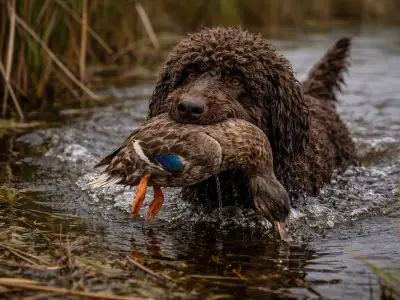
Irish Water Spaniel
The Irish Water Spaniel is one of the oldest water dog breeds and is easily recognised by its tightly curled coat and elegant build. Specialised in water retrieving, it is valued for its endurance, intelligence and excellent swimming ability. Lively, playful and sometimes independent, it remains strongly bonded to its family and requires consistent training and regular exercise.
Life expectancy
10 – 12 years
Price
1200 – 2400 €
Monthly budget
85 €
Size
Large
Profile
Irish Water Spaniel
Origin
Ireland
Year of origin
1830
Developed by
Irish breeders
Size
Large
Coat type
Curly coat
Owner profile
Active owner
Hypoallergenic
Yes
Litter size
7
Life expectancy
10 – 12 years
Price
1200 – 2400 €
Female
- Height : 53 – 58 cm
- Weight : 20 – 26 kg
Male
- Height : 56 – 61 cm
- Weight : 25 – 30 kg
Temperament & abilities
Affectionate
4/5
Calm
3/5
Independent
3/5
Intelligence
5/5
Obedience
4/5
Hunting instinct
5/5
Energy level
4/5
Good with children
4/5
Dog-friendly
3/5
Friendly with strangers
3/5
Hunting profile
Stamina
5/5
Hunting drive
5/5
Independence
4/5
Trainability
3/5
Beginner-friendly
2/5
Family compatibility
4/5
Feather game
4/5
Fur game
0/5
Underground work
0/5
Water work
5/5
These indicators help compare breeds and choose the right one for your hunting style.
Game & abilities
Estimated ability level by game type.
Budget
Purchase price
1200 – 2400 €
The price may vary depending on the breeder, bloodline, and region.
Average monthly cost
85 €
Estimated average: food, healthcare, accessories, and grooming.
A versatile gundog with real water talent, strong stamina, and a lively mind
Is the Irish Water Spaniel a Good Hunting Dog?
The Irish Water Spaniel can be a very good hunting dog for the right handler, especially where retrieving, water work, and versatile field use matter more than extreme speed or a highly mechanical pattern. In practical terms, Irish Water Spaniel hunting strengths usually include courage in cold or rough water, a willing retrieve, a useful nose, and the stamina to stay engaged through a long day. It is not always the easiest option for someone who wants a very straightforward, low-maintenance gundog, but in capable hands it can be an effective and distinctive working partner.
Its working style tends to be energetic, intelligent, and a little individual. Many Irish Water Spaniels show plenty of drive and enthusiasm, but they often respond best to thoughtful handling rather than repetitive drilling or heavy pressure. Trainability is usually good when the dog understands the job and stays mentally engaged, yet this is a breed that can test consistency if recall, delivery, steadiness, and handling are left vague in early training. Compared with some more common retrievers and flushing dogs, the Irish Water Spaniel may feel more quirky, more sensitive in some contexts, and more dependent on good communication with the handler.
For coherent use cases, this breed makes the most sense for hunters who want a versatile dog with genuine retrieving ability, comfort in difficult water, and enough search instinct to contribute in mixed shooting situations. It can suit:
- duck and other waterfowl work, especially where cold water confidence matters
- rough shooting with a dog that can hunt, flush, and retrieve
- handlers who enjoy training and shaping a smart, active dog
- homes where the dog also gets regular exercise, structure, and close human involvement
Its limitations are just as important to understand. The Irish Water Spaniel is not always the first choice for a hunter wanting the broadest pool of field-bred lines, the most predictable handling style, or a dog that switches off easily after minimal exercise. Energy level is typically high, and daily life is easier when the dog has both physical work and mental tasks. Without that outlet, some individuals can become noisy, busy, or creatively mischievous. For an owner comparing breeds, this is often a better match for someone who values personality, versatility, and water work than for someone seeking the simplest path to a highly standardized hunting companion.
Powerful water retrieves
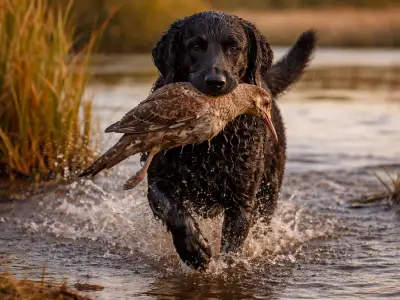
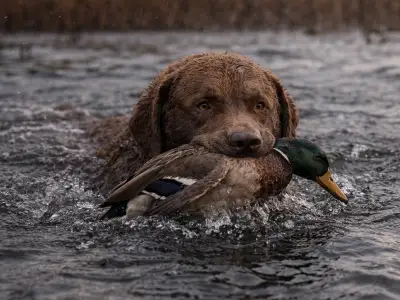
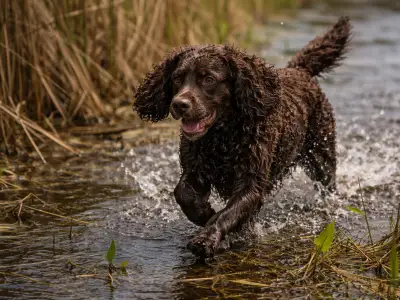
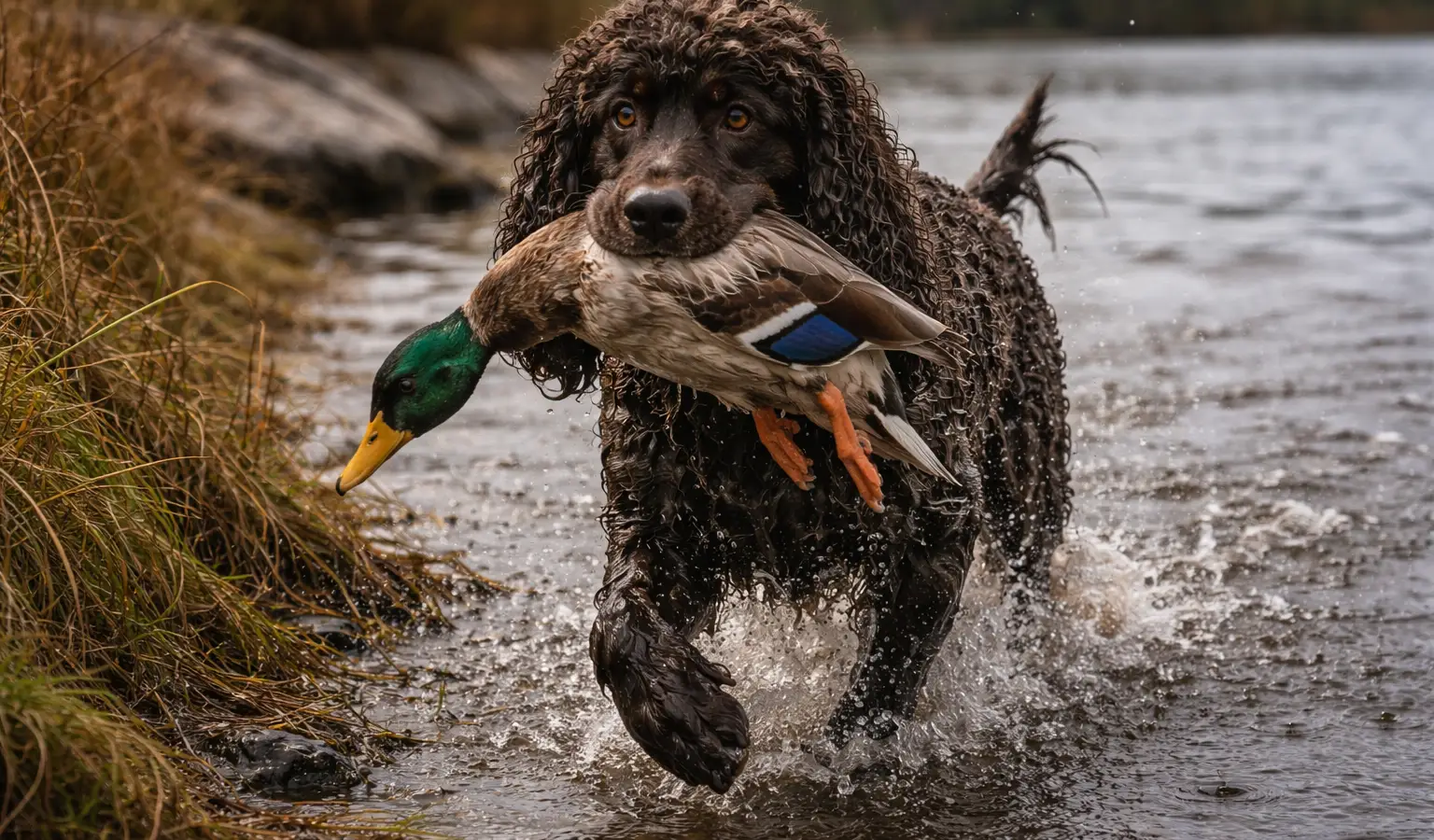
The Irish Water Spaniel is widely valued for confident work in wet, cold, and difficult cover. Its dense curly coat, strong build, and natural enthusiasm for water often make it especially capable on duck shoots and marsh retrieves. For hunters who need a dog that will enter rough water willingly and carry game back with purpose, this is one of the breed’s clearest strengths.
Stamina for long outings
This is an athletic gundog that can keep working when a shorter-winded dog begins to fade. Many Irish Water Spaniels handle long shooting days, repeated retrieves, and demanding ground well, provided conditioning and weight are managed sensibly. That endurance also means daily life usually requires serious exercise, not just a brief walk around the block.
Versatile field companion
Although often associated with waterfowl, the breed can be more versatile than many people expect. Depending on breeding, training, and local hunting style, an Irish Water Spaniel may contribute in marsh, woodland, and mixed rough cover as both a flushing dog and retriever. That flexibility suits hunters who want one dog for varied days rather than a highly narrow specialist.
Smart, responsive handling
The breed is generally intelligent and capable of learning complex work, which can be a real advantage in blind retrieves, steadiness, and directional handling. Many respond best to calm, consistent training rather than heavy-handed pressure. In practical terms, they often suit handlers who enjoy building a thoughtful working partnership instead of relying only on repetition and force.
Determined in rough cover
A good Irish Water Spaniel often shows notable courage when asked to push through reeds, rushes, brambles, and awkward banks. That willingness can be very useful on wounded game and difficult retrieves where softer dogs may hesitate. Even so, the breed is usually at its best when that boldness is guided by control, recall, and steady obedience.
Keen nose with focus
Many Irish Water Spaniels work with a useful combination of scenting ability and concentration. They can stay engaged on a task, especially when properly trained for marked falls, hunting dead, and methodical quartering. For the right owner, this can translate into a dog that is not only energetic, but also genuinely productive and mentally switched on in the field.
Who the Irish Water Spaniel suits best
The Irish Water Spaniel tends to suit an active owner who wants one dog for real life and purposeful work. For the right hunter, it can make sense as a versatile flushing and retrieving companion, especially where water, rough cover, and long days outdoors are part of the picture. This breed often fits people who enjoy training, can live with a bright and sometimes independent mind, and want a dog that is engaged with the family rather than left in the kennel or the yard.
It is usually less suitable for a low-activity household, a first-time owner wanting an easygoing dog, or a hunter who expects a highly mechanical, instantly compliant worker without steady education. Daily life is often best with room to move, regular exercise, and structured mental work. Common mismatches include owners who underestimate grooming, provide too little off-season activity, or prefer a very soft, low-drive temperament. In the right hands, the Irish Water Spaniel can be a lively family dog and capable hunting partner; in the wrong home, its energy and cleverness may become hard to manage.
How the breed’s history still shapes its work, temperament, and daily life
Origin and development of the Irish Water Spaniel
The Irish Water Spaniel was developed in Ireland as a water-retrieving and all-purpose sporting dog, and its history helps explain why the breed still stands apart from many other spaniels. While the exact mix behind its early development is not fully documented, most breed historians agree that it was shaped to work cold water, retrieve game reliably, and handle rough marsh or riverside terrain with confidence. That practical purpose remains visible today in the breed’s strong swimming ability, athletic build, weather-resistant curly coat, and often lively, problem-solving temperament.
By the nineteenth century, the Irish Water Spaniel had become established enough to be recognized as a distinct type rather than just another regional gundog. Much of that development is often linked to Justin McCarthy of Dublin, whose dogs are widely credited with helping fix the modern breed type, although some earlier influences remain uncertain. What is clearer is the goal: a dog with enough drive for serious field work, enough resilience for difficult water retrieves, and enough intelligence to work in partnership rather than simply by repetition. That background still matters for owners, because this is rarely a low-key or purely ornamental companion.
Historically, the breed was valued as a versatile hunting dog, especially for waterfowl but also for general shooting work. In practical terms, that heritage helps explain several modern traits: an Irish Water Spaniel may be enthusiastic in wet ground, independent-minded at times, and highly responsive when training is fair, varied, and purposeful. Many individuals learn quickly, but they can become bored with heavy-handed drilling. For hunters, this can mean an energetic, capable retriever with style and stamina. For family life, it often means a dog that does best with regular exercise, mental work, and owners who enjoy an active, hands-on breed.
The breed’s past also points to its limitations. An Irish Water Spaniel is not necessarily the easiest choice for someone wanting a highly biddable, low-maintenance gundog or a quiet pet content with short daily walks. Depending on bloodline and training, some are more reserved, clownish, or intense than others, but the general pattern is consistent: this is a working-bred sporting dog with character. People drawn to the breed usually do best when they appreciate both sides of its history, namely its usefulness in the field and its distinct, spirited personality at home.
Irish roots
The Irish Water Spaniel is widely regarded as one of the oldest spaniel types, developed in Ireland for work around rivers, lakes, and marshy ground. Its history is not documented in every detail, but the breed became known as a capable water retriever with a distinctive curly coat and a strong reputation among sportsmen.
Bred for wet work
This breed was selected to retrieve waterfowl, push through reeds, and handle cold, wet conditions with confidence. The dense, curly coat and powerful build suit rough terrain and repeated swims. In the field, many Irish Water Spaniels show stamina, problem-solving ability, and a more independent working style than some people expect from a retriever.
Bright, lively temperament
An Irish Water Spaniel is often playful, alert, and intelligent, with a sense of humor that owners remember well. Many are affectionate with family, yet they can also be sensitive, excitable, or a little reserved with strangers. They usually do best with calm, consistent training and regular engagement rather than heavy-handed handling.
Best with active owners
This is rarely an easy fit for a low-activity home. Most Irish Water Spaniels need substantial daily exercise, meaningful training, and chances to use their nose and brain. They tend to suit owners who enjoy outdoor routines, dog sports, or hunting life, and who want a versatile companion rather than a laid-back house dog.
Coat care matters
The curly coat helps protect the dog in water, but it also brings regular maintenance. Brushing, careful trimming, and routine ear care are important, especially for a dog that swims often or works in muddy cover. The coat sheds less than many hunting breeds, but it is not a wash-and-wear option for busy owners.
A thoughtful hunting partner
For the right handler, the Irish Water Spaniel can be an effective gun dog that combines drive with initiative. It may appeal especially to hunters who value water work, trainability, and a dog with personality. It is not always the simplest choice for beginners, because its energy, intelligence, and sensitivity often require skilled, patient guidance.
Practical answers on field ability, trainability, exercise, home life, and owner fit
Irish Water Spaniel hunting and family FAQ
Is the Irish Water Spaniel a good hunting dog for beginners?
The Irish Water Spaniel can be a rewarding hunting dog for a beginner, but it is usually easier for someone who is willing to learn handling and training, not just own a naturally cooperative dog. This breed often has strong working ability, good water confidence, and plenty of drive, yet it can also show independence and sensitivity if trained harshly or inconsistently. A first-time hunter who enjoys structured training, retrieves regularly, and works with a knowledgeable trainer may do very well. Someone wanting a very straightforward, low-maintenance gun dog may find another retriever or spaniel easier to start with.
What kind of hunting is the Irish Water Spaniel best suited for?
The breed is most closely associated with waterfowl work and general retriever duties, especially where stamina, swimming ability, and enthusiasm in rough weather are useful. Many Irish Water Spaniels can also handle upland flushing work, but their strongest reputation is usually tied to marshes, ponds, rivers, and mixed shooting days where versatility matters. In practical terms, they tend to suit hunters who want one dog for retrieves and some flushing rather than a highly specialized field-trial type. Actual performance depends a lot on breeding, early exposure, and how seriously the dog has been developed for hunting.
Are Irish Water Spaniels easy to train for retrieving and field work?
They are intelligent and capable, but not always simple in the way many people mean by easy. An Irish Water Spaniel often responds best to calm repetition, clear standards, and training that keeps the dog mentally engaged instead of drilling the same task to the point of boredom. Many learn quickly, yet they can test boundaries or become resistant if handling is heavy-handed. For hunting work, early retrieve games, steadiness basics, water exposure, and recall under distraction usually pay off more than rushing into advanced drills.
Can an Irish Water Spaniel live as a family dog if it also hunts?
In many homes, yes. A well-bred, well-exercised Irish Water Spaniel can be affectionate, entertaining, and closely bonded to its people, while still keeping enough working drive for hunting season and training days. The main condition is that family life should not replace real exercise, structured outlets, and regular engagement, because an underworked dog may become noisy, unruly, or overly inventive. Families who like outdoor routines, training sessions, and a dog with a lively personality often find the breed easier to live with than families expecting a calm couch dog by default.
How much exercise does an Irish Water Spaniel need when it is not hunting?
This is usually not a breed that stays balanced on a short walk around the block. Most Irish Water Spaniels need daily physical exercise plus mental work such as retrieving games, obedience, scent tasks, or varied off-lead activity in safe areas. On many days, a combination of brisk walks, training, and active play is more useful than simply adding miles without purpose. If the dog comes from stronger working lines, the need for regular outlets may be even more obvious, especially in adolescence and young adulthood.
Can an Irish Water Spaniel live in an apartment or small house?
It can be possible, but the success of apartment living depends far more on management than square footage alone. This breed generally does better with owners who can provide consistent outdoor exercise, training structure, and enough routine to prevent restlessness. A small home is less of a problem than long periods of boredom, weak recall work, or too little chance to run, retrieve, and use its brain. Many people will find a house with a secure yard easier, but a committed active owner can sometimes make a smaller space work.
Who is the Irish Water Spaniel the best fit for, and who should think twice?
The breed tends to fit active owners who want a distinctive sporting dog with real personality, strong water ability, and enough trainability to enjoy both hunting and daily companionship. It can suit hunters who value versatility and families who are prepared for grooming, exercise, and regular interaction rather than a low-effort pet. People who should think carefully include those away from home for long hours, owners who dislike coat care, and beginners hoping for a very soft, automatic, easygoing dog. In the right hands, the Irish Water Spaniel can be deeply enjoyable, but it usually rewards involvement more than convenience.