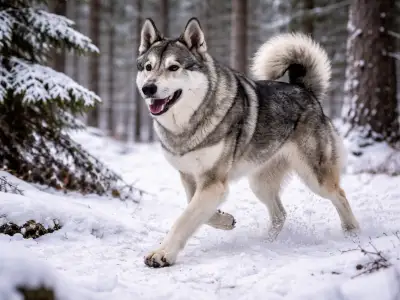
Finnish Spitz
The Finnish Spitz is a lively Nordic hunting dog, known for its expressive barking.
Life expectancy
12 – 15 years
Price
900 – 1600 €
Monthly budget
70 €
Size
Medium
Profile
Finnish Spitz
Origin
Finland
Year of origin
1892
Developed by
Finnish hunters
Size
Medium
Coat type
Double coat
Owner profile
Active owner
Hypoallergenic
No
Litter size
5
Life expectancy
12 – 15 years
Price
900 – 1600 €
Female
- Height : 39 – 45 cm
- Weight : 7 – 10 kg
Male
- Height : 42 – 47 cm
- Weight : 10 – 13 kg
Temperament & abilities
Affectionate
4/5
Calm
3/5
Independent
4/5
Intelligence
4/5
Obedience
3/5
Hunting instinct
5/5
Energy level
4/5
Good with children
4/5
Dog-friendly
3/5
Friendly with strangers
3/5
Hunting profile
Stamina
4/5
Hunting drive
3/5
Independence
4/5
Trainability
3/5
Beginner-friendly
3/5
Family compatibility
4/5
Feather game
2/5
Fur game
3/5
Underground work
1/5
Water work
0/5
These indicators help compare breeds and choose the right one for your hunting style.
Game & abilities
Estimated ability level by game type.
Budget
Purchase price
900 – 1600 €
The price may vary depending on the breeder, bloodline, and region.
Average monthly cost
70 €
Estimated average: food, healthcare, accessories, and grooming.
A lively pointing barker with real hunting instinct, but not the easiest fit for every hunter or household.
Is the Finnish Spitz a good hunting dog?
The Finnish Spitz is a capable hunting dog for the right kind of work, especially for hunters who value an active, independent bird dog with strong natural voice. Traditionally associated with finding game birds and alerting by barking, it can be very effective in wooded country where a dog must range out, use its nose intelligently, and keep contact through sound rather than close heel work. In practical terms, Finnish Spitz hunting ability is real, but it is specialized: this is not a universal gundog, nor the most straightforward choice for someone wanting a highly biddable, all-purpose retriever type.
Its working style is typically energetic, quick, and self-directed. Many Finnish Spitz dogs hunt with enthusiasm, cover ground well, and show good stamina for their size. They are often admired for their alertness, game-finding instinct, and willingness to work in challenging forest terrain. Handling can be more nuanced than with softer, more handler-focused breeds. Recall, steadiness, and consistency under distraction usually require patient training, and some individuals may be quite vocal, independent, or selective about cooperation if the education is rushed or repetitive.
For coherent use cases, the breed makes the most sense with hunters interested in traditional forest bird work and a dog that naturally searches, locates, and signals game. It may also suit owners who enjoy a primitive-flavored hunting companion rather than a close-working dog bred to constantly await instruction.
- Strengths: lively nose use, agile search pattern in woodland, stamina, natural alertness, distinctive barking indication, strong hunting motivation in good lines.
- Limits: less suited to people wanting very tight handling, polished retrieve work, or a highly versatile dog for every hunting scenario.
- Training demands: early recall work, impulse control, calm repetition, and enough real outlets to prevent frustration.
In everyday life, the same traits that support field performance also shape the home experience. The Finnish Spitz is usually bright, busy, and energetic, and it tends to do best with owners who appreciate a vocal, active dog and can provide regular exercise, structured training, and mental work. For a hunting household that wants character, animation, and authentic Nordic hunting temperament, it can be a rewarding choice. For a quieter pet home or a novice expecting effortless obedience, it may feel demanding.
Classic barking indicator
The Finnish Spitz is best known for locating game birds and then holding the hunter’s attention on the spot with persistent barking. This style can be especially useful in wooded country where visibility is limited. For hunters who appreciate a vocal pointing-type system rather than silent work, that trait is the breed’s most distinctive advantage.
Built for forest ground
This is a light, agile hunting dog that often moves well through dense woodland, uneven terrain, and mixed northern cover. It is not a heavy, crashing worker. Instead, it tends to hunt with quick feet, alert posture, and efficient movement, which can help it stay active for long outings when conditioning and weather suit the individual dog.
Independent but hunt-aware
Many Finnish Spitzes show a useful balance between initiative and cooperation. They may search ahead with confidence, yet still work in a way that keeps the handler involved. That makes them appealing to hunters who want a dog with some self-direction in the field, but not one that simply disappears and hunts for itself alone.
Sharp ears and quick reactions
In bird work, this breed often relies on alertness as much as raw drive. A good Finnish Spitz can react quickly to movement, sound, and changing cover, then switch into focused game indication. That responsiveness is valuable in woodland hunting, where fleeting contacts and hidden birds reward a dog that notices small changes before the hunter does.
Specialist rather than all-rounder
The Finnish Spitz can be very appealing for hunters who want a traditional upland forest dog, especially for game birds in the breed’s classic style. Its strengths are real, but they are fairly specific. It is usually a better fit for someone who values that niche working method than for an owner seeking a broad, do-everything gundog.
Best with a patient handler
Training tends to go best with calm repetition, good timing, and respect for the breed’s independent streak. Harsh handling can dull initiative or create friction. In practical terms, the Finnish Spitz often suits hunters who enjoy developing a natural hunting pattern over time, rather than expecting instant polish or highly mechanical obedience in the field.
Who the Finnish Spitz suits best
The Finnish Spitz tends to suit an active owner who genuinely enjoys living with a vocal, alert, independent hunting spitz rather than a highly biddable all-purpose dog. It is often a good match for people who like walking, forest outings, scent-rich environments, and regular engagement with the dog’s natural instincts. For hunters, it usually fits best with those interested in traditional upland bird work and a dog that uses initiative, keeps contact at a distance, and communicates with bark rather than close, constant handling.
It is usually less suitable for households wanting a quiet, low-maintenance companion, for owners who expect instant recall in distracting cover, or for people with very sedentary routines. First-time owners can do well, but only if they are consistent, patient, and realistic about noise, independence, and daily exercise. In family life, the breed often works best in homes that appreciate an observant, lively dog and can give it structure, outlets, and time outdoors instead of trying to turn it into a couch dog.
How a northern hunting dog’s past still shapes its voice, style, and daily temperament
Origin and development of the Finnish Spitz
The Finnish Spitz developed in what is now Finland from old northern spitz-type dogs used by rural hunters in vast forest country. While some early details are difficult to verify with complete certainty, the broad picture is consistent: this was a practical hunting dog shaped over generations to locate game, work at a distance without losing contact with its handler, and use its voice in a very specific way. That history helps explain why the breed today is alert, energetic, independent-minded, and especially known for its distinctive barking style when working birds.
Historically, Finnish hunters valued dogs that could move efficiently through woodland, find capercaillie, black grouse, and other game, then hold the animal’s attention by barking while the hunter approached. This is not the same working pattern as a close-heeling gun dog. The Finnish Spitz was selected for initiative, quick reactions, stamina, and strong awareness of the environment, but also for enough cooperation to remain usable in challenging terrain. In modern life, that often translates into a dog that is intelligent and responsive yet not automatically obedient in a repetitive, highly controlled way.
By the late 19th century, enthusiasts in Finland appear to have become concerned that the old hunting type was being diluted through crossbreeding as travel and settlement patterns changed. Breed preservation efforts helped define the Finnish Spitz more clearly, and the dog eventually became closely associated with Finnish national identity. Even so, its development was driven less by appearance alone than by field usefulness. The breed’s fox-like outline, lively expression, and red-gold coat are striking, but its real legacy is functional: endurance, animation, sensitivity to movement and sound, and a natural tendency to announce what it finds.
For today’s owner, that background is highly practical. A Finnish Spitz often suits people who appreciate an active, vocal, observant dog with genuine hunting heritage and a mind of its own. It may be a rewarding choice for woodland hunting, scent-rich walks, and engaged family life, but it is rarely the easiest fit for households wanting a quiet, low-maintenance companion. Early training, thoughtful recall work, and realistic expectations matter, because the same traits that made the breed effective in the forest can also make it busy, expressive, and selective in its cooperation at home.
A native dog of Finland
The Finnish Spitz developed in the northern forests of Finland, where spitz-type dogs were valued for alertness, stamina, and the ability to work at a distance from the hunter. It is widely regarded as one of Finland’s national breeds, with roots linked to old landrace hunting dogs shaped by climate, terrain, and practical use rather than appearance alone.
Bred to locate and bark
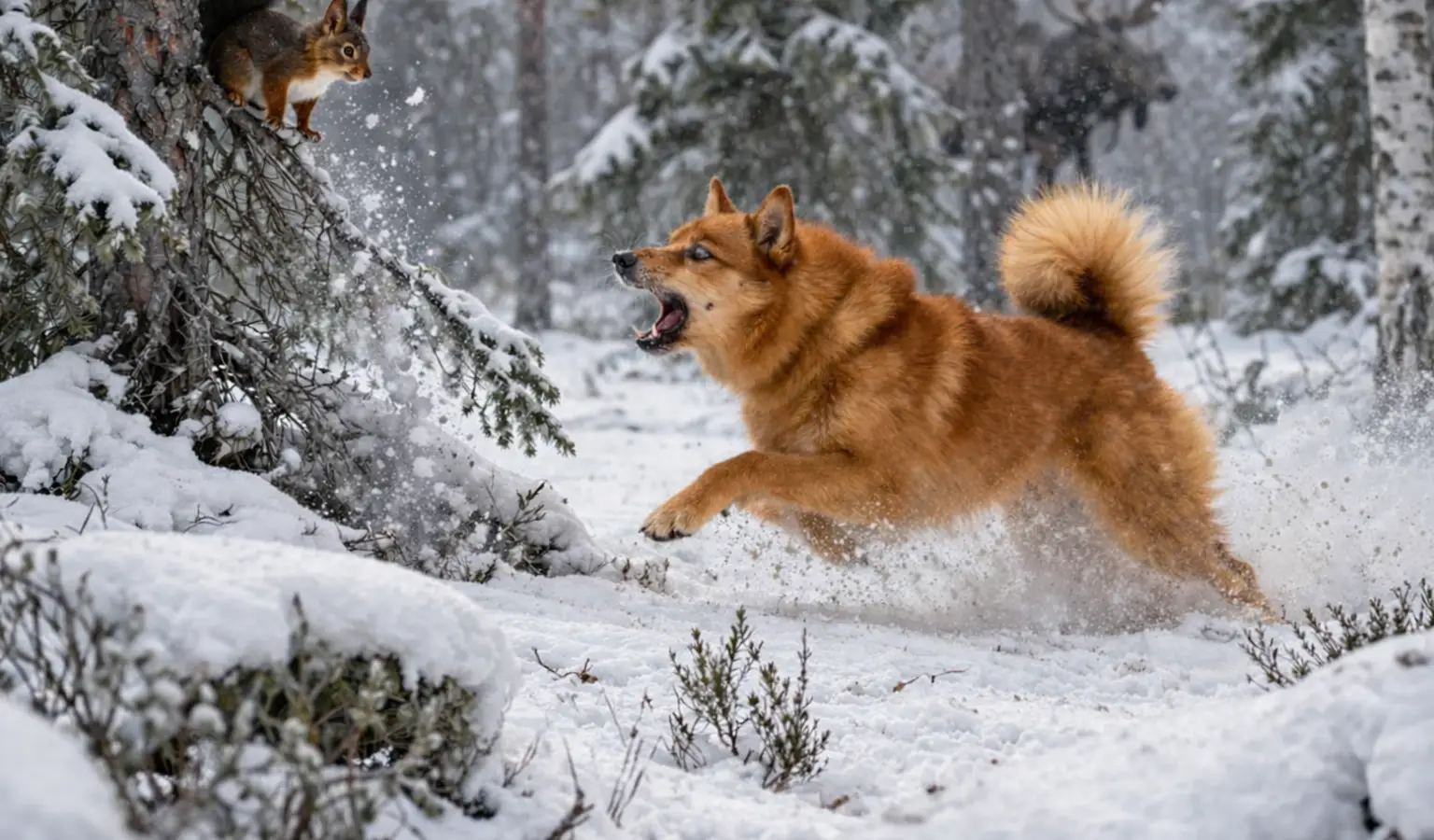
This breed is best known as a barking bird dog. In traditional hunting, the dog searches independently, finds game such as forest grouse, then holds the bird’s attention with animated barking so the hunter can approach. That working style helps explain the Finnish Spitz’s sharp awareness, quick reactions, and natural tendency to be vocal when excited or engaged.
Lively, bright, and self-directed
A good Finnish Spitz often combines friendliness with a distinctly independent mind. Many are affectionate with their family and observant with strangers without being naturally soft or eager to obey every cue. Training usually goes best with short, varied sessions and fair handling, especially for owners who appreciate a clever dog that may question repetition.
Better for active homes
Daily life with a Finnish Spitz usually suits people who enjoy movement, outdoor time, and regular interaction. This is not typically a low-maintenance couch dog. Many individuals need a meaningful outlet for energy, curiosity, and voice, whether through long walks, hiking, hunting work, scent games, or structured play. Under-stimulation can make nuisance barking and restless behavior more likely.
Coat care is manageable
The breed’s harsh outer coat and dense undercoat are designed for cold weather and woodland conditions. In practice, grooming is usually straightforward for much of the year, but seasonal shedding can be heavy and may require more frequent brushing. The coat should look natural rather than sculpted, and routine care also includes nails, ears, dental hygiene, and keeping an eye on overall condition in active dogs.
Best for patient handlers
The Finnish Spitz can be deeply rewarding for owners who want a watchful, expressive Nordic hunting breed with real personality. It may be less suitable for people seeking near-silent indoor living, constant off-leash reliability, or highly automatic obedience. In the right home, with early socialization and thoughtful training, it often becomes an engaging companion as well as a capable traditional hunting dog.
Practical answers for future owners, active families, and hunters considering this vocal Nordic bird dog.
Finnish Spitz hunting and family life FAQ
Is the Finnish Spitz a good hunting dog for beginners?
The Finnish Spitz can suit a beginner, but usually not a completely hands-off one. It was developed as a hunting spitz, especially for locating game birds and signaling with its voice, so success depends on patient training, good recall work, and controlled exposure to game. A novice hunter who enjoys learning, accepts a vocal dog, and is willing to work consistently may do well with the breed. Someone wanting a naturally compliant, easy off-lead dog may find it more challenging than some retrievers or versatile pointing breeds. Bloodline and the quality of early socialization can make a noticeable difference.
What does a Finnish Spitz hunt, and how does it work in the field?
The breed is most closely associated with forest bird hunting, especially capercaillie, black grouse, and other woodland game birds in its native tradition. Rather than pointing like a setter, the Finnish Spitz typically searches independently, locates game, and uses its characteristic bark to indicate and hold the hunter's attention on the bird's position. This style can be very effective in dense woodland where visibility is limited. Some individuals may also show interest in small game, but the breed is best understood as a specialized barking bird dog rather than a general-purpose gundog for every hunting task.
Are Finnish Spitz easy to train, or are they stubborn?
They are intelligent and quick to notice patterns, but they are not usually the most eager-to-please breed in the classic obedience sense. Many Finnish Spitz have an independent streak, which is useful in hunting but can feel stubborn if training is repetitive, harsh, or unclear. They often respond best to short sessions, calm consistency, and rewards that keep them engaged without overdrilling. Recall, impulse control, and quiet settling deserve early work because natural alertness and prey interest can easily override weak training. A skilled, fair handler usually gets much better results than someone relying on force or endless repetition.
Do Finnish Spitz bark a lot, and is that a problem in daily life?
Barking is one of the breed's defining traits, so this is a serious point to consider before bringing one home. In a hunting context, vocalization is part of the dog's working style, but in suburban life it can become difficult if the dog is bored, underexercised, or allowed to rehearse alert barking all day. Training can improve control, but it rarely removes the breed's natural tendency to use its voice. Owners usually do best when they combine enough physical exercise, scent work, structured quiet time, and clear rules about when barking is interrupted and when calm behavior is rewarded.
Can a Finnish Spitz live in an apartment, or does it need a house and yard?
A Finnish Spitz can live in an apartment in some cases, but it is not the easiest setting for the breed. The main issue is often not size but noise, stimulation, and the dog's need for regular outdoor activity and mental engagement. A house with a secure yard is usually more comfortable, though a yard alone is not enough if the dog is left to entertain itself. Apartment life tends to work best with experienced owners who can provide daily walks, training, scent-based games, and careful management of barking and arousal around hallway noises or passing dogs.
Is the Finnish Spitz a good family dog with children and other pets?
With the right home, the Finnish Spitz can be an enjoyable family companion: lively, expressive, and often strongly bonded to its people. It often does best with children who understand how to interact respectfully, because many individuals dislike rough handling or constant pestering. With other dogs, compatibility varies by temperament and socialization, but many live well in multi-dog homes. Small pets can be more complicated because hunting instinct and movement sensitivity may be strong, so introductions should be careful and management should remain realistic. Families usually enjoy the breed most when they want an active, interactive dog rather than a laid-back couch companion.
Who is the Finnish Spitz best suited to as a pet or hunting companion?
This breed tends to suit active owners who appreciate a natural, expressive dog and do not expect instant obedience. It can be a strong match for hunters interested in traditional bird work in woodland, as well as outdoorsy households that enjoy hiking, training, and regular engagement with their dog. It is usually a less natural fit for very quiet homes, first-time owners wanting an easygoing dog, or people with close neighbors who may not tolerate frequent barking. The best matches are typically patient, consistent handlers who enjoy canine personality and can channel energy, voice, and prey drive into structured daily life.