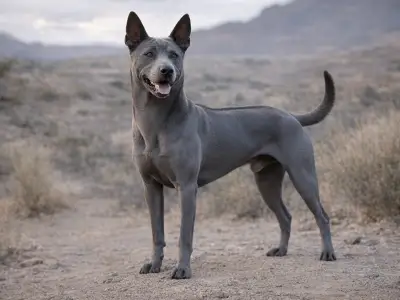
Cirneco dell’Etna
The Cirneco dell’Etna is a primitive Italian sighthound from Sicily, valued for its agility and stamina. A keen hunter outdoors, it is generally calm at home, affectionate yet independent. It needs active daily outings, mental stimulation and patient recall training.

Life expectancy
12 – 15 years
Price
1000 – 1800 €
Monthly budget
60 €
Size
Small
Profile
Cirneco dell’Etna
Origin
Italy
Year of origin
1000
Developed by
Sicilian hunters
Size
Small
Coat type
Short coat
Owner profile
Active owner
Hypoallergenic
No
Litter size
4
Life expectancy
12 – 15 years
Price
1000 – 1800 €
Female
- Height : 42 – 46 cm
- Weight : 8 – 10 kg
Male
- Height : 46 – 50 cm
- Weight : 10 – 12 kg
Temperament & abilities
Affectionate
4/5
Calm
3/5
Independent
4/5
Intelligence
4/5
Obedience
3/5
Hunting instinct
5/5
Energy level
4/5
Good with children
4/5
Dog-friendly
4/5
Friendly with strangers
3/5
Hunting profile
Stamina
4/5
Hunting drive
3/5
Independence
4/5
Trainability
3/5
Beginner-friendly
3/5
Family compatibility
4/5
Feather game
0/5
Fur game
3/5
Underground work
0/5
Water work
0/5
These indicators help compare breeds and choose the right one for your hunting style.
Game & abilities
Estimated ability level by game type.
Budget
Purchase price
1000 – 1800 €
The price may vary depending on the breeder, bloodline, and region.
Average monthly cost
60 €
Estimated average: food, healthcare, accessories, and grooming.
A light, agile primitive hunter best suited to active handlers who value initiative, speed, and manageable size.
Is the Cirneco dell’Etna a good hunting dog?
The Cirneco dell’Etna is a genuine hunting dog, especially coherent for small-game work in dry, rough country where agility, alertness, and endurance matter more than brute force. Traditionally associated with rabbit hunting, it tends to work as a lively, independent searcher that uses both nose and sight, covering ground with speed and economy rather than with the heavy, methodical style of some continental hounds. For the right hunter, the breed offers a very interesting balance: functional field ability in a compact dog that is usually easier to live with than many larger, harder-driving hunting breeds.
In the field, the Cirneco often stands out for its quick reactions, nimble feet, and capacity to negotiate broken terrain, stone, heat, and scrub. Its search pattern is typically active and intelligent, with a primitive hunting style that may include self-direction and rapid decision-making. That can be a strength when hunting in difficult ground, but it also means handling is not always as naturally close or compliant as with more biddable gundog types. Recall, steadiness, and consistent cooperation usually require patient early training and regular exposure to real-world distractions.
Potential owners should also be realistic about what the breed is, and is not. The Cirneco dell’Etna is not the obvious choice for hunters wanting a highly specialized retrieve, a very cold nose, or a dog bred to work in sustained close partnership at all times. Trainability is generally good when the relationship is fair and motivating, but many individuals respond better to thoughtful repetition than to pressure. Harsh handling can easily reduce confidence or willingness, while intelligent, reward-based work often brings out the best in the breed’s temperament.
- Best use cases: rabbit and similar small-game hunting, active search in dry or rocky terrain, hunters who appreciate a lighter, fast-moving primitive dog.
- Main strengths: agility, stamina, sharp awareness, manageable size, and a hunting style that can be both efficient and exciting to watch.
- Main demands: reliable recall training, enough daily exercise, mental engagement, and an owner comfortable with some independence.
As a companion, the breed can be easier in daily life than its field intensity might suggest, provided exercise needs are taken seriously. Many Cirnechi are affectionate, clean in the home, and pleasant to live with, but they are not low-energy ornaments. This is often a strong match for an active home that wants a real hunting dog without the scale or pressure of a larger specialist, and a less convincing fit for sedentary households or handlers expecting automatic obedience.
Sharp nose on rough ground
The Cirneco dell’Etna is widely valued for using scent effectively on difficult, dry terrain where game can be hard to pin down. Rather than relying on brute force, it often works with precision, picking up subtle odor and staying engaged in broken, rocky country. This makes it especially interesting for hunters who want a small primitive hound with real tracking usefulness.
Agile in rocky terrain
One of the breed’s most practical strengths is footwork. Built for uneven volcanic landscapes, the Cirneco is typically quick, balanced, and efficient over stone, scrub, and steep ground. That agility can reduce wasted motion and helps the dog stay effective where heavier or less nimble hunting dogs may tire sooner or lose rhythm.
Endurance without excess bulk
This is not a power breed, but it often shows impressive stamina for its size. A fit Cirneco can keep working for long periods when conditioned properly, especially in warm, dry conditions. Its lean build favors economical movement, which can suit hunters who cover ground steadily and want a dog that stays active without feeling cumbersome in daily life.
Focused small-game specialist
The breed is generally most at home in small-game work rather than broad all-purpose hunting. That specialization is a strength when expectations are realistic. Many Cirnechi show strong concentration, quick reactions, and a lively prey drive, making them appealing to handlers who want a compact hunting dog with a clear job instead of a heavy, multipurpose gundog style.
Independent but readable
The Cirneco often works with a degree of independence, which can be useful in the field, but it is usually not the same as effortless obedience. With fair, consistent training, many individuals remain quite readable and responsive to a calm handler. It tends to suit hunters who appreciate initiative in a dog and are comfortable shaping cooperation rather than demanding robotic precision.
Efficient hunter for active homes
A practical advantage of the Cirneco dell’Etna is that its hunting style often translates well to everyday ownership for active people. It brings drive, alertness, and athleticism without the sheer mass or management demands of larger hunting breeds. For the right owner, that can mean a dog capable of real field work while still fitting more easily into regular family routines.
Who the Cirneco dell’Etna suits best
The Cirneco dell’Etna tends to suit an active owner who appreciates a light, quick, primitive hunting dog rather than a highly biddable all-purpose gun dog. It is often a good match for people who enjoy seeing a dog work independently, can offer regular exercise, and are realistic about prey drive, sensitivity, and selective obedience. For hunting, it generally fits best with handlers interested in rabbit hunting or similar small-game work in dry, rough ground, where agility, stamina, and sharp senses matter more than brute force.
In daily life, this breed usually works best in a calm but active home with clear routines, secure fencing, and time for training and mental engagement. It may be less suitable for households wanting an easy off-lead dog, a low-maintenance couch companion, or a breed that accepts repetitive training without question. First-time owners can do well if they are consistent and observant, but people expecting instant recall, heavy-handed handling, or very low exercise needs often find the match difficult.
How Sicily’s volcanic landscape shaped this lean, independent hunting dog
Origins of the Cirneco dell’Etna
The Cirneco dell’Etna is widely associated with Sicily, especially the slopes of Mount Etna, where a small, agile hunting dog was developed to work rough volcanic ground in search of rabbit and other small quarry. Its exact ancient roots are often presented with great certainty, but the historical picture is probably more complex. The breed is frequently linked to very old Mediterranean prick-eared hunting dogs, and it may share ancestry or type with other primitive hounds from the region, yet modern breed history is most firmly tied to eastern Sicily rather than to any single romantic origin story.
What matters for understanding the Cirneco today is the kind of selection that shaped it. This was not a heavy, forceful dog bred to overpower game, but a light, durable hunter expected to move efficiently over hot, stony terrain, use its senses intelligently, and keep working without wasting energy. That background still helps explain the breed’s typical style: alert, lively, visually expressive, and often more independent in decision-making than many highly handler-dependent gundogs. A good Cirneco tends to be quick, adaptable, and keen rather than relentless in a purely mechanical way.
Historically, local hunters valued practical qualities over showiness. Dogs that could handle heat, sparse cover, uneven footing, and long outings were more useful than exaggerated specimens. That functional selection contributes to the breed’s generally athletic outline and to a temperament that often combines sensitivity with toughness. In daily life, this can mean a dog that is affectionate and close to its people, yet not always eager for repetitive drilling. Training usually goes best with calm consistency, short varied sessions, and enough physical outlet to keep the dog mentally settled.
For modern owners and hunters, the Cirneco’s history offers a realistic guide to suitability. This is often a strong choice for someone who appreciates a lighter primitive hunting breed with speed, agility, and a natural hunting instinct, particularly for active outings and terrain where nimbleness matters. It may be less straightforward for handlers wanting a highly biddable, easy-to-shape dog that thrives on constant close direction. Its past as a practical Sicilian rabbit hunter still shows in its energy, curiosity, and self-contained working style, and that heritage is a large part of the breed’s appeal.
Ancient Sicilian roots
The Cirneco dell’Etna is closely tied to Sicily, especially the area around Mount Etna. It is often described as an old Mediterranean hunting breed, and while some historical links are interpreted with caution, the breed’s identity is strongly associated with generations of practical use on harsh volcanic terrain rather than with modern show breeding alone.
Built for rough ground
This is a light, athletic primitive hound developed to move efficiently over rocky, uneven country. The Cirneco dell’Etna is generally valued for agility, stamina, and alertness more than brute power. That makes it especially interesting for hunters or active owners who appreciate a small-to-medium dog able to work hard without the heavy build of larger scenthounds.
A focused, independent hunter
In the field, the breed is usually described as lively, responsive, and highly engaged with scent and movement. Like many primitive hunting dogs, the Cirneco can combine cooperation with a noticeable independent streak. That often means training goes best with consistency, short sessions, and fair handling rather than repetitive drilling or heavy pressure.
Calm housemate, active routine
At home, many Cirnechi are affectionate and clean in their habits, but they are rarely a good fit for a sedentary lifestyle. Daily life tends to go best when they get regular exercise, chances to explore, and mentally engaging routines. A secure area is important, as a fast dog with prey interest may follow scent or sudden movement quickly.
Lean, low-maintenance care
The short coat is easy to keep tidy, and grooming is usually straightforward. The more important part of care is not cosmetics but condition: keeping the dog fit, warm enough in cold or wet weather, and adequately exercised. Because the breed is naturally lean, owners often need to distinguish healthy athletic slimness from true loss of condition.
Best for thoughtful active owners
The Cirneco dell’Etna often suits people who want a sensitive, athletic hunting dog or companion with real character rather than automatic obedience. It can be an appealing choice for experienced sighthound or primitive-breed owners, active families, and hunters who value finesse and endurance. It may be less suitable for homes expecting a highly biddable, low-drive dog.
Practical answers for people considering this ancient Sicilian hunting dog as a working partner, active companion, or family pet.
FAQ: hunting, training, and daily life with the Cirneco dell’Etna
Is the Cirneco dell’Etna a good hunting dog today?
The Cirneco dell’Etna is still widely valued for its natural hunting instincts, especially in terrain where agility, quick reactions, and persistence matter more than raw power. It is traditionally associated with small game work and may suit hunters who want a lively, attentive dog that can cover rough ground efficiently. In practice, hunting ability depends a great deal on line, early exposure, conditioning, and the quality of training. Some individuals remain strongly work-oriented, while others are kept mainly as companions and may need more patient development before they show reliable field usefulness.
What kind of game and hunting style does a Cirneco dell’Etna usually suit?
This breed is generally linked to small game hunting and to active, searching work in dry, rocky, or uneven country. Many people are drawn to the Cirneco because it combines speed, stamina, and a very alert nose with the nimbleness needed for difficult footing. It is not usually the first choice for someone wanting a heavier, more forceful dog for large game or very demanding retrieval tasks. It tends to suit hunters who enjoy a responsive, mobile dog and who are comfortable working with a primitive-type breed that may show some independence in the field.
Is the Cirneco dell’Etna easy to train, or is it too independent?
The Cirneco dell’Etna is often intelligent and quick to understand routines, but that does not always mean soft, automatic obedience. Many individuals learn best with short, clear sessions, fair boundaries, and rewards that keep motivation high, especially if training starts early. Harsh handling can reduce engagement, while inconsistent rules can encourage selective listening. For recall, leash manners, and off-lead reliability around prey, owners usually get the best results through steady repetition and realistic expectations rather than assuming the dog will behave like a highly biddable gundog.
Can a Cirneco dell’Etna live happily as a family dog if it does not hunt?
Many Cirnechi can adapt well to family life when they get enough daily exercise, mental activity, and structured interaction. At home, they are often affectionate, clean in their habits, and more settled indoors than people expect, provided their needs have been met outside. The challenge is not simply whether the dog hunts, but whether it has a meaningful outlet for chasing instincts, curiosity, and energy. Long walks, scent games, controlled running in secure areas, and regular training can help a non-hunting Cirneco live a balanced life.
Is the Cirneco dell’Etna good with children and other pets?
With sensible socialization, many Cirnechi are gentle and pleasant with respectful children, especially in calm homes where the dog is not constantly overstimulated. As with any active, sensitive breed, supervision matters, and very young children should not be expected to manage the dog appropriately on their own. Around other dogs, they are often sociable, though individual temperament varies. Small pets such as rabbits, rodents, or free-roaming backyard animals can be more complicated because prey drive may remain strong even in a well-raised dog.
Can a Cirneco dell’Etna live in an apartment, or does it need a large property?
A large house or country property is not automatically necessary, but easy apartment living is not guaranteed either. This breed can do well in smaller housing if the owner consistently provides real exercise, opportunities to sniff and explore, and a calm routine that prevents frustration from building up. What matters most is not square footage but management: secure leash use, safe fencing, and enough daily activity to satisfy a dog bred to move and search. A bored Cirneco in a city flat may be harder to live with than a well-exercised one in a modest home.
Who is the Cirneco dell’Etna best suited for: first-time owners, active families, or serious hunters?
The best match is usually an owner who likes athletic, responsive dogs and is willing to train consistently without relying on force. Active families can do very well with the breed if they understand prey drive, commit to daily outings, and want a lighter, more agile hunting-type dog rather than a laid-back pet. Serious hunters may appreciate the Cirneco’s traditional working background, but should still look carefully at breeding, temperament, and practical field qualities instead of assuming every dog will perform the same way. For true beginners, the breed can work, but it tends to suit people who are ready for a lively, observant dog with both charm and clear instincts.