Norwegian Lundehund
The Norwegian Lundehund is a rare primitive breed with unique anatomical traits.
Life expectancy
12 – 14 years
Price
1200 – 2200 €
Monthly budget
65 €
Size
Small
Profile
Norwegian Lundehund
Origin
Norway
Year of origin
1500
Developed by
Norwegian fishermen
Size
Small
Coat type
Double coat
Owner profile
Experienced owner
Hypoallergenic
No
Litter size
4
Life expectancy
12 – 14 years
Price
1200 – 2200 €
Female
- Height : 32 – 35 cm
- Weight : 5 – 6 kg
Male
- Height : 35 – 38 cm
- Weight : 6 – 7 kg
Temperament & abilities
Affectionate
4/5
Calm
3/5
Independent
4/5
Intelligence
4/5
Obedience
3/5
Hunting instinct
4/5
Energy level
4/5
Good with children
4/5
Dog-friendly
4/5
Friendly with strangers
3/5
Hunting profile
Stamina
4/5
Hunting drive
3/5
Independence
4/5
Trainability
2/5
Beginner-friendly
2/5
Family compatibility
3/5
Feather game
3/5
Fur game
0/5
Underground work
0/5
Water work
0/5
These indicators help compare breeds and choose the right one for your hunting style.
Game & abilities
Estimated ability level by game type.
No species scores are available yet.
Budget
Purchase price
1200 – 2200 €
The price may vary depending on the breeder, bloodline, and region.
Average monthly cost
65 €
Estimated average: food, healthcare, accessories, and grooming.
A highly specialized cliff and puffin hunter with unusual talents, but narrow modern hunting use
Is the Norwegian Lundehund a Good Hunting Dog?
The Norwegian Lundehund is a true hunting dog, but it is not a versatile all-round hunting breed in the way many gundog buyers expect. Historically associated with puffin hunting on steep coastal terrain, it brings unusual agility, bold movement in awkward spaces, and a distinctive problem-solving style. For someone asking about Norwegian Lundehund hunting ability today, the honest answer is that this breed is most convincing in highly specific search-and-access work rather than broad modern field use.
Its strengths are closely tied to its original job. The breed is known for exceptional flexibility, nimble footwork, and the confidence to move over rocks, ledges, and cramped passages where many dogs would hesitate. In practical terms, that can translate into an agile, curious hunter with a lively nose, quick reactions, and strong terrain awareness. The working style is often independent rather than handler-focused, which can be an asset in difficult ground but may also make the dog feel less straightforward to manage than a more biddable hunting breed.
That independence shapes training. Recall, focus, and steady handling usually need patient, consistent work, and trainability can vary with the individual dog and bloodline. A Norwegian Lundehund is generally better suited to an owner who enjoys managing a clever, somewhat self-directed dog than to someone wanting a highly polished retrieve-and-return specialist. It would not usually be the first recommendation for hunters seeking strong retrieving drive, long-range patterning, or a classic cooperative gundog style.
In everyday life, the breed often sits in a middle ground: alert, active, and mentally busy, but not simply defined by raw speed or endless stamina. It tends to do best with regular activity, exploration, and training games rather than repetitive hard work alone. For comparison shoppers, the Norwegian Lundehund makes the most sense if you value unusual agility, primitive character, and niche working heritage more than broad hunting versatility.
- Best fit: owners fascinated by rare hunting breeds and specialized terrain ability
- Less ideal for: hunters wanting dependable retrieve work, strong handler softness, or highly standardized field performance
- Daily-life reality: active, curious, and engaging, with training demands that reward patience and structure
Cliff and rock agility
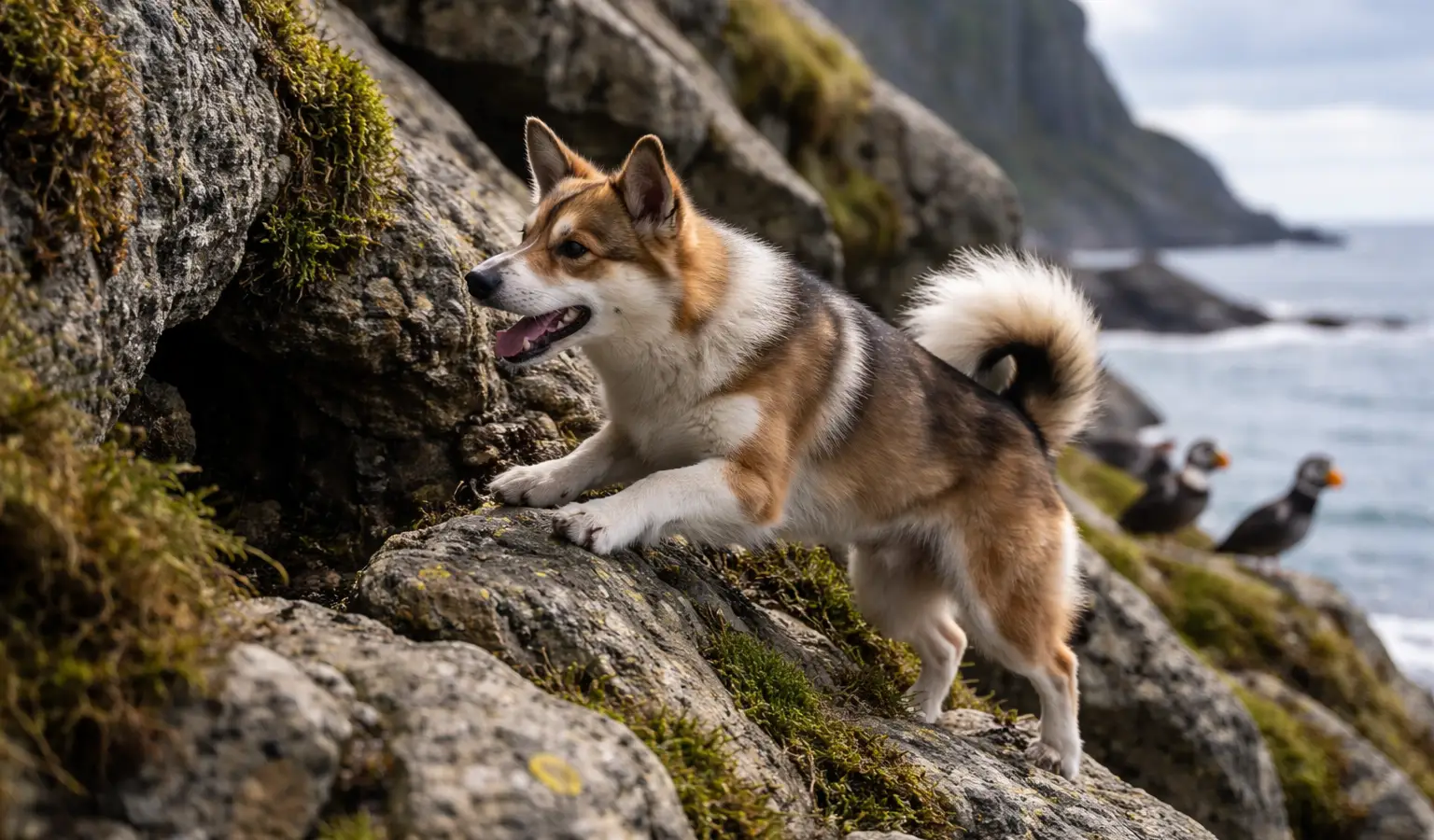
The Norwegian Lundehund was developed for puffin hunting on steep coastal terrain, and that background shows in its movement. It is notably agile on rocks, narrow ledges, and uneven ground, with a light, balanced way of traveling that would have helped it work where larger or heavier hunting dogs could not go safely.
Exceptional body flexibility
This breed is famous for unusual flexibility, a practical asset when entering crevices, turning in confined spaces, or backing out of awkward gaps. In hunting terms, that made the Lundehund especially suited to quarry hidden in burrows or cliff cavities rather than to broad, open-country pursuit.
Specialist in tight spaces
Unlike more all-round gundogs, the Lundehund’s real strength was specialized access work. It appears to have been valued less for long chases or formal retrieves and more for locating and reaching birds in difficult nesting sites. For hunters, that means its historic usefulness was narrow but very distinctive.
Independent problem-solving
A dog working on cliffs and in holes often needs to make decisions without constant direction, and the Lundehund can show that independent streak. This can be a real strength in practical hunting situations, but it also means modern training usually works best with patient handling, repetition, and realistic expectations rather than heavy pressure.
Focused on a specific task
When a breed has been shaped for one very particular job, concentration often appears in a narrow, situation-dependent way rather than as broad working versatility. The Norwegian Lundehund may suit owners who appreciate a dog with a strong original purpose, but it is not the obvious choice for those wanting a conventional multipurpose hunting companion.
Light build over brute force
The Lundehund’s advantages come from nimbleness, balance, and access, not power or endurance over long hunting days. That distinction matters for real-life expectations: it can appeal to people interested in primitive hunting breeds and historic working behavior, but it is generally better understood as a specialist than as a modern general hunting dog.
Who the Norwegian Lundehund suits best
The Norwegian Lundehund tends to suit an owner who enjoys living with an unusual, agile, independent-minded dog rather than a conventional all-round hunting breed. Its historic role was highly specialized, so it is usually a better match for people interested in primitive breeds, outdoor life, scent games, hiking, and thoughtful training than for hunters wanting a versatile gun dog or a hard-driving tracking specialist. In family life, it often fits best with patient adults or families who appreciate a small but busy dog with alert instincts, curiosity, and a mind of its own.
Less suitable profiles include households expecting easy off-lead reliability, highly biddable obedience, or a low-maintenance companion that will simply adapt to any routine. Many Lundehunds need careful socialization, secure containment, and daily mental engagement to stay easy to live with. They can be a rewarding choice for experienced active owners who like breed-specific quirks; they are often a weaker fit for first-time dog owners, very sedentary homes, or hunters expecting strong modern field utility.
How a remote puffin-hunting dog became one of the world’s most distinctive breeds
Origins of the Norwegian Lundehund
The Norwegian Lundehund was developed on the isolated northern coasts of Norway, where local fishermen and farmers used small, agile dogs to hunt puffins and gather birds from steep cliffs and narrow rock crevices. Its history is closely tied to this very specific job, which helps explain why the breed still stands apart today. Rather than being shaped for broad versatility, the Lundehund appears to have been selected over generations for balance, flexibility, sure-footed movement, and the confidence to work in difficult terrain with a large degree of independence.
Much of the breed’s old working life centered on islands such as Værøy, where puffin hunting was once an important source of food and feathers. Historical accounts vary in detail, and not every part of the breed’s early development is fully documented, but there is broad agreement that this is an old Nordic hunting dog adapted to a highly specialized niche. Its unusual physical traits, including extra toes and exceptional joint flexibility, were not curiosities in that setting; they were practical tools for climbing, gripping uneven surfaces, and maneuvering through tight spaces where a more conventional hunting dog would struggle.
That background still influences the Lundehund’s temperament and handling today. Many individuals are alert, inventive, and quick in their movements, yet not always eager to work in the highly biddable, repetitive way expected of more handler-focused gundogs. Owners often find that the breed responds best to calm, patient training and meaningful engagement rather than heavy pressure. The same independence that once helped it search rock faces can make modern training less straightforward, especially for people expecting instant compliance.
For today’s hunter, the Norwegian Lundehund is better understood as a historic specialist than as a general-purpose hunting breed. It may appeal most to enthusiasts interested in primitive or rare Nordic dogs, breed preservation, and a lively companion with unusual natural athleticism. In daily life, that heritage can mean a dog that is active, curious, and capable in awkward terrain, but also one that typically needs thoughtful management, mental stimulation, and an owner who appreciates a dog with its own mind. The breed’s past does not just explain how it looks; it also helps explain why living with one can feel quite different from living with a more conventional hunting dog.
Built for cliff hunting
The Norwegian Lundehund developed on remote Norwegian coasts, where it was used to hunt puffins in steep, rocky terrain. Its unusual flexibility and agile footwork are closely tied to that original job. This is not a general-purpose gundog in the modern sense, but a highly specialized hunting breed shaped by narrow passages, unstable surfaces, and quick independent decisions.
A rare survival story
The breed’s history includes periods of sharp decline, and the modern population descends from careful preservation efforts. That background helps explain why the Norwegian Lundehund remains rare and somewhat niche today. For owners, rarity can mean fewer local breeders, less mainstream familiarity, and a need to seek out people who truly understand the breed’s structure, temperament, and long-term management.
Independent, alert, and sensitive
Many Norwegian Lundehunds are bright, curious, and observant, but they are not always eager-to-please in the way some retrievers or spaniels are. Training often goes best with patience, short sessions, and calm repetition. Harsh handling can backfire. They tend to suit owners who appreciate a thoughtful, somewhat independent dog rather than one that works in constant close partnership.
Best for active but measured homes
Despite its hunting origin, this breed usually does not need the kind of relentless exercise expected from larger field dogs. What it does need is regular activity, environmental variety, and mental engagement. A secure home, structured walks, scent games, and time to explore can fit it well. Daily life is often easiest with owners who enjoy managing a lively, agile dog with a strong sense of curiosity.
Specialized working style
As a hunting dog, the Norwegian Lundehund is best understood through its original purpose rather than through modern trial expectations. It was selected to navigate difficult terrain and locate quarry in tight spaces, often with a degree of independence. That heritage may still show in how it moves, investigates, and problem-solves. It is more of a specialist cliff hunter than a versatile all-round hunting companion.
Care goes beyond grooming
Coat care is usually fairly manageable, but this breed asks for attentive day-to-day oversight in other ways. Owners often need to be observant about body condition, routine, stress, and digestive stability, since individual dogs can be sensitive. Consistent feeding habits, sensible exercise, and thoughtful breeder guidance matter more here than flashy grooming routines or high-intensity training plans.
Practical answers on hunting instinct, trainability, family life, exercise, housing, and owner fit.
Norwegian Lundehund hunting and ownership FAQ
Is the Norwegian Lundehund still a real hunting dog today?
The Norwegian Lundehund was historically developed for puffin hunting on steep coastal cliffs, so it does come from genuine working stock. In modern life, however, most Lundehunds are kept as companions rather than active hunting dogs, and their original job is no longer a common practical use. That means you should not assume every individual will perform like a modern gundog or versatile hunting breed. What often remains is agility, curiosity, problem-solving ability, and a tendency to investigate tight spaces and uneven terrain. For owners interested in instinct and breed history, it is better viewed as a primitive hunting breed with a highly specialized past than as a mainstream hunting partner for general game.
Can a Norwegian Lundehund be trained for hunting or scent work?
Some Norwegian Lundehunds can enjoy scent games, tracking foundations, and structured nose work, especially when training is calm, reward-based, and varied. Their mindset can be independent, so they may not respond with the same consistency or handler focus as breeds developed for close cooperative work. If you want a dog for serious field use, this breed may be a niche choice rather than the safest option. If your goal is to channel natural curiosity into activities with purpose, scent work, search games, and technical obstacle exercises are often more realistic. Success depends a lot on the individual dog, bloodline, and the owner’s patience with a breed that may prefer thinking for itself.
Is the Norwegian Lundehund easy to train for everyday life?
The breed is usually intelligent and observant, but easy is not always the right word. Many Lundehunds learn quickly, yet they can also be selective, environmentally focused, and less eager to repeat drills that feel pointless. Short sessions, food rewards, playful variety, and clear routines tend to work better than pressure or heavy correction. Recall, impulse control, and calm behavior around interesting scents or moving wildlife often deserve extra attention from an early age. Owners who enjoy patient, thoughtful training usually do better than people expecting automatic obedience.
What is daily life with a Norwegian Lundehund actually like?
Daily life is often shaped by the breed’s unusual mix of alertness, flexibility, and independence. A Lundehund may be entertaining and agile at home, but also busy-minded enough to notice every sound, movement, or opportunity to explore. This is not usually the kind of dog that thrives on being ignored all day with only a quick walk around the block. Most do best with a combination of walks, sniffing time, training games, and a predictable home routine. Owners should also expect some quirky behavior, because this is a rare primitive-type breed with traits that can feel quite different from more conventional family dogs.
Is the Norwegian Lundehund good with children and family life?
A well-socialized Norwegian Lundehund can fit into family life, but the best match is usually a household that understands small, sensitive, intelligent dogs. Many can be affectionate and lively with their people, though they may be reserved, easily overstimulated, or less tolerant of rough handling than sturdier family breeds. Supervision matters with young children, especially if the dog needs space or prefers quieter interaction. Families who teach respectful handling, provide routine, and avoid constant chaos often get a much better result. For very busy homes wanting an easygoing, highly biddable dog, other breeds may be simpler.
Can a Norwegian Lundehund live in an apartment or small home?
Apartment living can work if the dog gets enough mental engagement, regular outings, and a calm structure at home. Size alone is not the issue, because the bigger question is whether the owner can meet the breed’s need for exploration, sniffing, and structured activity. Some individuals may be alert and vocal, which can matter in close living spaces. Secure management is also important, since a curious, agile dog may investigate gaps, furniture, and escape opportunities more creatively than expected. A small home is usually manageable for committed owners, but a low-effort lifestyle is not the strongest fit.
Who is the Norwegian Lundehund best suited to?
The breed tends to suit owners who appreciate rare breeds, independent temperaments, and the idea of living with a dog that has strong historical character rather than standardized working-dog predictability. It can be a rewarding match for people who enjoy observation, training in small steps, and enriching daily routines instead of highly repetitive obedience work. It is usually less suited to first-time owners looking for a straightforward dog, or to hunters wanting a conventional all-purpose field companion. Active but thoughtful homes often suit it best, especially where the dog can get regular walks, scent-based activities, and patient handling. In the right setting, the Lundehund can be fascinating and enjoyable, but it is very much a breed to choose on purpose.