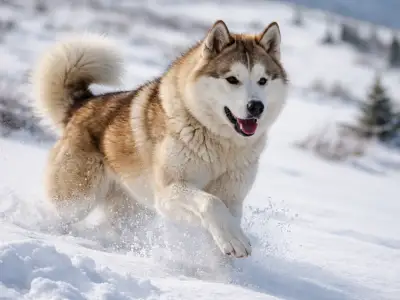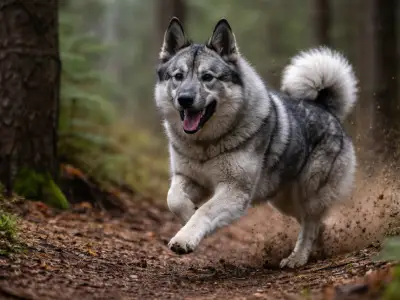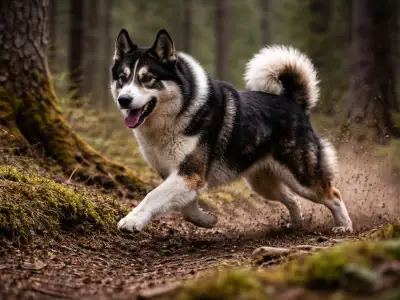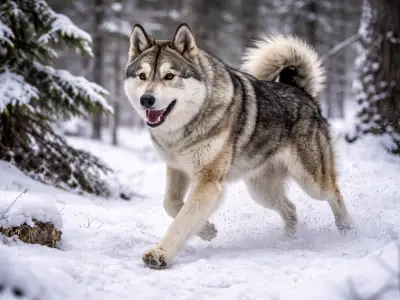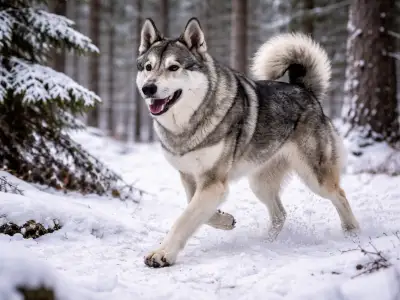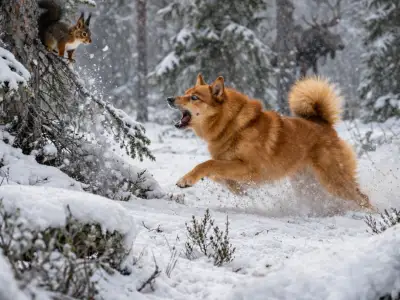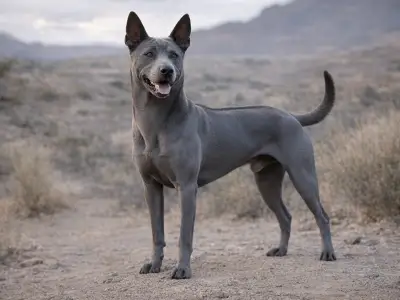
Karelian Bear Dog
The Karelian Bear Dog is a powerful and fearless big-game hunting dog.
Life expectancy
11 – 13 years
Price
1000 – 1800 €
Monthly budget
75 €
Size
Medium
Profile
Karelian Bear Dog
Origin
Finland
Year of origin
1936
Developed by
Finnish hunters
Size
Medium
Coat type
Double coat
Owner profile
Experienced owner
Hypoallergenic
No
Litter size
6
Life expectancy
11 – 13 years
Price
1000 – 1800 €
Female
- Height : 49 – 53 cm
- Weight : 17 – 20 kg
Male
- Height : 54 – 60 cm
- Weight : 20 – 23 kg
Temperament & abilities
Affectionate
2/5
Calm
3/5
Independent
5/5
Intelligence
4/5
Obedience
2/5
Hunting instinct
5/5
Energy level
5/5
Good with children
2/5
Dog-friendly
2/5
Friendly with strangers
2/5
Hunting profile
Stamina
5/5
Hunting drive
5/5
Independence
5/5
Trainability
1/5
Beginner-friendly
0/5
Family compatibility
2/5
Feather game
0/5
Fur game
4/5
Underground work
2/5
Water work
0/5
These indicators help compare breeds and choose the right one for your hunting style.
Game & abilities
Estimated ability level by game type.
Budget
Purchase price
1000 – 1800 €
The price may vary depending on the breeder, bloodline, and region.
Average monthly cost
75 €
Estimated average: food, healthcare, accessories, and grooming.
A bold, high-drive hunting spitz best suited to experienced handlers and demanding game work
Is the Karelian Bear Dog a Good Hunting Dog?
The Karelian Bear Dog is widely regarded as a serious hunting dog, especially for hunters who value courage, persistence, and an independent working style. It was developed for challenging game and remains best known for big-game work, but it can also be used in versatile hunting contexts depending on the individual dog, training, and local tradition. In practical terms, this is not a casual companion that happens to hunt well; it is a purpose-driven working breed with sharp instincts, high energy, and a temperament that makes the most sense in active, skilled hands.
In the field, the Karelian Bear Dog typically combines stamina, strong game awareness, and a bold approach to difficult terrain and demanding quarry. Its nose is generally effective rather than exaggerated in the way some scent specialists work, and its search pattern often reflects the spitz type: active, self-directed, and ready to range with initiative. Many hunters appreciate the breed for its courage and intensity, but that same toughness can make handling more demanding. Recall, steadiness, and controlled cooperation usually require patient training and regular exposure, not just raw drive. This is a dog that often works best with a handler who understands independent hunting breeds and can channel determination without constantly fighting it.
As a hunting partner, the breed tends to make the most sense for people looking for a hardy, mentally strong dog for rough country, cold weather, and serious work rather than polished all-round obedience. It is less naturally suited to owners who want a highly biddable dog that stays closely connected at all times or one that fits easily into occasional weekend activity. Retrieving ability can vary, and while some individuals can be taught useful retrieve work, that is usually not the breed's defining strength. Its real value lies more in game finding, pressure, presence, and staying committed in difficult situations.
- Best fit: experienced hunters wanting a courageous, durable hunting spitz for demanding game and terrain
- Main strengths: bravery, stamina, strong work ethic, cold-weather toughness, serious field attitude
- Main demands: early training, firm but fair handling, reliable recall work, substantial daily exercise, mental structure
- Less ideal for: novice owners, low-activity homes, or people wanting easy off-switch behavior without consistent management
In everyday life, the balance between field performance and family living can be rewarding but rarely effortless. A well-bred, well-managed Karelian Bear Dog may be loyal and stable with its own people, yet it usually remains intense, watchful, and highly energetic compared with easier pet breeds. Without enough work, outlets, and clear guidance, that drive can spill into restlessness or difficult behavior. For the right home, especially one built around hunting and outdoor life, the breed can be deeply satisfying. For the average family simply wanting an athletic dog, it is often more dog than they truly need.
Bold on big game
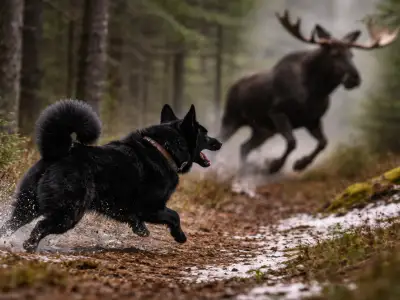
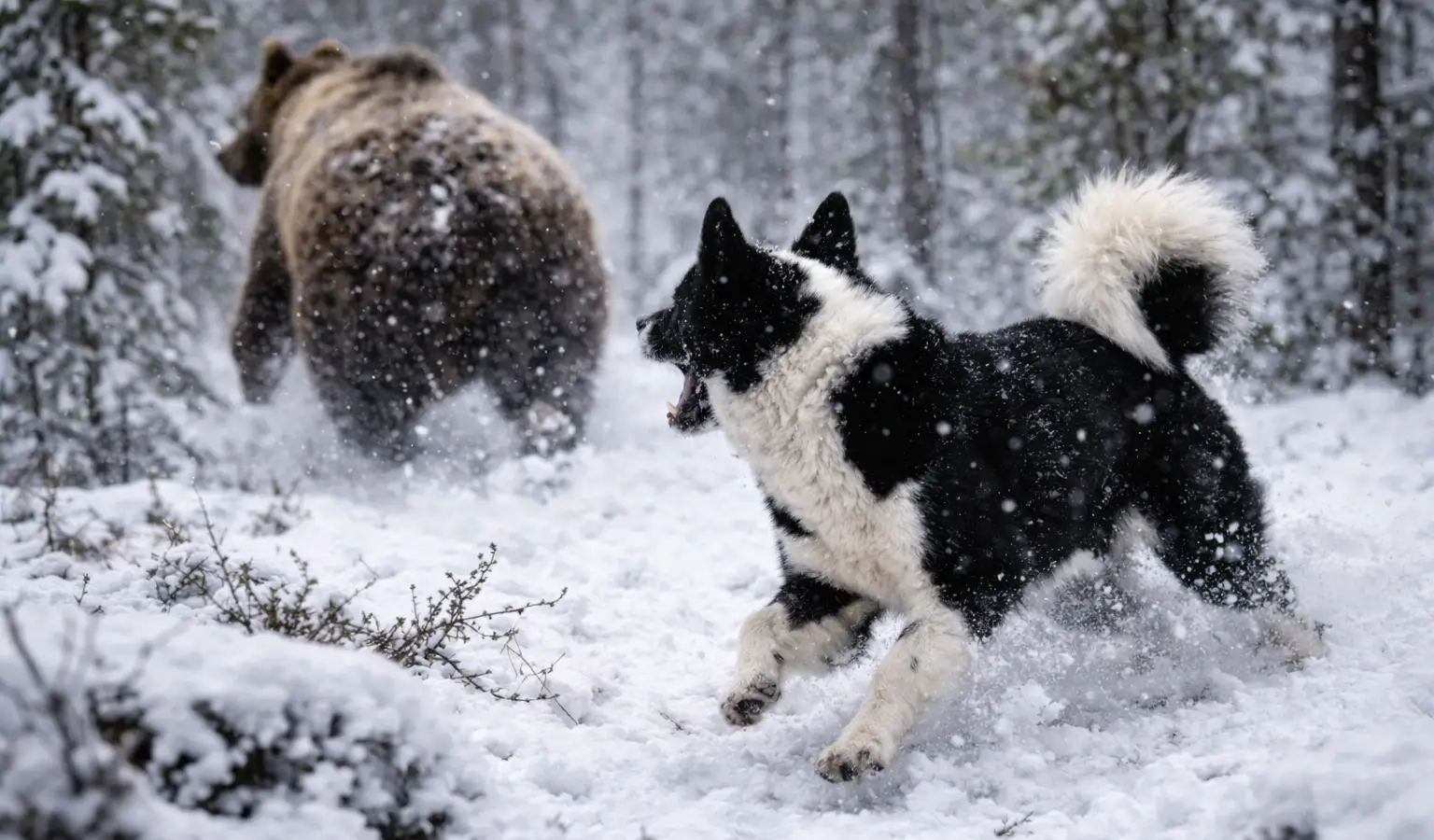
The Karelian Bear Dog is best known for its nerve and determination around formidable quarry. In experienced hands, it may show the confidence needed to locate, pressure, and hold large game at bay with intense barking rather than reckless contact. That courage is a real asset in serious hunting, but it also means this is not a casual or low-drive hunting companion.
Independent field worker
This breed often works with a strong sense of initiative, which can be valuable in rough country where the dog must make decisions away from the handler. For hunters who appreciate a self-reliant dog, that independence is part of the appeal. The trade-off is clear: recall, steadiness, and cooperation usually require patient training and consistent handling from an experienced owner.
Stamina in harsh country
Built for northern hunting conditions, the Karelian Bear Dog generally has the endurance to cover difficult ground for extended periods. It suits active hunters who need a dog that can keep working through dense forest, uneven terrain, and poor weather. In daily life, the same engine translates into substantial exercise needs and a dog that rarely thrives with a sedentary routine.
Tight focus on quarry
When switched on, this breed can show impressive concentration on game, staying mentally engaged instead of hunting in a scattered way. That focus is useful for locating and holding an animal’s attention, especially in traditional big-game work. It also means many individuals are intensely prey-driven, so control around wildlife and smaller animals should never be taken for granted.
Good scent use with voice
The Karelian Bear Dog is not just about bravery; it also relies on scenting ability and a characteristic vocal style to help the hunter track the situation. Its barking can be a practical working tool, signaling location and pressure on game. For hunting homes, that trait is functional. For suburban living, it may be harder to manage if not channeled carefully.
Best for specialist handlers
Its hunting strengths are real, but they are most useful for people who want a serious working spitz rather than a soft, easygoing gundog. The breed tends to fit hunters who value grit, toughness, and mental resilience in demanding environments. First-time handlers may find the combination of intensity, independence, and prey drive more challenging than the breed’s rugged image first suggests.
Who the Karelian Bear Dog suits best
The Karelian Bear Dog tends to suit a hunter or outdoor owner who wants a bold, hardy, highly driven dog and understands primitive northern hunting breeds. It often fits best with people who spend real time in the field, value independence as much as obedience, and can manage a dog with strong prey drive, a sharp voice, and a naturally watchful temperament. In the right hands, it can be a focused hunting companion for big game and other demanding work, but daily life still needs structure, exercise, and clear handling.
It is usually less suitable for first-time dog owners, very social multi-dog households, or families wanting an easygoing off-switch in a suburban routine. A Karelian Bear Dog may not be the best match for homes with small pets, inconsistent training, or owners who expect instant recall and soft, eager-to-please behavior. The breed generally suits confident, active adults who enjoy training, secure management, and purposeful outings far more than casual owners looking for a simple family pet.
How a rugged northern hunting dog became the bold, independent specialist known today
Origins of the Karelian Bear Dog
The Karelian Bear Dog comes from the forested borderlands of Finland and the wider Karelia region, where hunters long relied on hardy spitz-type dogs to locate, track, and hold game at bay in difficult terrain. Its roots appear to lie in old local hunting dogs shaped more by function than by formal breed planning. In practical terms, that history helps explain the breed seen today: intensely alert, weather-resistant, physically tough, and unusually willing to confront large game while maintaining enough independence to work away from the handler.
Modern breed development is most closely associated with Finland in the early 20th century, when breeders began selecting and standardizing dogs from these regional hunting populations. The aim was not simply to create a striking black-and-white dog, but to preserve a serious working hunter with courage, endurance, a strong nose, and the sharp voice needed to indicate game. Historical records can vary on the exact mix of local dogs involved, but the broad picture is consistent: the Karelian Bear Dog was refined from northern hunting stock chosen for performance in real field conditions rather than for a purely companion role.
That selection still shows in the breed’s temperament. A well-bred Karelian Bear Dog is often confident, intense, and highly responsive to movement, scent, and wildlife. It was valued for hunting moose and, as the name suggests, for standing its ground against dangerous game, which is why many individuals remain bold, quick to react, and not especially soft or easygoing by nature. This does not automatically make the breed difficult, but it does mean training usually works best with calm structure, consistency, and an owner who respects the dog’s independence instead of expecting effortless obedience.
For hunters, the breed’s history points to its strengths: stamina, determination, strong prey drive, and the ability to work in challenging woodland conditions. For family life, the same background can be a mixed blessing. In the right home, with substantial exercise, clear handling, and careful socialization, the Karelian Bear Dog can be deeply loyal and purposeful. In a casual pet home, especially one without enough outlet for its instincts, the breed may feel intense, vocal, and difficult to manage. Its past is not just interesting history; it is the clearest guide to whether this is the right dog for your hunting style and daily life.
Built in the Finnish borderlands
The Karelian Bear Dog comes from the forested regions of Karelia, an area shaped by harsh weather, big game, and practical hunting traditions. It was developed as a tough Nordic hunting dog able to work independently in demanding terrain, where stamina, courage, and a sharp nose mattered more than ornament or softness.
Selected for big-game work
This breed is best known for tracking, locating, and holding large quarry at bay with intense barking rather than constant physical contact. In hunting terms, that working style calls for nerve, speed, and strong self-belief. It can be impressive in capable hands, but it also means the breed may feel too hard-driven for many casual owners.
Bold, alert, and not especially yielding
A typical Karelian Bear Dog is vigilant, serious, and quick to react to movement, scent, or unfamiliar activity. Affection with its own people is common, but this is usually not a soft, eager-to-please breed in the retriever sense. Training often goes best with calm consistency, clear rules, and an owner who respects the dog’s independence.
Needs room, structure, and purpose
Daily life with this breed usually works best when there is space, routine, and meaningful activity. A short walk and a small urban apartment rarely match its natural drive. Many individuals do better with regular scent work, tracking, field time, or demanding outdoor exercise, plus secure handling because prey drive and reactivity can be strong.
A practical coat, but not a low-effort dog
The coat is weather-resistant and generally easier to manage than that of some long-coated northern breeds, though seasonal shedding can still be substantial. The bigger challenge is usually not grooming but management: exercise, recall work, early socialization, and channeling intensity in a safe way. This is a breed that tends to need committed daily involvement.
Best for experienced handlers
The Karelian Bear Dog often suits hunters and active rural owners better than first-time dog keepers. It can be deeply rewarding for people who value toughness, independence, and real working ability. In a purely pet setting, success depends a great deal on the individual dog, the line it comes from, and the owner’s skill with firm but fair guidance.
Practical answers about hunting ability, training, exercise, home life, and owner fit
Karelian Bear Dog hunting and ownership FAQ
Is the Karelian Bear Dog a good hunting dog for beginners?
The Karelian Bear Dog is usually better suited to experienced handlers than true beginners. It is a bold, intense hunting breed with strong independence, quick reactions, and a high prey drive, which can be difficult to manage without a solid training plan. A novice hunter may admire the breed's courage and stamina but still struggle with recall, control around game, and day-to-day management. In the right hands, it can be a very serious working partner, but most first-time owners do better with a more forgiving breed.
What kind of hunting is the Karelian Bear Dog best suited for?
This breed is traditionally associated with big-game hunting and game-finding work, especially in northern hunting cultures. Depending on bloodline, country, and training, individuals may be used to locate, track, and bay game with persistence and a lot of voice. It is not simply a general pet that happens to enjoy the woods; many lines retain a strong working mindset. Hunters who want a gritty, energetic dog for demanding terrain may find the breed appealing, but suitability depends a lot on local regulations, quarry, and the specific dog's temperament.
Are Karelian Bear Dogs easy to train off leash and on recall?
Reliable off-leash control can be challenging with this breed. Many Karelian Bear Dogs are intelligent and capable of learning quickly, but they are not typically soft, eager-to-please dogs that work only to satisfy their owner. Their independence can be an advantage in hunting situations, yet it often makes recall harder when scent, movement, or game triggers take over. Training usually goes best with early structure, repetition, clear boundaries, and realistic expectations rather than assuming perfect obedience in every environment.
Can a Karelian Bear Dog live as a family dog if it does not hunt?
Some can, but this is rarely the easiest breed for a purely companion home. A non-hunting Karelian Bear Dog usually still needs substantial physical exercise, regular training, and mentally demanding activities to stay balanced. Without meaningful outlets, the breed may become noisy, restless, or difficult to handle, especially if its guarding tendencies and prey drive are left unmanaged. It can live with a family, but the best match is usually an active household that genuinely enjoys structured outdoor life rather than a home looking for a calm, low-maintenance dog.
Is the Karelian Bear Dog good with children and other pets?
With children, results often depend on the individual dog, socialization, and how well the household manages boundaries. Many are loyal and attentive with their own family, but they are often intense dogs and may not suit chaotic homes with rough handling or constant commotion. With other pets, caution is important because prey drive can be strong, and same-sex dog tension may occur in some individuals. Early introductions help, but this is not usually the safest choice for a home with free-roaming small animals or a casual multi-dog setup.
Can a Karelian Bear Dog live in an apartment or city environment?
Apartment life is possible in rare cases, but it is not the natural fit for most Karelian Bear Dogs. This breed tends to need space, routine outdoor time, and a lot more than short neighborhood walks. It may also be vocal, alert, and quick to react to movement or unfamiliar stimuli, which can make dense urban living stressful for both dog and owner. A rural or semi-rural home with secure management, regular training, and serious exercise is generally more realistic.
Who is the Karelian Bear Dog the right choice for?
The breed usually suits people who want a tough, active, clear-headed working dog and who understand independent hunting breeds. Good candidates are often experienced owners, serious outdoors people, or hunters willing to invest in training, containment, and ongoing management. It is less suitable for owners wanting easy sociability, effortless recall, or a dog that adapts quietly to a sedentary routine. If you value drive, stamina, and strong natural instincts more than easygoing pet qualities, the Karelian Bear Dog may be worth considering.