
Dachshund
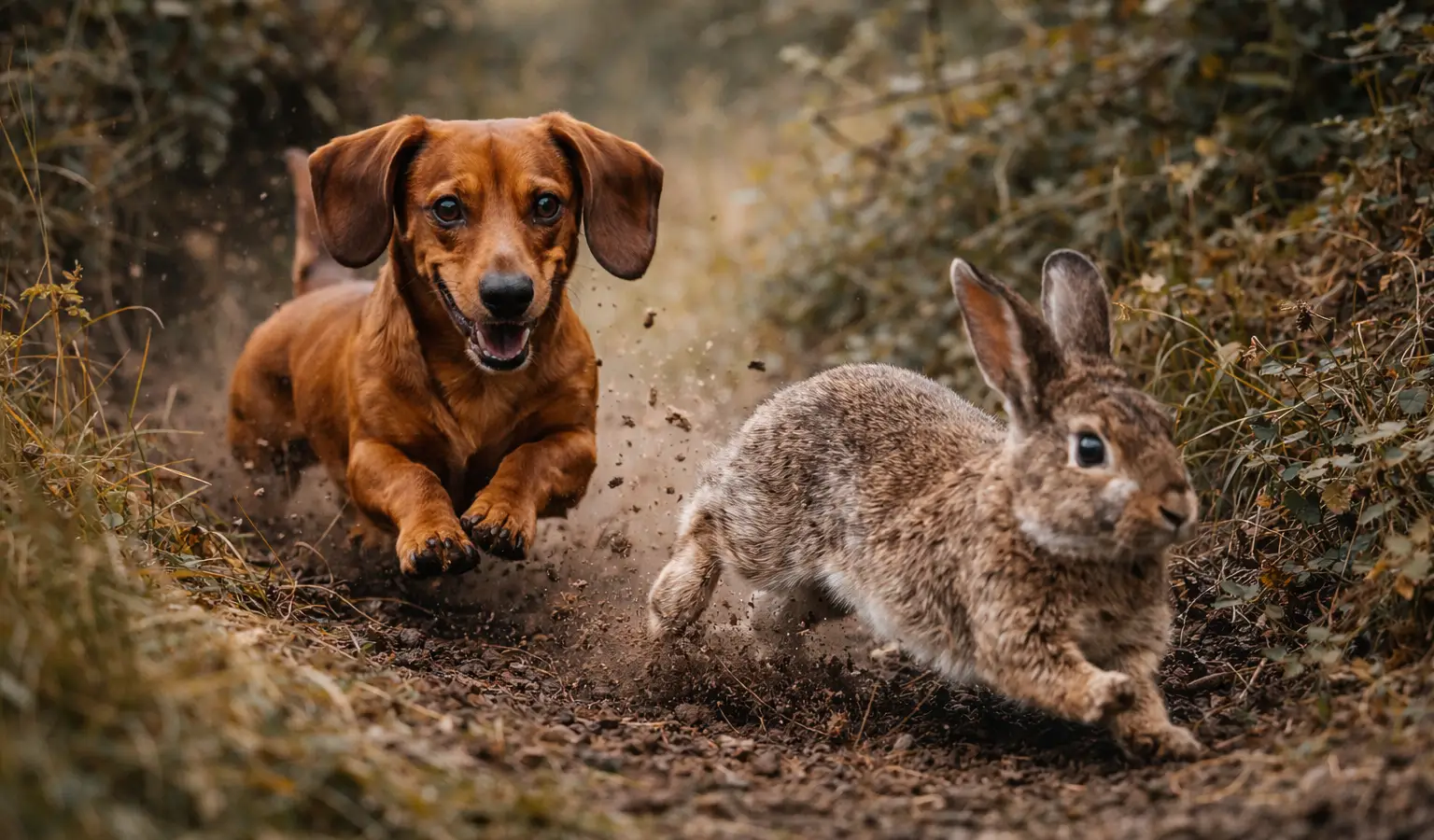
The Dachshund is a small, long-bodied dog known for its courage, intelligence and strong personality. Originally bred for badger hunting, it is now a loyal and lively companion.
Life expectancy
12 – 16 years
Price
800 – 1500 €
Monthly budget
60 €
Size
Small
Profile
Dachshund
Origin
Germany
Year of origin
1500
Developed by
German hunters
Size
Small
Coat type
Variable coat
Owner profile
Calm owner
Hypoallergenic
No
Litter size
4
Life expectancy
12 – 16 years
Price
800 – 1500 €
Female
- Height : 20 – 27 cm
- Weight : 7 – 9 kg
Male
- Height : 22 – 27 cm
- Weight : 8 – 9 kg
Temperament & abilities
Affectionate
4/5
Calm
3/5
Independent
4/5
Intelligence
4/5
Obedience
3/5
Hunting instinct
5/5
Energy level
3/5
Good with children
3/5
Dog-friendly
3/5
Friendly with strangers
3/5
Hunting profile
Stamina
4/5
Hunting drive
4/5
Independence
4/5
Trainability
3/5
Beginner-friendly
3/5
Family compatibility
4/5
Feather game
2/5
Fur game
3/5
Underground work
5/5
Water work
2/5
These indicators help compare breeds and choose the right one for your hunting style.
Game & abilities
Estimated ability level by game type.
Budget
Purchase price
800 – 1500 €
The price may vary depending on the breeder, bloodline, and region.
Average monthly cost
60 €
Estimated average: food, healthcare, accessories, and grooming.
A small hound with real hunting purpose, but a very specific working style
Is the Dachshund a good hunting dog?
The Dachshund is a genuinely capable hunting dog when used for the work it was developed to do. In hunting terms, its main strengths are nose, determination, courage, and the ability to work in tight cover or underground, not speed across open country. A well-bred, well-trained Dachshund can be very effective for tracking wounded game, flushing in dense habitat, and certain forms of earthwork, but it is not the most versatile choice for every hunter or every terrain.
Its working style is typically methodical rather than expansive. Many Dachshunds hunt close enough to stay in useful contact, yet they can also become very committed once they pick up scent, which makes recall and steadiness important training priorities. They often show impressive confidence for their size, and that bravery is part of their appeal as a Dachshund hunting dog. At the same time, independence is common in the breed, so handling is rarely as effortless as with more biddable gundogs. The owner usually gets the best results through patient repetition, clear rules, and regular field exposure rather than heavy-handed correction.
In practical use, the breed makes the most sense for hunters who want a compact dog with real drive and a strong nose, especially where cover is thick, access is awkward, or a larger dog is less convenient. Stamina can be better than newcomers expect, but the Dachshund's short legs still set limits in rough mountains, deep snow, large-scale driven work, or long days over very open ground. Retrieving ability varies by individual and line, so it should not automatically be treated as a specialist retriever.
- Best fit: tracking wounded game, close-range work in dense cover, some flushing tasks, and traditional earthdog-type work where legal and appropriate.
- Less ideal: hunters wanting wide-ranging search, highly polished off-lead handling, or one dog for every type of bird and fur work.
- Daily life: alert, energetic, and often entertaining, but not effortless; mental work, scent games, and reliable boundaries matter.
For family life, the balance can be very appealing. The Dachshund is small enough for easier transport and home living, yet it usually brings much more energy, opinion, and working instinct than its size suggests. This breed suits people who appreciate a bold temperament and can invest in training, outlet, and management. For the right owner, the Dachshund offers a distinctive mix of practical hunting ability and vivid everyday character.
Ground-scent accuracy
A good Teckel is valued first for its nose. Many work methodically on ground scent, making them useful for tracking wounded game and following older lines with patience rather than rushing. That steady scent focus can be especially valuable in woodland, hedgerows, and mixed terrain where a larger, faster hound may overshoot the line.
Bold underground worker
The breed was developed for going to ground, and that heritage still shows in many working Dachshunds. Their compact frame, determination, and willingness to face pressure suit den work on quarry such as badger or fox where legal and traditional practice allows. This is courage with purpose, not reckless speed, and it depends heavily on breeding, preparation, and careful handling.
Big stamina in a small body
Although short-legged, the Dachshund often has more endurance than first-time owners expect. Many can keep working for long periods at a measured pace, especially in rough cover where persistence matters more than outright speed. For hunters on foot, that can make the breed practical to manage while still giving enough drive for real field work.
Useful across several jobs
One of the breed’s strongest points is versatility. Depending on line and training, a Dachshund may be used for blood tracking, flushing in thick cover, den work, and sometimes limited retrieving of small game. It is not a universal specialist in every task, but for hunters who want one compact dog for varied work, the Teckel often makes sense.
Independent but trainable
Dachshunds tend to think for themselves, which helps when working out of sight underground or solving a difficult scent problem. That independence is useful in the field, but it also means training usually works best with consistency, repetition, and clear standards rather than heavy-handed pressure. In skilled hands, that balance can produce a very reliable little hunting companion.
Strong focus in dense cover
In bramble, scrub, and tight woodland edges, the Dachshund’s concentration can be a real asset. Many stay engaged with the job instead of ranging too wide, which helps in smaller hunting areas and close, practical work. For the right owner, that manageable search pattern is easier to live with day to day than the wider cast of some larger hunting breeds.
Who the Dachshund Suits Best
The Dachshund often suits hunters and active owners who want a compact dog with real purpose, strong scenting instinct, and plenty of personality. In the field, it tends to fit people interested in tracking, den work where legal and appropriate, or close-range hunting with a dog that works independently but stays connected to its handler. At home, it usually does best with people who enjoy training in short, consistent sessions and can give it mental work, walks, and clear boundaries rather than treating it as a decorative small dog.
It is often a good match for households that like an alert, engaged companion and do not mind a bold voice, a determined streak, and a dog that may follow scent and make its own decisions. It can be a poorer fit for owners wanting instant off-leash reliability, very rough exercise, or a highly biddable dog with no stubborn phase. Homes with many stairs, unmanaged weight gain, or very little daily interaction may also be less suitable. The best match is usually an owner who respects the breed's hunting background and is prepared to channel it constructively.
How a small German hunting dog became a distinctive worker and companion
Origin and development of the Dachshund
The Dachshund, known in many hunting circles as the Teckel, was developed in Germany as a purpose-bred hunting dog for going to ground. Its name is commonly linked to badger work, and that historical function helps explain the breed’s long body, strong forequarters, determined temperament, and willingness to work in tight cover or underground. Exact stages of early development are not documented in perfect detail, but the broad picture is consistent: breeders selected small, hardy, courageous hounds and earth dogs that could track scent, enter dens, and keep enough pressure on quarry to be useful to the hunter.
Rather than being bred simply as a “small dog,” the Dachshund was shaped for a very specific style of work. A good Teckel needed to be low enough to follow game into difficult places, yet robust enough to move through brush, dig, and cope with demanding terrain. Over time, different coat varieties and sizes were developed, likely to suit regional hunting preferences and conditions. Smooth, longhaired, and wirehaired Dachshunds each carry the same basic hunting identity, but lines may differ in sharpness, voice, game drive, and biddability depending on whether they were selected more strongly for field work, versatile hunting, or companion life.
This history still shows in the modern Dachshund’s character. Many retain a notably independent mind, a strong nose, and a level of persistence that can feel impressive or stubborn depending on the owner’s expectations. For hunters, that can mean a dog with real determination on a scent trail and useful confidence in dense cover. For family life, it often means a dog that benefits from consistent handling, clear routines, and enough daily activity to engage both body and brain rather than being treated as a decorative pet.
In practical terms, the breed tends to suit people who appreciate a compact dog with genuine working instincts. The Dachshund is often more substantial in attitude than its size suggests, which is part of its appeal but also one of its limitations for inexperienced owners. Those expecting effortless obedience may find the breed challenging, while owners who value character, scenting ability, and a bold little hunter often understand why the Teckel has remained so respected. Its past is not just a curiosity: it is the clearest explanation for how the breed moves, thinks, hunts, and settles into daily life today.
Built for the burrow
The Dachshund, or Teckel, was developed in Germany as a small hunting dog able to follow game underground. Its long body, short legs, strong forequarters, and determined attitude were not accidents of appearance but traits shaped for earthwork, especially on badger and sometimes fox. That original purpose still helps explain the breed’s boldness and persistence today.
A hunter with nose and grit
Among hunting dachshunds, scenting ability matters as much as courage. Many Dachshunds work methodically, using their nose with real concentration rather than pure speed. Depending on line and training, they may be used for tracking wounded game, flushing, or underground work. Their style often suits hunters who value determination, close-range work, and a dog that keeps pressing under pressure.
Small dog, strong opinions
Dachshunds often combine affection with independence. They can be funny, loyal, and very attached to their people, but they are not usually the most automatically compliant breed. Early education, clear routines, and calm consistency tend to work better than force. For many owners, the appeal lies exactly there: a compact dog with real personality, sharp awareness, and plenty of self-confidence.
Not a couch dog only
Because of their size, Dachshunds are sometimes underestimated. In daily life, many need regular walks, scent games, and mentally engaging routines to stay balanced. They can adapt well to smaller homes if their exercise and stimulation needs are met, but they are rarely happiest with a purely sedentary lifestyle. A bored Dachshund may become noisy, stubborn, or inventive in unhelpful ways.
Handling needs some thought
Daily care is usually straightforward, but living well with a Dachshund means managing both body and behavior sensibly. Weight control, sensible conditioning, and careful handling around repeated jumping are common points owners pay attention to. Coat care varies by variety, with smooth, longhaired, and wirehaired dogs needing different levels of grooming, but none should be treated as a zero-maintenance dog.
Best for engaged owners
This breed often suits people who enjoy an active small dog with hunting roots rather than a purely decorative companion. A Dachshund can fit family life very well, but usually does best with owners who respect its drive, train patiently, and enjoy daily interaction. For hunters and non-hunters alike, the breed tends to reward involvement more than convenience-based ownership.
Practical answers about hunting ability, training, family life, exercise, housing, and owner fit
Dachshund hunting and daily life FAQ
Is a Dachshund still a real hunting dog or mostly a pet today?
The Dachshund is historically a genuine hunting breed, developed to work underground and follow game with courage, persistence, and a very capable nose. In modern life, many are kept mainly as companions, but the working instinct often remains visible even in non-hunting lines. Whether an individual dog is truly suited to regular field work depends a lot on breeding, early exposure, training, and the handler's goals. A pet-bred Dachshund may still show strong prey interest, but that does not automatically make it an easy or reliable hunting partner. People looking for a hunting Teckel usually do best by seeking lines with proven working aptitude rather than assuming every Dachshund will perform the same way.
Are Dachshunds easy to train for hunting and obedience?
Dachshunds are intelligent and often quick to understand patterns, but they are not usually the most automatically compliant breed. Many have an independent streak, which can be useful in hunting but may make formal obedience feel more negotiated than effortless. Training tends to go best with short, clear sessions, strong consistency, and rewards the dog genuinely values. Harsh handling often backfires, while patient structure usually gets better results. For hunting work, recall, steadiness, scent focus, and control around game should be built gradually, because drive without discipline can become difficult to manage.
Can a Dachshund be both a good family dog and a hunting dog?
In many homes, yes, a Dachshund can combine companion life with working ability, provided its needs are taken seriously. A well-bred, well-managed dog may be affectionate at home, alert outdoors, and highly engaged when given scent-based tasks or hunting opportunities. The key is balance: enough daily structure, enough mental stimulation, and clear household rules so the dog's persistence does not turn into pushy behavior. Families should also remember that hunting instinct can show up in everyday life through chasing, barking, or fixation on scents. With thoughtful supervision and training, many Dachshunds adapt very well to family routines without losing their working character.
Do Dachshunds do well in apartments, or do they need a house and land?
A Dachshund can live successfully in an apartment if its exercise, training, and mental needs are met every day. Large property is not a substitute for engagement, and a bored Dachshund in a big yard may still become noisy, destructive, or difficult to handle. Apartment living does require realistic planning, especially because some individuals are quite vocal and very alert to hallway sounds, visitors, or wildlife outside. Regular walks, sniffing time, simple training games, and controlled opportunities to explore matter more than square footage alone. Ground-floor access can make daily management easier, but the breed does not automatically require rural housing to live well.
How much exercise does a Dachshund really need?
Most Dachshunds need more activity than people expect from a small dog, though not all need the same intensity. A typical adult usually benefits from daily walks, time to sniff and investigate, and small training or scent tasks that use the brain as well as the body. Many are happiest when they have a job-like routine, even if that job is not formal hunting. Exercise should be regular rather than extreme, because long periods of inactivity often create frustration and excess reactivity. Owners should think in terms of steady daily engagement, not just occasional bursts of activity on weekends.
What kind of owner or hunter is the Dachshund best suited to?
The breed often suits people who enjoy a dog with personality, initiative, and a strong sense of purpose rather than constant eagerness to please. For hunters, the Dachshund can appeal to those who value nose, determination, compact size, and a dog able to work in dense cover or underground depending on local practice and line. In everyday life, the best owner is usually patient, consistent, and not intimidated by a small dog making independent decisions. First-time owners can succeed, but only if they are ready to train seriously and manage prey drive, barking, and stubborn moments. Someone wanting effortless obedience or a highly biddable temperament may find the breed more challenging than expected.
Are Dachshunds good with children and other pets?
Many Dachshunds are loving with their family and can do well with respectful children, but they are not always endlessly tolerant of rough handling. They tend to do best where adults teach children how to approach, hold, and leave the dog alone when it wants space. With other pets, outcomes vary: some live peacefully with other dogs and even household cats, while others show strong chase or possessive behavior, especially if introductions are rushed. Early socialization helps, but management still matters in daily life. In homes with small animals, their hunting instincts should be taken seriously rather than dismissed because of the breed's size.