
Mouflon
Ovis gmelini musimon
A wild sheep found in mountainous and Mediterranean areas across several countries.
Type
Large mammal
Lifespan
14 years
Hunting season
Octobre à janvier selon quotas
Edible
Yes
Fact sheet
Mouflon
Scientific name
Ovis gmelini musimon
Type
Large mammal
Meat quality
Lean and tasty meat
Edible
Yes
Lifespan
14 years
Gestation
150 days
Size
140-180 cm
Weight
30-100 kg
Diet
Herbivore: grasses, leaves, shoots, shrubs
Status
Huntable depending on local regulations
Hunting season
Octobre à janvier selon quotas
Breeding season
10 / 11
Lifestyle and behaviour
Behaviour : Diurnal, wary, lives in herds, excellent climber
Social structure : Herds; males often in separate groups
Migration : Altitudinal seasonal movements
Habitat
- Mountain
Natural predators
- Wolf
Hunting methods
- Blinds
- Stalking
Health risks
- Intestinal parasites
- Sheep brucellosis
Ecosystem role
- Seed dispersal
Signs of presence
- Tracks on rocks
- Droppings
Introduction
General description
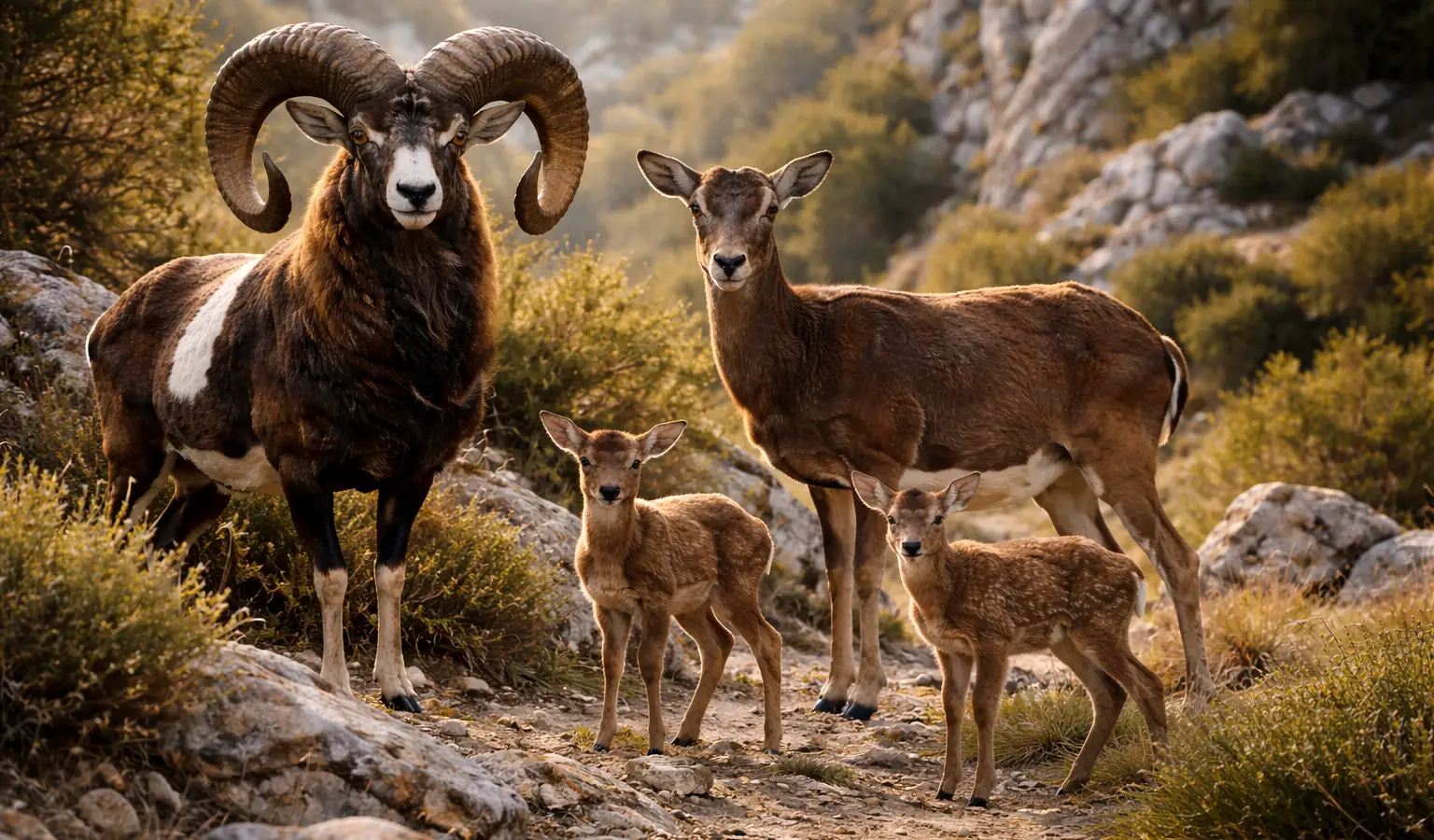
The mouflon, Ovis gmelini musimon, is a wild sheep associated with rocky mountains, dry Mediterranean slopes, open woodland, and rough hill country where visibility and escape terrain matter. It is one of the most recognizable wild caprines in many European hunting and wildlife contexts, valued both as a game species and as a striking animal to observe in broken terrain. Its silhouette, alert posture, and, in rams, heavy curved horns make it relatively easy to identify at a distance.
Ecologically, mouflon function as medium to large mountain herbivores that shape vegetation through grazing and browsing. They can influence plant structure on grasslands, shrublands, and forest edges, and they also help move seeds through their feeding activity and droppings. In landscapes shared with livestock, their role becomes more complex because habitat use, forage competition, disease transmission, and management goals may overlap.
For hunters, naturalists, and land managers, mouflon are known for wary behavior, sharp eyesight, and skill in steep rocky ground. They often detect disturbance early and use elevation, wind, and terrain to their advantage. That combination of visibility, vigilance, and climbing ability explains much of the species' reputation in mountain stalking and observation.
Although often discussed as if it were a single uniform game animal, mouflon populations can differ notably by region, origin, hunting pressure, climate, and habitat quality. Body size, horn development, herd size, and seasonal movements may all vary, so the most accurate understanding always comes from local field knowledge combined with broader species biology.
Morphology
Morphology
Mouflon are compact, athletic wild sheep built for balance and movement on steep, uneven ground. Adults generally measure about 140 to 180 cm in body length, with weight varying widely by sex, age, and habitat quality, often from roughly 30 to 100 kg. Rams are usually much larger and more powerfully built than ewes, with thicker necks, heavier forequarters, and more developed horns.
The coat is usually short to medium in length and adapted to seasonal change. In many populations, coloration ranges from reddish brown to dark brown, often with paler underparts. Mature rams commonly show a lighter saddle patch on the flanks or back in the colder season, though its extent can vary. Ewes tend to be plainer in color and more lightly built.
The most distinctive field mark is the horn. Adult rams typically carry strong, curved horns that spiral backward and downward, sometimes becoming massive with age. Ewes may have small horns or be hornless depending on population. The head is relatively narrow, the legs are sturdy, and the hooves are hard and well suited to rock. At a distance, mouflon often appear more lightly framed and agile than domestic sheep, with a notably wild carriage and quick, controlled movement on broken slopes.
Habitat and distribution
Habitat and distribution
Habitat
Mouflon favor habitats that combine forage with security. Typical mouflon habitat includes rocky mountainsides, steep grassland, open scrub, Mediterranean maquis, dry forest edges, and upland mosaics where animals can feed in the open but retreat quickly to cliffs, ledges, ridges, or rough cover. They generally do best in landscapes offering a mix of grazing areas, scattered shelter, and good vantage points.
They are strongly associated with mountain and hill biotopes, but not every mountain is equally suitable. The best areas often have open structure, patchy shrub cover, and terrain that supports visibility and escape. Dense closed forest is usually less favorable unless interspersed with openings, ridgelines, or rocky clearings. In warmer climates, north-facing slopes and higher elevations may be used more heavily during hot periods, while sunnier exposures can attract animals in colder weather.
Water availability, low disturbance refuges, and seasonal forage quality also shape habitat use. In managed game areas, mouflon often concentrate where grass production, mineral access, and safe resting ground coincide. Hunting pressure, livestock presence, and predator activity can all shift how openly they use otherwise suitable terrain.
Distribution
Mouflon are associated with parts of Europe and Mediterranean-influenced mountain landscapes, with populations occurring in several countries as native, historical, introduced, or managed game populations depending on the region. Their distribution today is shaped not only by natural habitat but also by past translocations, estate management, conservation decisions, and local hunting traditions.
They are most often encountered in mountainous or hilly terrain with rocky structure, especially in southern and central parts of Europe where climate and vegetation suit their ecology. In some places they occupy fairly continuous upland ranges; in others they occur as localized populations in isolated massifs, forests with open ridges, or managed hunting territories.
Occurrence patterns can be patchy. A mountain chain may hold regular herds in one sector and very few animals in another because of differences in winter severity, disturbance, disease, predation, habitat connectivity, or management history. Anyone researching mouflon distribution should therefore check local wildlife authorities or regional game management sources rather than relying only on broad range maps.
Lifestyle
Lifestyle and behaviour
Diet
Mouflon are herbivores that feed mainly on grasses, forbs, leaves, shoots, and shrubs. Their diet shifts with season, altitude, rainfall, and the structure of the local plant community. In productive grassland periods they may graze extensively, while in drier seasons or more wooded habitats they browse more on shrubs, twigs, and leafy material.
Spring and early summer often bring the richest forage, with fresh grasses and herbaceous plants supporting body condition, horn growth in rams, and lactation in ewes. During hot, dry Mediterranean periods or in winter mountain conditions, animals may rely more heavily on tougher grasses, evergreen shrubs, fallen mast where available, and woody browse. Snow cover, drought, or heavy grazing competition can narrow feeding options and concentrate use in key patches.
Feeding usually follows a pattern of movement between secure resting slopes and open feeding areas. Mouflon often select places where they can keep a broad field of view while grazing, especially where hunting pressure or predator risk is present. This diet flexibility helps explain why the species can persist in varied mountain habitats, though habitat quality strongly affects body condition and population performance.
Behaviour
Mouflon are primarily diurnal, with activity concentrated in the morning and late afternoon, though local conditions can shift this pattern. In warm weather or under disturbance, they may spend more time feeding during cooler hours and rest in sheltered or elevated places during the middle of the day. Their daily rhythm is closely tied to visibility, wind, temperature, and perceived risk.
They are notably wary animals. Vision is a major defense, and herds often position themselves where they can scan open slopes, ridges, and approach routes. If danger is detected, they may freeze briefly, bunch together, climb rapidly to safer ground, or move off in a controlled but fast ascent rather than an immediate blind sprint. In very open country, they often use contours and skyline positions to monitor large areas.
Mouflon are excellent climbers and move confidently across rock, scree, and steep broken terrain. Their escape behavior is strongly terrain-based: instead of diving into dense cover like some deer, they often seek elevation, rough ground, or a line of movement that gives them both sight and footing. Where they experience repeated human pressure, they may become more secretive, shift use of feeding areas, and increase vigilance long before a person is close enough to be noticed by less cautious species.
Social structure
Mouflon usually live in herds, but herd composition changes by season, age, and reproductive period. Ewes, lambs, and young animals commonly form nursery groups that use feeding and resting areas together. Adult rams often spend much of the year in smaller bachelor groups or remain loosely associated with other males, especially outside the rut.
This separation between the sexes is a typical part of mouflon social structure. Rams may use slightly different terrain, move on different schedules, or choose more secluded resting ground than female groups. Older males can become more independent and harder to observe consistently, particularly where disturbance is high.
During the breeding season, male and female groups come together more frequently. Dominance among rams is expressed through posture, parallel walking, displays, and sometimes direct clashes. Group size can vary widely depending on habitat openness, season, weather, and local density, from a few animals to more conspicuous herds in favorable open country.
Migration
Mouflon are not long-distance migrants in the way some large ungulates are, but they often make seasonal altitudinal movements. In mountain systems, animals may use higher ground during milder periods and shift to lower, more sheltered slopes in winter or during severe weather. The scale of these movements depends on snow depth, forage accessibility, disturbance, and local topography.
Many populations can be described as broadly sedentary within a home range, yet still highly responsive to seasonal conditions. They may move between feeding basins, ridgelines, forest edges, and rocky refuges in recurring patterns. In dry regions, water and green forage can drive short but regular relocations across the landscape.
Dispersal is usually more relevant than true migration when discussing range expansion. Young males in particular may move away from their natal area, helping connect nearby groups where habitat corridors remain open. Fences, roads, intensive land use, and human pressure can reduce this connectivity and isolate local populations.
Reproduction
Reproduction
The mouflon breeding cycle is seasonal, with mating typically taking place in autumn or early winter, though timing may vary somewhat with latitude and climate. During the rut, rams become more active around female groups, increase marking and display behavior, and may engage in competition with rival males. Horn clashes can occur, but much of dominance is also established through assessment, body posture, and persistence.
Gestation lasts about 150 days. Ewes generally give birth in spring, when improving forage conditions support milk production and lamb survival. A single lamb is most common, though twins are possible in some populations and under favorable nutritional conditions. Lambing usually takes place in relatively secure terrain where visibility and escape routes reduce risk.
Young mouflon are mobile fairly quickly, but they remain dependent on the ewe for protection and milk during the early period of development. Reproductive success is influenced by body condition, age structure, winter severity, predation, disease, and forage quality. In practical population management, spring recruitment and the proportion of lambs seen with ewe groups are important indicators of annual performance.
Field signs
Field signs
Useful mouflon field signs include tracks on soft ground near rocky routes, droppings, feeding traces, and repeatedly used paths linking bedding slopes to grazing areas. In mountain terrain, signs are often concentrated at transitions: below ridgelines, around saddles, near sheltered ledges, and on narrow lines of easier passage through rock.
Tracks resemble those of other sheep or goats, with a cloven print that is relatively narrow and pointed compared with many deer tracks, though exact appearance depends on substrate. On hard rocky ground, complete prints may be scarce, so observers often rely on partial impressions in dust, mud pockets, snow, or soft edges of trails. Repeated movement can leave polished-looking crossings, loose stones, or visible wear on narrow paths.
Droppings are typically small, dark pellets, often deposited in clusters where animals have fed or paused. Bedding areas may show flattened vegetation in sheltered vantage points with a good view. Fresh grazing on grasses and clipped shrub tips can also indicate current use, especially when combined with tracks and droppings. In hunted or heavily disturbed landscapes, sign may be easier to find than the animals themselves.
Ecology and relationships
Ecology and relationships
Ecological role
Mouflon play an important ecological role as mountain and upland herbivores. Through grazing and browsing, they influence plant composition, vegetation height, and the balance between grasses, herbs, and shrubs. In some landscapes this can help maintain open structure and habitat heterogeneity; in others, especially where densities are high or regeneration is limited, feeding pressure may reduce plant recovery.
They also contribute to seed dispersal through movement and droppings, linking feeding patches with resting areas and travel routes. Their trails and repeated use of certain slopes can create visible patterns of habitat use that affect soil disturbance and vegetation wear on a local scale.
As prey, mouflon may be taken by large predators such as wolves where ranges overlap. Predator presence can alter mouflon vigilance, grouping behavior, and space use. Their ecological role therefore sits at the intersection of vegetation dynamics, predator-prey relationships, and interactions with other wild and domestic herbivores.
Human relationships
Mouflon have a strong connection to hunting culture in many parts of Europe, where they are considered a valued big game species. Their wariness, eyesight, and use of steep terrain make them a classic quarry for mountain stalking and careful observation from vantage points or blinds. Horn development in mature rams also gives the species a long-standing place in trophy-oriented game management, although management goals vary widely between regions.
Beyond hunting, mouflon are appreciated by wildlife watchers and photographers because they are often visible in open rugged country, especially at dawn and dusk. At the same time, their relationship with people is not always simple. In shared landscapes, they may overlap with livestock grazing, compete locally for forage, or contribute to concerns about disease transmission between wild and domestic sheep.
Forestry and habitat management can also be affected by mouflon density. In some areas moderate use of grassland and scrub is acceptable or even beneficial; in others, repeated browsing and bark or shoot damage in regeneration zones may create management conflict. Successful coexistence depends on realistic population goals, habitat capacity, health monitoring, and local knowledge rather than one-size-fits-all assumptions.
As game meat, mouflon is edible and can be well regarded when animals are handled properly. Meat quality, as with other wild sheep and ungulates, depends on age, season, field care, and overall condition.
Legal framework and management
Legal framework and management
Legal status
Mouflon are generally considered huntable in some regions, but their legal status depends heavily on national law, regional wildlife regulations, property status, and local management plans. In some jurisdictions they are managed as established game animals with defined seasons and quotas; elsewhere their status may be more restricted, more localized, or tied to specific conservation and land management concerns.
Where hunting is allowed, the season often falls in autumn and winter, commonly around October to January, but exact dates, sex or age-class rules, and quota systems can differ significantly. Special requirements may apply to protected areas, fenced estates, mountain reserves, or zones with sensitive conservation objectives.
Because mouflon management may intersect with disease control, livestock protection, predator policy, and habitat impact assessments, regulations can change. The only reliable approach is to consult current official sources before any hunting, transport, or management action. Local authorities may also issue specific rules on tagging, trophy declaration, health inspection, or carcass handling.
Management tips
Good mouflon management starts with habitat reading. The species benefits from a balanced mosaic of open feeding ground, rocky escape terrain, low-disturbance resting areas, and seasonal access to water and shelter. Managers should pay close attention to grazing pressure, shrub encroachment, forest closure, and the condition of key wintering or drought-period areas, since these often limit local carrying capacity more than total land area does.
Observation is most effective from a distance with wind, sun angle, and terrain in mind. Repeated counts from fixed vantage points can help track herd composition, lamb recruitment, ram age structure, and seasonal movement. In hunting contexts, selective harvest should follow clear objectives rather than short-term opportunity alone, especially where the population is small, fragmented, or sensitive to winter losses.
Health monitoring matters in any landscape shared with domestic sheep or goats. Intestinal parasites and diseases such as brucellosis-related concerns in sheep systems are management issues that should be handled through veterinary guidance and official protocols, not assumption. Avoid concentrating animals artificially in ways that increase disease transmission or overuse of vegetation.
Where mouflon are creating conflict with regeneration, agriculture, or conservation targets, the most effective response usually combines population adjustment, habitat planning, and better spatial distribution of pressure. Purely reactive measures rarely solve a structural habitat or density problem for long.
Fun facts
Fun facts
- Mouflon rams can often be identified at long range by their sweeping horns and upright, alert stance on open slopes.
- The species is remarkably sure-footed, using rocky terrain not just as shelter but as a core part of its daily strategy for visibility and escape.
- Although often called a mountain animal, mouflon also do well in Mediterranean scrub, dry open woodland, and rough hill country if the landscape provides both forage and security.
- Rut behavior can be dramatic, with rival rams assessing one another through posture and movement before direct clashes occur.
- Mouflon may seem highly visible in open country, yet experienced observers know that a herd can disappear quickly by slipping over a ridge or tucking into broken ground.